
医疗保险

Search documents
多人被判有期徒刑,国家医保局公布个人骗取医保基金典型案例
Yang Shi Wang· 2025-10-09 02:58
Core Viewpoint - The National Medical Insurance Administration emphasizes a "zero tolerance" policy towards fraudulent activities related to medical insurance funds, highlighting the importance of safeguarding public interests and maintaining the integrity of the medical insurance system [1]. Group 1: Fraud Cases Summary - Case 1: In Jiangsu Province, an individual named Jing exploited special disease insurance benefits to fraudulently acquire and resell high-priced medications, resulting in a loss of over 280,000 yuan to the medical insurance fund [2][3]. - Case 2: In Guizhou Province, Zhao organized a scheme to instruct patients to overprescribe medications, leading to a total loss of approximately 282,392.52 yuan from the medical insurance fund [3][4]. - Case 3: In Jiangxi Province, an individual named Xiao used another person's social security card to fraudulently obtain and sell medications, causing a loss of 75,613.44 yuan to the medical insurance fund [5]. - Case 4: In Shaanxi Province, Peng utilized the medical benefits of deceased individuals to fraudulently acquire medications, resulting in a loss of 60,769.96 yuan [6][7]. - Case 5: In Gansu Province, Heng collaborated with others to create a fraudulent scheme that involved selling medications obtained through the misuse of medical insurance, leading to a loss of 369,772.72 yuan [8]. - Case 6: In Sichuan Province, Qian exploited the insurance of a deceased individual to fraudulently acquire and sell medications, causing a loss of 13,815.90 yuan [9][10]. - Case 7: In Fujian Province, a group of patients conspired to overprescribe medications, resulting in significant losses to the medical insurance fund [11][12]. - Case 8: In Qinghai Province, Bai fraudulently used another person's identity to obtain medical benefits, leading to a total cost of 37,879.4 yuan [13][14]. - Case 9: In Ningxia, an individual named Ou allowed others to use his social security card for fraudulent medical claims, involving a loss of 11,984.66 yuan [15]. - Case 10: In Hunan Province, Li and a pharmacy conspired to forge documents to claim medical insurance funds, resulting in a loss of 35,000 yuan [16]. - Case 11: In Inner Mongolia, Ma was found to have submitted falsified medical records to obtain benefits, leading to a loss of 7,953 yuan [17]. Group 2: Regulatory Response and Public Awareness - The recent cases illustrate the diverse and harmful nature of fraudulent activities against medical insurance, prompting strict legal repercussions including criminal charges, full restitution, and suspension of medical qualifications [18]. - The National Medical Insurance Administration calls for increased legal awareness among insured individuals and urges medical institutions and professionals to adhere to regulatory standards, fostering a cooperative environment for monitoring and reporting fraudulent activities [18].
国家医保局开展医保基金管理突出问题专项整治工作第三次全国视频调度暨“百日行动”工作部署
Zheng Quan Shi Bao Wang· 2025-09-27 10:23
Core Viewpoint - The National Healthcare Security Administration (NHSA) is launching a "Hundred-Day Action" campaign to address prominent illegal activities in the medical insurance sector, focusing on issues such as the resale of medical insurance drugs, excessive prescriptions, and fraudulent claims for maternity benefits [1] Group 1: Campaign Objectives - The "Hundred-Day Action" aims to tackle three key illegal activities: resale of medical insurance drugs, excessive prescriptions, and fraudulent maternity benefit claims [1] - The campaign emphasizes concentrated efforts and precise rectification to ensure compliance with laws and regulations [1] Group 2: Expected Outcomes - The NHSA aims to fundamentally eliminate the resale of medical insurance drugs and similar issues across the country [1] - The initiative is designed to deeply purify the operational environment of medical insurance funds [1]
失能群体照护更有保障!吃喝照料、康复护理全涵盖 长护险服务有了 “全国通用清单”
Yang Shi Wang· 2025-09-26 03:33
Core Points - The National Healthcare Security Administration (NHSA) issued the "National Long-term Care Insurance Service Project Directory (Trial)" on September 25, which mandates strict adherence to the directory for new long-term care insurance regions [1] - The directory includes a total of 36 service items categorized into daily living care and medical care, with 20 items under daily living care and 16 items under medical care [3] - NHSA plans to explore the inclusion of intelligent services and supportive assistive devices related to long-term care into the payment scope at the national level [5] Summary by Category Service Items - The directory specifies 36 service items, divided into two main categories: daily living care and medical care [3] - Daily living care includes 20 items aimed at assisting individuals in maintaining basic living abilities, covering areas such as dietary care, hygiene, and safety monitoring [3] - Medical care consists of 16 items, including general nursing, basic care, specialized care, and rehabilitation services [3] Implementation Guidelines - New regions implementing long-term care insurance must strictly follow the directory and cannot arbitrarily adjust or change the service scope [1] - Existing pilot cities with their own long-term care service project directories are required to align with the national directory within approximately three years [1]

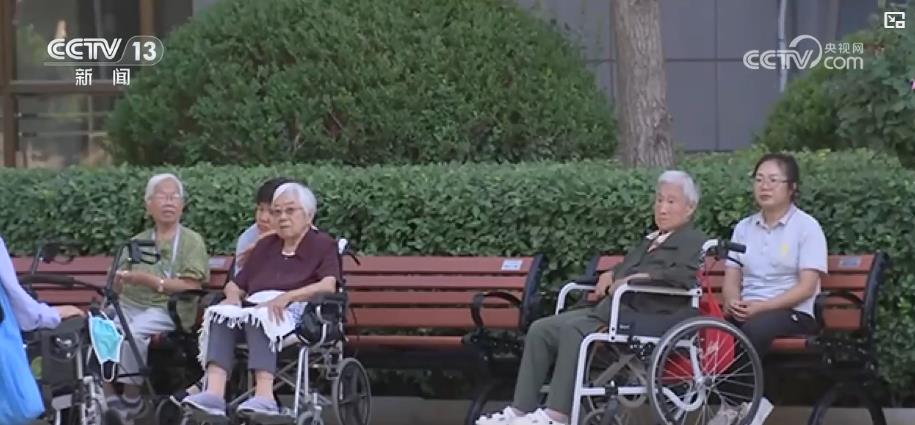
针对医保基金管理突出问题打出“组合拳” 专项整治让群众更有“医靠”
Yang Shi Wang· 2025-09-26 01:31
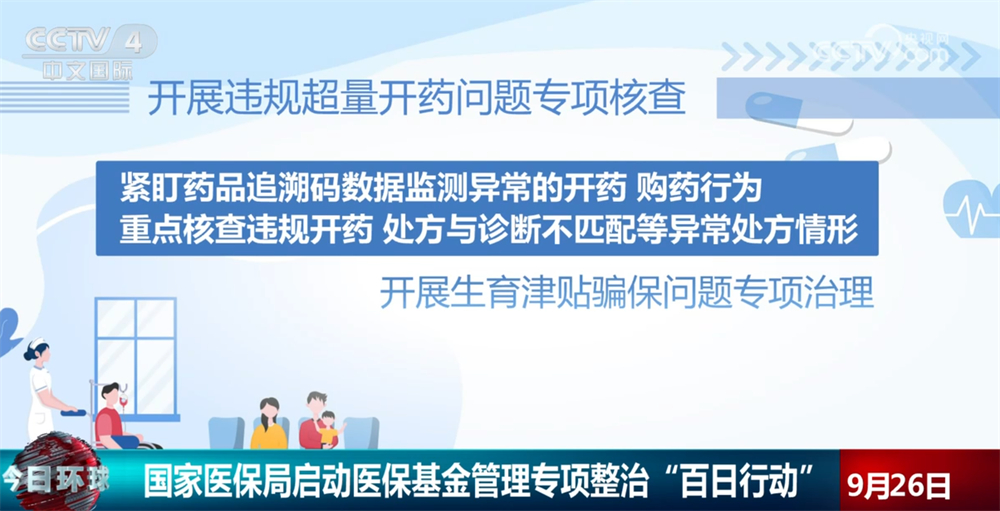
Group 1 - The National Healthcare Security Administration (NHSA) has initiated a "100-day action" to address prominent issues in medical insurance fund management, focusing on illegal practices such as the resale of medical insurance drugs and fraudulent prescriptions [1] - The NHSA has launched a special investigation into excessive prescription practices, monitoring abnormal prescription behaviors and mismatches between prescriptions and diagnoses [1] - The NHSA is also targeting fraudulent claims related to maternity benefits [1] Group 2 - The NHSA has released a trial version of the "National Long-term Care Insurance Service Project Directory," which standardizes service items and payment scope for long-term care insurance [3] - The directory categorizes services into two main types: daily living care and medical care, with specific activities outlined under each category [3] - Regions starting new long-term care insurance programs must adhere strictly to the directory and cannot arbitrarily change the service scope [5] Group 3 - The NHSA is exploring the inclusion of intelligent services and supportive assistive devices related to long-term care in the payment scope [6] - Currently, nearly 190 million people are enrolled in China's long-term care insurance, with over 100 billion yuan accumulated in funds and expenditures exceeding 85 billion yuan [8] - During the 14th Five-Year Plan period, the program has benefited over 2 million individuals with disabilities [8]
医保局希望每位参保人都能明明白白看病,顺顺利利报销!
Sou Hu Cai Jing· 2025-09-25 12:20
Core Points - The article addresses common misunderstandings regarding medical insurance reimbursement processes and emphasizes the importance of understanding the policies to avoid confusion and frustration [1][2] Group 1: Understanding Medical Insurance - Medical insurance is not an "all-inclusive insurance" and has specific reimbursement scopes, meaning it cannot cover all medical expenses [3] - There are three key directories that govern reimbursement: the Basic Medical Insurance Drug Directory, the Diagnosis and Treatment Project Directory, and the Medical Service Facility Standards, which dictate what medications and treatments are eligible for reimbursement [4][5] Group 2: Communication with Healthcare Providers - Patients are encouraged to proactively communicate with healthcare providers by asking if a prescribed item is covered by insurance, if there are non-reimbursable items, and if there are alternative reimbursable options available [9] Group 3: Reimbursement Process - The reimbursement process involves three parties: the hospital, the medical insurance system, and the medical insurance bureau, with each having distinct roles [10][12] - Hospitals provide medical services and initially cover the costs before reimbursement, while the medical insurance bureau audits and settles claims post-service [11][12] Group 4: Out-of-Town Medical Treatment - Patients must complete a pre-approval process for out-of-town medical treatment to ensure direct reimbursement; failure to do so may result in having to pay upfront and navigate a more complex reimbursement process later [13][16] Group 5: Information Verification - It is crucial to verify information through official channels rather than relying on hearsay, as medical insurance policies can be complex and frequently updated [17][18]

国家医保局印发《国家长期护理保险服务项目目录(试行)》
Bei Jing Ri Bao Ke Hu Duan· 2025-09-25 06:09
Core Points - The article discusses the establishment and management of the National Long-term Care Insurance Service Project Directory, which outlines the services covered under long-term care insurance [10][14] - The directory includes two main categories: daily living care projects and medical care projects, totaling 36 specific services [10][14] - The National Medical Insurance Administration is responsible for organizing, adjusting, and publishing the directory, ensuring it aligns with the needs of disabled individuals and the operational status of the long-term care insurance fund [3][6] Group 1: Directory Management - The National Medical Insurance Administration will create a dynamic adjustment mechanism for the long-term care service project directory based on the operational status of the insurance fund and the evolving needs of disabled individuals [3][4] - Local regions must align their long-term care service plans with the national directory, ensuring that services provided meet the actual needs of beneficiaries [3][6] - The directory will be strictly adhered to in newly established long-term care insurance areas, with existing pilot cities required to gradually unify their directories with the national standard over approximately three years [4][6] Group 2: Implementation and Oversight - Provincial medical insurance departments are tasked with overseeing the implementation of the directory by the end of December 2025, including payment management and service quality supervision [6][10] - There will be a focus on training long-term care service personnel and ensuring the quality of care provided meets established standards [6][10] - Monitoring and analysis of fund operations and the benefit levels for insured disabled individuals will be conducted to ensure that the services provided meet basic care needs [6][10]
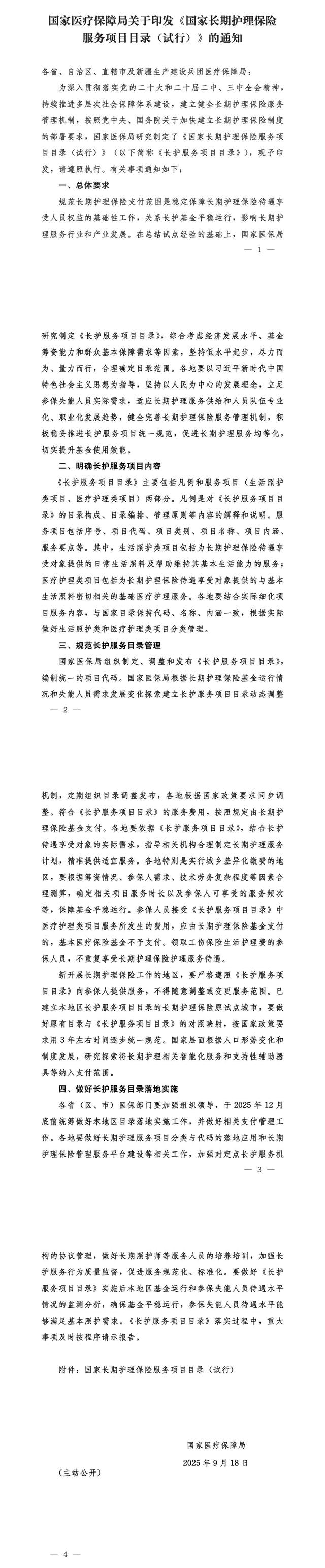
不得随意调整变更服务范围,国家医保局发布长护险服务项目目录(试行)
Bei Jing Shang Bao· 2025-09-25 06:02
Core Points - The National Healthcare Security Administration (NHSA) issued the "National Long-term Care Insurance Service Project Directory (Trial)" on September 25, 2023, which outlines the services that must be provided to insured individuals in regions that have newly implemented long-term care insurance [1] - Existing pilot cities with established long-term care service project directories are required to align their original directories with the new national directory within approximately three years [1] - The directory includes a total of 36 service items, categorized into daily living care and medical care, with 20 items under daily living care and 16 items under medical care [1] Summary by Category Long-term Care Insurance Implementation - New regions implementing long-term care insurance must strictly adhere to the "Long-term Care Service Project Directory" and cannot arbitrarily adjust or change the service scope [1] - Pilot cities must ensure their existing directories are mapped to the new national standards within a three-year timeframe [1] Service Project Directory Details - The directory consists of 36 service items, divided into two main categories: - Daily living care includes 20 items such as dietary care, toileting care, hygiene care, dressing assistance, functional maintenance, symptomatic care, vital signs monitoring, and safety care [1] - Medical care includes 16 items related to basic medical care services closely associated with daily living support, including general examination care, basic care, specialized care, and rehabilitation [1]
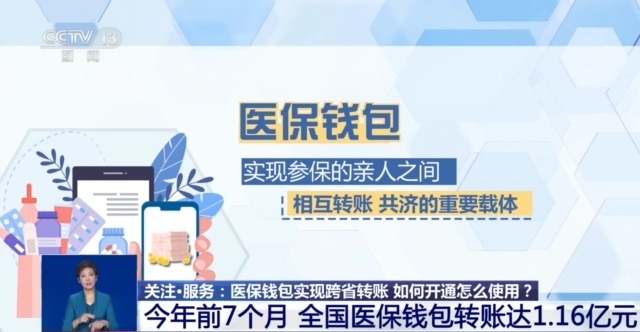
医保钱包实现跨省转账 如何开通?怎么使用?一文了解
Yang Shi Xin Wen· 2025-09-24 19:18
Core Insights - The recent upgrade of medical insurance services allows participants in employee medical insurance to transfer surplus funds from their personal accounts to family members in different provinces, facilitating cross-province mutual aid [1][3]. Group 1: Policy Impact - The implementation of the medical insurance wallet has significantly alleviated the financial burden on patients, particularly benefiting those who study, work, or retire in different locations [2]. - As of August 2025, Sichuan province has opened 150,000 medical insurance wallets, facilitating 34,000 transactions totaling approximately 24 million yuan [2]. Group 2: Financial Statistics - In the first seven months of this year, the total amount transferred through medical insurance wallets reached 116 million yuan, with 170,600 transactions conducted both within and across provinces [5]. - The cumulative balance of employee medical insurance personal accounts exceeded 1.44 trillion yuan in 2024, indicating a significant amount of dormant funds [3]. Group 3: Operational Guidelines - To open and use the medical insurance wallet, users must log into the National Medical Insurance Service Platform App and follow specific steps to activate the wallet [8]. - Each medical insurance wallet account is limited to three transfers per day, with a maximum transfer amount of 2,000 yuan per transaction [9].
医保新规定!10月起,这6项费用将不能报销,很多人还都不知道
Sou Hu Cai Jing· 2025-09-24 07:06
Core Points - The new healthcare policy in China will take effect from October 2025, significantly altering the reimbursement landscape for various medical expenses [1][3][4] - The policy aims to alleviate pressure on the medical insurance fund, which has been strained by rising healthcare costs and an increasing number of insured individuals [1][10] Summary by Categories Changes in Reimbursement Policy - Six categories of expenses will no longer be reimbursed by medical insurance starting October 2025, including non-essential nutritional supplements, special medical services, cosmetic surgery, non-therapeutic diagnostic tests, expensive traditional Chinese medicine, and services provided by non-medical institutions [3][4][5][8][10] - Non-medical essential nutritional supplements, such as vitamins and protein powders, will now be self-paid [3][4] - Special medical services that offer enhanced comfort and reduced wait times will also be excluded from reimbursement [4] - Cosmetic procedures aimed at improving appearance will not be covered, reinforcing previous regulations that were not strictly enforced [4][5] - Preventive diagnostic tests requested by individuals rather than prescribed by doctors will not be reimbursed [5][6] - Certain high-cost traditional Chinese medicine items will be removed from the reimbursement list, continuing a trend observed in previous adjustments [8] Implications for Healthcare Financing - The new regulations are expected to reduce the financial burden on the medical insurance fund, which has been under pressure due to rising medical expenses [5][10] - The healthcare market, particularly in cosmetic procedures, has seen significant growth, with the market size exceeding 450 billion yuan in the first half of 2025, indicating a shift towards self-funded healthcare options [5][8] - The policy reflects a broader challenge of balancing the sustainability of the medical insurance fund with the growing healthcare demands of an aging population [10] Public Awareness and Response - A significant portion of the insured population is unaware of the specifics of their medical insurance coverage, with surveys indicating that 67% do not understand the reimbursement scope [10][12] - Recommendations for the public include planning for medical expenses, considering supplementary commercial health insurance, and staying informed about policy changes to avoid unexpected costs [10][12]
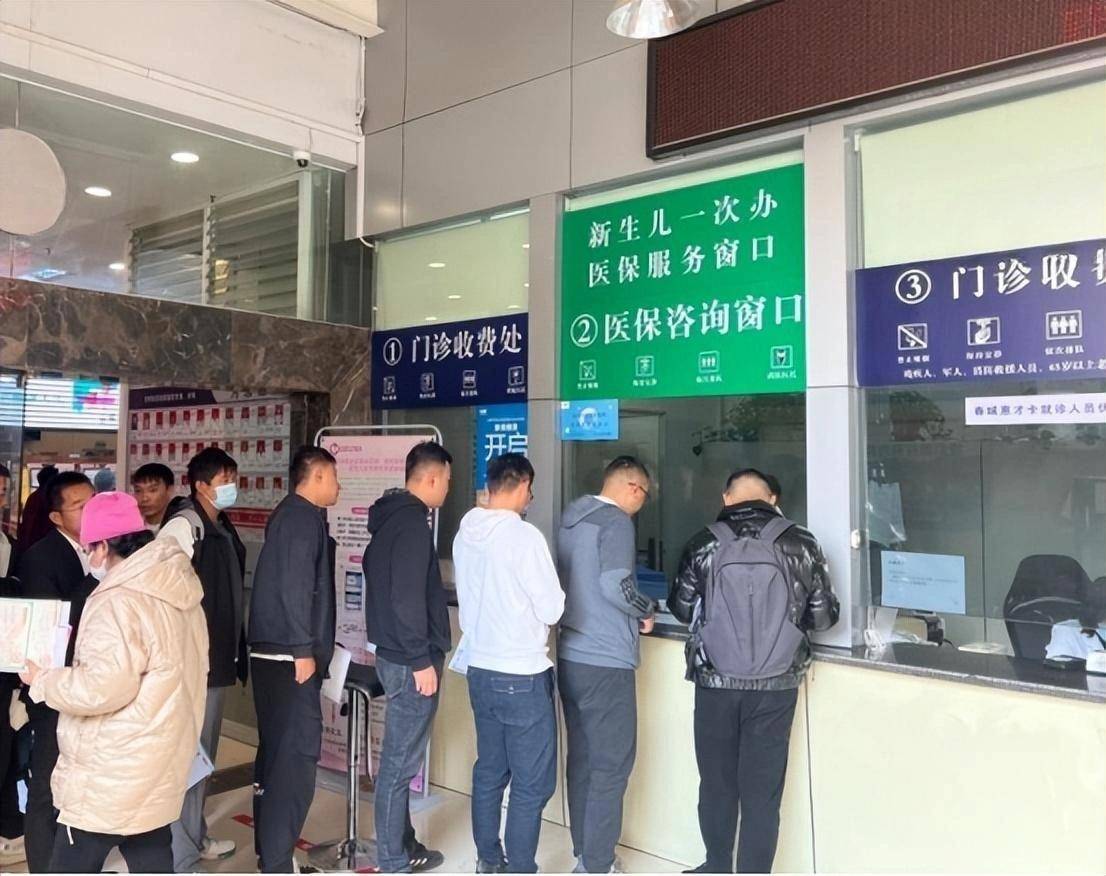
徐州积极织就“参保网” 加强居民医疗保障
Xin Hua Ri Bao· 2025-09-24 00:22
Core Insights - The expansion of medical insurance coverage in Xuzhou has significantly improved the health security of its citizens, with innovative methods leading to notable achievements in enrollment [1][2][3] Group 1: Data-Driven Enrollment Expansion - Xuzhou's medical insurance department collaborated with statistical departments to identify 6,120 unregistered enterprises from a total of 16,273 surveyed, implementing targeted outreach strategies to ensure comprehensive enrollment [1] - The department utilized a combination of methods including letters, proactive discussions, and on-site visits to engage potential participants, ensuring no one was left out [1] Group 2: Service Accessibility Enhancements - To address the challenges posed by a high number of migrant workers and a mobile population, Xuzhou has established a "15-minute medical insurance service circle," with 275 standardized service stations and 2,826 service points in communities [2] - The city has also upgraded urban services by installing self-service terminals in high-traffic areas, providing 24-hour access to medical insurance services [2] Group 3: Policy Innovations for Enrollment Retention - Xuzhou has introduced various policies to enhance the attractiveness of medical insurance, including a 1% reduction in contribution rates for flexible employment workers compared to standard rates [3] - The implementation of a "family mutual aid" policy allows personal account balances to cover family members' insurance costs, improving fund utilization and participant satisfaction [3] - Financial assistance for vulnerable groups has exceeded 100 million yuan, ensuring that those in need are adequately supported and enrolled [3] - As of August 21, 199.56 million workers were enrolled in employee medical insurance, an increase of 1.68 million from the previous year, with a coverage rate increase of 0.52 percentage points [3]