
服装

Search documents
太平鸟(603877.SH)发布前三季度业绩,归母净利润2826万元,同比下降73.79%
智通财经网· 2025-10-23 11:42
Core Insights - The company reported a revenue of 4.217 billion yuan for the first three quarters of 2025, representing a year-on-year decline of 7.15% [1] - The net profit attributable to shareholders was 28.26 million yuan, down 73.79% year-on-year [1] - The company experienced a non-recurring net profit loss of 55.46 million yuan [1] - Basic earnings per share stood at 0.06 yuan [1]

上海以时尚之名,燃动消费升级引擎
Guo Ji Jin Rong Bao· 2025-10-23 11:39
10月22日至23日,上海以"时尚+消费"双主线点燃城市活力,利郎LESS IS MORE 2025"由石至形"设计师联合系列发布秀与2025上海"进口嗨购节"暨"国 别商品文化缤纷月"启动仪式接连登场,通过设计赋能、文化融合与政策创新,展现上海"文旅商体展"联动促进消费升级的画面。 整个系列以"石"为起点,以"结构"为形态,从安平桥蕴含的石构智慧出发,延伸到现代几何建筑的结构语言,像是在时间与空间的折叠中,探寻当代男 装从自然之物到文化符号的演变过程。 消费联动:进口嗨购节打造全场景消费生态 10月23日,2025上海"进口嗨购节"暨"国别商品文化缤纷月"在虹桥品汇启动,通过"进口精品+国别新品"双主线,覆盖"食、行、游、购、娱"五大场 景。 上海市商务委二级巡视员刘朝晖在致辞中表示,上海"进口嗨购节"自2020年首次举办以来,累计推出近300项进口主题活动,带动进口商品销售累计达 60亿元。"国别商品文化缤纷月"着力搭建国际经贸合作平台和人文交流平台,推动国别文化交流和共融。 为整合品牌优势,凝聚平台资源,今年首次将"进口嗨购节"和"国别商品文化缤纷月"两个主题的活动合并举办。活动期间,10余家"6+36 ...

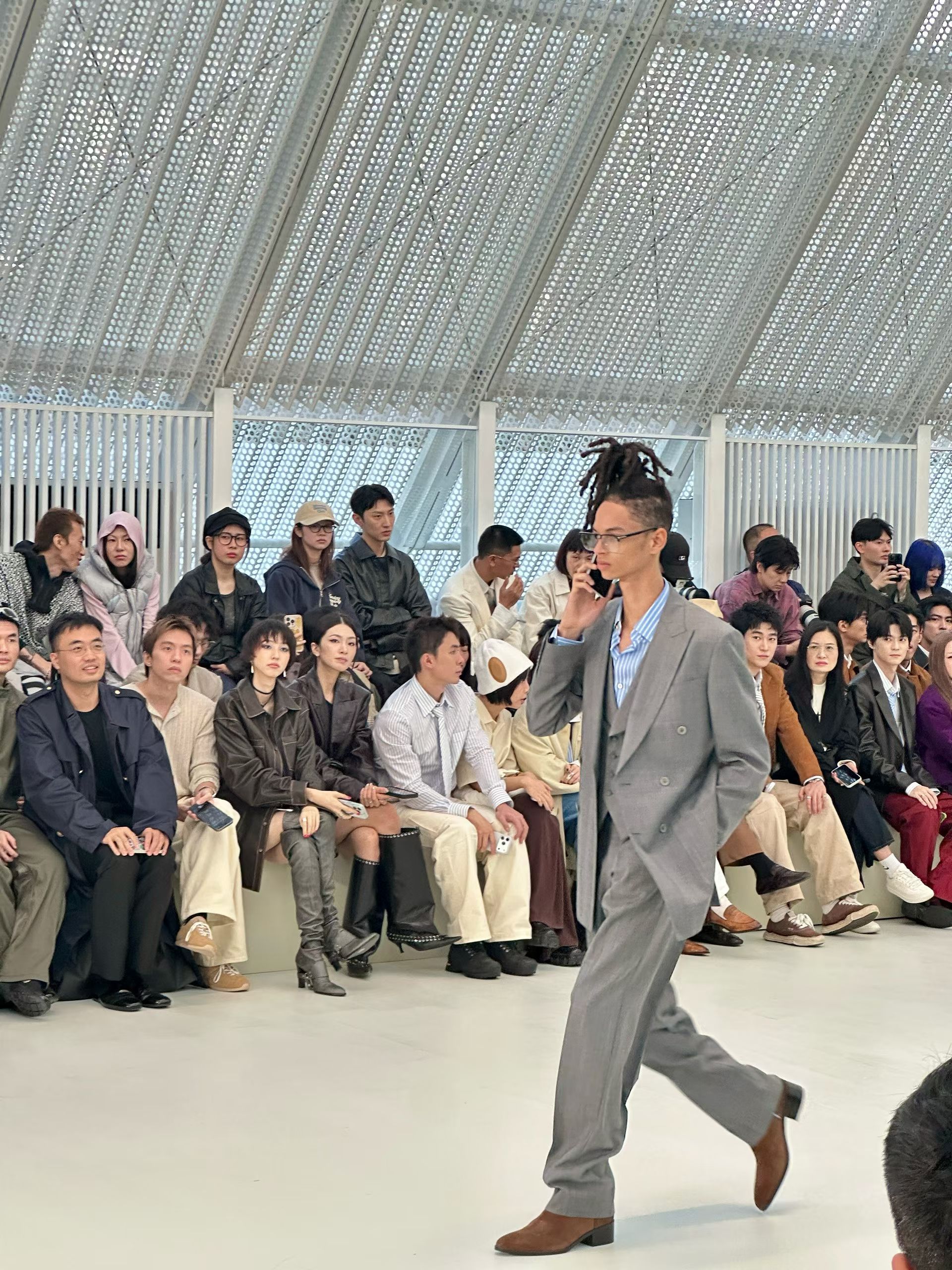
波司登签约Kim Jones,lululemon为何反其道而行?
Yang Zi Wan Bao Wang· 2025-10-23 11:21
Core Insights - The competition in the down jacket market is intensifying, with Bosideng partnering with former Dior designer Kim Jones to elevate its brand image, while Lululemon demonstrates strong performance in China with a 25% revenue growth [1][4]. Industry Overview - The Chinese sportswear market, valued at over 380 billion yuan, has maintained a compound annual growth rate of 7.4% over the past five years, attracting numerous brands [2]. - The high-end down jacket segment is particularly competitive, with international brands like Canada Goose and Moncler leading the market, while local brands like Bosideng aim to carve out their niche [2]. Company Strategies - Bosideng's decision to hire Kim Jones reflects a strategic move towards high-end branding, leveraging the designer's reputation to enhance its market position [3][4]. - In contrast, Lululemon focuses on product experience rather than designer endorsements, showcasing its offerings through relatable marketing campaigns that emphasize functionality and quality [3][5]. Product Philosophy - Lululemon's commitment to product quality is evident in its upcoming Featherweight series, which features high-quality materials and innovative design aimed at enhancing user experience [5]. - The brand's recent financial results indicate a successful strategy, with a 25% revenue increase in China and a 17% growth in same-store sales, underscoring the effectiveness of its product-centric approach [4][5]. Consumer Behavior - Consumers are becoming more discerning, prioritizing value for money over brand prestige, which necessitates that products justify their price points through quality and performance [7][8]. - The current market dynamics suggest that brands must genuinely understand consumer needs and deliver high-quality products to succeed in a competitive landscape [8].
阿迪达斯回应羽绒服代工争议 波司登该项业务年收超33亿元
Nan Fang Du Shi Bao· 2025-10-23 11:01
Core Viewpoint - The controversy surrounding Adidas down jackets being produced by OEMs such as Xuezhongfei and Bosideng has sparked significant consumer debate regarding brand pricing versus product quality [2][3][5] Group 1: Adidas and OEM Relationships - Adidas confirmed its collaboration with Xuezhongfei for manufacturing but did not address the pricing concerns directly [2][3] - Consumers have noted significant differences in product specifications between Adidas and its OEM counterparts, leading to questions about the value of paying a premium for the brand [3][5] - The Adidas jackets sold at higher prices often have lower specifications compared to similar products from Xuezhongfei, raising concerns about brand value versus product quality [3][5] Group 2: Consumer Reactions - Consumer responses are divided; some prefer to buy directly from OEMs like Xuezhongfei for better value, while others accept the brand's premium for perceived quality and design [5][7] - The lack of transparency regarding the OEM relationships and product specifications has led to confusion and dissatisfaction among some consumers [5][10] Group 3: Market Context and Brand Strategy - The practice of outsourcing production to local manufacturers is common among international brands like Adidas and Nike, which do not operate their own factories in China [7][10] - Adidas has reported that over 60% of its products sold in China are locally manufactured, highlighting the importance of the Chinese market, which accounts for approximately 15% of its global revenue [8][10] - The brand's strategy includes significant investment in brand image, technology, and marketing, which contributes to its pricing structure [7][10] Group 4: Bosideng's Role in the Market - Bosideng, a leading domestic down jacket manufacturer, derives about 13% of its revenue from OEM production, indicating the significance of this business model in its overall strategy [9][10] - The company has seen substantial growth in its OEM business, with a reported revenue increase of 26.4% year-on-year for its OEM segment [9][10] - Bosideng's success is attributed to its strong manufacturing capabilities and reputation, which also benefits its OEM partnerships [9][10]

阿迪达斯回应羽绒服代工争议,波司登该项业务年收超33亿元
Nan Fang Du Shi Bao· 2025-10-23 10:50
Core Viewpoint - The controversy surrounding Adidas down jackets being produced by domestic OEMs like Xuezhongfei has sparked significant consumer debate regarding brand pricing versus product quality [2][4][8] Group 1: Adidas and OEM Relationships - Adidas confirmed its collaboration with Xuezhongfei for manufacturing but did not address the pricing concerns directly [2] - Consumers have noted significant differences in product specifications between Adidas and Xuezhongfei's products, despite similar pricing [4] - The majority of Adidas products sold in China are manufactured locally, with over 60% produced by domestic teams and 95% made in China [8][9] Group 2: Consumer Reactions - Consumer responses are divided; some prefer to buy directly from Xuezhongfei for better value, while others accept the brand's premium for perceived quality and design [4][8] - The lack of transparency regarding the OEM relationships and product specifications has led to confusion and dissatisfaction among consumers [12] Group 3: Industry Context - The practice of outsourcing production to local manufacturers is common among international brands like Adidas and Nike, which do not operate their own factories in China [5][6] - The controversy reflects broader issues of global supply chain dynamics and consumer awareness regarding product sourcing and pricing [12] Group 4: Financial Performance - Adidas reported a revenue of €7.98 billion in the Greater China region, with a year-on-year growth of 11% [9] - The OEM business is a significant revenue source for companies like Bosideng, contributing approximately 13% to its total income, with a notable increase in revenue from this segment [12]
安正时尚:公司通过集中竞价交易方式减持已回购股份187.004万股
Mei Ri Jing Ji Xin Wen· 2025-10-23 10:45
Group 1 - The company Anzheng Fashion (SH 603839) announced the completion of its share reduction plan, having reduced 1.87004 million shares, which is 0.48% of the current total share capital of 389,034,500 shares [1] - The remaining shares in the company's repurchase account amount to 2,018,300 shares, representing 0.52% of the current total share capital [1] - As of the report date, Anzheng Fashion has a market capitalization of 3.7 billion yuan [1] Group 2 - For the first half of 2025, the revenue composition of Anzheng Fashion is as follows: clothing accounts for 64.07%, while e-commerce operation services account for 35.93% [1]

一件冲锋衣轻松搞定北京换季温差 京东带来大牌冲锋衣折扣低至5折
Zhong Guo Jin Rong Xin Xi Wang· 2025-10-23 10:20
Core Insights - Recent drastic temperature drops in northern cities, including Beijing, have led to a surge in demand for outdoor jackets, particularly "冲锋衣" (tactical jackets), which have become a fashionable staple [1][2] - JD.com reported over 100% growth in sales for tactical jackets and over 120% for soft shell jackets, indicating a strong consumer demand for quality outdoor apparel [1] Group 1: Market Trends - The popularity of tactical jackets has transformed them into a "must-have" item for seasonal transitions, driven by their features such as warmth, wind resistance, breathability, and versatility [1] - JD.com is collaborating with well-known brands like The North Face, Camel, Descente, and Kelong to offer a variety of tactical jackets, with discounts of up to 50% [1] Group 2: Product Features - The three-in-one tactical jackets available on JD.com include options like Descente's fleece-lined jacket, which is suitable for autumn commuting, and Kelong's down-filled jacket, known for its lightweight warmth and 3D design for better mobility [1] - The three-proof tactical jackets, designed to withstand wind and light rain, feature advanced waterproof materials and designs that prevent cold air from entering, making them ideal for outdoor activities [2]

太平鸟:向风尚服饰增资10亿元
Ge Long Hui· 2025-10-23 10:07
Core Viewpoint - Taiping Bird (603877.SH) has approved a capital increase of 1 billion yuan to its wholly-owned subsidiary, Fengshang Apparel, to enhance its financial strength and support the implementation of the Ningbo High-tech Zone Taiping Bird Global Fashion R&D Center project [1] Group 1: Capital Increase Details - The company will use 200 million yuan of raised funds for investment projects and 800 million yuan of its own funds for daily operations [1] - After the capital increase, Fengshang Apparel's registered capital will rise from 95 million yuan to 1.095 billion yuan, maintaining its status as a wholly-owned subsidiary of the company [1] - The board has authorized management to sign relevant contracts and make contributions in phases according to Fengshang Apparel's actual needs [1]
太平鸟:2025年前三季度净利润同比减少73.79%
2 1 Shi Ji Jing Ji Bao Dao· 2025-10-23 09:50
Core Viewpoint - The company reported a decline in both revenue and net profit for the first three quarters of 2025 compared to the previous year [1] Financial Performance - The company achieved operating revenue of 4.217 billion yuan, representing a year-on-year decrease of 7.15% [1] - The net profit attributable to shareholders of the listed company was 28.26 million yuan, down 73.79% year-on-year [1] - Basic earnings per share were 0.06 yuan, reflecting a decline of 73.91% compared to the same period last year [1]
太平鸟:第三季度净利润亏损4945.26万元
Ge Long Hui A P P· 2025-10-23 09:49
Group 1 - The core point of the article is that Taiping Bird reported a decline in revenue and a net loss for the third quarter and the first three quarters of the year [1] Group 2 - In the third quarter, the revenue was 1.319 billion yuan, a year-on-year decrease of 5.54% [1] - The net loss for the third quarter was 49.4526 million yuan [1] - For the first three quarters, the revenue was 4.217 billion yuan, a year-on-year decrease of 7.15% [1] - The net profit for the first three quarters was 28.259 million yuan, a year-on-year decrease of 73.79% [1]