
冶金

Search documents
天工国际上半年业绩企稳 高端制造实现多项重大突破
Zheng Quan Ri Bao· 2025-08-27 06:09
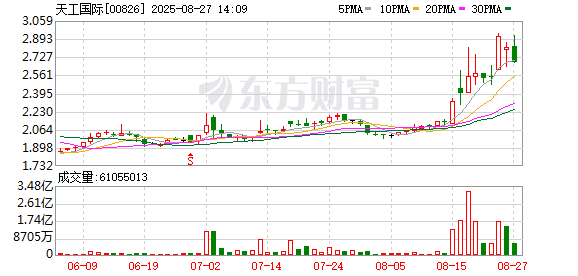
Core Viewpoint - Tian Gong International Limited reported a significant increase in revenue and net profit for the first half of 2025, driven by the recovery of the domestic market and advancements in high-end manufacturing technologies [2][4]. Group 1: Financial Performance - In the first half of 2025, the company achieved an operating income of 2.343 billion yuan and a net profit attributable to shareholders of 204 million yuan, representing a year-on-year growth of 10.4% [2]. - The revenue from mold steel reached 1.155 billion yuan, with domestic revenue of 566 million yuan, up 4.7% year-on-year [2]. - The high-speed steel revenue was 394 million yuan, with domestic revenue of 228 million yuan, reflecting a year-on-year increase of 14.1% [2]. Group 2: Technological Advancements - The company possesses exclusive domestic powder metallurgy technology and has established a national-level enterprise technology center, enabling breakthroughs in high-end manufacturing sectors such as aerospace, robotics, nuclear fusion, and medical devices [2]. - During the reporting period, the company successfully developed high-nitrogen alloy materials using powder metallurgy technology, addressing challenges related to nitrogen content control and purity enhancement [2]. Group 3: Market Opportunities - The company has the largest powder production equipment in the country, with an annual capacity of 8,000 to 10,000 tons of high-alloy powder, which includes titanium and copper alloys [3]. - The successful spin-off of Tian Gong's titanium alloy subsidiary to the Beijing Stock Exchange is expected to leverage capital markets for breakthroughs in the high-end titanium alloy industry [3]. - The company is also focusing on the nuclear fusion materials market, producing advanced low-activation steel and high-boron steel for nuclear power applications, which have significant market potential as the nuclear power industry develops [3].

方大特钢旗下南昌研究中心增资至6亿元,增幅87.5%
Xin Lang Cai Jing· 2025-08-26 08:52
南昌方大特钢研究中心有限公司成立于2022年7月,法定代表人为梁建国,经营范围包括新材料技术推 广服务、冶金专用设备制造、金属结构制造等。股东信息显示,该公司由方大特钢(600507)全资持 股。 天眼查工商信息显示,8月20日,南昌方大特钢研究中心有限公司发生工商变更,注册资本由3.2亿人民 币增至6亿人民币,增幅87.5%。 ...

2026年印度国际矿物、金属、冶金及材料展4M展
Sou Hu Cai Jing· 2025-08-25 07:31
Exhibition Overview - The 2026 India International Minerals, Metals, Metallurgy, and Materials Exhibition (MMMM 2026) will take place from September 10 to 12, 2026, in New Delhi, India, organized by Hyve Exhibition Group [1] - This biennial event has been successfully held 14 times and serves as a significant B2B platform for entrepreneurs, CEOs, consultants, senior government officials, decision-makers, and trade delegations to network and establish meaningful business partnerships [1][2] - The exhibition will feature multiple professional forums and concurrent events, including the "2026 India Fasteners Exhibition" and the "2026 India International Machine Tool Exhibition" [2] Market Overview - India's crude steel production has been steadily increasing, reaching 13.8 million tons in March 2025 (up 7.0% year-on-year) and 13.5 million tons in May 2025 (up 9.7% year-on-year), with a government target of 500 million tons of capacity by 2047 [3] - Infrastructure projects, which account for 25%-30% of steel demand, are the core growth engine, supported by a $1.3 trillion national infrastructure plan covering railways, ports, and smart cities, leading to a 35% increase in steel consumption [5] - The per capita steel consumption is expected to rise from 98 kg in 2025 to 160 kg by 2030 [5] Import and Trade Dynamics - India heavily relies on imports for coking coal, with annual imports at 58 million tons, projected to increase to 160 million tons by 2030 [6] - From April to June 2025, finished steel imports decreased by 28.8% (1.4 million tons) due to significant reductions in exports from China (down 45.8%) and Japan (down 65.2%) [6] - India implemented a 12% temporary safeguard duty in April 2025 to curb low-priced imports, while exports saw a slight decline of 5.1% but showed significant growth in markets like Belgium and the United States [6] Product Range - The exhibition will showcase a wide range of products including metallurgy (steel and non-ferrous metals), auxiliary materials, carbon materials, ferroalloys, refractory materials, instruments, environmental protection technologies, and mining equipment [7][8][9][10][11][12][13]

创新变革促进动能转换
Jing Ji Ri Bao· 2025-08-24 22:08
Group 1 - The core viewpoint emphasizes that local state-owned enterprises (SOEs) in Guangxi are leading high-quality development through technological innovation and modernization of the industrial chain, focusing on quality, efficiency, and energy transformation [1] - Guangxi SOEs leverage a dual endowment of "large industry + large channel," with traditional industries like machinery, metallurgy, and electricity having significant scale and potential for technological iteration, while also benefiting from open platforms such as the Western Land-Sea New Corridor and the China-ASEAN Expo [1] - The SOEs are implementing targeted reforms to convert comparative advantages into growth momentum, supported by a "policy toolbox" and "scenario testing ground" that facilitate project-driven technological and industrial development [2] Group 2 - The establishment of a "new project library" for SOEs aims to drive technological and industrial advancements, while encouraging traditional enterprises to enhance technology and product innovation [2] - Challenges remain in the high-quality development of SOEs, such as barriers in technology transfer, lack of brand valuation systems for traditional enterprises, and high costs in multimodal transport [2] - Recommendations include integrating AI development paths and establishing specialized evaluation guidelines for the four categories of enterprises, as well as building cross-border pilot bases and brand experience centers [2]
合金投资:股东招银叁号计划减持不超过约1155万股
Mei Ri Jing Ji Xin Wen· 2025-08-20 10:47
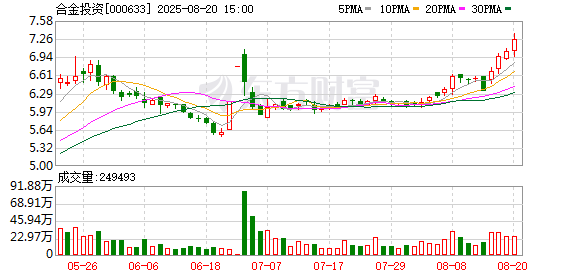
Group 1 - The revenue composition of Alloy Investment for the first half of 2025 is as follows: Metallurgical industry accounts for 61.73%, transportation services account for 36.9%, and other businesses account for 1.37% [1] Group 2 - Alloy Investment announced that its shareholder, Qiongcheng Zhaoyin No. 3 Investment Partnership (Limited Partnership), which holds approximately 23.09 million shares (6% of total share capital), plans to reduce its holdings by up to 11.55 million shares, not exceeding 3% of total share capital, within three months after the announcement [2]

国开行前7个月发放先进制造业和战略性新兴产业贷款3850亿元
Yang Shi Xin Wen· 2025-08-20 08:50
Group 1 - The core viewpoint of the articles highlights the significant increase in loans issued by the National Development Bank (NDB) for advanced manufacturing and strategic emerging industries, amounting to 385 billion yuan from January to July, representing a year-on-year growth of 51.3% [1] - The NDB has intensified its efforts in corporate engagement, customizing financial service plans for individual enterprises, particularly focusing on key industrial chains such as integrated circuits, domestic large aircraft, high-end equipment manufacturing, and new materials [1] - In Shanghai, the NDB's branch has increased R&D loan disbursements to support 15 enterprises in high-end equipment manufacturing and new energy vehicles, addressing the significant funding needs for R&D [1] Group 2 - In Liaoning, the NDB's branch is focusing resources on four trillion-yuan industrial bases and 22 key industrial clusters, providing long-term financing support to companies like Shenyang Siasun Robot and Ansteel Group, thereby aiding the province's equipment manufacturing sector [2] - The NDB plans to align its efforts with the recent guidelines issued by the People's Bank of China and other departments to provide long-term financing support for key industrial chains, enhancing financial services for characteristic industrial clusters and key enterprises [2]
包钢股份控股子公司1105.3万元项目环评获原则同意
Mei Ri Jing Ji Xin Wen· 2025-08-15 06:23
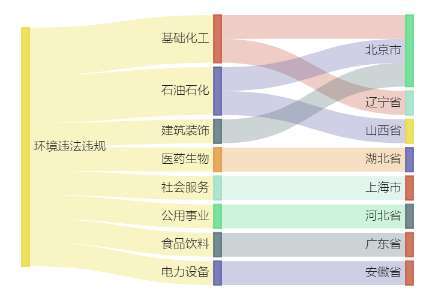
Group 1 - The core viewpoint of the news is that Baosteel's subsidiary, Inner Mongolia Baosteel Jinshi Mining Co., Ltd., has received preliminary approval for an environmental impact assessment for its tailings water deep treatment project, with a total investment of 11.053 million yuan [1] - The "A-share Green Report" project aims to enhance the transparency of environmental information for listed companies, utilizing authoritative environmental regulatory data from 31 provinces and 337 cities [1] - The latest A-share Green Weekly Report indicated that 10 listed companies have recently exposed environmental risks [1] Group 2 - Baosteel's main business is in the metallurgy industry, accounting for 100% of its revenue [2] - The company's market capitalization is approximately 113.22 billion yuan, with projected revenues of 70.565 billion yuan for 2023 and 68.089 billion yuan for 2024 [3] - The net profit attributable to shareholders is forecasted to be 51.527 billion yuan for 2023, decreasing to 26.462 billion yuan in 2024 [3]

合金投资股价下跌3.51% 半年度净利润同比增长44.12%
Jin Rong Jie· 2025-08-14 18:09
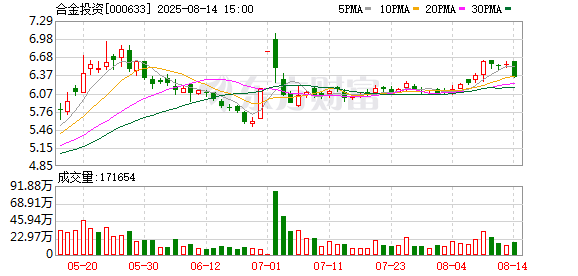
Core Viewpoint - Alloy Investment's stock price experienced a decline of 3.51% on August 14, closing at 6.33 yuan, with a trading volume of 171,654 hands and a transaction amount of 110 million yuan [1] Financial Performance - For the first half of 2025, Alloy Investment reported total revenue of 164 million yuan, representing a year-on-year increase of 73.46% [1] - The net profit attributable to shareholders was 4.58 million yuan, up 44.12% year-on-year [1] - The net profit after deducting non-recurring gains and losses was 4.67 million yuan, reflecting a year-on-year growth of 57.41% [1] - The net cash flow from operating activities reached 15.06 million yuan, a significant increase of 409.28% year-on-year [1] Business Segmentation - The company's revenue composition for the first half of 2025 included 61.73% from the metallurgy industry, 36.9% from transportation services, and 1.37% from other businesses [1] Market Activity - On August 14, the main funds saw a net outflow of 14.81 million yuan, accounting for 0.61% of the circulating market value [1] - Over the past five days, the main funds experienced a net outflow of 10.71 million yuan, representing 0.44% of the circulating market value [1]
合金投资:8月14日召开董事会会议
Mei Ri Jing Ji Xin Wen· 2025-08-14 09:35
Group 1 - The company Alloy Investment (SZ 000633) announced on August 14 that its 12th Board of Directors' 22nd meeting was held on the same day, combining in-person and remote voting methods [2] - For the first half of 2025, the revenue composition of Alloy Investment was as follows: Metallurgical industry accounted for 61.73%, transportation services accounted for 36.9%, and other businesses accounted for 1.37% [2]
中新自贸协定升级红利持续释放,为两国经贸往来注入不竭动能
Di Yi Cai Jing· 2025-08-12 13:01
Core Viewpoint - The article emphasizes the need for China and New Zealand to accelerate bilateral economic and trade cooperation, particularly in advanced fields such as food science, low-carbon technology, agricultural economy, digital trade, and biopharmaceuticals [1][7]. Bilateral Trade Overview - In 2024, the bilateral trade volume between China and New Zealand reached $20.15 billion, with China exporting $7.74 billion and importing $12.42 billion [2]. - From January to June 2025, the cumulative trade volume was $10.85 billion, showing a year-on-year growth of 6.3%, with exports from China decreasing by 1.6% and imports increasing by 10.8% [2]. Economic Cooperation Landscape - The economic relationship has evolved beyond traditional goods trade to include diversified cooperation in areas such as deep processing of agricultural products, technological innovation, green finance, and the digital economy [3]. - The implementation of the China-New Zealand Free Trade Agreement (FTA) has led to a significant increase in bilateral trade, with nearly NZD 30 billion growth since its inception [3]. Trade Surplus and Policy Environment - New Zealand has maintained a trade surplus with China for eight consecutive years from 2017 to 2024, aided by the favorable policy environment created by the FTA [4]. - New Zealand's unique resources and technological advantages in food science, environmental protection, and agricultural economy have driven trade growth, particularly in dairy, meat, timber, fruits, and organic products [4]. Strategic Initiatives and Future Prospects - New Zealand has established a strategic advantage in bilateral cooperation with China through various pioneering initiatives, including being the first developed country to sign a comprehensive FTA with China [5]. - The upgraded FTA has significant implications for China's new development pattern and high-quality opening-up, facilitating cooperation in key areas like dairy and forestry [6]. Continued Cooperation and Future Directions - The ongoing benefits from the upgraded FTA are expected to inject continuous momentum into bilateral trade, with a focus on expanding market access and reducing institutional transaction costs [7]. - Future cooperation should prioritize advanced fields such as food science, low-carbon technology, agricultural economy, digital trade, and biopharmaceuticals, establishing a new model for South-South cooperation [7].