
企业咨询

Search documents
维德咨询创始人现身深圳,与中国企业共探出海合规新路径
Jin Tou Wang· 2025-09-15 09:43
Group 1 - The roundtable forum "China Enterprises Going Global" focused on compliance challenges, communication strategies, and resource integration for Chinese companies expanding overseas, attracting over fifty representatives from various sectors [1] - Ciprian Boboi, CEO of Wide Advocacy, emphasized that Chinese enterprises must transform compliance into a competitive advantage to achieve long-term value in European and American markets [1][2] - The core discussion revolved around the triangle dilemma of speed, compliance, and cost, highlighting the need for a phased compliance strategy [2] Group 2 - Jenna Chen from Wide Advocacy pointed out that many companies fall into the trap of "sell first, manage later," neglecting soft compliance elements like cultural adaptation and ESG disclosure, which can severely damage brand reputation [2] - Chris Pereira, CEO of iMpact, stated that compliance is not a cost but a cornerstone of brand trust, and can be leveraged as marketing content in European and American markets [2] - Boboi shared a case study of a global tech giant achieving 100% compliance in Romania over ten years, emphasizing the importance of embedding compliance throughout the product lifecycle [2] Group 3 - The interactive session allowed participants to discuss real challenges, such as the EU's "battery passport" regulation, with Boboi suggesting the integration of carbon footprint tracking from the design phase [3] - Boboi highlighted that data privacy, product labeling, and consumer safety are high-risk areas, and compliance should be viewed as a strategic investment rather than a cost [3] - For beauty brands concerned about cultural symbols in Islamic markets, Chen recommended localized visual audits and halal certification for effective communication [3] Group 4 - PartnerBoost's marketing director suggested that preemptive compliance can amplify growth by transforming one-time promotions into long-term brand-building efforts [4] - The discussion emphasized the importance of real-time data feedback and contract management to ensure effective marketing investments [4] Group 5 - Wide Advocacy announced the launch of a special program in the Greater Bay Area to empower Chinese enterprises, addressing compliance foresight issues raised during the forum [5] - The program will leverage a global five-dimensional commercialization resource network to facilitate compliance access, policy lobbying, and media integration [5] Group 6 - Wide Advocacy plans to establish a regulatory response center in the Greater Bay Area, offering a "compliance sandbox" service to simulate extreme regulatory scenarios [6] - The company will provide access to a global policy database, addressing the information asymmetry concerns raised by participating enterprises [6] - Jenna Chen indicated that 60% of resources will be allocated to the Chinese market over the next three years, aiming to help Chinese technology leverage global regulatory influence [6]
洪灏:经济弱不一定对股市不利,但有其他负担;熊力:中国个人投资者迟到
日经中文网· 2025-08-26 03:07
Core Viewpoint - The weakening of China's economic fundamentals does not necessarily imply negative consequences for the stock market, as evidenced by recent strong stock performance despite disappointing economic indicators [2][4]. Group 1: Stock Market Performance - The A-share market in China is experiencing a continuous rise, with the Shanghai Composite Index reaching a 10-year high [2]. - There is ongoing debate about whether the Chinese stock market has entered a bull market, as major indices remain near their peak levels from October 2024 [4]. - Many individual investors who bought at high prices are now satisfied to reach breakeven after an 11-month wait, which may lead to profit-taking [4]. Group 2: Government and Institutional Influence - The Chinese government is clearly intent on maintaining the upward trend of stock prices, especially in light of the stagnant real estate market, which could help mitigate the impact of falling property prices [4]. - The current stock price increase is primarily driven by stable institutional investors, contrasting with the previous decade when individual investors' concentrated funds led to a downturn [6]. - Financing purchases account for approximately 11% of the total market capitalization of A-shares, lower than the 17% seen in 2015 [6]. Group 3: Investor Behavior and Market Risks - There is a notable decoupling between the Chinese and Indian markets, with global investors likely to shift funds from China to India unless there are significant negative developments in Indian trade [5]. - Individual investors are entering the market late, which could lead to a rapid overheating of the market and potential sell-offs by major shareholders [6]. - The current leverage ratio in the market is significantly lower than in 2015, reducing the risk of a similar market collapse [6].


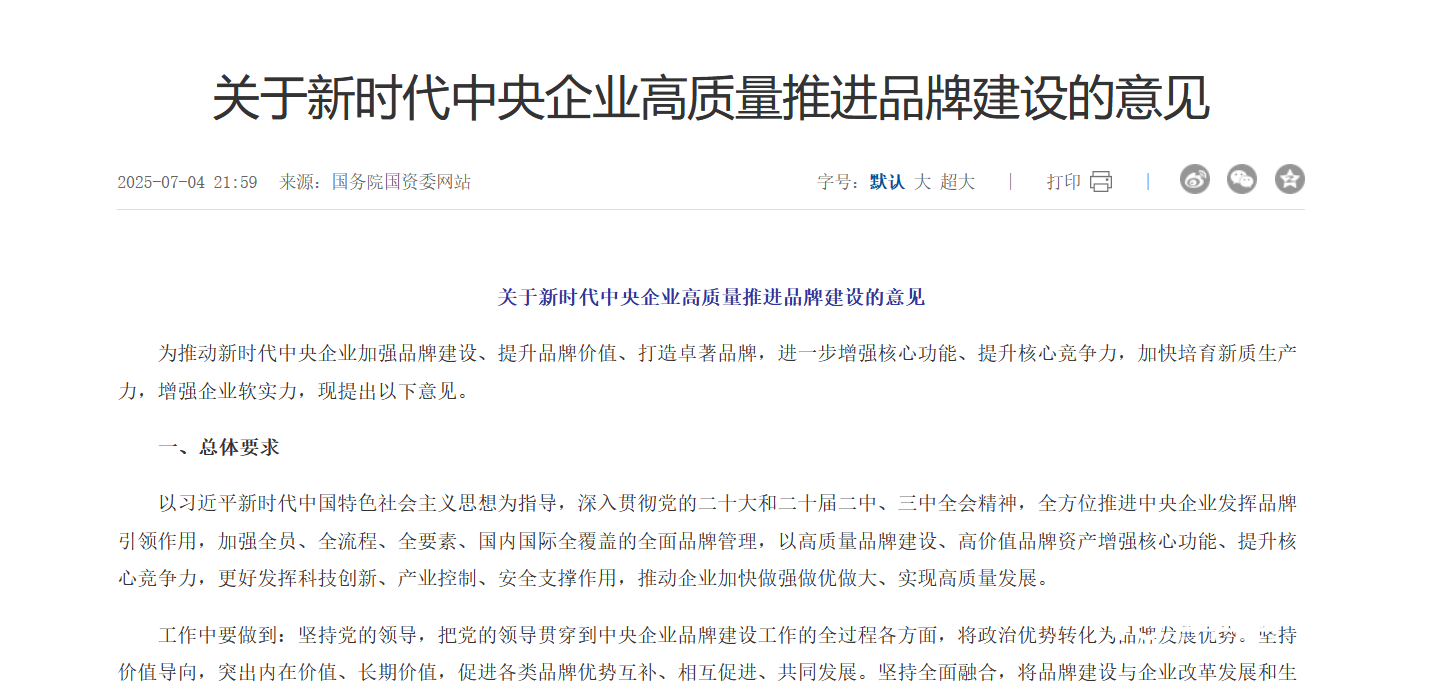
品牌要“讲人话”!专家:ESG、出海等成国内营销新趋势
Sou Hu Cai Jing· 2025-08-07 12:49
Group 1 - The event "Brand Leading · Bay Area Action" focused on how central state-owned enterprises (SOEs) can implement the "Opinions" to lead high-quality development through brand building [1] - The "Opinions" issued by the State-owned Assets Supervision and Administration Commission (SASAC) aim for central enterprises to significantly enhance brand awareness and implement brand strategies by 2030, and to form a number of globally renowned brands by 2035 [2] - The "Opinions" emphasize the need for comprehensive brand strategy management, including enhancing brand value, internationalization, and organizational support to strengthen brand development [2] Group 2 - Experts highlighted that brand building must integrate with national strategies and market demands, emphasizing the importance of social responsibility for central SOEs [5] - The transition from product internationalization to brand globalization is crucial for Chinese enterprises, with the "Opinions" providing guidance for building strong brands [5] - The concept of branding is framed as nurturing a story in the hearts of customers and consumers, rather than merely focusing on product design or marketing [5]
【邀请函】解锁机遇:马来西亚人才流动——跨境个税指引
Sou Hu Cai Jing· 2025-07-09 03:14
Core Insights - Malaysia is increasingly becoming an ideal destination for foreign investment and talent due to its strategic geographical location, diversified economy, and supportive government policies [2] - The Malaysian government has implemented measures to facilitate employment for expatriates while balancing the ratio of foreign and local talent [2] - Companies face challenges in navigating the complexities of cross-border individual taxation for foreign employees, necessitating effective regulatory frameworks and talent strategies [2] Group 1: Market Opportunities - Malaysia's market continues to grow, presenting rich opportunities for businesses looking to expand in Southeast Asia [2] - The immigration and talent mobility policies in Malaysia aim to help companies efficiently acquire the necessary skills and resources, enhancing regional flexibility and competitiveness [2][4] Group 2: Immigration Policies - Recent developments in immigration policies include key regulations affecting foreign talent and considerations for employing expatriates [4][5] - The core tax considerations for hiring foreign talent in Malaysia are crucial for ensuring compliance and optimizing talent mobility strategies [4][5] Group 3: Challenges and Best Practices - Observed challenges include the complexity of cross-border individual taxation and the obligations of employers and employees regarding tax and other duties [5] - Best practices for ensuring compliance and optimizing talent mobility strategies will be discussed in the upcoming webinar [4][6] Group 4: Webinar Details - A webinar is scheduled for July 17, 2025, from 10:00 AM to 11:00 AM (Beijing time), featuring experts from Ernst & Young [7] - The webinar will cover how Malaysia can unlock regional potential for businesses and provide essential knowledge and tools to navigate local talent mobility complexities [2][6]

70%的企业转型失败,因为太追求效率至上
3 6 Ke· 2025-04-23 02:54
Core Insights - 70% of transformation initiatives ultimately fail, primarily due to organizations focusing on efficiency rather than effective transformation strategies [1][2] - Companies employing a "designed simplicity" approach see a 42% increase in transformation success rates compared to those focused on efficiency [3][4] Group 1: Transformation Challenges - Organizations have initiated nearly one new transformation project annually since 2018, with an average of three projects ongoing at any time [1] - 70% of procurement professionals find achieving transformation goals more difficult than expected, with an average score of 58 out of 100 for cost-saving targets [1][3] Group 2: Efficiency vs. Designed Simplicity - The efficiency-focused approach emphasizes rapid deployment and iterative optimization, but its effectiveness in functional transformations is limited [2][3] - Even with a focus on efficiency, the success rate of transformations only improves by 5%, while designed simplicity significantly enhances success rates [3][4] Group 3: Principles of Designed Simplicity - Designed simplicity centers on user experience, aiming to reduce complexity and enhance process understanding and execution [4][5] - Key principles include ensuring new processes are free of gaps, easy to complete, and capable of addressing rare scenarios [4][6] Group 4: Employee Engagement and Experience - Designed simplicity involves close collaboration among leaders, managers, and employees to ensure processes are user-friendly and effective [6][7] - This approach leads to a 123% increase in employee satisfaction and a 68% improvement in operational efficiency [12] Group 5: Implementation Steps - Organizations should follow a structured approach to implement designed simplicity, including assessing current workflows, analyzing complexities, and optimizing processes [17][18][19] - Continuous feedback and monitoring are essential to ensure the new processes are adopted effectively and to make necessary adjustments [24]

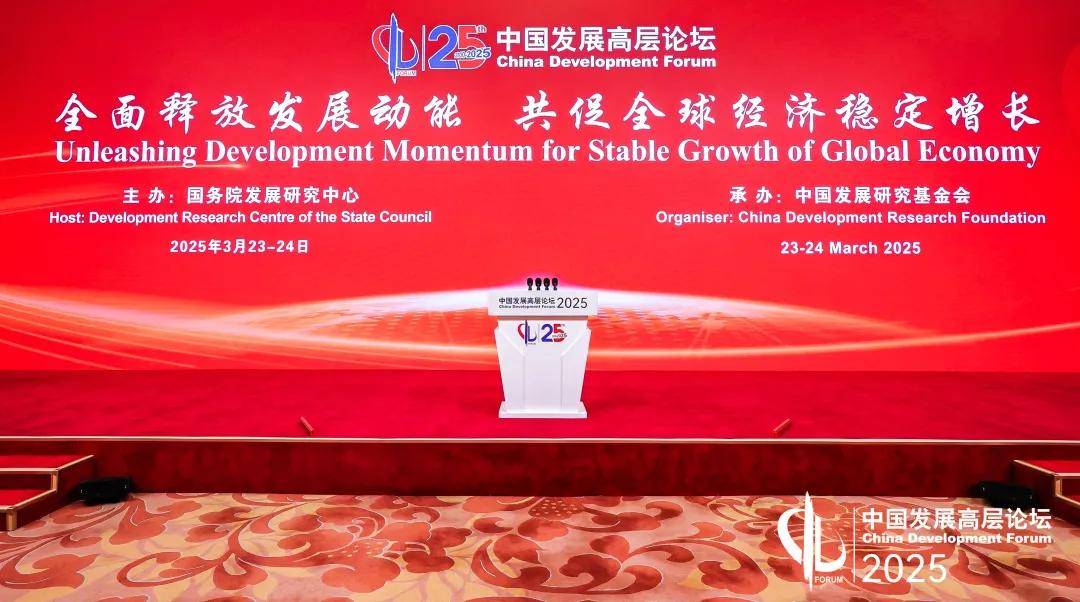
毕马威受邀出席中国发展高层论坛2025年年会:携手各方解码中国经济新动能
Sou Hu Cai Jing· 2025-03-25 10:29
Group 1 - The China Development Forum 2025 aims to explore new economic dynamics and promote global economic stability, attracting global leaders and scholars [1][3] - The forum serves as a high-level dialogue platform for policymakers and business leaders, focusing on macroeconomic policies and growth [3] - Key discussions include China's economic growth target of "around 5%" for the year, which aligns with the "14th Five-Year Plan" and supports the "15th Five-Year Plan" [5] Group 2 - The forum emphasizes the importance of technological innovation and its role in driving new productive forces, with a focus on artificial intelligence and sustainable development [6][7] - The Chinese government is prioritizing key core technology research and development in sectors like integrated circuits and new energy vehicles [7] - Initiatives to boost domestic consumption are being implemented, including a special action plan to enhance effective demand through high-quality supply [8] Group 3 - The forum is recognized as a key window for observing the implementation of policies from China's Two Sessions, highlighting confidence in China's economic development [9] - KPMG's commitment to deepening its presence in China and supporting global service delivery is reinforced through participation in the forum [9]
安迈咨询任命Jon Nicklin为北亚区法证咨询服务高级董事,持续推进国际业务增长
IPO早知道· 2025-02-11 10:08
安迈在争议解决领域保持领先地位。 本文为IPO早知道原创 作者|罗宾 微信公众号|ipozaozhidao 据IPO早知道消息,2月11日,全球领先的企业咨询服务公司安迈企业咨询(Alvarez & Marsal,下 称"安迈")宣布,任命Jon Nicklin为北亚区法证咨询服务高级董事。这一任命彰显了安迈持续推进 国际业务增长战略,深化北亚市场布局的长期承诺。 Nicklin是一位业界公认的思维清晰、结果导向的法证专家,曾担任多个标的额达数百万美元的重大 争议案件的的专家证人,包括在国际投资争端解决中心(ICSID)仲裁案件中提供专家证词。他近期 在香港国际仲裁中心(HKIAC)、新加坡国际仲裁中心(SIAC)和中国国际经济贸易仲裁委员会 (CIETAC)的框架下,协助中国客户处理多项复杂且高风险的争议,展现了非凡的专业实力。 安迈董事总经理兼法证咨询服务亚洲联席主管Henry Chambers表示:"在地缘政治和跨境争议愈加 复杂的背景下,安迈致力于为客户交付最高标准的成果。Jon深厚的区域市场认知与争议解决实战经 验,完美契合了我们在北亚法证咨询服务的领导地位及目标。有了Jon的加入,我们对实现这一发 ...