
低空装备

Search documents
工业和信息化部:低空装备产业产值年均增速10%以上
Yang Shi Wang· 2026-01-03 23:42
Core Insights - During the "14th Five-Year Plan" period, China's low-altitude equipment industry is experiencing continuous expansion, with an annual growth rate of over 10% in industry output value [1] Industry Summary - The low-altitude equipment industry in China is projected to maintain a robust growth trajectory, reflecting the government's strategic focus on enhancing this sector [1] - The industry is expected to play a significant role in the overall economic development, contributing to technological advancements and increased market opportunities [1]
工信部标准体系建设重点包括新能源汽车
Cai Jing Wang· 2026-01-03 02:02
近日,工业和信息化部办公厅印发《制造业中试标准体系建设指南(2025版)》。其中提到,到2027年累 计制修订标准50项以上,到2030年累计制修订标准100项以上,建成涵盖基础通用、关键技术和行业应 用的先进制造业中试标准体系,引领制造业中试创新发展。重点领域涵盖智能网联新能源汽车、低空装 备等。 ...
低空装备产业创新不断 助力低空经济安全起“飞”
Zhong Guo Xin Wen Wang· 2025-12-01 12:03
Core Insights - The low-altitude equipment industry in China is experiencing significant growth and innovation, showcasing substantial development potential [1] - The projected output value for low-altitude equipment in 2024 is approximately 52 billion yuan, with an average annual growth rate of over 10% during the 14th Five-Year Plan period [1] - The industry is diversifying, with nearly 30 types of ton-class drones and over 70 types of electric vertical take-off and landing aircraft currently in development [1] Industry Development - As of now, there are 977 registered companies in the civil unmanned aerial vehicle (UAV) information system, with 3,222 products filed and 17 types of civil drones approved for test flights [1] - The emphasis on safety is paramount, with experts highlighting the need for comprehensive safety planning and coordination in the development of low-altitude economic-related industries [1] Risk Management - A risk-based refined management approach is suggested due to the diverse application scenarios of drones, which leads to varying risks [2] - It is recommended to implement differentiated safety management standards based on population density in different areas to ensure risk control [2] Competitive Advantage - The establishment of a regionally concentrated low-altitude economic industry is advised to create a one-stop service capability, allowing for cost-sharing and avoiding detrimental competition between cities [2]
推动低空经济高质量发展 工信部:低空装备产业潜力巨大
Zhong Guo Jing Ji Wang· 2025-12-01 04:38
Core Insights - The low-altitude economy in China is rapidly developing, with significant potential driven by the integration of new energy and information technology [1][6] - The market size of China's low-altitude economy is projected to reach 1.5 trillion yuan by 2025 and exceed 3.5 trillion yuan by 2035 [1] Policy Developments - The Chinese government has initiated several policies to promote the low-altitude economy, including the "Strategic Plan for Expanding Domestic Demand (2022-2035)" and the inclusion of low-altitude economy in the government work report [2][6] - Local governments are actively developing their low-altitude economies, with plans such as Beijing's action plan to establish itself as a low-altitude economic innovation hub and Wuhan's implementation plan for an industrial cluster by 2027 [2][3] Industry Initiatives - Various regions, including Shenzhen and Anhui, have introduced regulations and plans to enhance low-altitude infrastructure, such as establishing takeoff and landing points and flight routes [3] - The development of low-altitude economic clusters has been established in key economic regions like Beijing-Tianjin-Hebei, Yangtze River Delta, and Pearl River Delta [3] Corporate Engagement - Numerous automotive companies are investing in the low-altitude economy, focusing on the development of eVTOL (electric vertical takeoff and landing) vehicles, with significant advancements reported [4] - Companies like XPeng, GAC, and Geely are making strides in the production and delivery of flying cars, with expected mass production dates ranging from 2025 to 2027 [4] Conference Insights - The 2025 Low Altitude Equipment Industry Innovation Development Conference highlighted the importance of building a systematic and intelligent low-altitude equipment industry [5][6] - Key discussions included the construction of a low-altitude intelligent network system and safety technology innovations, aiming to transition the low-altitude economy towards a more efficient and secure model [6] Research Outcomes - Five significant research outcomes were released at the conference, focusing on the development paths and standards for low-altitude intelligent networks and equipment [7] - These outcomes are expected to provide systematic support for the development of China's low-altitude industry, marking a significant step in technological innovation and application promotion [7]
新技术融合带来新机遇 我国低空装备产业发展展现巨大潜力
Yang Shi Wang· 2025-11-30 04:07
Core Viewpoint - China is set to promote the safe and healthy development of the low-altitude equipment industry, enhancing its development path across multiple levels as part of the "14th Five-Year Plan" [1] Group 1: Industry Development - The 2025 Low Altitude Equipment Industry Innovation Development Conference in Inner Mongolia released five research reports, including a roadmap for power battery technology and a development path for low-altitude intelligent networking systems [3] - The energy density of mass-produced power battery systems is expected to reach 220-250 watt-hours per kilogram by 2025 and to exceed 330-400 watt-hours per kilogram by 2030 [3] - A framework for the low-altitude equipment industry standard system has been proposed, covering seven areas including low-altitude aircraft and infrastructure [3] Group 2: Technological Integration - The integration of new energy and next-generation information technology with the low-altitude equipment industry is accelerating, presenting new opportunities and showcasing significant potential for development [5] - Key technologies such as aviation power batteries and flight control systems will be the focus, along with safety operation technologies like low-altitude intelligent networking [9] Group 3: Strategic Initiatives - The Ministry of Industry and Information Technology plans to strengthen top-level design, focusing on intelligent, green, and integrated development to enrich the product spectrum of low-altitude equipment [7] - There will be an emphasis on building a high-level industrial supply chain and cultivating advanced industrial clusters to support the high-quality development of the low-altitude economy [7] - The approach will prioritize logistics transportation, agricultural operations, emergency rescue, and short-distance passenger transport, with a phased implementation strategy for applications like cargo drones and agricultural protection machines [9]

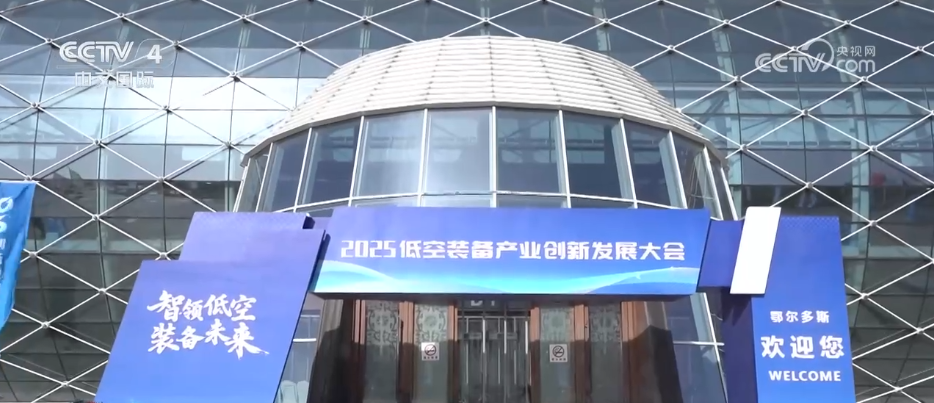
我国将稳妥推动低空装备产业安全健康发展 “多点发力”完善发展路径
Yang Shi Wang· 2025-11-30 02:48
Core Insights - China is set to promote the safe and healthy development of the low-altitude equipment industry, focusing on multiple aspects to improve the development path of the industry [1][3] Group 1: Industry Development Plans - The Ministry of Industry and Information Technology (MIIT) has released several research reports, including a roadmap for power battery technology for low-altitude aircraft, aiming for energy density of 220-250 Wh/kg by 2025 and 330-400 Wh/kg by 2030 [1] - A framework for the standard system of the low-altitude equipment industry has been proposed, covering seven areas including low-altitude aircraft, infrastructure, and test flights [1] Group 2: Technological Integration and Opportunities - The integration of new energy and next-generation information technology with the low-altitude equipment industry is creating new opportunities, indicating a positive development trend and significant potential for the industry [3] Group 3: Strategic Focus and Goals - The MIIT plans to enhance top-level design with a focus on intelligence, greenness, and integration, aiming to enrich the product spectrum of low-altitude equipment and build a high-level industrial and supply chain [5] - Key technologies such as aviation power batteries and flight control systems will be prioritized, along with the promotion of application demonstrations for low-altitude equipment in logistics, agricultural operations, emergency rescue, and short-distance passenger transport [7]

工业和信息化部将开展国家新兴产业发展示范基地创建活动
Zheng Quan Ri Bao Wang· 2025-11-26 01:28
Core Viewpoint - The Ministry of Industry and Information Technology of China has announced the creation of national emerging industry development demonstration bases, aiming to establish around 100 demonstration parks and 1,000 demonstration enterprises by 2035 to promote the healthy and orderly development of emerging industries [1][2]. Group 1: Demonstration Bases - The demonstration bases will include both parks and enterprises, focusing on key emerging industries such as new generation information technology, new energy, new materials, biotechnology, high-end equipment, intelligent connected vehicles, green environmental protection, low-altitude equipment, and aerospace [1]. - The initiative aims to create benchmarks in emerging industries, providing a robust support system for the development of new productive forces [1]. Group 2: Industry Insights - Various parks have already established strong clusters in specific sectors, such as advanced manufacturing, industrial internet, and new energy vehicles, indicating a growing specialization in these areas [2]. - To ensure the demonstration bases serve their intended purpose, it is crucial to select the right leading industries, provide solid public services, and implement strict assessment and evaluation measures [2]. Group 3: Long-term Impact - The demonstration bases are expected to gather innovative resources and industrial elements, promoting collaboration in tackling key core technologies and enhancing the security of industrial supply chains [3]. - Over time, as these bases develop and mature, they will foster a tiered industrial cluster pattern across the country, nurturing globally competitive leading enterprises and specialized small and medium-sized enterprises, thus transforming China from an industrial power to an industrial stronghold [3].
工信部提出,启动国家新兴产业发展示范基地创建工作
Huan Qiu Wang· 2025-11-26 01:16
Core Insights - The Ministry of Industry and Information Technology has initiated the creation of national emerging industry development demonstration bases, focusing on key sectors such as new generation information technology, new energy, new materials, and high-end equipment [1] - In October, high-tech industry sales revenue in China grew by 13.6% year-on-year, with both high-tech service and manufacturing sectors maintaining double-digit growth [1] - The State Council's recent policy aims for deep integration of artificial intelligence with six key sectors by 2027, positioning the digital economy as a significant growth driver by 2030 [1] Industry Performance - High-tech service industry sales revenue increased by over 10% year-on-year [1] - High-tech manufacturing sales revenue also saw a similar growth rate, indicating robust performance across these sectors [1] - Specific sectors such as integrated circuits, industrial robots, and drone manufacturing reported significant year-on-year sales growth of 32.5%, 41.7%, and 38.4% respectively [1] Policy and Strategic Direction - The State Council's "Artificial Intelligence +" action plan outlines measures to enhance foundational capabilities, aiming for extensive integration of AI into key sectors by 2027 [1] - By 2030, the digital economy is expected to become a crucial growth engine for economic development, with a vision for a fully digital economy and smart society by 2035 [1] - There is a recognized need to enhance self-sufficiency in areas potentially subject to foreign control, such as advanced computing chips and large-scale computing facilities [4]

工信部:聚焦智能网联新能源汽车等新兴产业重点领域 创建示范基地
Cai Jing Wang· 2025-11-25 01:40
Core Viewpoint - The Ministry of Industry and Information Technology has announced the establishment of national emerging industry development demonstration bases, targeting key areas of the new technological revolution and industrial transformation by 2035 [1] Group 1: Key Areas of Focus - The demonstration bases will focus on new generation information technology, new energy, new materials, biotechnology, high-end equipment, intelligent connected new energy vehicles, green environmental protection, low-altitude equipment, and aerospace [1] Group 2: Development Goals - The plan aims to create approximately 100 national emerging industry development demonstration bases in the form of parks and around 1,000 enterprise-level demonstration bases by 2035 [1]
我国将建百个园区类国家新兴产业发展示范基地
Bei Jing Shang Bao· 2025-11-24 15:52
Core Points - The Ministry of Industry and Information Technology announced the launch of the National Emerging Industry Development Demonstration Base creation initiative, aiming to establish around 100 park-type and 1,000 enterprise-type demonstration bases by 2035 [1][2] - The initiative focuses on key emerging industries such as new generation information technology, new energy, new materials, biotechnology, high-end equipment, intelligent connected new energy vehicles, green environmental protection, low-altitude equipment, and aerospace [1][2] - The creation period for these demonstration bases is set for two years, after which an evaluation will be conducted to assess the completion of key tasks and performance indicators [1] Group 1 - The demonstration bases will include two categories: park-type and enterprise-type, with the goal of enhancing industrial innovation capabilities and optimizing the industrial development environment [2][3] - Demonstration parks will focus on promoting the cluster development of leading industries, attracting quality enterprises, and forming a development pattern that integrates large and small enterprises [3] - The initiative aims to establish a collaborative innovation system that integrates industry, academia, and research, enhancing the supply capacity of key common technologies and improving the conversion and industrialization of scientific and technological achievements [3] Group 2 - The work plan emphasizes the need for a strong industrial ecosystem, enhancing cooperation among upstream and downstream enterprises, and promoting the deep integration of innovation chains, industrial chains, capital chains, and talent chains [3] - It also highlights the importance of improving industrial governance capabilities and exploring management methods that meet the needs of emerging industries [3] - The initiative is expected to create a robust backbone force and important engines for leading the development of emerging industries, providing strong support for shaping new economic development momentum and advancing new industrialization [2]