智能网联与新能源汽车

Search documents
郭永航到小鹏科技园开展调研
Guang Zhou Ri Bao· 2025-10-24 01:45
Core Insights - The article emphasizes the importance of developing a first-class industrial ecosystem to seize opportunities in emerging industries, particularly in the context of Guangzhou's economic growth and technological innovation [2][3]. Group 1: Government Initiatives - The Guangzhou municipal government is focusing on high-quality development of key industries and enterprises, as highlighted by the recent visit of the municipal secretary to the Xiaopeng Technology Park [2]. - The government aims to enhance support for local high-tech companies like Xiaopeng Motors, which has shown strong market performance and innovation in the smart connected and new energy vehicle sectors [2]. Group 2: Industry Development Focus - There is a strategic push towards artificial intelligence, low-altitude economy, and other cutting-edge technologies, with an emphasis on developing diverse and consumer-oriented new vehicle models [2][3]. - The government is committed to optimizing the industrial system, prioritizing manufacturing, and implementing the "AI+" initiative to capture new market opportunities in sectors like autonomous driving and embodied intelligence [3]. Group 3: Infrastructure and Ecosystem Support - The article highlights the need for improved infrastructure and public services around industrial parks to attract more innovation resources and enhance the overall industrial ecosystem [2][3]. - There is a call for increased investment in key industries, focusing on attracting leading enterprises and enhancing the competitiveness of the industrial chain [3].

广州营商环境改革八年“三级跳”
Guang Zhou Ri Bao· 2025-10-15 01:59
Core Viewpoint - Guangzhou is implementing a comprehensive reform of its business environment, focusing on a "12218" modern industrial system to enhance the city's economic competitiveness and attract more enterprises [1][5]. Group 1: Reform Stages - The reform has undergone three significant phases: starting from "indicator-based" reforms in 2018, moving to "factor-based" reforms in 2022, and now entering the "industry-based" reform phase in 2024 [2][4]. - The initial phase focused on simplifying administrative processes, reducing approval times, and enhancing efficiency, achieving a reduction in business registration time to half a day [2][4]. - The current "industry-based" reform aims to tailor the business environment to specific industries, breaking down resource barriers and fostering high-quality industrial development [5][4]. Group 2: Key Achievements - As of January to August 2025, Guangzhou registered 565,800 new market entities, marking a year-on-year increase of 62.55%, leading among six pilot cities for business environment innovation [1]. - The city has established itself as a hub for strategic industries, particularly in smart connected and new energy vehicles, with a three-year action plan to enhance these sectors [5][6]. - The introduction of high-precision mapping for autonomous driving has significantly reduced approval times by over 80%, facilitating the operation of 110 autonomous taxis [6]. Group 3: Institutional Innovations - Guangzhou is leveraging market-oriented reforms and service industry expansion to enhance the flow of resources and stimulate market vitality [8]. - The city has introduced 31 measures to improve land use efficiency, allowing startups to "rent before buying" and offering flexible land supply options [8]. - New standards for live-streaming e-commerce have been established, providing regulatory guidance and fostering a supportive environment for this emerging sector [9]. Group 4: Cost Reduction and Support - The city has implemented a multi-layered financial support system, including a 10 billion yuan angel fund to encourage early-stage investments in technology [10]. - Measures to streamline administrative processes have resulted in an 81% reduction in the number of trips required for businesses to complete necessary procedures [10]. - Cross-border research material facilitation measures have improved customs efficiency for innovation-related imports by over 50% [11]. Group 5: Overall Impact - The cumulative reforms have led to a total of over 4 million market entities in Guangzhou, positioning the city as the third-largest in terms of market vitality among Chinese cities [11].

普通项目落地最高可获1亿元产业基金配套支持 赛迪与孝感共办科创之星大赛
Zhong Guo Jin Rong Xin Xi Wang· 2025-10-10 13:37
Core Viewpoint - The "2025 Xiaogan·Saidi Innovation Star Competition" aims to attract global tech talents and foster a new development pattern focusing on high-end talent leading major projects, quality projects expanding industrial clusters, and modern industries nurturing an innovative ecosystem [1][3]. Group 1: Competition Overview - The competition is structured as a "1+N" series of technology innovation activities, with the main event focusing on strategic emerging industries such as sensors, optoelectronic information, advanced manufacturing, artificial intelligence, intelligent networking, and new energy vehicles [1][3]. - The competition aims to promote talent attraction, innovation, and investment through its activities [1]. Group 2: Awards and Support - The competition offers various awards, including first, second, third prizes, and consolation prizes, with corresponding cash rewards and certificates [2]. - Winning projects that are signed and implemented can receive up to 2 million yuan in technology achievement transformation subsidies, supported by a fund matrix of 10 billion yuan from Xiaogan [2]. - Projects can also benefit from preferential access to incubators or industrial parks, personalized services, and the opportunity to be recognized as "Xiaogan Innovation and Entrepreneurship Talents" [2]. Group 3: Strategic Importance - The competition is seen as a strategic move for Xiaogan to develop into a hub for technology achievement transformation within the Wuhan metropolitan area, focusing on high-quality technology innovation and project transformation [3]. - The choice of Xiaogan for the competition is based on its unique geographical advantages and solid industrial foundation [3].
报告披露!广州高企超两成实现国产化替代,最看好人工智能
Nan Fang Du Shi Bao· 2025-09-23 13:24
Core Insights - The report indicates that over 20% of high-tech enterprises in Guangzhou have achieved domestic substitution through core technologies [1][4][5] - The new materials industry shows significant performance, with 57.1% of green petrochemical and new materials enterprises achieving domestic substitution, exceeding the average by 30.1 percentage points [5][4] - The report highlights that 48.2% of specialized and innovative enterprises in Guangzhou have over 80% of their revenue from high-tech products and services [5][4] Industry Performance - In 2024, 32.3% of surveyed enterprises reported revenue growth of 10% or more, while 12.2% experienced growth between 5% and 10% [4] - Market share analysis reveals that 4.1% of enterprises rank among the global leaders, 16.8% are among the domestic leaders, and 29.4% are in the upper-middle tier domestically [4] - Companies like Guangdian Yuntong, Guanggang Gas, and Zhongshan Precision are among the top three globally in their respective sectors [4] Technological Advancements - 5.4% of enterprises reported their core technologies are at the international leading level, while 29.2% are at the domestic leading level [5] - The report emphasizes the importance of specialized and innovative enterprises, which focus on niche markets and possess strong innovation capabilities [5] Future Outlook - The most promising sectors for high-tech enterprises in Guangzhou include artificial intelligence (38.9%), intelligent equipment and robotics (15.9%), and new energy and storage (over 5%) [6][8] - The report suggests that Guangzhou should establish a regional technology foresight system to systematically promote industrial technology foresight [8] Recommendations - It is recommended to create a normalized working mechanism for industrial technology foresight and establish a technology warning platform [8] - Encouragement for technology think tanks and consulting firms to provide personalized technology foresight and strategic consulting services to enterprises [8]
“只收梦想,不收租金”!“零租金”的风吹到多个大城市
Di Yi Cai Jing· 2025-09-16 10:43
Core Concept - The emergence of "zero rent" policies in major Chinese cities, driven by local governments and state-owned enterprises, aims to attract innovative startups and enhance urban economic development [2][4][5] Group 1: Zero Rent Policies - Shenzhen initiated a "zero rent" policy allowing qualifying small and micro tech enterprises to occupy 100,000 square meters of state-owned industrial park space with up to two years of rent-free occupancy [4] - Hangzhou's Qiantang Smart City announced a three-year rent exemption for its 20,000 square meter robot industrial park, with individual companies eligible for up to 1,000 square meters [4] - Guangzhou and Shanghai followed suit, with Guangzhou offering 150,000 square meters of zero rent space and Shanghai providing free office and living spaces for young entrepreneurs [5][6] Group 2: Competitive Landscape - The competition among core cities for high-quality industries and innovative projects is intensifying, with cities adopting aggressive incentives to attract startups [7][8] - Cities are focusing on strategic emerging industries such as intelligent connected vehicles, biomedicine, and artificial intelligence to draw in innovative enterprises [8][9] Group 3: Implications of Zero Rent - The "zero rent" initiative is viewed as a form of risk investment by local governments, potentially leading to future tax agreements or equity stakes in startups [9][10] - Guangzhou is exploring new models like "rent + equity" to support the growth of innovative projects, indicating a shift from traditional rental management to a more integrated service approach [10]
“只收梦想,不收租金”!“零租金”的风吹到多个大城市
第一财经· 2025-09-16 10:11
Core Viewpoint - The article discusses the emergence of a "zero rent" trend in major Chinese cities, where local governments and state-owned enterprises are offering rent-free office spaces to attract small and innovative enterprises, reflecting a shift in urban space management and operational logic [3][4][9]. Group 1: Zero Rent Initiatives - Shenzhen initiated a "zero rent" policy, allowing qualifying small and innovative enterprises to occupy 100,000 square meters of state-owned industrial park space rent-free for up to two years [5][6]. - Hangzhou and Suzhou followed suit, with Hangzhou's robot industrial park offering three years of rent-free space and Suzhou's plan providing two years of zero rent for various entrepreneurial teams [6][7]. - Guangzhou and Shanghai also launched similar initiatives, with Guangzhou offering 150,000 square meters of zero rent space and Shanghai providing free office and living spaces for young entrepreneurs [7][8]. Group 2: Competitive Landscape - The "zero rent" trend is driven by increasing vacancy rates and fierce competition among core cities to attract high-quality industries and innovative projects [9][10]. - Cities are targeting specific industries such as intelligent networking, biomedicine, and artificial intelligence, indicating a competitive environment where cities vie for innovative enterprises [10][11]. Group 3: Underlying Strategies - The zero rent offers are seen as a form of risk investment by local governments, with potential future agreements regarding tax requirements or equity stakes in the businesses [11][12]. - Guangzhou is exploring new models like "rent + equity" to support early-stage projects, aiming to build a new urban industrial ecosystem [12].
“小巨人”百万奖励背后的新质生产力战略
Nan Fang Du Shi Bao· 2025-09-02 23:12
Core Points - Guangzhou has launched an upgraded support policy for specialized, refined, distinctive, and innovative (referred to as "specialized and new") small and medium-sized enterprises (SMEs), with over 1 billion yuan allocated for various enterprise support measures over the next three years [2][3] - The city has cultivated 354 national-level "little giant" enterprises and 6,399 specialized and new SMEs, generating over 800 billion yuan in annual revenue, positioning them as a driving force for new productivity [3][10] - The support measures include 25 initiatives across seven areas, such as enhancing financial support, promoting digital transformation, and optimizing comprehensive services [3][4] Financial Support - New recognized "little giant" enterprises will receive a maximum reward of 1 million yuan, while national-level manufacturing champions can receive up to 1.5 million yuan [3] - Additional financial incentives include up to 500,000 yuan for specialized and new enterprises undergoing technological transformation and 100,000 yuan for "little giant" enterprises expanding their capital [4][8] Land and Cost Reduction - Guangzhou is implementing policies to reduce land acquisition costs for specialized and new SMEs, including long-term leases and flexible land transfer terms [6][7] - The city offers an "interest-free installment" policy for industrial projects, allowing enterprises to pay only 50% of the land transfer fee upfront [7] Innovation and Growth - Specialized and new enterprises in Guangzhou have an average growth rate of 18.1% over the past three years, significantly higher than the industry average [10] - The R&D expenditure of "little giant" enterprises is 8.8%, surpassing the city's average, with an average of 40.93 patents per "little giant" enterprise [11] Industry Focus - Over 60% of "little giant" enterprises are in the industrial foundation sector, with 90% involved in key industries such as intelligent networking, new energy vehicles, biomedicine, artificial intelligence, and semiconductors [12]
广州专精特新企业年营收超八千亿元,扶持政策再加码
Di Yi Cai Jing· 2025-08-29 10:48
Core Insights - Guangzhou's new policies aim to enhance support for specialized, refined, and innovative small and medium-sized enterprises (SMEs), with 77.8% of new listed companies in 2024 being specialized and innovative [1][4] - The average growth rate of specialized and innovative enterprises in Guangzhou over the past three years is 18.1%, significantly higher than the industry average, indicating their role as a new driving force for economic growth [1][4] Group 1: Policy Measures - The newly released measures include 25 support initiatives across seven areas: strengthening gradient cultivation, stimulating innovation, enhancing financial support, deepening digital transformation, promoting integrated development, optimizing comprehensive services, and reinforcing organizational guarantees [1][3] - A four-tier gradient cultivation system is proposed, targeting different stages of SME development to provide precise incentives [1][3] Group 2: Enterprise Statistics - By the end of 2024, Guangzhou has nurtured 6,399 specialized and innovative SMEs, 354 national-level "little giant" enterprises, and 136 provincial-level manufacturing champions, with total annual revenue exceeding 800 billion yuan [4] - Specialized and innovative enterprises contribute significantly to innovation, with an average of 8.66 patents per enterprise, and "little giant" enterprises averaging 40.93 patents, far exceeding similar-sized companies [4] Group 3: Financial and Talent Support - The city has established a capital market financing platform in collaboration with Shenzhen Stock Exchange, registering over 800 key industry enterprises and projects, and has hosted 28 financing matching events in 2024 [3] - Specialized and innovative "little giant" enterprises receive priority in talent programs, ensuring support in housing, medical care, and education for key personnel [3]
第33届广州博览会落幕 累计观展人数超16万人次
Guang Zhou Ri Bao· 2025-08-25 01:54
Core Insights - The 33rd Guangzhou Expo achieved a total intended signing amount of 400.81 billion yuan, attracting over 160,000 visitors and signing 83 economic cooperation projects [2][3]. Group 1: Event Overview - The expo showcased Guangzhou's role as a national central city and international trade center, featuring various thematic exhibition areas such as new productivity, rural revitalization, and healthcare [2][4]. - The total exhibition area reached approximately 180,000 square meters, marking a year-on-year increase of over 50% [3]. Group 2: International and Cultural Expansion - The expo was held concurrently with the 11th International Invention Exhibition, enhancing its international, cultural, and social dimensions [4]. - Over 4,000 business associations and enterprises participated, improving supply-demand matching and facilitating on-site transactions [4]. Group 3: Focus on Emerging Industries - The event emphasized the cultivation of new productivity, focusing on emerging industries such as artificial intelligence, smart vehicles, and aerospace [4]. - The International Invention Exhibition attracted over 300 guests from more than 30 countries, showcasing over 2,000 inventions [4]. Group 4: Future Outlook - A framework agreement was signed to promote domestic circulation and develop new productivity over the next three years, aiming to create a beneficial cycle through technology sharing and market connectivity [6]. - The expo plans to continue enhancing its internationalization and professionalism, establishing itself as a benchmark for global economic cooperation [6].
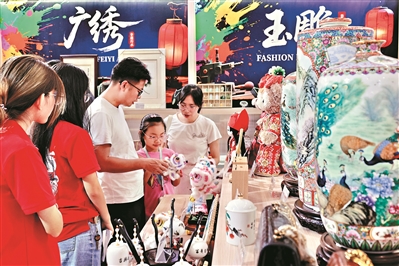
首设亿元投资支持!广州双创大赛启动,细分赛道扩至19个
Nan Fang Du Shi Bao· 2025-08-24 05:26
Group 1 - The 2025 Guangzhou Science and Technology Innovation and Entrepreneurship Competition has opened registration, expanding the number of industry tracks from 14 to 19 while continuing the "market + government" model [2] - A total cash prize of 20 million yuan is set for the competition, along with a newly established investment support mechanism totaling 100 million yuan [2] - The competition focuses on strategic emerging industries in Guangzhou, targeting small and medium-sized enterprises with independent legal status registered in the city [2] Group 2 - The competition includes 19 specific industry tracks such as intelligent connected vehicles, new energy vehicles, pharmaceuticals, medical devices, synthetic biology, and artificial intelligence, among others [2] - The awards are structured as "cash rewards + investment support," encouraging companies to become leaders in their respective segments and achieve significant growth [3] - The competition will provide up to 200 million yuan in equity investment support for eligible companies that have been established for less than five years and have not received market-based institutional investment [3] Group 3 - The competition will collaborate with over 70 service organizations from Hong Kong, Macau, and Taiwan, enhancing the depth and breadth of innovation cooperation [3] - A special award for projects from Hong Kong, Macau, and Taiwan universities is introduced to encourage students to bring their ideas to Guangzhou [4] - Registration for the competition requires units to voluntarily register and authenticate their identity on the official website [4]