
离岸贸易

Search documents
制定离岸贸易法律制度是“必答题”
Di Yi Cai Jing· 2025-10-19 12:02
Core Viewpoint - Shanghai aims to become the "global pricing center for RMB assets," while Shenzhen and Hainan are set to develop offshore trade hubs, necessitating improvements in offshore trade legal frameworks [1] Offshore Trade Growth - Offshore trade in China is experiencing rapid growth, with Shanghai's offshore trade volume expected to exceed 500 billion yuan in 2024, a 64% increase from 2020 [1] - Hainan's offshore international trade revenue is projected to grow by 114% year-on-year in the first half of 2024 [1] - Qingdao's "Offshore Reach" platform serves over 300 enterprises, handling offshore trade volumes exceeding 9 billion USD [1] Legal Framework Challenges - The current legal framework is lagging behind the practical needs of offshore trade, causing significant delays and losses for companies [1][3] - A state-owned enterprise faced a one-month delay in a 300 million USD oil financing deal due to unclear legal effectiveness of electronic bills of lading [1] - A cross-border e-commerce firm had to abandon a 120 million yuan global procurement order due to ambiguous foreign exchange rules regarding offshore account fund transfers [1] Core Scenarios and Legal Needs - Offshore trade is characterized by "three flows separation" (goods do not enter the country, capital flows cross-border, and orders remain onshore), leading to unique legal requirements [2] - Key scenarios include: 1. Offshore resale, which raises concerns about the legal effectiveness of property certificates [3] 2. Global procurement facing conflicts in fund settlement rules [4] 3. Commissioning overseas processing with unclear tax implications [5] Comparative Analysis of Successful Offshore Centers - Successful offshore trade centers like Singapore, Hong Kong, and New York have established adaptable legal frameworks that can serve as models for China [7] - Singapore employs a combination of tax incentives and regulatory sandboxes to enhance offshore trade efficiency [8] - Hong Kong's common law system provides flexibility in property rights and efficient dispute resolution mechanisms [9] - New York's offshore financing system is built on strict account separation and collaboration between federal and state laws [10] Legal Pain Points in China - China's current legal system presents four mismatches that hinder offshore trade development: 1. Property law does not recognize electronic bills of lading and cross-border warehouse receipts [13] 2. Foreign exchange rules conflict with the flexible needs of businesses [13] 3. Tax laws are often temporary and lack long-term stability [13] 4. Dispute resolution processes are inefficient and unclear [14] Proposed Legal Framework - A comprehensive legal framework is proposed, focusing on four dimensions: legislation, property rights, regulatory optimization, and dispute resolution [15] - Key recommendations include: 1. Establishing a dedicated Offshore Trade Management Regulation to define legal boundaries and account statuses [16] 2. Amending property laws to recognize electronic bills of lading and cross-border warehouse receipts [17] 3. Enhancing regulatory flexibility in foreign exchange management [18] 4. Creating specialized arbitration centers for offshore trade disputes [19] Conclusion - The development of a stable, transparent, and predictable legal system is essential for China's offshore trade ambitions, particularly in establishing Shanghai as a global financial center [21]
海南封关,远比你想象的重要
虎嗅APP· 2025-09-25 10:28
Core Viewpoint - The establishment of Hainan as a free trade port is a significant step towards developing a new type of offshore international trade center, which aims to enhance China's role in global trade beyond being just a supplier of goods [4][5][6]. Group 1: New Offshore Trade Model - Hainan aims to transition from a traditional offshore trade model, where Chinese companies primarily act as suppliers, to a new model where they also serve as facilitators for goods from other countries [4][5]. - The new offshore trade model involves remote control operations, allowing companies to manage procurement, processing, and sales without passing through Chinese ports [5][6]. Group 2: Hainan's Strategic Importance - Hainan's free trade port will cover an area of 35,400 square kilometers, significantly larger than existing free trade zones in China, providing ample space for talent and enterprises [6]. - The free trade port will offer greater openness compared to free trade zones, with over 70% of goods exempt from tariffs and simplified customs procedures [6][7]. Group 3: Financial and Service Trade Development - Hainan is positioned to develop a service trade sector that complements its offshore trade ambitions, with service trade growth rates projected to exceed 20% in 2024 [8][9]. - The establishment of an offshore RMB settlement center in Hainan is crucial for facilitating cross-border trade and investment, enhancing the internationalization of the RMB [10][11]. Group 4: Global Trade Dynamics - The global trade landscape is shifting towards a model where products are produced through complex international supply chains, necessitating low tariffs, minimal barriers, and no subsidies [16][17]. - Hainan's free trade port will implement a "zero tariff" policy for a broader range of goods, increasing the proportion of zero-tariff items from 21% to 74% [19]. Group 5: Future Prospects - Hainan's development as a free trade port is seen as a critical experiment for broader national policies, with the potential to set a precedent for future free trade agreements [20][21]. - The unique position of Hainan, with its less developed economic background, allows for the implementation of innovative economic policies without the friction that might occur in more developed regions [21].

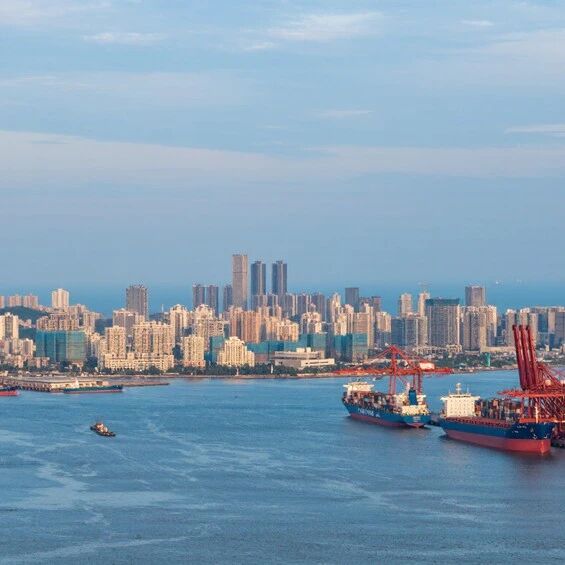
海南封关,远比你想象的重要
商业洞察· 2025-09-25 09:25
Core Viewpoint - The article emphasizes the significance of Hainan's upcoming closure on December 18, marking a pivotal moment for the establishment of a new offshore international trade center, which aims to enhance China's role in global trade and improve its competitive edge [4][5]. Group 1: New Offshore Trade Concept - Hainan aims to develop a new type of offshore trade, transitioning from being merely a supplier of goods to a service-oriented role similar to Singapore, facilitating trade for goods from other countries [7]. - The new offshore trade model allows Chinese enterprises to engage in global supply chains without passing through Chinese ports, enhancing operational efficiency [7][8]. Group 2: Importance of Hainan Free Trade Port - The Hainan Free Trade Port will cover an area of 35,400 square kilometers, significantly larger than existing free trade zones, providing ample space for talent and enterprises [8]. - The port's open policies will surpass those of traditional free trade zones, with over 70% of goods enjoying zero tariffs and simplified customs procedures [9][20]. Group 3: Financial and Service Trade Development - Hainan is positioned to become a center for offshore RMB settlement, complementing Hong Kong's established role, and facilitating the flow of capital between domestic and international markets [12][13]. - The growth of service trade in Hainan is projected to exceed 20% in 2024, with significant increases in sectors like transportation, tourism, and digital trade [10]. Group 4: Global Trade Dynamics - The article discusses the shift in global trade dynamics, highlighting the rise of intermediate goods in trade and the increasing importance of service trade, which now constitutes 30% of total trade volume [10][18]. - The "Three Zeros" principle (zero tariffs, zero barriers, and zero subsidies) is identified as a new international trade rule that Hainan aims to adopt to enhance its trade competitiveness [18][19]. Group 5: Future Prospects - Hainan's development as a free trade port is seen as a critical step in China's broader strategy to enhance its global trade position and attract foreign investment [22][24]. - The article draws parallels between Hainan and Shenzhen's past, suggesting that Hainan's current status as a less developed region may provide a unique opportunity for reform and growth [23][24].

海南封关,远比你想象的重要
Sou Hu Cai Jing· 2025-09-24 17:59
Core Insights - Hainan is set to officially close its borders on December 18, marking a significant step towards establishing a new type of offshore international trade center, which aims to shift Chinese enterprises from being mere suppliers to service providers in global trade [3][4][5] Group 1: New Offshore Trade Model - The new offshore trade model allows Chinese companies to engage in global trade without passing through Chinese ports, enhancing their role in the global supply chain [3] - This model emphasizes remote control and management of trade processes, enabling companies to coordinate procurement, processing, and sales across multiple countries [3] Group 2: Importance of Hainan Free Trade Port - Hainan's free trade port will cover an area of 35,400 square kilometers, significantly larger than existing free trade zones in China, providing ample space for talent and enterprises [5] - The free trade port will offer greater openness compared to traditional free trade zones, with most goods exempt from tariffs and simplified trade regulations [7][20] Group 3: Competitive Advantages - Hainan's free trade port will implement a zero-tariff policy for over 70% of goods, compared to Shanghai's limited tariff exemptions, making it a more attractive location for offshore trade [7][19] - The port will also feature a simplified customs process, allowing goods to enter before customs declaration, enhancing operational efficiency [7] Group 4: Service Trade Growth - The global trade landscape has shifted, with intermediate goods now accounting for over 70% of trade, and service trade comprising 30% of total trade volume, indicating a need for high-quality service support in offshore trade [8][9] - Hainan's service trade is projected to grow over 20% in 2024, with significant increases in sectors like transportation, tourism, and digital trade [9] Group 5: Offshore RMB Settlement Center - Hainan aims to establish an offshore RMB settlement center, complementing Hong Kong's existing role, to facilitate domestic and international capital flow [11][12] - This center will enhance the internationalization of the RMB and attract foreign investment, contributing to Hainan's financial ecosystem [12][15] Group 6: Challenges and Opportunities - Despite its potential, Hainan faces challenges such as a lack of financial market openness and service infrastructure, which could hinder its ability to attract high-quality resources [14] - However, Hainan's strategic location and the government's support for establishing a financial settlement center present significant opportunities for growth [14][15] Group 7: Future Trade Rules - The evolving global trade rules emphasize "zero tariffs," "zero barriers," and "zero subsidies," which align with Hainan's goals for trade liberalization [17][18] - Hainan's free trade port is positioned to experiment with these principles, potentially serving as a model for broader national implementation [20][21]

中国服务贸易如何破局
Di Yi Cai Jing· 2025-09-10 11:36
Core Insights - The article analyzes the core challenges of offshore trade in China and proposes an institutional innovation plan centered on "law-tax-regulation-opening" collaboration [1][5] - Offshore trade in China is experiencing rapid growth, yet service trade accounts for less than 10% of it, highlighting a significant gap compared to the global average of over 25% [1][2] - The article emphasizes the need for a paradigm shift in recognizing service trade as the driving force behind offshore trade, rather than merely a support function [2][5] Challenges in Offshore Trade - The intangible nature of service trade complicates rights confirmation, leading banks to hesitate in providing financing support, which restricts business expansion [3][5] - The integration of information flow, capital flow, and service results in service trade increases regulatory difficulties, often resulting in either delayed risk identification or excessive compliance costs for enterprises [3][5] - High dependency on rules and significant international discrepancies in regulations create compliance challenges for Chinese service enterprises operating abroad, with compliance costs consuming 8% to 12% of service revenue [3][4] Factors Limiting Development - A long-standing bias towards "heavy goods, light services" has led to a relative disadvantage for service trade in resource allocation and policy support [4][5] - Fragmented statistical standards for service trade hinder precise decision-making and strategy formulation [4][5] - Domestic institutions lack sufficient international service capabilities, with cross-border financial services coverage only one-third of that in Singapore [4][5] Global Best Practices - Successful offshore trade centers globally prioritize service trade in their institutional frameworks, with Singapore, Hong Kong, and New York serving as key examples [6][7] - Singapore's model includes legal guarantees, tax incentives, and regulatory innovation, facilitating efficient offshore service trade [6] - Hong Kong leverages its common law system and tax exemptions to reduce service trade costs, while New York optimizes service trade processes through account isolation and regulatory collaboration [7] Proposed Solutions - The article outlines a seven-dimensional approach to enhance service trade awareness and capabilities, including legal reforms, tax optimization, and regulatory collaboration [8][9] - Legal reforms aim to establish a comprehensive protection system for digital rights in service trade, addressing the challenges posed by intangible assets [9] - Tax incentives are proposed to support offshore financial and cross-border digital service enterprises, with long-term stable tax rates [10][11] - Simplifying foreign exchange management and enhancing financial support for service trade are also critical components of the proposed solutions [11][12] - Establishing a unified regulatory platform and reducing negative lists for service trade can streamline processes and enhance efficiency [12][13]
临港新片区制度创新“落地有声” 改革发展“成色足”
Yang Shi Wang· 2025-08-21 01:35
Group 1 - The core viewpoint is that the Lingang New Area of the China (Shanghai) Pilot Free Trade Zone has achieved significant economic growth and institutional innovation over its six years of establishment, integrating deeply into the global value chain [1] - The "Digital Comprehensive Bonded Zone" platform was launched to promote the full digital transformation of the Yangshan Special Comprehensive Bonded Zone, enhancing the efficiency and security of document processing in shipping trade [3] - As of June this year, over 200 enterprises in the Lingang New Area have improved their data cross-border flow efficiency by 70% through the introduction of a negative list and operational guidelines for data exit [4] Group 2 - The Lingang New Area has achieved major institutional innovations in financial services and offshore trade, linking its development with the construction of Shanghai as an international financial center [5] - The "Cross-border Pass" digital service platform has served over 300 cross-border trade enterprises and 28 financial institutions, completing more than 3,000 verification tasks for the authenticity of offshore trade [6] - The offshore trade scale in the Lingang New Area exceeded $15 billion, marking a 23.6% increase, while the international reinsurance business platform registered premiums exceeding 84.3 billion yuan [6]
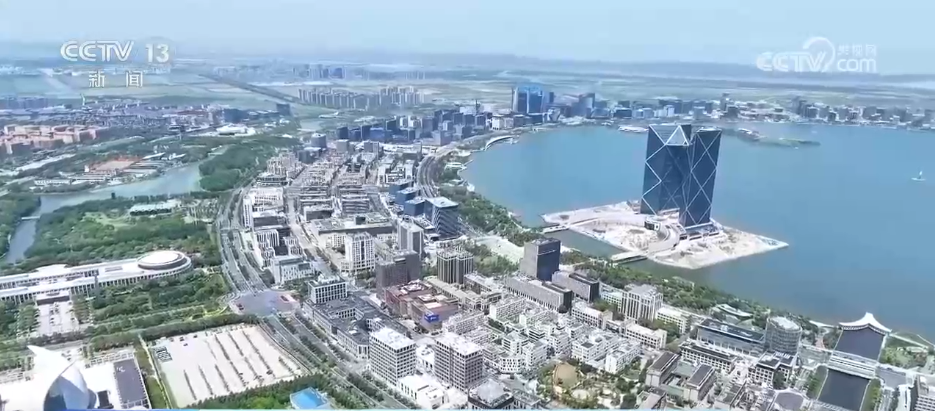
临港新片区经济公司党委书记、董事长孙仓龙:做实“走出去”综合服务平台 打造第二总部集群
Sou Hu Cai Jing· 2025-08-19 23:59
Core Viewpoint - The Shanghai Lingang New Area is enhancing its role as a platform for higher-level opening-up, contributing to the "Lingang Plan" for international trade and investment [1][14]. Economic Growth and Development - The Lingang New Area has seen an average annual growth rate of 17.6% in regional production value over the past six years, with the number of market entities increasing to 156,000 [3]. - The area has introduced 166 innovative or leading open measures, with 79 being nationally pioneering cases [3]. - The number of listed companies in the Lingang New Area has increased from 9 in 2020 to 17 in 2024 [3]. Talent and Population - The Lingang New Area has attracted 141,000 talents, with a population of 580,000, reflecting a growth rate of 80% [4]. Offshore Trade and Services - The "Going Out" comprehensive service platform was established to assist Chinese enterprises in international expansion, featuring over 500 professional service institutions [15][16]. - The platform has facilitated over 15,000 offshore trade authenticity verifications, with total payment amounts exceeding 430 billion RMB, accounting for 70% of offshore trade [16]. Financial and Insurance Innovations - The area has developed a reinsurance market, with a trading scale of 39.26 billion RMB and premium registration exceeding 84.2 billion RMB [7]. - The establishment of a risk-sharing mechanism for the aviation industry has led to a reduction in insurance prices by over one-third [8]. Future Plans and Strategic Goals - The Lingang New Area aims to enhance its service network by expanding its presence across China and establishing over 40 liaison stations globally [15]. - The area is focused on integrating offshore trade, financial services, and digital solutions to create a comprehensive support system for enterprises [9][10]. Institutional Innovation - The Lingang New Area is positioned as a "testbed" for institutional innovation, contributing to Shanghai's development as a global financial center [10][17]. - The area emphasizes the importance of aligning local regulations with international standards to facilitate cross-border trade and investment [17].
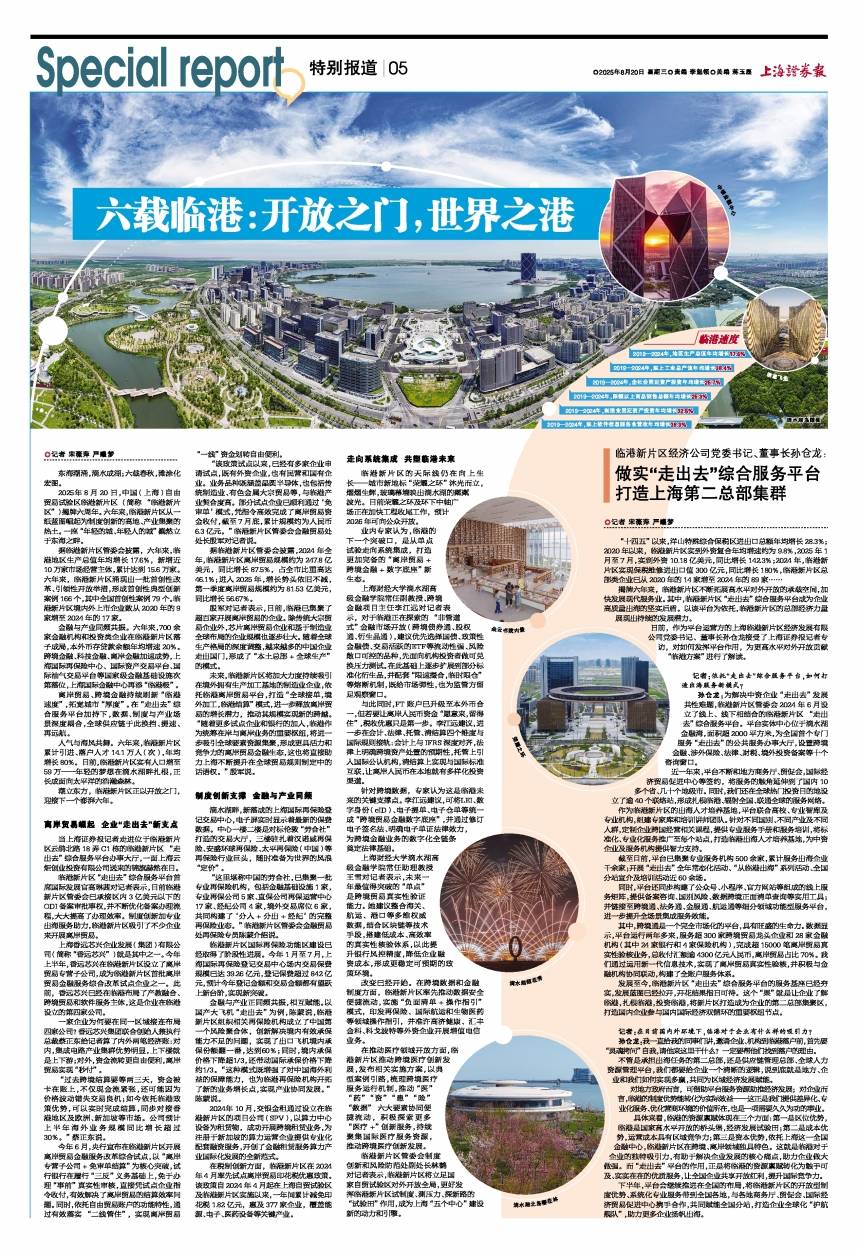
接轨国际最高标准 免审单结算试点为上海建设国际贸易中心提供关键制度支撑 临港将实现一线离岸贸易“秒付”
Jie Fang Ri Bao· 2025-07-06 02:25
Core Viewpoint - The People's Bank of China has announced a comprehensive pilot reform for offshore trade financial services in the Lingang New Area, aimed at improving the efficiency of offshore trade settlements and supporting Shanghai's goal of becoming an international trade center [1]. Group 1: Reform Details - The reform focuses on "offshore specialized subsidiaries + no pre-approval settlement," allowing banks to bypass the traditional 2-3 day verification process for contracts and invoices, thus enabling real-time settlement [2]. - Banks will no longer need to conduct individual audits of documents for qualified enterprises, significantly enhancing operational efficiency and international competitiveness [2][3]. - The establishment of offshore specialized subsidiaries in the Lingang New Area is required for enterprises, which will be recognized and recommended by the Lingang Administrative Committee [2]. Group 2: Financial and Risk Management - The reform will effectively isolate offshore fund flows from domestic entities, minimizing the risk of financial instability in the domestic system [3]. - The "white list" mechanism will allow the Lingang Administrative Committee to manage enterprise risks, reducing the operational risks and responsibilities for banks [2][3]. Group 3: Growth Potential - The pilot reform is a result of the deep integration of national strategy and regional industrial foundations, with Lingang continuously breaking through in offshore trade [4]. - In 2024, the offshore trading volume in the Lingang New Area reached 24.78 billion yuan, a year-on-year increase of 87.5%, accounting for 46.1% of the city's total [4]. - The Lingang Administrative Committee plans to attract manufacturing enterprises with overseas production bases, leveraging the offshore trade platform to further enhance growth potential [4].
“新型离岸贸易”新在哪(新知)
Ren Min Ri Bao· 2025-05-28 22:13
Core Viewpoint - The article emphasizes the importance of developing new offshore trade models in a cautious and tailored manner, avoiding blind imitation and ensuring that local conditions are respected [1][4]. Group 1: New Offshore Trade Model - New offshore trade involves purchasing goods from abroad and reselling them to other foreign locations, with settlements conducted through domestic enterprises [2]. - This model represents a shift from traditional offshore trade, allowing Chinese companies to transition from being suppliers to establishing local offshore companies and leading the trade process, enhancing their global competitiveness [2][3]. - A key feature of new offshore trade is the separation of document flow, capital flow, and logistics flow, which enables flexible global resource allocation and strengthens supply chain resilience [2]. Group 2: Industry Transformation - Traditional industries, such as a textile company in Suzhou, have adopted a three-stage offshore trade structure, resulting in an 18% reduction in logistics costs and a one-third decrease in delivery times [3]. - Emerging industries, particularly in renewable energy, are leveraging offshore trade to provide technology licensing and supply chain management services, embedding "Made in China" into global production networks [3]. - This approach allows high-end processes like R&D and settlement to remain in China while manufacturing is positioned overseas, facilitating a transition from a "world factory" to an "innovation hub" [3]. Group 3: Support and Development - The expansion of new offshore trade necessitates enhanced capabilities in digital economy, finance, logistics, and legal services, highlighting the need for collaborative development across these sectors [3]. - Financial support for offshore trade requires coordination in cross-border financial regulation, emphasizing the importance of data exchange and enterprise oversight [3]. - Risk management in this new trade model relies on advancements in digital technologies and blockchain, which are essential for improving risk identification and early warning capabilities [3]. Group 4: Local Adaptation and Global Integration - The development of new offshore trade should be tailored to local conditions, recognizing the diverse resource endowments and trade foundations across different regions [4]. - A differentiated approach that respects local characteristics can enhance foreign trade flexibility and attractiveness, ultimately improving quality and efficiency [4]. - As technology and services evolve, new offshore trade is positioned to become a significant driver of China's role in the global economic landscape, especially in an uncertain international trade environment [4].
海南推动离岸贸易高质量发展举措入选
Hai Nan Ri Bao· 2025-05-19 01:21
Core Viewpoint - The Ministry of Commerce has released a new batch of best practice cases for expanding the service industry, highlighting innovative measures for high-quality offshore trade development in Hainan [1] Group 1: Best Practice Cases - The third batch of best practice cases includes 11 cases focusing on industrial ecosystem construction, international cooperation, regional collaboration, and institutional innovation [1] - The case titled "Solving Regulatory Challenges to Promote High-Quality Offshore Trade" details measures taken by Hainan and other regions to enhance offshore trade [1] Group 2: Regulatory Mechanisms - Hainan has established a self-regulatory mechanism for foreign exchange and cross-border RMB business, emphasizing full-process management of new offshore international trade activities [2] - The introduction of a negative image management concept allows for post-monitoring without interference if no negative situations are present, enhancing the experience of policy benefits for enterprises [2] Group 3: Tax Support - Hainan offers a 15% corporate income tax rate for qualifying offshore trade enterprises and includes eligible talent in the high-demand talent list, exempting them from personal income tax exceeding 15% [2] - Banks are allowed to independently decide on the types of transaction documents to review, resulting in an 80% reduction in foreign exchange settlement time [2] Group 4: Development of Offshore Trade - The Yangpu New Offshore International Trade Pilot Zone in Hainan has seen significant growth in new offshore international trade settlement amounts due to its policy advantages [2]