
科技成果转化服务

Search documents
缩短“时差”促创新(评论员观察)——“差距”之中育新机②
Ren Min Ri Bao· 2025-09-29 22:32
Core Viewpoint - The integration of industry, academia, and research is essential for shortening the "time lag" between technological innovation and its commercialization, which will accelerate the transformation of technological innovation into high-quality development [1][4]. Group 1: Technological Innovation and Market Application - Recent events such as the 2025 World Artificial Intelligence Conference and the 2025 World Robotics Conference showcase the strong performance of domestic robots, indicating a robust momentum in the robotics industry and a closer realization of the "human-machine symbiosis" vision [1]. - The efficiency of innovation increases as the time lag between technological innovation and market application decreases, which is crucial for gaining a competitive edge in the global technology landscape [1]. Group 2: Policy and Mechanism Support - Strengthening the national technology transfer system and enhancing policy support are vital for promoting the application and iterative upgrade of independently developed products, transforming more technological achievements into marketable products [2]. - Sichuan province has implemented measures such as proportional empowerment and a pay-after-use model, resulting in a 20% year-on-year increase in registered technological achievements and a 33.6% increase in technology contract registrations in 2024 [3]. Group 3: Innovation Ecosystem and Support Structures - The establishment of innovation platforms, such as national manufacturing innovation centers and pilot platforms, is crucial for supporting the industrialization of technological achievements, enhancing the speed and efficiency of transforming technology into productive forces [3]. - The concept of a "technology matchmaker" is emphasized, where intermediary platforms facilitate connections between enterprises and technological solutions, thereby improving the overall innovation ecosystem [3].
同济科技:绿色科技驱动综合服务转型 聚焦房地产去化、碳中和布局、产学研融合及战略升级
Quan Jing Wang· 2025-09-19 10:19
Group 1 - Company is currently selling two real estate projects, with the Tongji Panlongli project nearly sold out and expected to deliver by the end of 2025, while the Tongji Bay Jingting project is still in the sales process [1] - The company aims to maintain quality, safety, and delivery while controlling costs and improving sales performance in its real estate business [1] - Future direction of the real estate business will be determined based on market trends, company strategy, and financial situation [1] Group 2 - Company actively implements the national dual carbon development strategy, participating in sustainable development projects and promoting green building technologies [2] - The Tongji Panlongli project is developed as a super low-energy building, and the company has undertaken a demonstration project for ultra-low energy consumption in Yangpu District [2] - The company has developed a carbon management system to assist clients in effective carbon data management and analysis [2] Group 3 - Company focuses on the "District-School Technology Achievement Application Strategic Platform" and leverages partnerships with Tongji University for technology transfer and innovation [3] - The company has established the Tongyang Incubation Fund to support technology commercialization and high-quality incubators [3] - The company is constructing the Tongji Technology Future Center as part of a collaborative project with Tongji University, focusing on smart construction and transportation [3] Group 4 - The board of directors has defined the company's development strategy to build a new framework led by "dual carbon," centered on technological innovation, and supported by digitalization and intelligence [4] - The company aims to become a comprehensive service provider for value enhancement in urban construction and development [4] - The board will continuously review strategic direction, optimize resource allocation, and manage risks effectively [4]

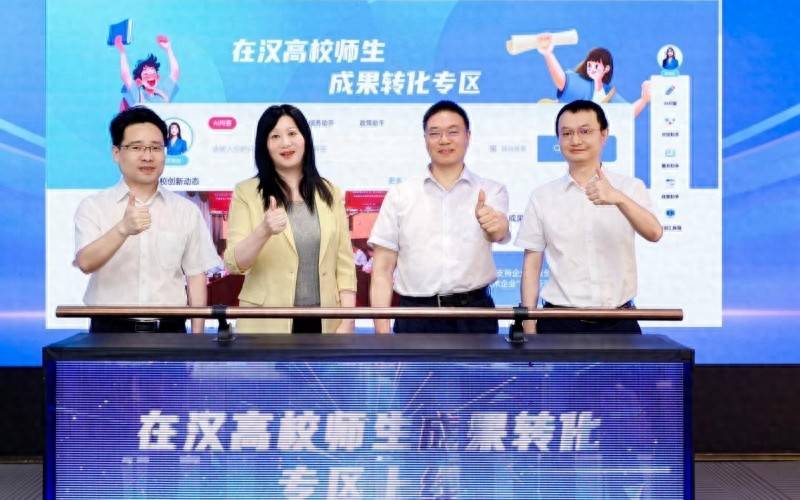
武汉推出十亿元基金赋能高校师生创新创业
Sou Hu Cai Jing· 2025-07-02 10:28
Group 1 - Wuhan has launched a 1 billion yuan fund to empower innovation and entrepreneurship among university faculty and students [2][3] - The fund, named "Wuchuangxing·University Faculty and Student Innovation and Entrepreneurship Fund," aims to provide comprehensive financial and resource support for startup teams [3] - The initiative includes the establishment of a service area for technology achievement transformation in universities, integrating functions such as achievement display and resource matching [2][4] Group 2 - The fund focuses on early-stage investments in hard technology and has a duration of 10 years, emphasizing patient capital for supporting innovation and entrepreneurship [3] - A "Technical Manager Partner Program" has been introduced to address the challenges of technology achievement transformation, involving experts from various sectors to facilitate project evaluation and resource integration [3][4] - The launch of these initiatives marks a new phase in the digital, capitalized, and platform-based transformation of scientific achievements in Wuhan [4]


宏观专题报告:地方国补,缘何_暂停”?
Shenwan Hongyuan Securities· 2025-06-16 09:49
Group 1: Policy Changes and Funding - The 2025 "old-for-new" policy has significantly increased funding support to 300 billion yuan, up from 150 billion yuan in 2024[24] - The subsidy scope has expanded to include more products, such as microwaves, water purifiers, dishwashers, rice cookers, and mobile devices[24] - As of the end of May, 162 billion yuan of central government subsidies have been allocated, with 138 billion yuan still pending distribution[7] Group 2: Market Impact and Performance - In April, retail sales of consumer goods grew by 5.1% year-on-year, with significant disparities in growth rates among categories[5] - Home appliance sales surged by 38.8% year-on-year in April, while automotive and communication equipment sales saw declines[39] - By the end of May, nationwide sales under the "old-for-new" program reached 1.1 trillion yuan, with approximately 175 million subsidies issued[33] Group 3: Regional Variations and Challenges - Some regions, like Chongqing, reported a subsidy redemption rate of 82.3%, leading to a suspension of certain subsidy programs due to fund exhaustion[33] - Local governments are adjusting subsidy mechanisms, with some areas implementing phased funding releases to manage demand[61] - The rapid use of subsidies in various regions has raised concerns about potential fraud and the need for improved monitoring mechanisms[65]
税费优惠激活中国经济蓬勃“向新力”
Zhong Guo Jing Ji Wang· 2025-05-26 23:55
Group 1 - The core viewpoint emphasizes that the acceleration of technological innovation will significantly contribute to high-quality development, fostering a virtuous cycle among technology, industry, and finance, and integrating various chains such as funding, innovation, and talent [1][4] - A series of tax and fee reduction policies have effectively supported the cultivation of new productive forces and the high-quality development of the manufacturing industry, with tax reductions and refunds amounting to 424.1 billion yuan in the first quarter of this year [1][2] - The precision of tax reductions reflects the "quality improvement and efficiency enhancement" role of fiscal policy, focusing on R&D investment, venture capital, and key industrial chains, thereby strengthening the innovation capabilities of enterprises [1][3] Group 2 - The comprehensive effects of structural tax reductions and other measures have led to a positive growth trend in innovation momentum, with high-tech industry sales revenue increasing by 13.9% year-on-year in the first four months of this year, significantly outpacing the overall national growth rate [2] - Manufacturing has also shown steady growth, with sales revenue increasing by 4.7% year-on-year in the same period, particularly in advanced manufacturing sectors such as computer and intelligent equipment manufacturing, which saw sales revenue growth of 23.8% and 15.7% respectively [2] - The government has introduced a series of tax incentives covering all aspects of enterprise innovation activities, promoting the high-end, intelligent, and green transformation of the manufacturing sector, thereby enhancing the economy's new driving force [3]
一季度我省服务业取得开门红
Sou Hu Cai Jing· 2025-05-26 23:10
Core Viewpoint - Jiangsu's service industry has shown a strong start in the first quarter, with significant growth in both high-tech and traditional service sectors, contributing to the province's economic development [1][2][3]. Group 1: Service Industry Performance - In the first quarter, Jiangsu's service industry added value reached 18,831 billion yuan, a year-on-year increase of 5.9%, accounting for 56.9% of the regional GDP, an increase of 1.3 percentage points from the previous year [1]. - The accommodation and catering industry saw a value-added growth of 7.5%, while wholesale and retail grew by 7.7%, and profit-oriented services increased by 8.9% [1]. - The contribution rate of the service industry to economic growth was 56.5%, driving a 3.3 percentage point increase in regional GDP [1]. Group 2: Production Service Sector - The revenue of large-scale service enterprises in Jiangsu grew by 8% year-on-year in the first quarter, surpassing the national average by 1 percentage point [2]. - The productive service sector accounted for 68.7% of the revenue from large-scale service enterprises, with a year-on-year growth of 9.9%, contributing 83.6% to the overall growth of the service sector [2]. - Business service revenue increased by 12.5%, contributing 33% to the growth of large-scale service enterprises [2]. Group 3: High-Tech Service Sector - High-tech services have shown strong growth, with e-commerce services leading at a year-on-year increase of 39.8% [3]. - Internet and related services saw a revenue growth of 17.1%, with internet information services and platforms growing by 14.9% and 30.8%, respectively [3]. - The revenue from technology transfer services grew by 27.8%, while research and design services increased by 10.5% [3]. Group 4: Transportation and Financial Services - The transportation network in Jiangsu operated efficiently, with railway passenger volume reaching 74.4 million, a growth of 5.1% [4]. - The total revenue of financial institutions reached 26.7 trillion yuan, with a loan balance of 27.4 trillion yuan, growing at a rate of 10.7% [5]. - The postal network's business volume reached 38.4 billion yuan, with express delivery volume exceeding 3.63 billion pieces, reflecting a growth of 21.1% [5]. Group 5: Telecommunications and Digital Economy - The telecommunications sector reported a total business volume of 34.95 billion yuan, with a steady growth of 5.1% [6]. - By the end of March, the number of internet broadband users reached 49.43 million, growing by 2.6% [6]. - The data indicates a robust integration of the digital economy with the real economy, showcasing the vitality of the service industry in Jiangsu [6].
前4个月我国高技术产业销售收入同比增长13.9%
Yang Guang Wang· 2025-05-20 01:58
Group 1 - The core viewpoint of the articles highlights the positive impact of tax reduction and fee reduction policies on technological innovation and manufacturing industries in China, with significant growth in sales revenue and innovation momentum [1][2] - In the first quarter of this year, tax reductions and refunds supporting technological innovation and manufacturing reached 424.1 billion yuan, indicating strong government support for these sectors [1] - High-tech industry sales revenue increased by 13.9% year-on-year in the first four months, significantly outpacing the overall national growth rate [1] Group 2 - The sales revenue from national technology achievement transformation services grew by 33.6% year-on-year in the first four months, reflecting the continuous release of new productivity innovation momentum [1] - The manufacturing sector also showed steady growth, with sales revenue increasing by 4.7% year-on-year, particularly in advanced manufacturing such as computer manufacturing and intelligent equipment manufacturing, which saw increases of 23.8% and 15.7% respectively [1] - The structural tax reduction and fee reduction policies have effectively supported the high-quality development of technological innovation and manufacturing industries [1][2]