
制造业与服务业深度融合

Search documents
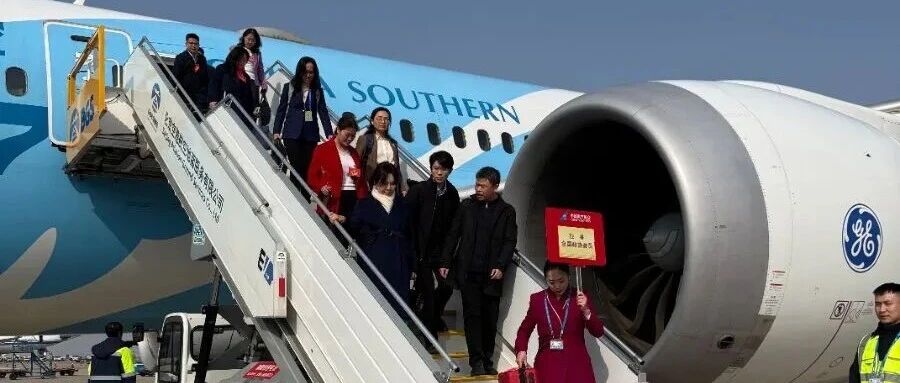
住粤全国政协委员乘机抵京,万米高空聊了哪些“十五五”议题
21世纪经济报道· 2026-03-03 11:08
Core Viewpoint - The article highlights the key focus areas of the upcoming National Two Sessions, emphasizing new economic models such as low-altitude economy, silver economy, and smart economy, along with the integration of technology innovation, manufacturing, and service industries in Guangdong's high-quality development agenda for 2026 [3][4]. Group 1: Economic Focus Areas - The National Two Sessions will address the integration of technology innovation with industry innovation, particularly how to better serve technology innovation enterprises [6]. - There is a strong emphasis on the collaboration between manufacturing and service industries, with a call for financial and legal services to support the real economy [8]. - The "Guangdong Goods Going Global" initiative aims to promote innovative products like humanoid robots and AI glasses, enhancing Guangdong's traditional industry advantages while introducing new innovative goods to national and international markets [9]. Group 2: Talent and Education - The development of AI education and AI healthcare is a priority, with institutions like Southern Medical University focusing on building AI medical courses across various fields [4][6]. - The "Million Talents Gathering in Nanyue" initiative is expected to attract outstanding medical talents from both domestic and international backgrounds to contribute to Guangdong's healthcare and wellness industry [6]. Group 3: Policy and Strategy - The article notes that this year's National Two Sessions are particularly significant as they mark the beginning of the 14th Five-Year Plan, with discussions aimed at aligning Guangdong's development with national strategic goals [12].

希音许仰天:百亿布局大湾区,打造全球时尚产业新标杆
Nan Fang Du Shi Bao· 2026-02-25 01:30
Group 1 - The core message of the article highlights the rapid growth and future vision of SHEIN, a global fashion giant that has maintained high-speed growth since its establishment in Guangzhou in 2014, with an expected export value exceeding 100 billion yuan by 2025 and operations in over 160 countries and regions [2] - The company's success is attributed to Guangdong's complete industrial ecosystem and a business environment characterized by responsiveness and support, which enables SHEIN's unique "small order quick response" model, reducing the design-to-delivery cycle to 2-3 weeks [2] - The deep integration of manufacturing and services is identified as SHEIN's core competitive advantage, utilizing data to convert fragmented demands into production instructions and binding cross-border logistics with manufacturing processes for real-time market-driven capacity adjustments [2] Group 2 - SHEIN's future development plans in Guangdong for the next three years include continued participation in the "cross-border e-commerce + industrial belt" pilot program to allow more small and medium-sized factories to benefit from cross-border e-commerce, supporting the "Guangdong goods go global" initiative [3] - The company aims to increase investment in supply chain empowerment and talent cultivation to promote the digital transformation of traditional manufacturing, contributing to the development of composite talents in the Greater Bay Area [3] - SHEIN plans to invest over 10 billion yuan in building a smart supply chain, continuing to establish a presence in Guangdong and collaborating to create a world-class fashion industry cluster [3]

“链”上融合,“群”聚赋能
Xin Lang Cai Jing· 2026-02-25 00:30
Group 1 - The core viewpoint of the article emphasizes the deep integration of manufacturing and service industries in Guangdong, showcasing a new industrial form and business model driven by collaboration and digital technology [2][3]. - SHEIN's rapid growth since its establishment in Guangzhou in 2014 exemplifies the success of this integration, with projected platform export exceeding 100 billion yuan by 2025 and operations in over 160 countries [2]. - The "small batch quick response" model of SHEIN is supported by Guangdong's complete industrial ecosystem, allowing for a design-to-delivery cycle of 2-3 weeks [2]. Group 2 - Digital technology, particularly artificial intelligence, is identified as a key enabler of the deep integration between manufacturing and service sectors, with Siemens highlighting its role in building a modern industrial system in Guangdong [3]. - Siemens has established a digital economy ecosystem with over 300 partners and more than 400 digital solutions, with AI-related solutions accounting for one-third of its offerings [3]. - The collaboration between manufacturing and service industries is described as a deep integration rather than a simple addition, with companies like Jiadu Technology exploring new paths through digital empowerment [3][4]. Group 3 - China Mobile is positioned as a key player in the modern industrial chain, aiming to act as an incubator by connecting various sectors and fostering specialized enterprises [4][5]. - The company plans to enhance the integration of production, education, research, and application to address industrial challenges and promote consumption [5]. - Yongdao Group's consistent ranking among China's top 500 enterprises is attributed to Guangdong's regional advantages and policy support, reinforcing confidence in its development [5].
希音许仰天:百亿布局大湾区,打造世界级时尚产业集群
2 1 Shi Ji Jing Ji Bao Dao· 2026-02-24 23:09
Group 1 - The core viewpoint of the article highlights the rapid growth and future vision of Guangzhou Shein International Import and Export Co., Ltd., which has become one of the world's top three fashion retailers since its establishment in Guangzhou in 2014, with an expected export value exceeding 100 billion yuan by 2025 and operations in over 160 countries and regions [1][2] - The company's success is attributed to Guangdong's complete industrial ecosystem and a business environment characterized by responsiveness and support, which facilitates its unique "small order quick response" model, reducing the design-to-delivery cycle to 2-3 weeks [1] - The deep integration of manufacturing and service industries is identified as the core competitive advantage of the company, utilizing data to convert fragmented demands into production instructions and binding cross-border logistics with manufacturing processes for real-time market-driven capacity adjustments [1] Group 2 - The company is actively participating in the "cross-border e-commerce + industrial belt" pilot program to support the development of small and medium-sized factories, with initiatives like the "Guangdong Goods Going Global Spring Action - Shein Industrial Belt Overseas Plan" launched in various locations since January [1] - The digital tools developed by the company are open to the entire supply chain within its ecosystem, promoting transparency and refined management for factories, with plans to conduct nearly 600 training sessions by 2025, covering 37,000 suppliers [1] - The company plans to invest over 10 billion yuan to build a smart supply chain headquarters in Guangdong, aiming to establish a world-class fashion industry cluster and position "Guangdong manufacturing" as a new benchmark in the global fashion industry [2]
SHEIN创始人许仰天罕见亮相
Di Yi Cai Jing Zi Xun· 2026-02-24 15:44
Group 1 - SHEIN's founder Xu Yangtian publicly spoke at the Guangdong High-Quality Development Conference, highlighting the company's rapid growth since its establishment in Guangzhou in 2014, with platform exports exceeding 100 billion yuan in 2025 [2] - SHEIN operates in over 160 countries and regions, becoming one of the top three fashion retailers globally, with a valuation of 365 billion yuan, ranking ninth in the Hurun Global Unicorn List for 2025 [2] - The company's success is attributed to its "small order, fast return" digital and flexible supply chain model, which allows for a design-to-delivery cycle of 2-3 weeks, leveraging Guangdong's complete industrial ecosystem [2] Group 2 - SHEIN, originally based in Nanjing and Guangdong, has moved its headquarters to Singapore to pursue global expansion [3] - The company has received approval from the UK's Financial Conduct Authority (FCA) for an initial public offering (IPO) in London, but there are rumors of a potential shift to a Hong Kong IPO due to regulatory challenges [3] - Despite the challenges of overseas regulatory risks and delays in listing, SHEIN plans to invest over 10 billion yuan in building a smart supply chain headquarters in Guangdong [3]

SHEIN创始人许仰天:将继续扎根广东,投入超100亿元建设智慧供应链体系
Xin Lang Cai Jing· 2026-02-24 06:14
Core Insights - SHEIN's growth is significantly attributed to the supportive environment in Guangdong, with platform export exceeding 100 billion yuan since its establishment in Guangzhou in 2014, covering over 160 countries and regions [3][9] Group 1: Growth Factors - The complete industrial ecosystem and excellent business environment in Guangdong have been crucial for SHEIN's rapid growth, enabling a supply chain model that compresses delivery time to 2-3 weeks [4][10] - SHEIN has nearly 10,000 suppliers in Guangdong, contributing to over 600,000 jobs in the province, highlighting the region as a vital development ground [4][10] Group 2: Business Model Innovation - The deep integration of manufacturing and service sectors has allowed SHEIN to create a global business model, utilizing digital insights to drive production based on real-time market trends [5][11] - The company employs a fast-response model that transforms fragmented market demands into production directives, enhancing manufacturing efficiency and responsiveness [5][11] Group 3: Social Responsibility and Future Plans - SHEIN is committed to supporting the high-quality development of Guangdong's manufacturing sector, with initiatives like open digital factory tools and a smart supply chain network [6][12] - The company plans to invest over 10 billion yuan in building a smart supply chain system in Guangdong, aiming to enhance the digital transformation of traditional manufacturing and support local talent development [7][13]
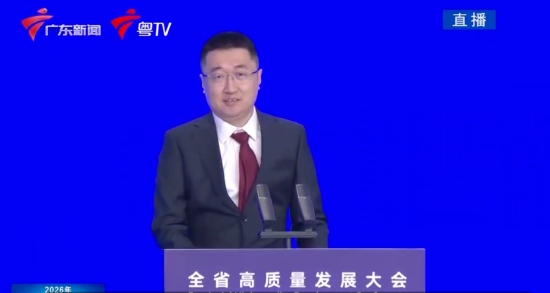
SHEIN最新发言:未来三年投入超100亿元建智慧供应链体系
Xin Lang Cai Jing· 2026-02-24 04:41
Core Insights - SHEIN's rapid growth is attributed to Guangdong's complete industrial ecosystem and excellent business environment [1][3] - The deep integration of manufacturing and service industries has established SHEIN's global business landscape [1][4] - SHEIN is committed to fulfilling its social responsibility as a leading enterprise, focusing on supporting the high-quality overseas expansion of Guangdong's manufacturing industry [1][5] Group 1: Growth Factors - Guangdong's robust industrial ecosystem and top-notch business environment have significantly contributed to SHEIN's rapid growth, enabling a supply chain model that compresses delivery times to two to three weeks [3][9] - The support from local government and various departments has been crucial in establishing SHEIN's supply chain headquarters in Guangzhou, with nearly 10,000 suppliers and over 600,000 jobs created in the province [3][9] Group 2: Business Model - SHEIN leverages cross-border e-commerce and digitalization to integrate user demand insights into the manufacturing process, creating a responsive supply chain that drives production based on real-time market trends [4][10] - The company's model allows for dynamic adjustments in logistics and production, enhancing efficiency and responsiveness to consumer needs, thus establishing a competitive edge in the global fashion industry [4][10] Group 3: Future Plans - SHEIN plans to invest over 10 billion yuan in building a smart supply chain system in Guangdong over the next three years, aiming to create a world-class fashion industry cluster [1][12] - The company will actively participate in pilot projects combining cross-border e-commerce with industrial belts, helping small and medium-sized factories benefit from e-commerce opportunities [5][12] - SHEIN's training initiatives will cover approximately 37,000 suppliers by 2025, reinforcing the talent foundation for high-quality industry development in Guangdong [5][11]
一季度我省服务业取得开门红
Sou Hu Cai Jing· 2025-05-26 23:10
Core Viewpoint - Jiangsu's service industry has shown a strong start in the first quarter, with significant growth in both high-tech and traditional service sectors, contributing to the province's economic development [1][2][3]. Group 1: Service Industry Performance - In the first quarter, Jiangsu's service industry added value reached 18,831 billion yuan, a year-on-year increase of 5.9%, accounting for 56.9% of the regional GDP, an increase of 1.3 percentage points from the previous year [1]. - The accommodation and catering industry saw a value-added growth of 7.5%, while wholesale and retail grew by 7.7%, and profit-oriented services increased by 8.9% [1]. - The contribution rate of the service industry to economic growth was 56.5%, driving a 3.3 percentage point increase in regional GDP [1]. Group 2: Production Service Sector - The revenue of large-scale service enterprises in Jiangsu grew by 8% year-on-year in the first quarter, surpassing the national average by 1 percentage point [2]. - The productive service sector accounted for 68.7% of the revenue from large-scale service enterprises, with a year-on-year growth of 9.9%, contributing 83.6% to the overall growth of the service sector [2]. - Business service revenue increased by 12.5%, contributing 33% to the growth of large-scale service enterprises [2]. Group 3: High-Tech Service Sector - High-tech services have shown strong growth, with e-commerce services leading at a year-on-year increase of 39.8% [3]. - Internet and related services saw a revenue growth of 17.1%, with internet information services and platforms growing by 14.9% and 30.8%, respectively [3]. - The revenue from technology transfer services grew by 27.8%, while research and design services increased by 10.5% [3]. Group 4: Transportation and Financial Services - The transportation network in Jiangsu operated efficiently, with railway passenger volume reaching 74.4 million, a growth of 5.1% [4]. - The total revenue of financial institutions reached 26.7 trillion yuan, with a loan balance of 27.4 trillion yuan, growing at a rate of 10.7% [5]. - The postal network's business volume reached 38.4 billion yuan, with express delivery volume exceeding 3.63 billion pieces, reflecting a growth of 21.1% [5]. Group 5: Telecommunications and Digital Economy - The telecommunications sector reported a total business volume of 34.95 billion yuan, with a steady growth of 5.1% [6]. - By the end of March, the number of internet broadband users reached 49.43 million, growing by 2.6% [6]. - The data indicates a robust integration of the digital economy with the real economy, showcasing the vitality of the service industry in Jiangsu [6].