
住宿和餐饮业

Search documents
2026年1-2月经济增长数据点评:中国经济“开门红”
Ping An Securities· 2026-03-17 00:38
Economic Growth Data - In the first two months of 2026, China's industrial production value increased by 6.3% year-on-year, while the service production index grew by 5.2%[2] - Industrial production growth accelerated by 1.1 percentage points compared to December 2025, and the service sector's growth improved by 0.2 percentage points[2] - Social retail sales rose by 2.8% year-on-year, with fixed asset investment increasing by 1.8%, both showing significant improvements from December 2025 by 1.9 and 5.6 percentage points respectively[2] Sector Performance - High-tech manufacturing value added surged by 13.1%, outpacing overall industrial growth by 6.8 percentage points[2] - Export delivery value also rebounded, growing by 6.3% year-on-year, matching the industrial production growth rate and improving by 3.1 percentage points from December 2025[2] - The service sector saw notable growth in information transmission, software, and IT services (10.1%), finance (7.0%), and transportation (6.3%) during the same period[2] Investment Trends - Fixed asset investment showed a year-on-year increase of 1.8%, with infrastructure and manufacturing investments rising by 9.8% and 3.1% respectively[2] - Real estate investment declined by 11.1%, but this was a smaller drop compared to the previous year's overall decline by 6.1 percentage points[2] - Equipment and tool purchases increased by 11.5%, indicating strong policy support for investment recovery[2] Risks and Outlook - Potential risks include the effectiveness of growth stabilization policies falling short of expectations, unexpected severity of overseas economic downturns, and escalation of geopolitical conflicts[8]
适用重规范 ▏研发费用加计扣除四大误区与解析
蓝色柳林财税室· 2026-03-07 14:43
Core Viewpoint - The article discusses common misconceptions regarding the R&D expense super deduction policy, which is a significant initiative by the government to support technological innovation. Group 1: Misconceptions - Misconception 1: Real estate companies can enjoy the R&D expense super deduction policy. Certain industries, including real estate, are not eligible for this policy as per the classification outlined in the National Economic Industry Classification [4]. - Misconception 2: Companies conducting market research can benefit from the R&D expense super deduction policy. Activities such as routine product upgrades and market research do not qualify for this deduction [5][6]. - Misconception 3: Failed R&D activities cannot benefit from the R&D expense super deduction policy. In fact, expenses from failed R&D activities are eligible for the deduction, as the policy encourages R&D activities regardless of their outcomes [7]. - Misconception 4: Only in-house researchers' expenses can be deducted. Expenses for external researchers hired through labor contracts are also eligible for the super deduction [8].


【宏观经济】一周要闻回顾(2026年2月26日-3月3日)
乘联分会· 2026-03-03 08:38
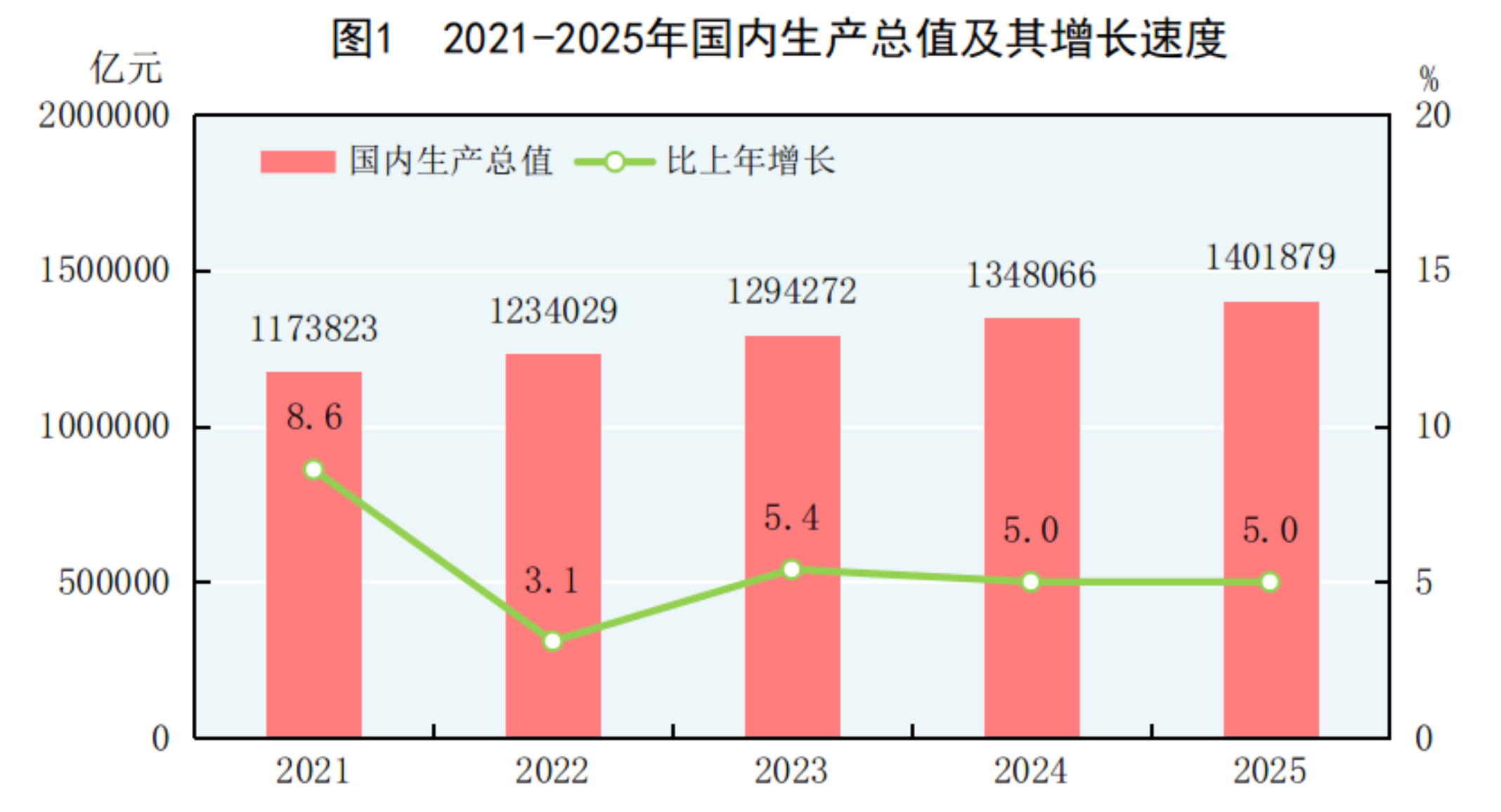
Economic Overview - In 2025, China's GDP reached 140,187.9 billion yuan, growing by 5.0% year-on-year, with the primary industry increasing by 3.9%, the secondary industry by 4.5%, and the tertiary industry by 5.4% [5] - The per capita GDP was 99,665 yuan, reflecting a 5.1% increase from the previous year [5] - The total national income was 1,393,700 million yuan, also up by 5.1% [5] Employment and Labor - The total employment reached 72,504 million, with urban employment accounting for 65.6% [6] - Urban new employment increased by 1,267 million, surpassing the previous year's figures by 110,000 [6] - The average urban survey unemployment rate was 5.2%, with a year-end rate of 5.1% [6] Industrial Growth - The total industrial output value was 416,826 billion yuan, marking a 5.8% increase [11] - The manufacturing sector saw a growth of 6.4%, with significant increases in automotive manufacturing (11.5%) and electrical machinery (9.2%) [12] - Profits from industrial enterprises reached 73,982 billion yuan, a slight increase of 0.6% [13] Agricultural Production - Total grain production was 714.88 million tons, an increase of 1.2% year-on-year [10] - The production of cotton rose by 7.7%, while oilseed production increased by 2.9% [10] Trade and Investment - The total import and export value was 454,685 billion yuan, growing by 3.8%, with exports increasing by 6.1% [20] - In January 2026, foreign direct investment amounted to 920.1 billion yuan, with a 25.5% increase in newly established foreign-invested enterprises [42] - The manufacturing sector attracted 260.9 billion yuan in foreign investment, while the service sector received 640.4 billion yuan [43] Consumer Market - The total retail sales of consumer goods reached 501,202 billion yuan, growing by 3.7% [16] - Online retail sales accounted for 26.1% of total retail sales, amounting to 130,923 billion yuan, a 5.2% increase [18] Financial Sector - The broad money supply (M2) increased by 8.5% to 340.3 trillion yuan [22] - The total social financing scale increased by 35.6 trillion yuan, with a year-end stock of 442.1 trillion yuan [22] Technological Development - R&D expenditure reached 39,262 billion yuan, growing by 8.1% [29] - The number of patents granted was 972,000, although this represented a 7.0% decrease from the previous year [29] Environmental Progress - Carbon emissions per unit of GDP decreased by 5.0% [9] - Clean energy generation increased by 14.4%, with significant growth in solar and wind energy [9]

中华人民共和国2025年国民经济和社会发展统计公报
Guo Jia Tong Ji Ju· 2026-02-28 01:33
Economic Overview - The GDP for the year reached 140,187.9 billion yuan, growing by 5.0% compared to the previous year [3] - The primary industry added value was 93,347 billion yuan (3.9% growth), the secondary industry was 499,653 billion yuan (4.5% growth), and the tertiary industry was 808,879 billion yuan (5.4% growth) [3] - The per capita GDP was 99,665 yuan, reflecting a 5.1% increase year-on-year [3] Population and Employment - The total population at the end of the year was 1,404.89 million, a decrease of 3.39 million from the previous year [9] - The urban population was 953.80 million, accounting for 67.9% of the total population [7] - The total employment reached 72.50 million, with an urban employment rate of 65.6% [8] Industrial Performance - The total industrial added value was 416,826 billion yuan, marking a 5.8% increase [24] - The manufacturing sector saw a growth of 6.4%, with significant increases in automotive manufacturing (11.5%) and high-tech manufacturing (9.4%) [26][31] - The profits of industrial enterprises reached 73,982 billion yuan, a 0.6% increase year-on-year [31] Agricultural Output - The total grain output was 714.88 million tons, an increase of 1.2% from the previous year [21] - The production of pork was 59.38 million tons, reflecting a growth of 4.1% [23] Service Sector Growth - The value added by the wholesale and retail sector was 145,808 billion yuan, growing by 5.0% [36] - The information transmission, software, and IT services sector grew by 11.1% [36] Trade and Investment - The total import and export value reached 454,685 billion yuan, with exports growing by 6.1% and imports by 0.5% [60] - Foreign direct investment amounted to 747.7 billion yuan, a decrease of 9.5% [69] Financial Sector - The broad money supply (M2) increased by 8.5% to 340.3 trillion yuan [76] - The total social financing scale increased by 35.6 trillion yuan, with a year-end balance of 442.1 trillion yuan [77]
2025年山东服务业实现增加值55881亿元,同比增长6.1%
Feng Huang Wang Cai Jing· 2026-02-14 00:08
Core Insights - The service industry in Shandong Province has shown significant growth and stability in 2025, contributing to the overall economic development of the region [1] Group 1: Service Industry Performance - In 2025, the service industry achieved a value-added output of 55,881 billion yuan, with a year-on-year growth of 6.1%, marking a 0.5 percentage point increase from the previous year [1] - The contribution rate of the service industry's value-added output to the provincial economic growth reached 59.1%, driving a 3.2 percentage point increase in overall economic growth [1] - The proportion of the service industry's value-added output in the Gross Domestic Product (GDP) reached 54.1%, an increase of 0.8 percentage points from the previous year, indicating a more balanced and coordinated industrial structure [1] Group 2: Traditional Service Sector - Traditional service sectors such as wholesale and retail, transportation and storage, and accommodation and catering achieved value-added growth rates of 7.0%, 7.0%, and 6.0% respectively, collectively contributing 1.4 percentage points to economic growth [2] - Innovations in traditional services, such as the upgrade of smart terminal facilities at Qingdao Port, have significantly improved operational efficiency, showcasing the sector's quality enhancement [2] Group 3: Emerging Service Sectors - New economic sectors are accelerating transformation, with significant growth in information transmission, software and IT services, leasing and business services, and finance, which saw value-added growth rates of 8.1%, 9.9%, and 5.7% respectively, contributing 0.8 percentage points to economic growth [3] - The revenue of artificial intelligence companies in Shandong maintained over 30% growth, with core industry revenue exceeding 120 billion yuan, highlighting the deep integration of the digital economy with the service sector [3] Group 4: Business Environment and Outlook - The service industry’s business climate index remained in a "relatively prosperous" range throughout 2025, indicating stable operational conditions and growing confidence in market prospects [3] - By the end of 2025, the number of large-scale service enterprises in Shandong reached 17,000, reflecting a net increase of over 1,000 from the previous year, demonstrating strong market vitality and resilience [3]
黄冈正合酒店管理有限公司成立,注册资本300万人民币
Sou Hu Cai Jing· 2026-02-11 05:15
Group 1 - The establishment of Huanggang Zhenghe Hotel Management Co., Ltd. has been registered with a legal representative named Xia Dan and a registered capital of 3 million RMB [1] - Huanggang Zhenghe Catering Service Co., Ltd. holds 100% ownership of the new hotel management company [1] - The business scope includes hotel management, catering management, takeaway delivery services, and food sales (only pre-packaged food) [1] Group 2 - The company is classified under the national standard industry of accommodation and catering, specifically in the lodging sector [1] - The registered address of the company is located at No. 41, Xinguang Avenue, Huangzhou District, Huanggang City, Hubei Province [1] - The company is a limited liability company with a natural person investment or holding structure, and its business term is set until February 10, 2026, with no fixed expiration [1]
2025年住宿和餐饮业增加值累计值为2.64万亿元
Chan Ye Xin Xi Wang· 2026-02-10 03:47
Core Insights - The value added by the accommodation and catering industry in the fourth quarter of 2025 is reported to be 0.79 trillion yuan, with a cumulative value of 2.64 trillion yuan for the same period [1] - The value added index for the accommodation and catering industry in the fourth quarter of 2025 stands at 105.6 for the quarter and 104.9 cumulatively [1] Summary by Category Industry Performance - The accommodation and catering industry shows a quarterly value added of 0.79 trillion yuan for Q4 2025 [1] - The cumulative value added for the accommodation and catering industry in Q4 2025 reaches 2.64 trillion yuan [1] Index Analysis - The value added index for the fourth quarter of 2025 is recorded at 105.6, indicating growth compared to previous periods [1] - The cumulative value added index for the accommodation and catering industry in Q4 2025 is 104.9, reflecting overall industry performance [1]

内蒙古“四上”单位 突破1.5万个
Xin Lang Cai Jing· 2026-02-08 19:33
Core Insights - The number of "Four Above" units in Inner Mongolia is projected to reach 15,098 by the end of 2025, representing an increase of 1,102 units or a growth rate of 7.9% compared to the previous year [1] Summary by Category - **Wholesale and Retail Units**: There are 4,362 units in the wholesale and retail sector, which is an increase of 469 units, reflecting a growth of 12.0%. This sector contributed the most to the overall growth of "Four Above" units, accounting for a 3.4 percentage point increase [1] - **Accommodation and Catering Units**: The number of accommodation and catering units reached 1,040, with an increase of 127 units, marking a growth rate of 13.9%, the highest among all categories [1] - **Service Industry Units**: There are 2,117 units in the scale of service industry (excluding trade), which increased by 116 units, showing a growth of 5.8% [1] - **Industrial Units**: The scale of industrial units stands at 4,343, with an increase of 271 units, resulting in a growth rate of 6.7% [1] - **Construction Units**: There are 1,604 qualified construction units, which increased by 112 units, reflecting a growth of 7.5% [1] - **Real Estate Development Units**: The number of real estate development units is 1,632, with a modest increase of 7 units, resulting in a growth rate of 0.4% [1]
徐州未能晋级万亿GDP之城
2 1 Shi Ji Jing Ji Bao Dao· 2026-02-02 05:48
Core Insights - Xuzhou's GDP reached 953.7 billion yuan in 2024, nearing the trillion yuan target, generating high expectations for 2025 [2] - The government report indicated a GDP growth target of approximately 5.8% for 2025, without specifying a clear GDP figure [2][4] - Xuzhou's mayor emphasized the importance of focusing on development rather than being fixated on the trillion yuan milestone [4] Economic Performance - In 2025, Xuzhou's GDP is projected to be 995.72 billion yuan, reflecting a 5.8% increase year-on-year, which is below the 6% target but exceeds the national average growth rate of 5.0% [4][5] - The primary industry added value was 79.25 billion yuan, growing by 3.0%; the secondary industry reached 365.63 billion yuan, with a growth of 3.5%; and the tertiary industry achieved 550.85 billion yuan, growing by 8.0% [5] - Industrial production saw a 6.8% increase in the added value of large-scale industries, with significant growth in chemical fiber manufacturing (10.5%), agricultural and sideline food processing (13.1%), and electrical machinery manufacturing (18.6%) [5] Investment Trends - Fixed asset investment in Xuzhou decreased by 11.9% year-on-year, which is significantly lower than the national average decline of 3.8% [5] - Investment in the primary industry fell by 27.4%, the secondary industry by 11.5%, and the tertiary industry by 11.9% [5] - Notable growth in specific sectors included textile (36.5%), automotive manufacturing (18.4%), and furniture manufacturing (9.5%) [5] Consumer and Income Data - Retail sales of consumer goods in 2025 are expected to grow by 5.5%, with significant increases in food (18.5%), clothing (15.5%), and communication equipment (11.5%) [6] - The per capita disposable income in Xuzhou is projected to be 42,230 yuan, reflecting a 4.9% increase year-on-year, with urban residents earning 48,978 yuan (4.3% growth) and rural residents earning 30,639 yuan (5.6% growth) [6]

民间投资向新向优势不可挡
Jing Ji Ri Bao· 2026-01-31 02:36
Group 1 - The structural leap in private investment is a result of precise macro policy guidance and market opportunities resonating together, with policies aimed at reducing barriers, expanding avenues, and improving the environment effectively stabilizing market expectations and boosting investment confidence [1][3] - A comprehensive package of policies to stimulate domestic demand was implemented on January 20, focusing on private investment, including loan interest subsidies for small and micro enterprises, special guarantee plans for private investment, and risk-sharing mechanisms for private enterprise bonds [1] - Despite a decline in overall private investment growth since 2025 due to macro factors like the deep adjustment of the real estate market, there has been a significant optimization in the structure of private investment, shifting from traditional sectors like real estate and general manufacturing to new technologies, new infrastructure, new services, and new livelihoods [1][2] Group 2 - The transition towards "new" and "better" is unstoppable, with private investment embracing new productive forces and modern industrial systems, as evidenced by a 0.6% growth in private investment in the manufacturing sector despite a 3.8% decline in overall fixed asset investment in 2025 [2] - Investment in high-tech services and consumer sectors has become new hotspots for private investment, with significant growth in information transmission and water management sectors, as well as in accommodation, catering, and cultural entertainment industries [3] - To sustain and enhance private investment confidence and vitality, deep structural reforms are necessary, focusing on promoting "fair rules" rather than just "equal identity," ensuring that private capital can not only enter the market but also compete fairly [3][4]