自然保护

Search documents
国务院 批复同意!
Zheng Quan Shi Bao· 2025-09-10 14:13
Group 1: Healthcare Strengthening Project - The State Council has approved the "Healthcare Strengthening Project Implementation Plan," aiming to enhance grassroots healthcare services and infrastructure by 2027 and 2030 [1][3][4] - By 2027, the plan targets a more rational layout of grassroots healthcare institutions, improved facilities, and increased public health service capabilities, with a goal for residents to access medical services within 15 minutes [6][7] - By 2030, the project aims for a more robust grassroots healthcare system, improved talent development, and enhanced digitalization, ensuring equitable public health services and quality medical care [6][8] Group 2: Key Tasks of the Healthcare Plan - The plan includes optimizing the layout of grassroots healthcare institutions, establishing a comprehensive rural healthcare service system, and enhancing urban community health services [7][8] - It emphasizes the functional positioning of healthcare institutions, ensuring county hospitals handle common and critical illnesses while community health centers provide basic public health services [8][9] - The plan promotes the establishment of tightly-knit medical alliances to enhance resource allocation and service quality across healthcare institutions [9][10] Group 3: Public Health Services and Medical Support - The plan outlines actions to improve basic public health services, focusing on health education and management for vulnerable populations, aiming for a 70% management rate for chronic diseases by 2030 [10][11] - It includes initiatives to enhance basic medical services through capacity building and support for county-level healthcare institutions, ensuring high service standards in rural areas [11][12] - The plan also addresses the need for targeted services for key populations, including children and the elderly, and promotes integrated healthcare and elderly care services [12][13] Group 4: Environmental Protection Initiative - The State Council has approved the establishment of the Huangyan Island National Nature Reserve, aimed at preserving the ecological diversity and stability of the area [20][21] - The initiative mandates strict adherence to environmental protection regulations and enhanced management to prevent illegal activities within the reserve [20][21]
国务院,批复同意!
Zheng Quan Shi Bao· 2025-09-10 10:56
Group 1: Healthcare Strengthening Project - The State Council has approved the "Healthcare Strengthening Project Implementation Plan," aiming to enhance grassroots healthcare services by 2027 and 2030 [1][3][5] - By 2027, the plan targets a more rational layout of grassroots healthcare institutions, improved facilities, and increased public health service capabilities, with a goal for residents to reach the nearest healthcare point within 15 minutes [7][8] - By 2030, the project aims for a more robust grassroots healthcare system, a growing talent pool, improved facilities and digitalization, and enhanced equality in public health services [7][9] Group 2: Key Tasks of the Healthcare Plan - The plan includes optimizing the layout of grassroots healthcare institutions, establishing a comprehensive rural healthcare service system, and improving emergency medical capabilities [8][9] - It emphasizes the importance of functional positioning for healthcare institutions, ensuring that county hospitals handle common and chronic diseases while community health centers provide basic public health services [9][10] - The plan also focuses on strengthening the construction of tightly-knit medical alliances to enhance resource allocation and service quality at the grassroots level [10][11] Group 3: Public Health Services and Medical Capacity - The project aims to enhance basic public health services, focusing on key populations such as pregnant women and the elderly, with a target of 70% management service rate for chronic diseases by 2030 [11][12] - It includes actions to improve basic medical services, ensuring that healthcare institutions meet service capacity standards and promoting family doctor contracts [12][13] - The plan outlines measures to enhance the healthcare workforce, including training and retaining medical professionals in rural areas [16][18] Group 4: Environmental Protection Initiative - The State Council has approved the establishment of the Huangyan Island National Nature Reserve, which is crucial for maintaining the ecological diversity and stability of the area [2][20] - The reserve's management will adhere to strict environmental protection regulations, with a focus on enhancing oversight and enforcement against violations [20][21]
国务院,批复同意!
证券时报· 2025-09-10 10:11
Core Viewpoint - The State Council has approved the "Medical and Health Strong Foundation Project Implementation Plan," aiming to enhance grassroots medical services and ensure equitable access to healthcare by 2030 [2][4]. Summary by Sections Medical and Health Strong Foundation Project - The plan aims to improve the layout of grassroots medical institutions by 2027, ensuring that residents can reach the nearest medical service point within 15 minutes [2][6]. - By 2030, the grassroots medical service system will be further improved, with a focus on talent development, facility upgrades, and digitalization [2][7]. - The project emphasizes the importance of a coordinated development of traditional Chinese medicine and Western medicine [2][7]. Main Tasks - **Optimizing Planning**: The plan includes enhancing the rural healthcare service system, integrating management of rural medical institutions, and improving emergency medical capabilities [8]. - **Functionality of Institutions**: County hospitals will focus on common and chronic diseases, while community health centers will provide basic public health services [9]. - **Building Medical Alliances**: The establishment of tightly-knit medical alliances to ensure resource sharing and improve service quality [10]. - **Public Health Services**: The plan aims to enhance public health services, particularly for vulnerable populations, and improve management of chronic diseases [11]. - **Basic Medical Services**: The initiative includes enhancing the capabilities of county-level medical institutions and ensuring high-quality service delivery [12]. - **Targeted Population Services**: Focus on children, the elderly, and individuals with chronic conditions, promoting integrated healthcare services [13]. - **Disease Prevention and Control**: Reforming disease prevention systems to improve monitoring and response capabilities [14]. - **Promotion of Traditional Medicine**: Encouraging the use of traditional Chinese medicine in grassroots healthcare [15]. - **Infrastructure Upgrades**: Investment in upgrading medical facilities and equipment in rural areas [16]. - **Talent Development**: Building a robust healthcare workforce through training and recruitment initiatives [16]. - **Digital Health Services**: Enhancing digital health services to improve data sharing and patient management [17]. - **Incentive Mechanisms**: Implementing policies to incentivize the development of grassroots healthcare services [18]. Support Measures - **Organizational Implementation**: Emphasizing the importance of local governments in executing the plan effectively [19]. - **Planning Guidance**: Integrating the project into broader economic and social development plans [19]. - **Financial Support**: Ensuring adequate funding for public health services and grassroots healthcare institutions [19]. - **Monitoring and Guidance**: Regularly tracking the implementation progress and providing necessary support [19]. Nature Conservation - The State Council has approved the establishment of the Huangyan Island National Nature Reserve to protect its ecological diversity and stability [3][20]. - Strict enforcement of environmental protection regulations will be required to ensure the effective management of the reserve [3][20].


哈萨克斯坦在其境内天山西麓设立自然保护区
Xin Hua She· 2025-08-21 06:42
Core Viewpoint - Kazakhstan has established the Melk Natural Park to protect the Tian Shan mountain ecosystem and biodiversity within its territory [1] Group 1: Establishment of the Park - The Melk Natural Park was officially established on August 20, covering an area of 86,632 hectares [1] - The park is located in the Zhambyl region and has been granted national-level special protected area status [1] Group 2: Objectives and Biodiversity - The primary aim of the park is to protect rare animal and plant species and maintain the balance of the mountain ecosystem [1] - The park is home to various rare species, including snow leopards, argali sheep, porcupines, and lynxes [1] Group 3: Collaborative Efforts - The establishment of the Melk Natural Park is the result of years of collaboration among the Kazakh government, research institutions, local residents, and the United Nations Development Programme [1] - In addition to conservation measures, the park will also focus on research, public education, and the development of eco-tourism [1]
虎豹翻倍 猿声重现!卫星俯瞰中国“最美国土”生灵复苏
Yang Shi Xin Wen· 2025-08-19 17:35
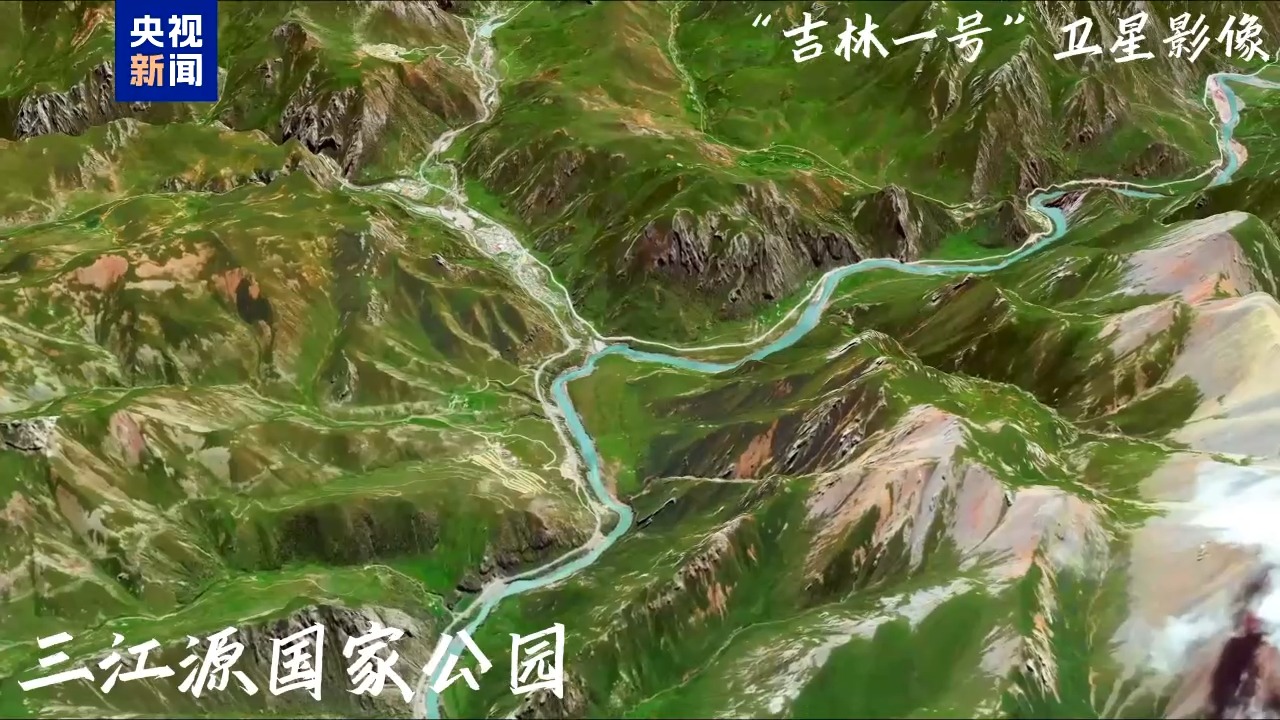
Core Viewpoint - The construction of China's national park system has made significant progress, integrating over 120 various natural protected areas and enhancing ecosystem protection and governance [1][3]. Group 1: National Parks Achievements - The Sanjiangyuan National Park plays a crucial role in maintaining the ecological safety of the "Chinese Water Tower" and Asia's water ecosystem [1]. - The Giant Panda National Park has achieved a complete unification of the wild giant panda's core distribution areas and main breeding habitats [2]. - The population of wild tigers and leopards in the Northeast Tiger and Leopard National Park has increased from 27 and 42 to approximately 70 and 80, respectively [3]. - The Hainan Tropical Rainforest National Park has seen the near-extinction of the Hainan gibbon turn into the only growing population of gibbons globally [3]. - The Wuyi Mountain National Park protects a world natural and cultural heritage site and serves as a complete gene pool for subtropical forests at the same latitude globally [3]. Group 2: Future Plans - China has established a unique national park system framework, aiming to steadily and orderly advance the establishment of new national parks, with a goal to build the largest national park system in the world by 2035 [3].
国家公园建设成效显著 自然保护地体系建设进入新阶段
Yang Shi Xin Wen· 2025-08-04 01:01
Core Insights - The establishment of national parks in China since 2021 has led to significant improvements in ecological protection and biodiversity [1] Group 1: Sanjiangyuan National Park - Sanjiangyuan National Park protects the source ecosystems of the Yangtze, Yellow, and Lancang Rivers, with grassland vegetation coverage increasing by 8.6% since establishment [2] - Local residents' annual income has increased by 15,000 to 21,000 yuan, enhancing their sense of well-being [2] Group 2: Giant Panda National Park - The park has connected 13 local giant panda populations and built 6 ecological corridors, addressing habitat fragmentation [3] - The wild giant panda population has recovered from approximately 1,100 in the 1980s to around 1,900 [3] Group 3: Northeast Tiger and Leopard National Park - The park has facilitated wildlife migration and established a modern monitoring system, with the populations of Northeast tigers and leopards increasing from 27 and 42 to about 70 and 80, respectively [4] - The presence of Northeast tigers has been recorded in the Changbai Mountain area for the first time in 30 years [4] Group 4: Hainan Tropical Rainforest National Park - The park has successfully restored damaged natural forests, with the population of the critically endangered Hainan gibbon increasing from 35 individuals in 5 groups to 42 individuals in 7 groups [5] - The income of relocated residents is now nearly four times higher than before relocation [5] Group 5: Wuyi Mountain National Park - The park has integrated ecological protection efforts across Fujian and Jiangxi provinces, discovering new species such as the Rain God Toad [6] - The establishment of ecological tea gardens has improved ecological compensation standards [6] Group 6: National Park System Development - China's national park system is now in a phase of systematic integration and comprehensive advancement [7] - The third National Park Forum is scheduled for August 18-19, where the latest achievements in national park construction will be shared [7]
我国第一批国家公园都取得哪些成效?国家林草局回应
Xin Jing Bao· 2025-07-31 05:07
Core Insights - The establishment of the first batch of national parks in China has led to significant ecological and economic benefits, including increased wildlife populations and improved livelihoods for local residents [1][2][3] Group 1: Achievements of National Parks - Sanjiangyuan National Park has integrated the source areas of the Yangtze and Yellow Rivers, employing 23,000 local residents for ecological management, resulting in an 8.6% increase in grassland vegetation coverage and an annual income increase of 15,000 to 21,000 yuan for residents [1] - The Giant Panda National Park has connected 73 natural reserves across three provinces, increasing the wild panda population from 1,100 in the 1980s to approximately 1,900 today, with a 110 million yuan investment in research and conservation [1][2] - The Northeast Tiger and Leopard National Park has established a modern monitoring system, increasing the populations of Northeast tigers and leopards from 27 and 42 to around 70 and 80, respectively, with a significant expansion of their habitat [2] - Hainan Tropical Rainforest National Park has successfully increased the population of the critically endangered Hainan gibbon from 35 to 42 individuals, while also significantly boosting the income of relocated residents [2] - Wuyi Mountain National Park has integrated ecological protection efforts between Fujian and Jiangxi provinces, discovering new species and maintaining a stable population of the yellow-bellied pheasant [2] Group 2: Management and Innovation - The National Forestry and Grassland Administration has approved overall planning and monitoring systems for national parks, promoting innovative approaches in wildlife hazard prevention, natural education, and ecological experiences [3]
广东高水准推进绿美保护地建设 物种数量和种群规模呈扩大态势
Zhong Guo Chan Ye Jing Ji Xin Xi Wang· 2025-06-16 14:20
Core Viewpoint - Guangdong province is enhancing its natural protection areas through comprehensive actions aimed at ecological preservation and restoration, with a target to increase the area of natural protection zones significantly by 2035 [2][3][6] Group 1: Natural Protection Area Development - Guangdong has the earliest and largest number of natural protection areas in China, with 1,361 existing sites [1][2] - The province aims for natural protection areas to cover over 15% of its land area and 8% of its marine area by 2035 [2] - A unified and efficient natural protection system is being established, supported by various regulatory frameworks [2] Group 2: Ecological Protection Actions - The "Green and Beautiful Protection Area Enhancement Action" is one of the six major ecological initiatives in Guangdong, focusing on improving the quality and service capabilities of natural protection areas [3] - Continuous monitoring and enforcement actions are being implemented to combat human activities that threaten these areas [4][5] Group 3: Technological Integration - Modern technology is being utilized for monitoring and managing wildlife and natural protection areas, including infrared camera networks and remote monitoring systems [4][5] - A digital network for biodiversity protection has been established, enhancing the management of natural reserves [5] Group 4: Ecological Benefits and Community Engagement - The ecological benefits from these initiatives are being realized, with numerous events and educational programs promoting biodiversity and ecological awareness [6][7] - The province is fostering eco-tourism and related industries, allowing local communities to share in the economic benefits derived from natural protection areas [7]
在融入中赋能文化和自然遗产焕新彩聚焦文化和自然遗产日在融入中赋能文化和自然遗产焕新彩
Da Zhong Ri Bao· 2025-06-15 00:34
Group 1 - The "Cultural and Natural Heritage Day" is celebrated on the second Saturday of June each year in China, with over a thousand cultural and museum-themed activities held across Shandong province, showcasing its rich historical and cultural resources [2] - The Shandong Museum hosted a special event on June 14, where parents and children learned the basics of Shandong embroidery under professional guidance, emphasizing the importance of intangible cultural heritage [2] - Two major exhibitions were launched at the Shandong Museum: one focusing on Qing Dynasty calligraphy featuring 55 pieces from renowned masters, and another highlighting stories of ancient honest officials from Shandong through over 70 artifacts [2] Group 2 - Various non-material cultural heritage activities were organized across the province, including workshops and exhibitions, under the theme "Integrating into Modern Life - Intangible Heritage is Youthful," allowing the public to experience traditional culture [3] - The main event for the Cultural and Natural Heritage Day in Shandong will take place on June 16, 2025, in Tai'an, where the Shandong Archaeological Park Alliance will be established and an archaeological study map will be released [3] - The Dongying region saw the establishment of the Oriental Stork Protection Research Center, with significant breeding data reported for various bird species, indicating a stable and growing population in the Yellow River Delta [3]
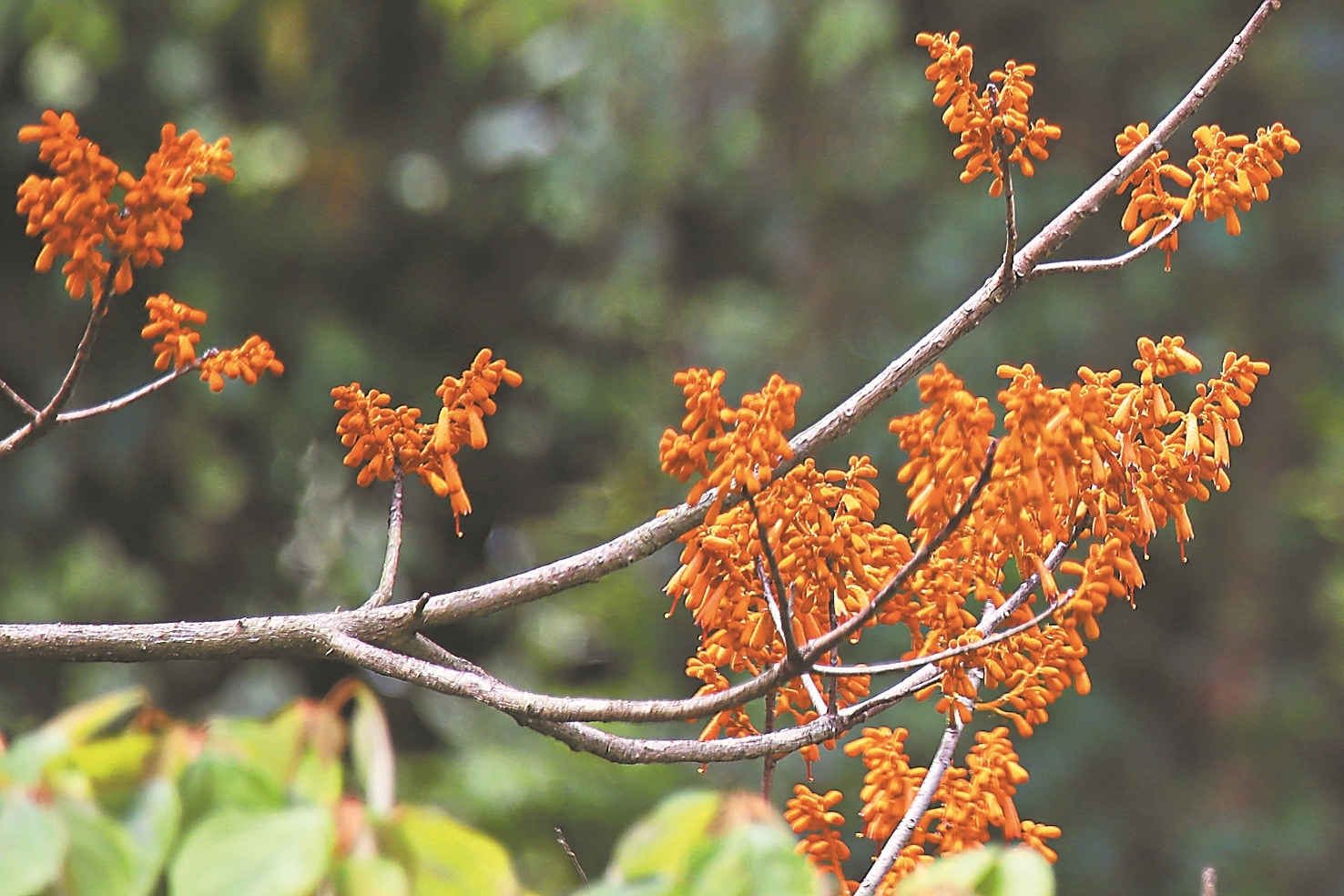
一级保护植物广西火桐首现西大明山
Guang Xi Ri Bao· 2025-06-13 02:06
Core Viewpoint - The discovery of the critically endangered species, Guangxi Fire Tree, in the Xidaming Mountain Nature Reserve highlights the ecological value and biodiversity of the region, marking it as a new habitat for this rare plant [3][4]. Group 1: Discovery and Significance - A unique plant, Guangxi Fire Tree, was found in the Xidaming Mountain Nature Reserve, characterized by its bright orange-red flowers and absence of green leaves during its flowering period [3]. - The Guangxi Fire Tree (Firmiana kwangsiensis H.H.Hsue) is a deciduous tree native to southern China, which was upgraded from national second-level protection to first-level protection in 2021 and classified as "Critically Endangered" (CR) by the IUCN [3]. - The discovery increases the number of national first-level protected plant species in the reserve to five, enhancing the ecological value of the area [3]. Group 2: Conservation Efforts - The Xidaming Mountain Nature Reserve has seen significant improvements in its ecological environment due to increased investment and management efforts focused on ecological restoration, biodiversity monitoring, and combating environmental violations [4]. - The finding of the Guangxi Fire Tree serves as a testament to the successful outcomes of these ecological protection initiatives [4].