
非遗

Search documents
走出大山、走向全国,甘肃叫响“甘味”劳务品牌
Xin Lang Cai Jing· 2026-02-26 19:41
Core Viewpoint - Gansu has positioned labor brand development as a key strategy for stabilizing employment, increasing income, and promoting revitalization, aiming to create 75 provincial labor brands by the end of 2025, which will support over 1.4 million stable jobs and entrepreneurial opportunities [1][2]. Group 1: Labor Brand Development - Gansu has transitioned from a spontaneous labor output model to a systematic cultivation approach, focusing on quality improvement rather than just quantity expansion [2]. - The "Lanzhou Noodle Master" and other labor brands have generated cross-regional effects, creating job opportunities for over 1 million people in Gansu, Qinghai, Ningxia, and Henan [2]. - The provincial government has launched a plan to enhance labor brand cultivation from 2026 to 2028, aiming to exceed 100 provincial brands by 2028 [2]. Group 2: Skills Training - Skills training has become essential for establishing a solid foundation for labor brands, shifting from a reliance on informal networks to structured training programs [3]. - Gansu has implemented a four-part service model combining job demand, skills training, skills evaluation, and employment guidance, resulting in over 300,000 training sessions conducted in the past three years [3][4]. - The introduction of standardized training courses, such as the "Lanzhou Beef Noodle Making" digital course, has been adopted in over 200 vocational schools and training institutions nationwide, aiming to train 50,000 qualified noodle chefs annually [4]. Group 3: Differentiated Brand Cultivation - Gansu has established a four-tier cultivation mechanism to avoid brand homogenization, focusing on local resources and unique cultural attributes [5][6]. - Local specialties, such as "Dunhuang Floral Artist" and "Yugur Embroidery Master," have been developed to leverage regional cultural resources [5]. - The province aims to conduct over 100,000 labor brand skill training sessions within three years, promoting the concept of "one county, one product" [6]. Group 4: Cross-Regional Collaboration - Gansu is breaking regional barriers to promote labor brands from local to national levels, signing agreements with Shandong and Ningxia for labor cooperation [7]. - In 2025, Gansu facilitated the transfer of 52,000 rural laborers through collaborative mechanisms with other provinces [7]. - Traditional state-owned enterprises are also participating in labor brand initiatives, such as training 500 petrochemical skilled workers for Turkmenistan [7]. Group 5: Integration with Industry - Labor brands are evolving from mere employment identifiers to integral parts of local industries, enhancing related sectors such as processing, packaging, and logistics [8]. - The "Lanzhou Noodle Master" brand is not only providing labor but also driving the development of associated industries [8]. - The ongoing actions are expected to inject continuous momentum into high-quality employment and comprehensive rural revitalization [8].
【光明论坛】多措并举扩大乡村消费
Xin Lang Cai Jing· 2026-02-25 19:59
Core Viewpoint - The 2026 Central No. 1 Document emphasizes "multiple measures to expand rural consumption," aiming to enhance consumption facilities and services, and cultivate new consumption formats and scenarios in rural areas, which is a strategic move to activate the internal driving force for comprehensive rural revitalization and respond to farmers' aspirations for a better life [1] Group 1: Expansion of Rural Consumption - Expanding rural consumption requires breaking through the "last mile" of agricultural product sales, revitalizing the original vitality in rural areas. The document proposes cultivating "harvest markets" to connect production and consumption, addressing the long-standing issues of agricultural surplus not reaching consumers [1] - The example of Guizhou Meitan illustrates how local advantages in tea production can create a new consumption scene by integrating offline exhibitions, online live streaming, and cultural experiences, effectively linking production and sales [1] Group 2: New Consumption Formats - The document highlights the cultivation of new consumption formats such as non-heritage workshops, aiming to bring traditional skills into daily consumption, thus achieving cultural inheritance, farmer income increase, and consumption upgrade [2] - The Beijing Jingxi Rice Agricultural Heritage site exemplifies this by integrating non-heritage workshops with farming culture, allowing visitors to engage in traditional farming practices and purchase related products, thereby enriching rural cultural consumption [2] - The rise of "micro-vacations" reflects a growing preference for rural landscapes, with the document advocating for the development of leisure camping as a new format to transform scenic beauty into consumption scenarios, merging ecological and economic benefits [2] Group 3: Infrastructure and Regulatory Support - Expanding rural consumption necessitates both "hardware upgrades" and "software optimization," with ongoing efforts to promote the adoption of electric vehicles and smart home appliances in rural areas, and the gradual improvement of logistics networks [3] - Continuous market regulation efforts aim to combat counterfeit products and enhance the consumption environment, promoting "quality consumption," "green consumption," and "convenient consumption" as new directions for rural consumption [3] Group 4: Innovation and Development - The integration of various practices such as "harvest markets + village broadcasting," "non-heritage + consumption," and "camping + cultural tourism" demonstrates that innovation in formats, infrastructure improvement, and service upgrades can effectively bridge urban and rural consumption cycles [3] - The document stresses the importance of leveraging local resources and identifying key points for rural consumption to stimulate economic growth and ensure that rural areas become attractive and vibrant consumption spaces [3]
厂甸庙会邀您沿街“寻马”
Xin Lang Cai Jing· 2026-02-08 21:39
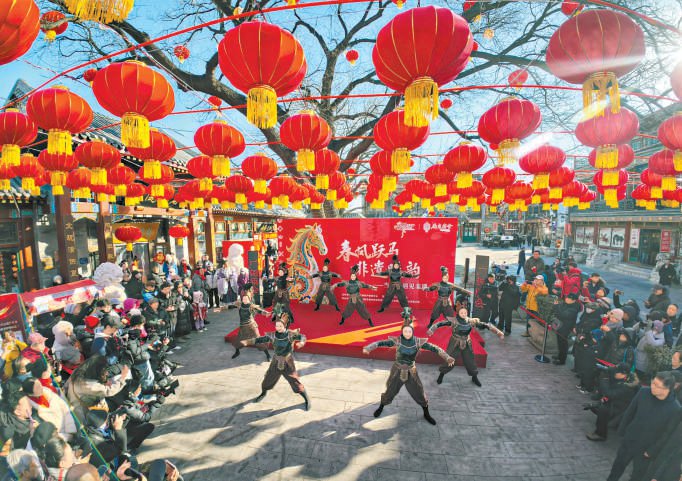
Core Viewpoint - The "Spring Breeze Rides the Horse, Intangible Cultural Heritage Warm Rhythm" event is set to take place from February 8 to 16, 2026, in the core areas of Liulichang, aiming to create a festive atmosphere for the upcoming Spring Festival and promote intangible cultural heritage [1][2]. Group 1: Event Details - The event will feature 33 intangible cultural heritage projects, 24 hands-on experiences, and 10 special performances, utilizing both fixed presentations and mobile displays to engage visitors [1]. - The first day of the event included performances such as the original Peking opera "Dragon Horse Brings Blessings" and a dance titled "Galloping Horses," showcasing the theme of the Year of the Horse [1][2]. Group 2: Interactive Activities - The Fire God Temple will serve as the main venue for intangible cultural heritage experiences, featuring the "Intangible Heritage Cube" showcasing traditional products like Li Nengsheng cloth shoes and Ruifuxiang silk [2]. - Interactive games such as "Flying Flower Order" and riddles will be held, allowing participants to exchange "silver tickets" for cultural creative gifts [2][3]. Group 3: Cultural Exhibitions - Various exhibitions will be held, including the "Hundred Years of Factory Dian" cultural exhibition and the "Chasing Ink and Emotions: Xu Beihong's Horse Art" exhibition, among others [2][3]. - A unique "Searching for the Horse" activity will encourage visitors to find 66 horse figures hidden along the streets, enhancing the interactive experience [3]. Group 4: Public Engagement - The event aims to transform the traditional static exhibition model of intangible cultural heritage into a more interactive experience, encouraging public participation through games and direct engagement with heritage practitioners [3]. - Citizens can find more details and make reservations through the official WeChat account of the Xicheng District Cultural Relics Protection Management Center [4].

“文化+”让江苏发展更有料
Xin Hua Ri Bao· 2026-02-05 22:52
Group 1 - The provincial government emphasizes the importance of "cultural empowerment" for economic and social development, focusing on cultural tourism integration and cultural heritage [1] - The micro-short drama has emerged as a significant trend in the internet era, contributing to artistic creation, enhancing various industries, and enriching the cultural life of the public [1] - The Jiangsu Provincial Broadcasting and Television Bureau has developed a plan for the network audio-visual industry chain (2025-2027) to address key bottlenecks in micro-short drama development and foster new growth momentum [1] Group 2 - There is a call for collaborative efforts in promoting cultural empowerment through quality content creation and building a robust industry ecosystem [2] - Financial support and creative guidance will be provided for outstanding works focusing on contemporary themes, local development, and intangible cultural heritage [2] - The integration of intangible cultural heritage into everyday life and tourism remains a challenge, with a need for innovative performances that resonate with tourist experiences [2] Group 3 - The "Reading City" initiative has been launched in Jiangsu to activate urban cultural memories and shape cultural IP, leveraging historical cultural districts and buildings as key resources [3] - The deep cultural heritage of cities is viewed as a valuable asset that can enhance urban attractiveness and foster public appreciation for local culture [3] - The initiative aims to engage the public with historical cultural districts, promoting a deeper connection with local cultural identity and facilitating the integration of historical and urban cultural development [3]

“年货经济”里的文旅消费新气象
Sou Hu Cai Jing· 2026-02-05 11:12
Core Insights - The "New Year Goods Economy" has evolved into a significant consumption model during the period from the Winter Solstice to the Lantern Festival, expanding from traditional food and clothing to include health, entertainment, and cultural tourism, thus becoming a vital engine for driving consumption, cultural transmission, and economic activation [1][22]. Group 1: Cultural and Experiential Consumption - The traditional practice of purchasing New Year goods has become more diverse, with cultural and experiential products gaining popularity alongside traditional items like food and clothing [2][25]. - Non-material experiences, such as interactive games and performances, are increasingly integrated into New Year markets, enhancing the festive atmosphere and providing immersive experiences for consumers [3][25]. - Events like the "Non-Heritage New Year Market" showcase local craftsmanship and cultural heritage, attracting visitors and enhancing community engagement [3][28]. Group 2: Regional Characteristics and Local Brands - New Year markets across China exhibit distinct regional characteristics, contributing to the emergence of local brands and enhancing the overall festive consumption landscape [4][25]. - The integration of local cultural elements into New Year celebrations, such as traditional crafts and foods, fosters a sense of community and cultural pride [4][28]. Group 3: Food as a Central Element - Food remains a crucial component of the New Year goods economy, with limited edition festive items experiencing high demand [5][26]. - Various regions are organizing food festivals and events that highlight local delicacies, enhancing the cultural and culinary experience for consumers [5][26]. Group 4: Technology and Modernization - Traditional New Year activities are increasingly incorporating technology and modern entertainment, creating a fusion of cultural heritage and contemporary experiences [6][27]. - Events like the Sichuan International Dinosaur Lantern Festival combine interactive entertainment with cultural performances, appealing to a broader audience [6][27]. Group 5: Community and Economic Impact - Initiatives like the "Guizhou Mei Garden New Year Festival" not only promote local products but also support rural economies by providing platforms for local farmers to sell their goods [19][29]. - The establishment of community markets during festive seasons enhances local economic activity and fosters a sense of belonging among residents [19][30].

聚焦文化强省建设:借“苏超”经验推动长江文旅升级,筑牢非遗人才根基
Yang Zi Wan Bao Wang· 2026-02-04 15:35
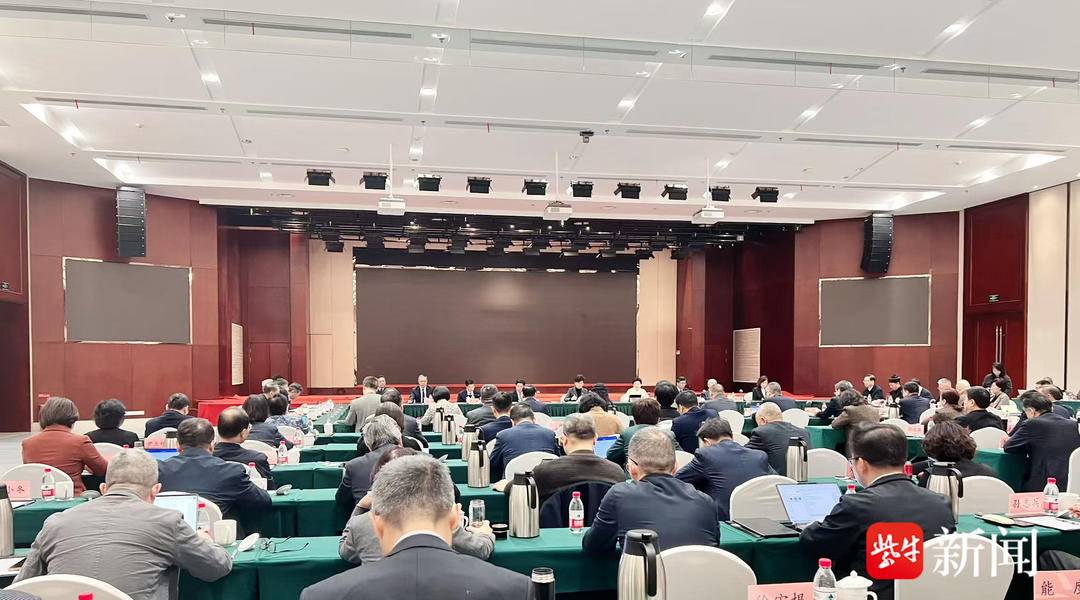
Group 1 - The core discussion at the Jiangsu Provincial Political Consultative Conference focused on building a culturally strong province and leveraging culture to empower economic and social development [1] - The success of "Su Chao" is attributed to the integration of sports, culture, and consumer resources, suggesting a need for a similar approach in Jiangsu's tourism and cultural sectors [3] - A proposal was made to systematically integrate the 433 kilometers of cultural and ecological resources along the Yangtze River in Jiangsu to create premium tourism routes [3] Group 2 - Successful cases of intangible cultural heritage (ICH) activation were shared, highlighting the integration of traditional arts into tourism, such as the transformation of Huai Opera into a tourist attraction [3] - Recommendations were made to modernize traditional operas like Kunqu and Xiju by making them more accessible and appealing to younger audiences, emphasizing the need for innovative and experiential offerings [3] - A call for establishing a cross-disciplinary curriculum in higher education focused on ICH, combining skills in craftsmanship, digital innovation, brand management, and cultural tourism [4] Group 3 - The rise of online literature as a significant cultural form was acknowledged, with suggestions to support original projects that reflect Jiangsu's cultural heritage [4] - Emphasis was placed on the importance of AI technology in new media formats like AI dramas and comics, advocating for policy support in these emerging fields [4]
文化年味成新春新潮流!非遗年货才是年味天花板
Xin Lang Cai Jing· 2026-02-01 01:44
Core Insights - The cultural significance of intangible heritage (非遗) products is becoming a major trend in the Chinese New Year market, enhancing the festive atmosphere with cultural depth [1] Group 1: Market Trends - Non-heritage products are emerging as the "top flow" in the New Year goods market, driven by their unique cultural heritage and innovative expressions [1] - Various regions across the country are launching intangible heritage shopping months, with events like the Guangzhou Huacheng Square gathering over 130 intangible heritage projects from 15 provinces and regions [1] Group 2: Consumer Engagement - Online live streaming for intangible heritage products has achieved impressive results, garnering 18.5 million views and over 600 million yuan in sales, with 59% of orders coming from consumers under 40 years old [1] - The integration of online live streaming and offline market experiences allows intangible heritage products to reach a broader audience, moving from niche markets to mainstream consumption [1] Group 3: Product Diversity - Intangible heritage products encompass a wide range of categories, including food, handmade crafts, and cultural creations, maintaining traditional craftsmanship while aligning with modern aesthetic demands for the Year of the Horse [1] - These products not only serve as preferred gifts for the New Year but also facilitate the transmission of traditional culture in a contemporary context, offering a new way to unlock the festive spirit [1]
实施三年培育方案 构建梯度发展体系 甘肃省出台方案系统推进劳务品牌培育
Xin Lang Cai Jing· 2026-01-30 00:59
Core Viewpoint - Gansu Province has launched a comprehensive plan to enhance labor brand cultivation from 2026 to 2028, aiming to improve employment quality and regional economic development through systematic training and brand development [1][3]. Group 1: Action Plan and Goals - The plan aims to conduct over 100,000 skill training sessions within three years and cultivate more than 100 provincial and 200 municipal labor brands [1]. - The transformation goal is defined as moving "from freedom to order, from quantity to quality," focusing on three major actions and thirteen key tasks to enhance labor brand construction [1][2]. Group 2: Key Actions and Measures - The "expansion" action will focus on accurately nurturing characteristic labor brands, standardizing brand naming, and expanding scale in seven key sectors, including catering, home services, cultural tourism, and renewable energy [1][2]. - The "quality enhancement" action will solidify brand development foundations through five measures, including cultivating local craftsmanship, innovating service mechanisms, and improving brand image [2]. Group 3: Current Achievements and Future Directions - During the 14th Five-Year Plan, Gansu has cultivated 75 provincial labor brands, creating stable employment for over 1.4 million people [3]. - Notable brands include "Lanzhou Noodle Master," which has significantly impacted employment across multiple provinces, and "Longnan E-commerce," which has enabled 310,000 people to find jobs in the e-commerce sector [3]. - The province plans to strengthen coordination and promote the "Gansu Flavor" labor brand to enhance its quality and effectiveness, aiming to become a hallmark of regional economic development [3].
第十届腊八民俗文化活动在“虎丘花事”温情启幕
Su Zhou Ri Bao· 2026-01-27 01:00
Core Insights - The event "A Bowl of Laba Congee Warms a City" in Gusu District showcases the integration of local culture and tourism, emphasizing the revitalization of traditional customs in a modern context [1][5] Group 1: Cultural Activities - The Laba congee event involved 19 communities in the Huxi Street, where residents participated in cooking and sharing congee, fostering community spirit [2] - Performances such as "Friendship Laba" and "New Year Flower Offering" highlighted local customs, attracting applause from attendees [2] - The event featured a vibrant flower market with various floral displays, and an online shopping option was introduced to cater to diverse consumer needs [2] Group 2: Non-material Cultural Heritage - The event included a "New Year Non-material Cultural Heritage Market," showcasing traditional crafts like woodblock printing and paper-cutting, enhancing cultural appreciation [3] - Workshops were organized to teach participants about non-material cultural heritage, allowing them to create their own crafts [4] Group 3: Economic Impact - The event stimulated the local economy by promoting cultural tourism, with joint ticketing and discounts offered by local attractions and businesses [4] - The integration of AI technology in cultural activities showcased innovative approaches to enhance visitor engagement and experience [4] Group 4: Cultural Empowerment - The event reflects Gusu District's commitment to cultural development and high-quality tourism integration, leveraging its rich cultural heritage [5] - The district aims to transform traditional cultural resources into economic advantages, promoting the "Three Flowers" cultural brand as a symbol of Gusu's tourism [5] Group 5: Community Engagement - The Huxi Street is actively promoting non-material cultural heritage through regular workshops and community engagement initiatives [6] - The district is developing a comprehensive cultural and tourism ecosystem by integrating local attractions, businesses, and community resources [6]
攻坚克难齐奋进 幸福花开新玉树
Xin Lang Cai Jing· 2026-01-25 20:19
Core Insights - The article highlights the significant progress made by Yushu Tibetan Autonomous Prefecture during the 14th Five-Year Plan period, focusing on various sectors including culture, tourism, agriculture, and healthcare [1][9]. Group 1: Cultural and Tourism Development - Yushu has positioned itself as a preferred international ecological tourism destination, enhancing its cultural tourism service system and integrating local cuisine and hospitality [2][3]. - The region has received 6.4185 million tourists, generating a total tourism expenditure of 4.175 billion yuan, which has created nearly 20,000 jobs [3]. - The establishment of a digital archive for intangible cultural heritage has led to the systematic protection of 834 representative projects, showcasing the region's cultural richness [3]. Group 2: Agricultural Advancements - Yushu's agricultural sector is anchored by yak and Tibetan sheep industries, creating a comprehensive supply chain from breeding to sales [4]. - The region boasts 120 million acres of organic certified grasslands and five geographical indication products, enhancing the quality and safety of agricultural products [4]. - The yak wool sales reached 50 tons annually, supported by modern processing facilities and established quality standards [3][4]. Group 3: Ecological Improvements - Yushu has seen a significant increase in flagship species, with the black-necked crane population rising from 22 to over 220, and the Tibetan antelope population increasing from under 20,000 to 70,000 [5][6]. - The region's water quality has improved, with 99.6% of surface water meeting excellent standards, and air quality showing 99.97% of days classified as good [6]. - Yushu has been recognized as a national ecological civilization demonstration zone, with ongoing initiatives for waste management and ecological protection [6]. Group 4: Healthcare Enhancements - The establishment of the provincial-level medical center in Yushu has alleviated healthcare access issues, with a 28.53% increase in advanced surgical procedures [8]. - A comprehensive telemedicine system has been implemented, allowing residents to access expert medical services remotely [8]. - The region has focused on improving healthcare quality and expanding resources, contributing to the overall well-being of the population [7][8]. Group 5: Infrastructure and Transportation - The completion of the G0613 highway segment has improved connectivity, facilitating travel and enhancing the transportation network [8]. - The integration of transportation infrastructure supports the overall development of the region, contributing to economic growth and accessibility [8]. Group 6: Future Outlook - Yushu aims to continue its development trajectory towards 2035, with goals for significant economic growth, increased per capita GDP, and improved living standards for residents [9].