
蚕桑

Search documents
栽桑养蚕山青民富
Jing Ji Ri Bao· 2025-11-19 03:42
Core Insights - The development of the silkworm industry in Qianjiang District has transformed previously impoverished areas into economically viable regions through sericulture and mulberry cultivation [1][2][3] - The district has established a comprehensive "mulberry-silkworm-silk" industrial chain, enhancing local economic growth and providing job opportunities for returning migrants [2][3] Group 1: Economic Transformation - The mulberry planting area in Shuanglong Village has reached over 3,000 acres, with an annual fresh cocoon output exceeding 20,000 pounds, significantly improving the local economy [1] - The average annual income increase for villagers has surpassed 15,000 yuan, with the total fresh cocoon production in Qianjiang reaching approximately 800,000 pounds [1][3] Group 2: Technological Advancements - The introduction of intelligent temperature control technology in silkworm breeding has improved survival rates and quality, leading to more efficient production processes [2] - The establishment of smart breeding factories has allowed for a more standardized and robust production of silkworms, enhancing overall industry efficiency [2] Group 3: Industry Expansion - Qianjiang has built industrial parks that attract various enterprises, covering all aspects of the silk industry, from processing to trade [3] - The silk production capacity of companies in Qianjiang accounts for 42.7% of the total silk output in Chongqing, indicating a significant role in the regional economy [3] Group 4: Product Diversification - The "mulberry+" innovation model has led to the creation of diverse products, including edible fungi, mulberry tea, and mulberry leaf noodles, contributing to a broader product matrix [3] - The total output value of the mulberry and silkworm-related processing enterprises has exceeded 300 million yuan, showcasing the economic impact of the industry [3]
第三届全国劳务协作暨劳务品牌发展大会11月18日至19日举行 四川九大劳务品牌将亮相
Si Chuan Ri Bao· 2025-11-18 00:09
Core Insights - The third National Labor Cooperation and Labor Brand Development Conference will be held in Nanning, Guangxi, showcasing nine major labor brands from Sichuan, highlighting the strength of Sichuan's labor brands [1] - Sichuan is a major population and labor-exporting province, with a total of approximately 26 million migrant workers, accounting for about one-tenth of the national total [1] - From 2021 onwards, Sichuan has cultivated 358 regional characteristic labor brands and established 60 "Chuan" characteristic labor brands, promoting high-quality employment for migrant workers [1] Group 1 - The nine labor brands include "Longquan Car Workers," "Weiyuan Fig Craftsmen," "Wusheng Mago," "Chuan Zhong Lithium Workers," "Bashu Rattan Artisans," "Gaoyuan Rose Artisans," "Ningnan Silkworm Sisters," "Longxiang Chefs," and "Qiaoxiang Crystal Workers" [1] - Labor brands are defined as labor identifiers with distinct regional marks, strong skill characteristics, and good user reputation, which significantly support employment and rural revitalization [1] Group 2 - The rapid development of Sichuan labor brands is attributed to the deep exploration of regional characteristics, with "Ningnan Silkworm Sisters" showcasing traditional sericulture skills and "Bashu Rattan Artisans" exporting products to over 20 countries [2] - Skills empowerment is the core competitiveness of Sichuan labor brands, with "Longquan Car Workers" training over 270,000 skilled workers and "Chuan Zhong Lithium Workers" providing targeted training for over 7,000 positions in the lithium battery industry [2] - Labor brands also serve as effective tools for improving livelihoods, with "Gaoyuan Rose Artisans" providing over 200 stable jobs and "Weiyuan Fig Craftsmen" linking deeply with the fig industry, creating 200,000 jobs and generating 3 billion yuan in revenue last year [2] Group 3 - The nine labor brands will participate in various activities at the conference, including brand achievement displays, product live streaming, and collaboration agreements with relevant provinces and cities [3]
河南方城:“一片桑叶”带动多产融合
Zhong Guo Jing Ji Wang· 2025-11-04 07:37
Core Insights - The silk and mulberry industry in Sili Shop Town has seen significant growth through a model that integrates leading enterprises, cooperatives, and farmers, resulting in increased employment and income for local residents [1][2] Group 1: Industry Development - Sili Shop Town has developed over 4,500 acres of mulberry trees and 10,000 acres of oak silkworms, with an annual production of 300,000 kilograms of silk cocoons, generating a value of over 30 million yuan [2] - The town has established 82 standardized silkworm breeding greenhouses, enhancing the quality and efficiency of silk production [2] - The introduction of new products such as mulberry leaf tea, mulberry leaf noodles, silkworm sand pillows, and silk quilts has extended the industry chain and increased product value [2] Group 2: Technological and Cultural Integration - The town is leveraging modern information technology to create a cultural research base focused on silk and mulberry, aimed at enhancing awareness and quality of the silk brand [3] - Investments of over 15 million yuan have been made to improve local infrastructure, including the construction of water conservation facilities and cultural attractions, which also support tourism [3] - The integration of research and tourism is expected to attract thousands of students annually, boosting the local economy [3] Group 3: Future Plans - Future strategies include expanding planting areas and focusing on the comprehensive development of mulberry resources, aiming for high-quality and sustainable growth in the silk industry [3] - The goal is to achieve large-scale production, regional layout, and diverse varieties, revitalizing the silk industry in the context of rural revitalization [3]
(活力中国调研行)蚕桑产业有新意 “一根丝”织密乡村共富网
Zhong Guo Xin Wen Wang· 2025-10-24 12:58
Core Insights - The article highlights the innovative transformation of the silkworm industry in Hai'an, Jiangsu, led by Xinyuan Silk Group, which aims to enhance rural income through modernized silkworm farming practices [1][4]. Group 1: Industry Transformation - Xinyuan Group has implemented an automated silkworm farming system, replacing traditional methods with technology that includes temperature and humidity sensors, and automated feeding systems [2]. - The area of mulberry gardens in Hai'an has significantly decreased from 180,000 acres in 2007 to 54,000 acres in 2023 due to industrial development, prompting the need for innovation in silkworm farming [2]. - The company has developed a new feeding method using artificial feed throughout the silkworm's life cycle, ensuring high-quality silk production [2]. Group 2: Economic Impact on Farmers - Xinyuan Group has created a collaborative model where the company raises young silkworms and distributes them to farmers, increasing their income by allowing them to raise more silkworms per acre [4]. - Farmers can earn an additional 1,500 yuan per acre by increasing the number of silkworms raised from 3 to 4.5 [4]. - The "family silkworm house" model allows farmers to convert small spaces into silkworm farming areas, generating a net income of approximately 500 yuan per batch, with the potential for 25 batches per year [4]. Group 3: Industry Chain Development - Xinyuan Group has expanded its operations into a complete industrial chain, converting silkworm cocoons into high-end silk fabrics, developing mulberry leaves into health tea, and creating health products from silkworm pupae [6]. - The company operates over 20,000 hectares of mulberry gardens across multiple provinces, establishing a comprehensive supply chain from raw material sourcing to end-product sales [6]. - In the previous year, Xinyuan Group reported a revenue of 15.88 billion yuan, marking its fourth consecutive year of exceeding 10 billion yuan in revenue [6].

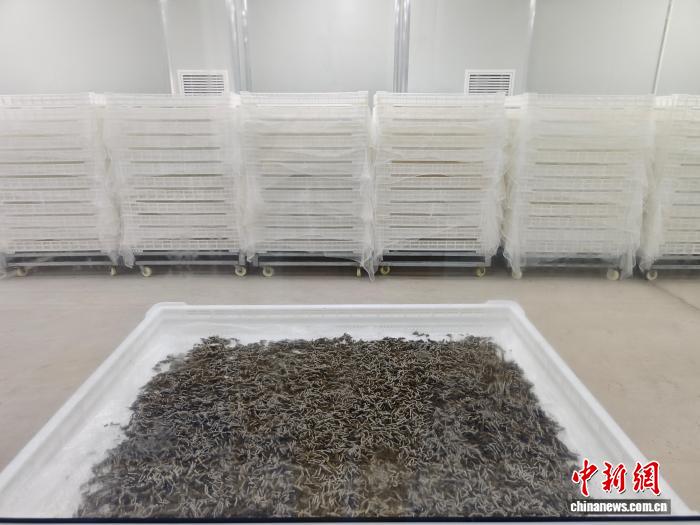
【安康】“校招共用”激发科技人才创新活力
Shan Xi Ri Bao· 2025-10-20 22:50
Core Viewpoint - Ankang City is implementing a "shared recruitment" model to attract high-level talent from universities and promote collaboration between academia and industry, aiming to enhance the quality of key industrial chains such as selenium-rich food, new materials, and ecological tourism [1][2] Group 1: Talent Recruitment and Collaboration - Ankang City has introduced the "Shared Recruitment Implementation Measures (Trial)" to facilitate the integration of talent from universities and enterprises [1] - The city has established 8 new provincial-level "Scientist + Engineer" teams and dispatched 1,184 technology special commissioners and 80 enterprise technology vice presidents this year [1] - A total of 259 talent service platforms, including expert workstations and technology innovation teams, have been built in the city [1] Group 2: Industry Focus and Innovation - The city is actively promoting talent recruitment policies to encourage experts to collaborate with key industries and enterprises, focusing on technological breakthroughs and the application of scientific achievements [1] - Ankang City is collaborating with universities such as Northwest A&F University and China Pharmaceutical University to build clusters of technology service centers [1] - The local silk industry is seeking to innovate through research partnerships with universities to develop selenium-rich artificial feed for silkworms, aiming for large-scale and intensive operations [2]
清风为伴产业兴丨“政策好风气正,更有奔头了”
Zhong Yang Ji Wei Guo Jia Jian Wei Wang Zhan· 2025-10-13 00:17
Core Insights - The article highlights the importance of the sericulture industry in promoting rural revitalization in Shiquan County, Shaanxi Province, with a focus on enhancing supervision and accountability among local officials [2][3] Group 1: Industry Development - The sericulture industry is a key component of rural revitalization efforts in Shiquan County, with local authorities actively supervising the implementation of policies and responsibilities among party members and officials [2] - A three-year action plan (2025-2027) for the transformation and upgrading of the sericulture industry has been established, incorporating new technologies and projects such as intelligent co-cultivation factories and drone pest control [2] - The county's disciplinary inspection and supervision agency has included the transformation of the sericulture industry as a focus area, ensuring oversight of key projects, fund usage, and evaluation processes [2] Group 2: Accountability and Oversight - A case was reported where a local official, Zhou, was found to have misappropriated 18,492.5 yuan intended for the village collective, resulting in disciplinary action and full restitution of the funds [2] - The county has implemented a "list + ledger" supervision mechanism to monitor the implementation of agricultural subsidy policies, addressing issues such as operational difficulties with temperature control equipment and timely pest control [3] - Local farmers expressed satisfaction with the improved policies and support, indicating a more stable income and a positive outlook for sericulture [3]
“桂字号”河池蚕桑茧丝绸产销对接暨产业招商推介活动在京举行
Zhong Guo Jin Rong Xin Xi Wang· 2025-09-16 03:12
Core Insights - The event held on September 10 aimed to enhance the brand development of the Hechi silk industry, promote product consumption, and foster industrial investment cooperation [1] - The "Xinhua·Hechi Sericulture Industry Development Index" was released, showcasing significant achievements in the silk industry [2] Industry Overview - By 2024, Hechi's mulberry garden area is expected to reach 963,200 acres, with silkworm cocoon production accounting for 45% of Guangxi, 28% of China, and 25% globally [1] - Hechi has maintained the highest raw silk production in China for 15 consecutive years, with an annual capacity of over 1 million silk quilts and more than 30 large-scale enterprises [1] - The comprehensive output value of the sericulture industry in Hechi is nearly 20 billion yuan [1] Development Plans - In 2022, Hechi issued the "Hechi City Silk Industry Chain Development Plan (2021-2025)" with a target of 50 billion yuan in total industry chain output value by 2025 [2] - The "Three-Year Action Implementation Plan for High-Quality Development of the Sericulture Industry (2023-2025)" was introduced in 2024, focusing on seven key areas with 32 measures [2] - Since 2020, Hechi has invested 1.023 billion yuan in agricultural funds and provided 2.239 billion yuan in "cocoon and silk loans" [2] Technological Advancements - Advanced technologies such as small silkworm co-cultivation and grid cocoon farming have been promoted in the region [2] - All silk reeling enterprises in Hechi have achieved full automation, and the first full silk Zhuang brocade production line in Guangxi has been established [2] - Hechi is building a trusted data space for the silk industry and a China-ASEAN silk trading center to enhance data support across the entire industry chain [2] Economic Impact - In 2024, the output value of Hechi's silk processing industry is projected to reach 4.617 billion yuan, a year-on-year increase of 10.46%, accounting for 35.52% of the region [3] - The production of white blank silk is expected to reach 4.84 million meters, with a year-on-year growth of 19.2% [3] - The comprehensive utilization output value of sericulture resources exceeds 1 billion yuan, with the highest development capability in Guangxi [3] Brand Development - Hechi has achieved significant brand development, with "Yizhou Silkworm" and "Nandan Yao Silkworm Flat Silk" receiving geographical indication registration [3] - Five trademarks have been recognized as "Famous Trademarks of Guangxi," and four products have been awarded national ecological origin protection status [3] - The cumulative value of regional public brands, enterprise brands, and product brands in Hechi exceeds 10 billion yuan [3] Internationalization Efforts - Hechi's silk products, including high-grade raw silk and silk masks, are exported to over ten countries and regions, including Japan and Italy [3] - The "Southern Silk Nest × Lü Yue" fashion show showcased Hechi's silk on the international fashion stage, promoting the region's silk industry [4] - The first full silk Zhuang brocade jacquard production line in Guangxi is set to commence production in December 2024, enhancing the region's cultural and fashion integration [4]
阳山县乡村振兴人才驿站引智破局,“三下乡”解蚕桑难题
Nan Fang Nong Cun Bao· 2025-08-28 12:39
Core Insights - The article highlights the collaboration between the Yangshan County Rural Revitalization Talent Station and Professor Liu Jiping's research team to address challenges in the sericulture industry through targeted technological solutions [4][11]. Group 1: Collaboration and Technology Transfer - The Yangshan County Rural Revitalization Talent Station facilitated a meeting between Professor Liu Jiping's team and Guangdong Siyuan Group to discuss key issues in the sericulture industry, such as pest control and high mortality rates in young silkworms [4][11]. - The research team presented innovative solutions, including "light-based silkworm rearing," "chlorine dioxide gas disinfection," and "early warning systems for pests," aimed at improving production efficiency and reducing disease loss rates by an estimated 30% [4][11]. Group 2: Field Research and Practical Solutions - The team conducted field research in Qinglian and Xiaojing towns, focusing on the practical challenges faced by local silkworm farmers, such as poor root development and inefficient water and fertilizer use [6][7]. - Specific recommendations were provided to farmers, including optimal planting density and precise water and fertilizer management, along with a commitment to offer ongoing pest detection services [7][8]. Group 3: Long-term Industry Development - Professor Liu emphasized the importance of establishing a "green pest control demonstration site" and a talent cultivation program aimed at training 50 local technical experts by 2025 [11]. - The initiative aims to enhance the value chain of the sericulture industry by exploring applications of silkworm resources in food and pharmaceutical sectors, thereby increasing overall industry profitability [11].
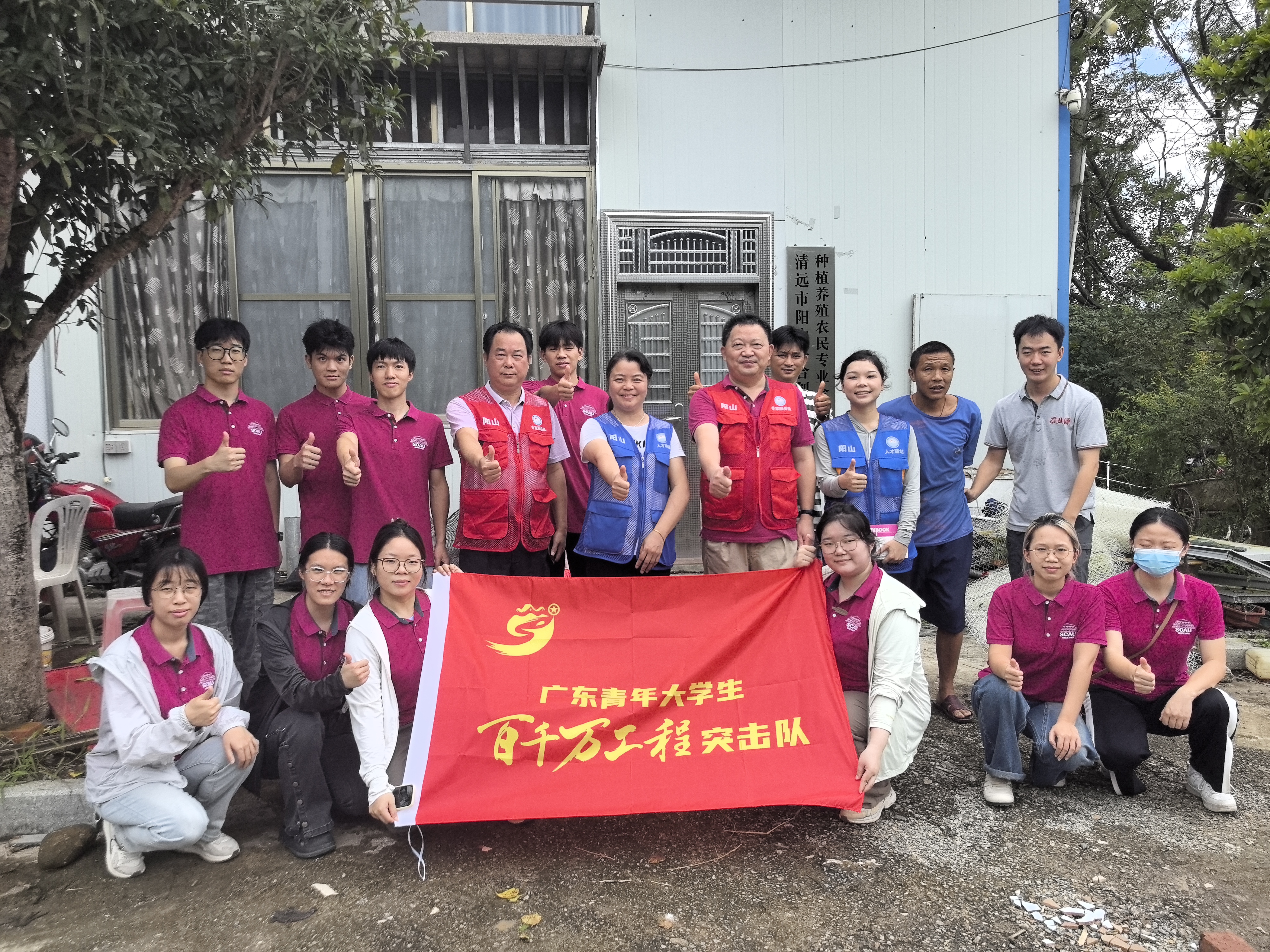
“百千万”看广新|创新消费帮扶模式,激活乡村振兴新动能
Sou Hu Cai Jing· 2025-07-10 12:32
Core Viewpoint - Guangxin Group is actively supporting the provincial "Hundred Million Project" through a three-pronged assistance model that includes industrial-driven development, targeted procurement support, and platform empowerment to enhance sales channels for agricultural specialty products in paired assistance counties and towns, achieving a virtuous cycle of industrial upgrading and farmer income increase [1]. Group 1: Industrial Driven Development - Since the Guangxin Group's assistance team entered Heshui Town in Yangchun City, a series of initiatives including financial investment, technical guidance, and industry subsidies have been implemented, leading to the establishment of a small silkworm co-cultivation base, a Xiangyun silk drying field, and an ecological agricultural demonstration park for the silkworm and Xiangyun silk industry [2]. - The demonstration park covers an area of 130 acres and includes production areas for Xiangyun silk, silkworm breeding demonstration areas, five dyeing and finishing workshops, and drying fields, with an annual production capacity of 1 million meters of Xiangyun silk, which is sold in cities like Shenzhen and Hangzhou, as well as overseas markets in Europe and Japan [2]. Group 2: Targeted Procurement Support - Guangxin Group has established a new pattern of production and sales connection that spans from the field to the table, achieving full coverage of agricultural product procurement from paired assistance regions in its employee canteens, effectively broadening sales channels for agricultural specialty products in Yangchun City, Zijin County, and Huizhou [7]. - The group’s subsidiary, Guangqing Technology, conducts monthly targeted procurement of agricultural products such as grains, oils, vegetables, and meats from collective enterprises in the paired assistance village, forming a stable consumption support chain [7]. Group 3: Platform Empowerment - To leverage regional advantages for county economic development, Guangxin Group has invested funds and mobilized social forces to build a "Hundred Million Project" assistance cooperation pavilion, collaborating with logistics and supply chain companies to continuously strengthen the foundation for high-quality agricultural specialty products to "go out of the mountains and into the bays" [11]. - The group has also created its own e-commerce platform featuring a "Hundred Million Project" assistance section, showcasing over 200 types of agricultural products from designated assistance counties and towns [7]. Group 4: Future Plans - Guangxin Group plans to continuously explore the value of agricultural products, streamline sales channels, and inject new vitality into the high-quality development of county economies, thereby activating new momentum for rural industrial revitalization [18].

河池蚕桑产业“织”出振兴致富路
Zhong Guo Jin Rong Xin Xi Wang· 2025-07-07 03:09
Core Insights - The silkworm cocoon production in Hechi City, Guangxi, has achieved a significant harvest despite adverse weather conditions, showcasing the resilience of local farmers [1][4] - Hechi has maintained its position as the leading city in China for sericulture production for 20 consecutive years, with an industry output value of 13.5 billion yuan, accounting for 27% of the city's total agricultural output [2] - Technological advancements and automation in the silk production process have led to increased efficiency and job creation, with a reported monthly production increase of approximately 18 tons [3] Group 1: Industry Overview - Hechi's favorable climate and historical expertise in sericulture have contributed to its dominance in the industry, with over 400 years of tradition [1] - The local government has strategically integrated the sericulture industry into major agricultural initiatives, establishing numerous demonstration bases to promote best practices [1][2] Group 2: Economic Impact - The sericulture industry involves around 220,000 households and nearly 1 million farmers, with an average annual income exceeding 50,000 yuan per household [2] - The industry plays a crucial role in poverty alleviation and rural revitalization, serving as a key pillar for increasing farmers' incomes [2][5] Group 3: Technological Advancements - The introduction of automated equipment in silk production has enhanced operational efficiency and expanded production capacity, resulting in the creation of 200 new jobs [3] - The focus on green, intelligent, and brand-oriented development is driving the integration of digital technologies into the sericulture industry [3] Group 4: Resilience to Adverse Weather - Hechi's sericulture has effectively managed the challenges posed by extreme weather through advanced agricultural techniques and resilient crop varieties [4] - The area has seen significant improvements in crop yield and pest resistance, with a reported 80% reduction in pest issues compared to the previous year [5]