邮轮业

Search documents
中国征美船舶费,皇家加勒比危矣
Hu Xiu· 2025-10-11 02:10
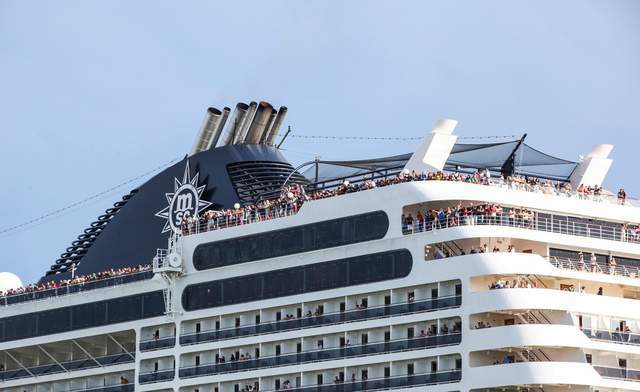
Core Viewpoint - The Chinese Ministry of Transport announced a special port fee for U.S. vessels as a countermeasure against the U.S. imposing port fees on Chinese ships, effective from October 14, 2025 [2][20]. Group 1: Special Port Fee Details - The special port fee will apply to any vessel with over 25% U.S. ownership or flying the U.S. flag, regardless of the registration of the shipowner or operator [3][4]. - The fee will be charged per voyage based on net tonnage, starting at 400 RMB per net ton in 2025 and increasing to 1120 RMB by 2028 [4]. - For example, the Royal Caribbean's Spectrum of the Seas, with a net tonnage of 168,000 tons, could incur a maximum fee of approximately 67.36 million RMB per voyage [6]. Group 2: Impact on Royal Caribbean - The new fee structure could lead to an additional cost of around 1000 RMB per passenger for the Spectrum of the Seas, assuming it operates at full capacity for 76 voyages in a year [8][12]. - The policy includes safeguards, limiting the maximum fee to five voyages per year for each vessel, and only charging once for multiple port calls on the same voyage [7]. - The special port fee is expected to increase by 60% after October 2026, adding further financial pressure on Royal Caribbean [14]. Group 3: Broader Industry Context - Royal Caribbean faces additional challenges from U.S. tax scrutiny, as the U.S. government is pushing for stricter tax compliance from cruise companies registered abroad [17][21]. - The company is caught in a regulatory squeeze, with significant costs from the Chinese port fee and potential tax liabilities in the U.S. [22]. - The cruise industry is experiencing a complex geopolitical landscape, with the new port fee being part of a broader trend of increasing regulatory pressures [29][43]. Group 4: Operational Challenges - Adjusting port calls in response to the new fee could be a complex process, requiring significant logistical changes and advance planning [31][33]. - The operational impact of changing ports is substantial, as it affects scheduling, customer service, and overall operational efficiency [35][37]. - The new fee structure serves as a warning to other U.S.-owned cruise lines that have not yet operated in Chinese ports, highlighting the potential for increased costs in the future [39].


2025暑期酒店业变局:出境游复苏带来“中式改造”丨夏游记
2 1 Shi Ji Jing Ji Bao Dao· 2025-09-01 10:33
Core Insights - The hotel industry has experienced a significant boost during the summer of 2025, driven by a shift towards quality travel experiences and cultural elements [1][2] - Data from travel platforms indicates a strong demand for quality tourism, with average order prices increasing by 9.9% year-on-year [1] - The resurgence of outbound tourism has led to a rapid recovery in hotel bookings, particularly in popular destinations like Japan and Thailand [3][4] Group 1: Domestic Hotel Trends - Hotels in popular domestic destinations, such as Sanya, reported occupancy rates exceeding 70%, with innovative activities like coral reef observation camps becoming popular [2] - The trend of traveling to events, such as concerts and exhibitions, has surged, with hotel searches around event venues increasing significantly [2] Group 2: Outbound Tourism Developments - Popular outbound destinations for Chinese tourists include Japan, Thailand, and South Korea, with hotel bookings in Okinawa and Jeju Island seeing year-on-year increases of 98% and 44%, respectively [3] - Hotels abroad are adapting to Chinese tourists by offering services in Mandarin and incorporating Chinese cultural elements [3][4] Group 3: Cruise Market Recovery - The cruise market has shown strong recovery, with over 1.37 million travelers passing through Shanghai's cruise port by August 26, marking a 48.71% increase year-on-year [4][5] - Family-oriented travel has become a significant driver of demand, with a notable increase in bookings for family cabins and entertainment facilities on cruise ships [5]
产业链供应链发力 邮轮经济拓展消费新空间
Xin Hua Wang· 2025-08-12 05:47
Core Viewpoint - The Chinese cruise industry is experiencing a resurgence following the full restoration of international cruise transportation in 2023, with significant demand being released, particularly from major ports like Shanghai and Tianjin, which is expected to drive high-quality development in cultural tourism and high-end manufacturing [1][3][4]. Industry Recovery - The cruise industry in China has gradually returned to a recovery trajectory since the resumption of operations, with significant milestones including the launch of international routes by various cruise lines starting from mid-2022 [3][4]. - The peak season during the Spring Festival in 2023 marked a strong start for the cruise economy, indicating a positive trend for the industry [3]. Economic Outlook - Experts express confidence in the future of China's cruise economy, predicting it will enter a second "golden decade" of rapid development after a period of nurturing [4]. - The cruise economy is referred to as a "waterborne golden industry," with substantial growth observed since the establishment of the homeport market in 2006 [4]. Market Dynamics - Despite challenges such as limited routes and low-price competition, the recent surge in demand has revitalized the industry, with record bookings reported for upcoming cruises [5][6]. - The average age of cruise passengers is decreasing, with a notable increase in the proportion of younger travelers, indicating a shift in market demographics [7]. Policy Support - The recovery of the cruise market is supported by various government policies aimed at facilitating the orderly resumption of international cruise operations and promoting high-quality development [6][10]. - Local governments have introduced specific action plans and support measures to enhance the cruise tourism sector [6]. Infrastructure Development - The introduction of China's first domestically built large cruise ship, "Aida·Magic City," signifies a major advancement in the country's shipbuilding capabilities and the potential for a more robust domestic cruise economy [8][9]. - The ship's specifications highlight China's growing capacity to build complex vessels, which is a milestone in transitioning from a shipbuilding power to a strong shipbuilding nation [8]. Future Directions - Experts suggest enhancing the innovation system within the cruise industry, improving local supply chains, and exploring new tourist destinations to ensure sustainable development [9][10]. - There is a call for establishing modern cruise tourism service clusters that integrate various related services, which could further stimulate the cruise economy [10].

全球邮轮业强劲复苏,三巨头集体驶入盈利快车道
2 1 Shi Ji Jing Ji Bao Dao· 2025-08-06 08:52
Group 1: Company Performance - Royal Caribbean Group reported a strong Q2 2025 performance with a passenger load factor of 110%, total revenue of $4.5 billion, and a net profit of $1.2 billion, leading to an upward revision of the full-year earnings forecast to between $15.41 and $15.55 per share [1][2] - Carnival Corporation also showed impressive results with Q2 revenue reaching $6.3 billion and a net profit of $565 million, marking a significant increase compared to previous years [2][3] - Norwegian Cruise Line Holdings reported Q2 earnings per share of $0.51 and revenue of $2.52 billion, although slightly below expectations, the stock surged by 11.79% in pre-market trading, indicating strong investor confidence [2][3] Group 2: Industry Trends - The global cruise industry is experiencing a "V-shaped recovery," with major players reporting revenues exceeding pre-pandemic levels, indicating a return to positive growth [2][3] - The International Cruise Association forecasts that global cruise passengers will exceed 34.13 million in 2024 and reach 37.7 million in 2025, with further growth expected to 40 million by 2027 [3] - The U.S. cruise market is projected to surpass $17 billion by 2028, while the Asia-Pacific region is expected to grow at an annual rate of 19.6%, becoming a key driver for global cruise industry growth [3][4] Group 3: Market Dynamics - The summer cruise season is booming, with global passenger numbers expected to exceed 37.1 million and market size reaching $44.39 billion, particularly driven by a 45% annual growth rate in China [4][5] - Domestic cruise activities in China are thriving, with the Tianjin International Cruise Home Port expecting to host nearly 50 cruise ships and over 100,000 passengers during the summer [5][6] - Cruise companies are innovating their offerings to attract families and children, enhancing onboard and onshore experiences to meet consumer demand for quality and personalization [6]
为什么国际邮轮不爱去天津了?
3 6 Ke· 2025-06-27 06:11
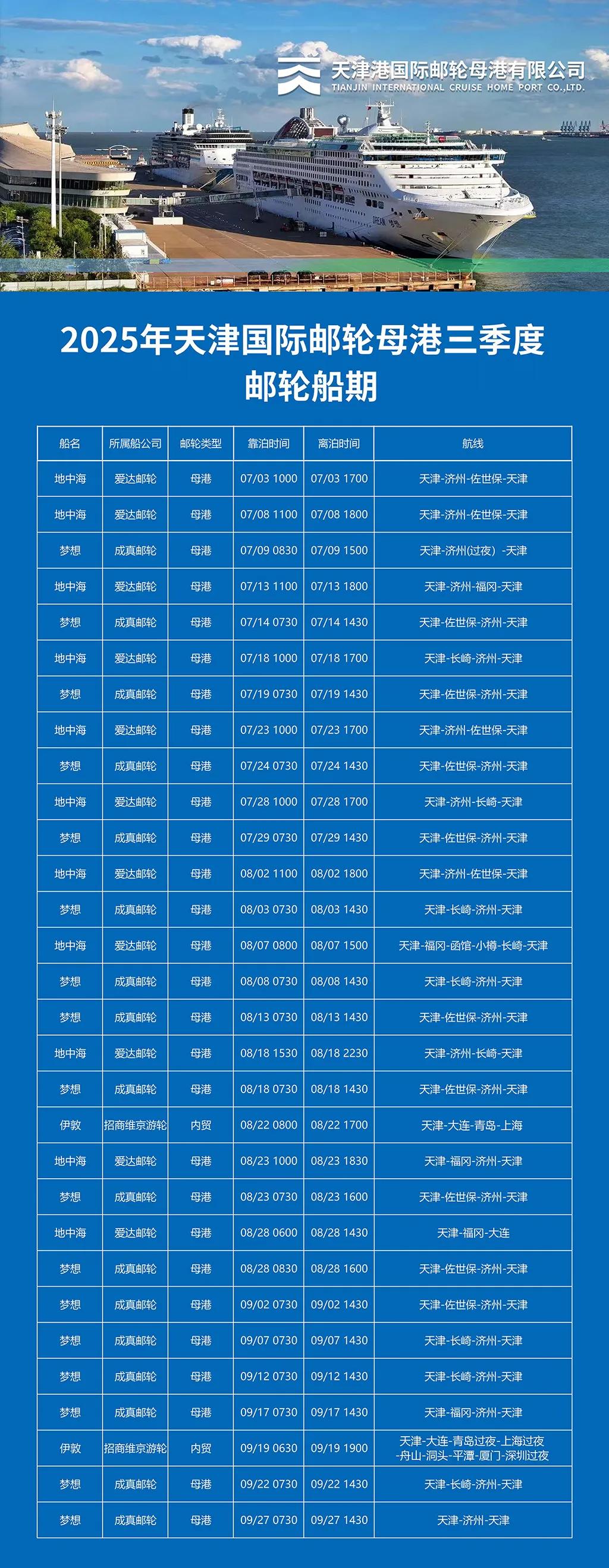
Core Viewpoint - The Tianjin International Cruise Homeport is experiencing a significant decline in activity and attractiveness compared to other domestic ports, particularly in the context of the upcoming summer season [1][5]. Group 1: Current Situation of Tianjin Cruise Homeport - The cruise schedule for Tianjin shows a lack of foreign cruise ships, with only two domestic vessels, the Mediterranean and Dream, operating during the peak season [3][4]. - In 2024, the Mediterranean will have 43 voyages in Tianjin, but this number will drastically drop to 16 in 2025, indicating a sharp decline in interest from cruise companies [5][6]. - The absence of international cruise lines like MSC and Royal Caribbean from Tianjin has been noted, reflecting a broader trend of retreat from the port [5][8]. Group 2: Market Dynamics and Challenges - The post-pandemic market has seen a shift in consumer behavior, with many potential travelers from Beijing lacking passports, which limits their ability to choose cruise travel [11][14]. - The geographical disadvantages of Tianjin, such as longer travel times to destinations compared to southern ports, further hinder its competitiveness [20][22]. - The cruise industry is increasingly focused on profitability, and Tianjin's offerings are perceived as less attractive compared to emerging ports like Guangzhou and Shenzhen [25][26]. Group 3: Competitive Landscape - Southern ports like Guangzhou and Shenzhen are rapidly developing, with strategic investments and better access to consumer markets, making them more appealing for cruise operations [27][30]. - The rise of new regional stars like Qingdao and Xiamen, which offer shorter travel times and rich tourism resources, poses additional competition for Tianjin [33][34]. - The concept of "middle-income trap" is applied to Tianjin, indicating that while it has resources and policies, it lacks a distinct competitive edge in the cruise market [24][26]. Group 4: Future Prospects and Recommendations - To regain its status, Tianjin should pivot from aiming to be the second-largest cruise homeport to becoming a unique cruise and destination hub for the Beijing-Tianjin-Hebei region [36][37]. - Initiatives such as enhancing incentives for international cruise lines and developing domestic cruise routes could provide new opportunities for growth [35][36]. - The recent launch of the "One Ticket to Explore Dongjiang" plan indicates that Tianjin is not giving up and is seeking innovative strategies to attract visitors [36][38].
排放量相当于1.2万辆汽车!邮轮业“急需”绿色突围
Sou Hu Cai Jing· 2025-05-04 09:04
Group 1 - The cruise tourism industry is experiencing unprecedented popularity, with the number of cruise ships exceeding 300 and passenger capacity surpassing 635,000 in 2024 [3] - The industry is projected to witness a record of over 31.7 million passengers in 2024, generating an economic impact of $168.6 billion [3] - The cruise operators are under pressure to adopt more environmentally friendly practices, with a goal of achieving "net zero emissions" by 2050 [3][4] Group 2 - Norwegian operator Hurtigruten aims for "zero emissions" by 2030, investing €100 million ($113.7 million) in environmental upgrades [4] - French cruise company Ponant is also targeting 2030 for carbon-neutral transoceanic voyages using wind energy and liquid hydrogen fuel cells [4] - Viking Cruises plans to deliver a hydrogen-powered zero-emission cruise ship by 2026 [4] Group 3 - The industry is exploring green technologies and operational solutions, including more efficient engines and improved waste management systems [6] - The legal framework for responsible cruise travel includes key treaties from the International Maritime Organization (IMO) and regional organizations promoting environmentally responsible practices [6] Group 4 - Liquefied natural gas (LNG) has become the leading alternative fuel, reducing the use of heavy fuel oil from 74% in 2019 to 54% in 2023 [8] - While LNG is considered a cleaner fuel, concerns remain about methane emissions, prompting interest in renewable mixed energy sources like green methanol and hydrogen fuel cells [8] - The industry is investing billions in various development paths, with a focus on zero-carbon solutions such as hydrogen and ammonia fuels [8]