非遗产业

Search documents
乡村特色产业,如何持续发展
Ren Min Ri Bao· 2025-08-17 21:52
Core Viewpoint - The establishment of "Silver Village" in Danzhai County, Guizhou, has successfully integrated over 30 intangible cultural heritage (ICH) projects, enhancing local tourism and cultural industries, and demonstrating the potential of financial support in driving regional development [1][2]. Group 1: Development of "Silver Village" - "Silver Village" was created to gather and develop scattered ICH projects, aiming to transform cultural resources into a distinctive industry [1]. - The project received initial funding of 1 million yuan and an additional 500,000 yuan from personal savings, but faced financial challenges during construction [1]. - Agricultural Bank of China provided a loan of 4 million yuan, which alleviated funding shortages and allowed for the successful opening of "Silver Village" [1]. Group 2: Economic Impact and Financial Support - "Silver Village" now attracts 200,000 visitors annually, generating a comprehensive output value exceeding 10 million yuan [2]. - The Agricultural Bank of China has supported 48 ICH inheritors in Qiandongnan Prefecture, facilitating the creation of various ICH brands and tourism routes [2]. - The bank is focused on optimizing financial resource allocation to support regional characteristic industries and promote new business developments [2]. Group 3: Broader Financial Initiatives - The Agricultural Bank of China is also supporting the green industry, helping companies like Guizhou Gaofeng Shili Xiang Rice Industry Co., Ltd. to expand production and market reach [3]. - By the end of 2024, the bank aims to have a loan balance of 8.3 billion yuan for technology-based enterprises, supporting 429 companies with specialized financial products [3]. - The bank's strategy includes focusing on serving the real economy, rural revitalization, and the integration of culture and tourism [3].

从竹编手包到爆款潮玩,非遗如何紧跟市场与潮流
2 1 Shi Ji Jing Ji Bao Dao· 2025-06-25 14:34
Group 1 - The meeting highlighted the increasing popularity of the "cultural tourism + intangible cultural heritage" model among tourists, showcasing the integration of traditional crafts into modern tourism [1] - Yang Changqin, a representative from Guizhou, emphasized the historical significance of bamboo weaving, which has been passed down for nearly 400 years, evolving from practical tools to cultural and collectible items [2] - The company has adopted a "company + farmers + cooperatives" model, enhancing market access and involving more locals in the preservation and promotion of intangible cultural heritage [2][3] Group 2 - Yang Changqin's company generates an annual revenue of approximately 20 million yuan, providing stable employment for 108 individuals and flexible jobs for over 200 others, contributing to local economic development [3] - The integration of intangible cultural heritage with industry has enabled bamboo artisans to achieve financial success, while cross-industry collaborations have expanded market reach [5] - The company has developed a series of "bamboo tourism" routes, attracting around 20,000 visitors annually to experience bamboo weaving culture firsthand [5] Group 3 - The Dongguan Cultural Center has been promoting traditional culture through innovative products, such as transforming the national intangible cultural heritage project "Dongguan Qianjiao Lantern" into a popular 3D metal puzzle [5][6] - The center emphasizes the importance of internet products and has recently launched rap music related to intangible cultural heritage, aiming to attract a younger audience [6] - Initiatives like immersive cultural markets and themed events are designed to enhance public engagement with traditional culture, making it more accessible and appealing [6]


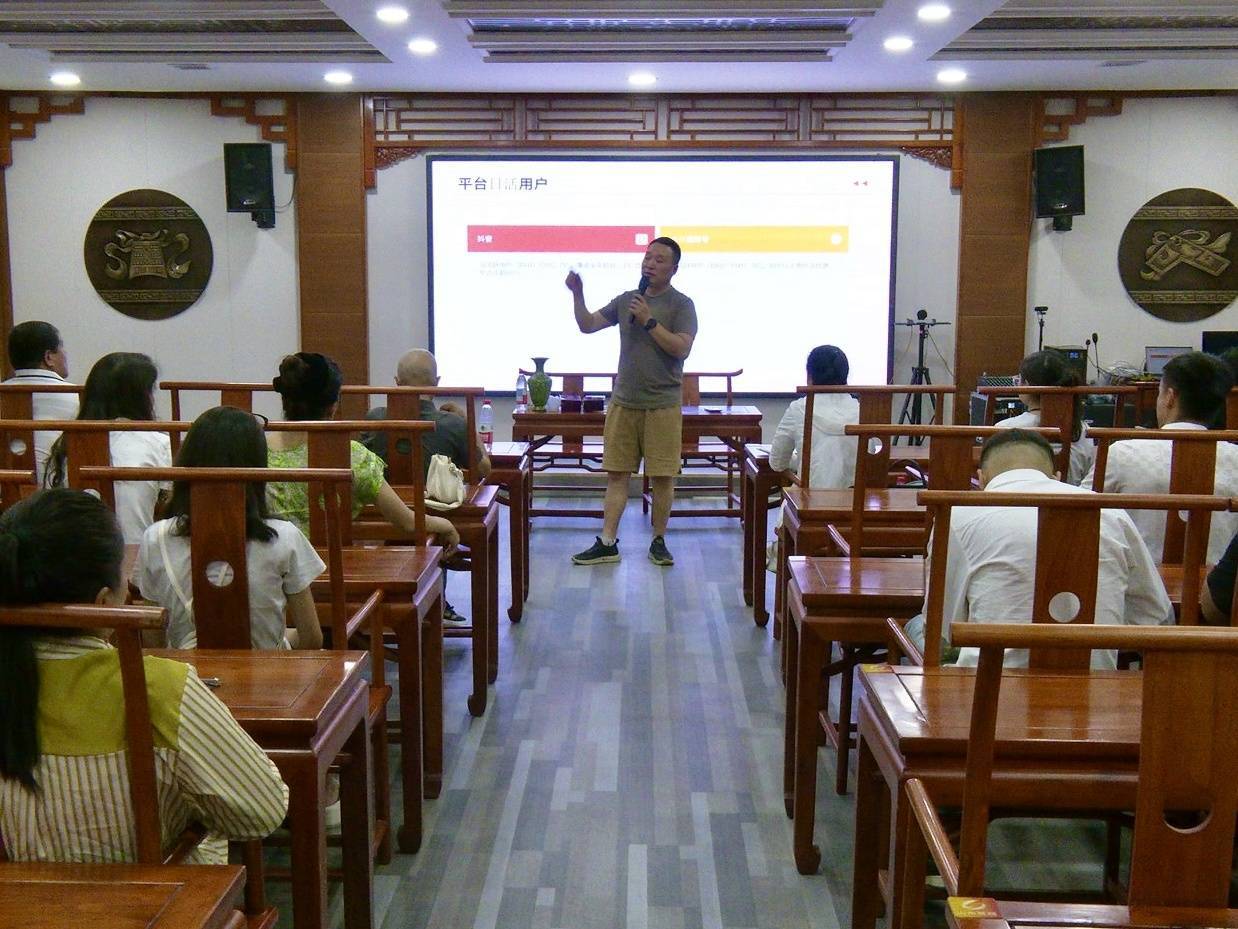
解锁“流量密码”!英吉沙非遗电商培训赋能产业新生态
Sou Hu Cai Jing· 2025-05-08 10:20
Core Viewpoint - The "Non-Heritage Products Walk on Cloud" e-commerce training event in Yingshisha County aims to empower non-heritage inheritors with digital marketing skills, focusing on integrating traditional crafts with e-commerce to enhance the sustainable development of intangible cultural heritage products [1][5]. Group 1: Training Overview - The training includes systematic teaching on digital marketing techniques such as live streaming and short video marketing, specifically targeting unique local products like Yingshisha pottery and stamped fabric [1][5]. - Professional instructors provided practical guidance on e-commerce fundamentals, user profiling, data integration, and key operational strategies [2][5]. - The training aims to help participants understand the "traffic password" for online sales and will include follow-up support for merchants [2][4]. Group 2: Challenges and Solutions - Despite the initial potential for online sales of local products like Yingshisha knives and pottery, challenges such as lack of marketing experience and operational skills have hindered expected sales outcomes [4]. - Participants were encouraged to bring specific issues encountered during live streaming for real-time analysis and optimization by instructors [4]. - A participant expressed newfound confidence in presenting their products correctly during live streams after receiving training [4]. Group 3: Future Development - The training is organized by the Yingshisha County Cultural and Tourism Bureau, targeting non-heritage project inheritors, local tourism staff, and some live streamers [5]. - The initiative aims to expand sales channels and market space for Yingshisha products, promoting the sustainable development of intangible cultural heritage [5]. - Future plans include creating a comprehensive sales experience that connects production, sales, and consumer engagement [5].