
高新技术产业

Search documents
西藏产生首个经济“千亿城市”
Sou Hu Cai Jing· 2026-02-02 01:26
拉萨地区生产总值突破1090亿元 西藏产生首个经济"千亿城市" "2025年拉萨地区生产总值历史性突破千亿元大关,达到1090.99亿元。"在参加自治区十二届人大四次 会议审议时,自治区人大代表、拉萨市市长王强说。这不仅标志着西藏产生了首个地区生产总值达到千 亿元的城市,也标志着我国省会城市地区生产总值全部超过千亿元,补齐了国家"经济版图"上的最后一 块"关键拼图"。 原标题: 数据显示,2025年,拉萨市预计固定资产投资增长5%以上,实现社会消费品零售总额553亿元,完成进 出口总额55亿元;接待游客5051万人次、实现旅游总花费606亿元,分别同比增长16.8%、14.5%;新增 高新技术企业61家、规上工业企业11家。 近年来,西藏把高质量发展作为新时代的硬道理,完整准确全面贯彻新发展理念,抢抓机遇、发挥优 势,因地制宜发展新质生产力,推动经济发展更趋平稳、更可持续,2025年实现地区生产总值3031.89 亿元,八项经济指标增速位居全国前列,高质量发展保持良好势头。作为西藏经济的重要组成部分,拉 萨市始终坚持产业强市战略,全力"拼经济、抓发展",着力构建"一个主导、三大支柱、九大产业"现代 化产业体系 ...
中经评论:北方经济量级突破带来的启示
Jing Ji Ri Bao· 2026-01-30 00:09
Core Insights - The article highlights significant economic milestones in 2025, with Shandong becoming the third province in China to surpass a GDP of 10 trillion yuan, Beijing becoming the second city to reach a GDP of 5 trillion yuan, and Dalian becoming the first city in Northeast China to achieve a GDP of 1 trillion yuan. These breakthroughs reflect the economic transformation and upgrading in Northern China [1][2]. Group 1: Shandong's Economic Transformation - Shandong's achievement of a 10 trillion yuan GDP is a result of a strategic transformation from a traditional industrial base, where traditional industries accounted for 70% of its economy, to a focus on high-tech industries. Since 2018, Shandong has been a pilot zone for new and old kinetic energy conversion, leading to sustained economic growth that outpaces the national average since 2020 [1]. - By 2025, Shandong's high-tech industry output is expected to account for 55.3% of its total industrial output, with advanced capacities in traditional sectors like steel and petrochemicals exceeding 40% [1]. Group 2: Beijing's Economic Growth - Beijing's GDP of 5 trillion yuan is characterized by a shift towards high-value industries driven by innovation, with R&D investment intensity maintained at 6%. The city's economic growth is increasingly supported by technology and knowledge-based sectors [2]. - During the 14th Five-Year Plan period, all ten high-tech industries in Beijing surpassed the 100 billion yuan mark, with sectors like information technology and healthcare leading the way [2]. Group 3: Dalian's Role in Northeast Revitalization - Dalian's achievement of a 1 trillion yuan GDP is significant for the revitalization of Northeast China, as it combines traditional industrial strengths with technological innovation to upgrade its industrial structure towards high-end, green, and intelligent sectors [2]. - Dalian has maintained a stable scale of 400 billion yuan in its green petrochemical industry and has surpassed 100 billion yuan in its new automotive industry, positioning itself as a key player in Northeast Asia's international shipping and economic landscape [2]. Group 4: Implications for Economic Development - The simultaneous economic advancements in Shandong, Beijing, and Dalian illustrate diverse pathways to high-quality development, emphasizing the importance of localized strategies that leverage regional advantages [3]. - The article suggests that transformation and upgrading require long-term commitment and strategic foresight, as evidenced by the sustained efforts of these regions [3]. - The developments in these regions contribute to a more balanced economic landscape in China, addressing the historical disparity between Northern and Southern economies [3].
成为首个万亿级地市辖区之后,南山能为大湾区做什么|湾区观察
Di Yi Cai Jing· 2026-01-29 15:14
其经验或将重塑中国城市群的发展逻辑。 2025年,深圳市南山区GDP预计突破万亿元,成为中国首个经济总量过万亿的地市辖区;地均GDP达54 亿元/平方公里,人均GDP超过54万元,两项指标均位居全国前列。 这一成就不仅标志着南山自身发展的飞跃,更折射出粤港澳大湾区在国家战略中的示范意义。 从大湾区建设的全局视角看,南山区的成功实践为区域协同发展提供了创新样本、产业引擎和开放窗 口,其经验或将重塑中国城市群的发展逻辑。 从"蛇口试管"到"万亿南山" 2025年是南山建区35周年。从建区时GDP仅78亿元,到2005年突破千亿元,再到如今登顶万亿城区,南 山的经济发展画出了一条昂扬向上的曲线。回头来看,35年来,南山主要做到了三件事。 一是把有限空间变成无限场景。南山陆域面积仅185平方公里,约为深圳的1/10,却贡献了全市1/4的 GDP、1/3的专利、2/5的上市公司。破解空间瓶颈,南山靠的是"垂直城市+地下空间+海洋经济"立体开 发:后海超级总部基地平均容积率6.0以上,地下商业体量超过200万平方米;同时依托43.7公里黄金海 岸线、汇聚60个市级以上海洋创新载体,实现海洋产业增加值占全市的八成左右。 二 ...
两大城市晋级,中国万亿之城增至29席
Xin Lang Cai Jing· 2026-01-29 13:35
Group 1 - The core viewpoint of the articles is the addition of Wenzhou and Dalian to China's "trillion GDP city club," increasing the total number of such cities to 29, with Dalian being the first in Northeast China and Wenzhou being the third in Zhejiang [1][3][5] - Dalian's GDP reached 10,002.1 billion yuan with a growth rate of 5.7% for 2025, marking a significant transformation from a traditional industrial base to a more diversified economy [1][3] - Wenzhou's GDP reached 10,213.9 billion yuan, with a notable industrial growth rate of 10.3% for the same year, driven by a strong private sector and innovation [1][5] Group 2 - Dalian's industrial sectors, including railway shipbuilding, pharmaceuticals, and automotive manufacturing, saw substantial increases in value added, with growth rates of 57.5%, 30.9%, and 19.5% respectively [3] - Wenzhou's strategic emerging industries, equipment manufacturing, high-tech industries, and digital economy core industries reported increases in value added of 14.4%, 13.6%, 11.8%, and 16.4% respectively [5] - The total import and export volume of Wenzhou surpassed 300 billion yuan, with exports growing by 9.6%, outpacing national and provincial averages [5] Group 3 - The addition of Dalian and Wenzhou signifies a new phase of expansion for China's trillion GDP city club during the 14th Five-Year Plan period, indicating an optimization of regional economic structures [6]

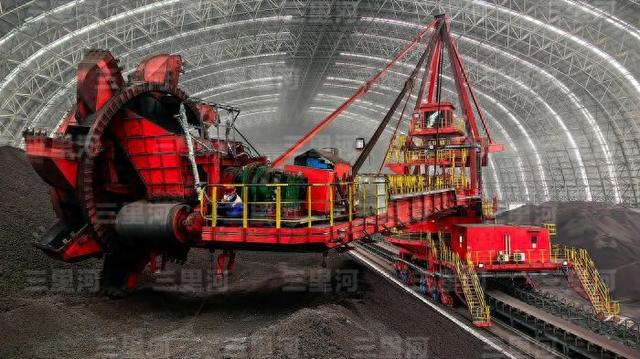
立足特色优势打造新质生产力重要实践地
Jing Ji Ri Bao· 2026-01-27 23:10
Core Viewpoint - Hainan aims to achieve high-quality development by leveraging its unique resources and free trade port policies, focusing on modern industrial systems and technological innovation to enhance productivity and economic growth [1][2]. Group 1: Economic Development and Industry Focus - During the "14th Five-Year Plan" period, Hainan is prioritizing the development of four main industries: tourism, modern services, high-tech industries, and tropical agriculture, with a focus on integrating innovation resources [2]. - By 2024, Hainan's R&D expenditure is projected to reach 10.961 billion yuan, marking a 22.1% increase year-on-year, the highest growth rate in the country [2]. - The contribution of the four main industries to the regional GDP is expected to reach 67.2% by the first three quarters of 2025, an increase of 14.2 percentage points compared to 2020 [2]. Group 2: Agricultural Innovation - Hainan is positioned as a key player in seed production, with over 800 related enterprises and more than 10,000 professionals engaged in seed breeding, contributing to a market value exceeding 18 billion yuan [3]. - The province aims to implement a seed industry revitalization action plan, focusing on biotechnology and AI to enhance research capabilities and develop a modern seed industry cluster [3]. Group 3: Marine Economy - Hainan has jurisdiction over approximately 2 million square kilometers of ocean, making it an ideal location for deep-sea research and marine technology development [4]. - The marine economy's contribution to Hainan's GDP is projected to exceed 200 billion yuan, accounting for 35.5% of the total [4]. Group 4: Aerospace Industry - Hainan is developing a comprehensive commercial aerospace industry chain, leveraging its geographical advantages for cost-effective launches and safe landing zones [4]. - The Wenchang Space Launch Site is becoming a significant hub for the aerospace industry, with plans to expand satellite manufacturing and rocket assembly capabilities [4]. Group 5: Green and Digital Economy - Hainan is focusing on green low-carbon industries, with over 70% of its power generation from clean energy sources, and aims to develop a digital economy with nearly 500 core enterprises by 2025 [5][6]. - The province plans to foster digital applications in various sectors, including health and entertainment, while promoting the development of semiconductor and biopharmaceutical industries [5]. Group 6: Policy and Institutional Framework - Hainan is working to enhance its free trade port policy framework to optimize resource allocation and market expansion, aiming to create a conducive environment for international trade and investment [6]. - The province seeks to align with international trade rules and enhance cooperation in technology innovation, particularly in biotechnology and marine equipment [6].
去年四季度末我国科技型 中小企业获贷率为50.2%
Zhong Guo Zheng Quan Bao· 2026-01-27 21:02
Core Insights - The People's Bank of China reported that by the end of Q4 2025, 275,000 technology-oriented SMEs received loans, with a loan acquisition rate of 50.2%, an increase of 2 percentage points from the previous year [1] Group 1: Loan Statistics - By the end of Q4 2025, the total balance of RMB loans from financial institutions reached 271.91 trillion yuan, reflecting a year-on-year growth of 6.4%, with an annual increase of 16.27 trillion yuan [1] - The balance of loans to technology-oriented SMEs in both domestic and foreign currencies was 36.3 trillion yuan, marking a year-on-year increase of 19.8%, which is 13.6 percentage points higher than the overall loan growth rate [1] - The balance of loans to high-tech enterprises reached 18.61 trillion yuan, with a year-on-year growth of 7.5%, outpacing the overall loan growth by 1.3 percentage points [1] Group 2: Loan Growth in Various Sectors - By the end of Q4 2025, the loan balance for enterprises and institutions in foreign currencies was 186.21 trillion yuan, showing a year-on-year increase of 8.9%, which is 0.7 percentage points higher than the previous quarter [1] - The balance of inclusive micro and small enterprise loans in RMB reached 36.57 trillion yuan, with a year-on-year growth of 11.1%, exceeding the overall loan growth by 4.7 percentage points, and an annual increase of 3.63 trillion yuan [1]
今年上半年中关村国际技术交易中心落地 北京提速科技成果转化生态建立
Bei Jing Shang Bao· 2026-01-25 08:33
Core Viewpoint - The focus is on enhancing the commercialization of scientific and technological achievements in Zhongguancun, aiming to establish a robust transformation system by 2027, which includes the creation of numerous collaborative platforms and technology development projects [3][4]. Group 1: Technology Transformation Initiatives - Zhongguancun aims to form an efficient and dynamic technology transformation system by 2027, targeting the establishment of 1,000 collaborative platforms and 5,000 technology development projects [3]. - The plan includes incubating 3,000 technology-based enterprises and 600 specialized and innovative enterprises, addressing national strategic needs and local economic development [3]. - In 2026, over 1,000 technology achievements are expected to be transformed and commercialized, with a focus on integrating technology with industry [3][4]. Group 2: Infrastructure Development - The Zhongguancun International Technology Trading Center will be established to facilitate the display and transaction of technological achievements, providing platforms for showcasing and roadshows [4]. - The center will host technology exchanges and include market-oriented service institutions such as intellectual property assessment and venture incubation [4]. - A concept verification platform will be developed to assess the commercial viability of technologies from the laboratory stage to product stage, aiding in the transformation process [4]. Group 3: Industrial Growth and Economic Impact - By 2025, Zhongguancun is projected to have 64 specialized industrial parks covering 22 million square meters, housing over 6,600 enterprises and generating a revenue scale of 1.2 trillion yuan [5]. - The total revenue of large-scale enterprises in Zhongguancun is expected to exceed 10 trillion yuan by 2025, with a total industrial fund scale surpassing 140 billion yuan [5].


杭州踩线完成“十四五”2.3万亿GDP目标,未来5年要站上3万亿
Sou Hu Cai Jing· 2026-01-23 09:25
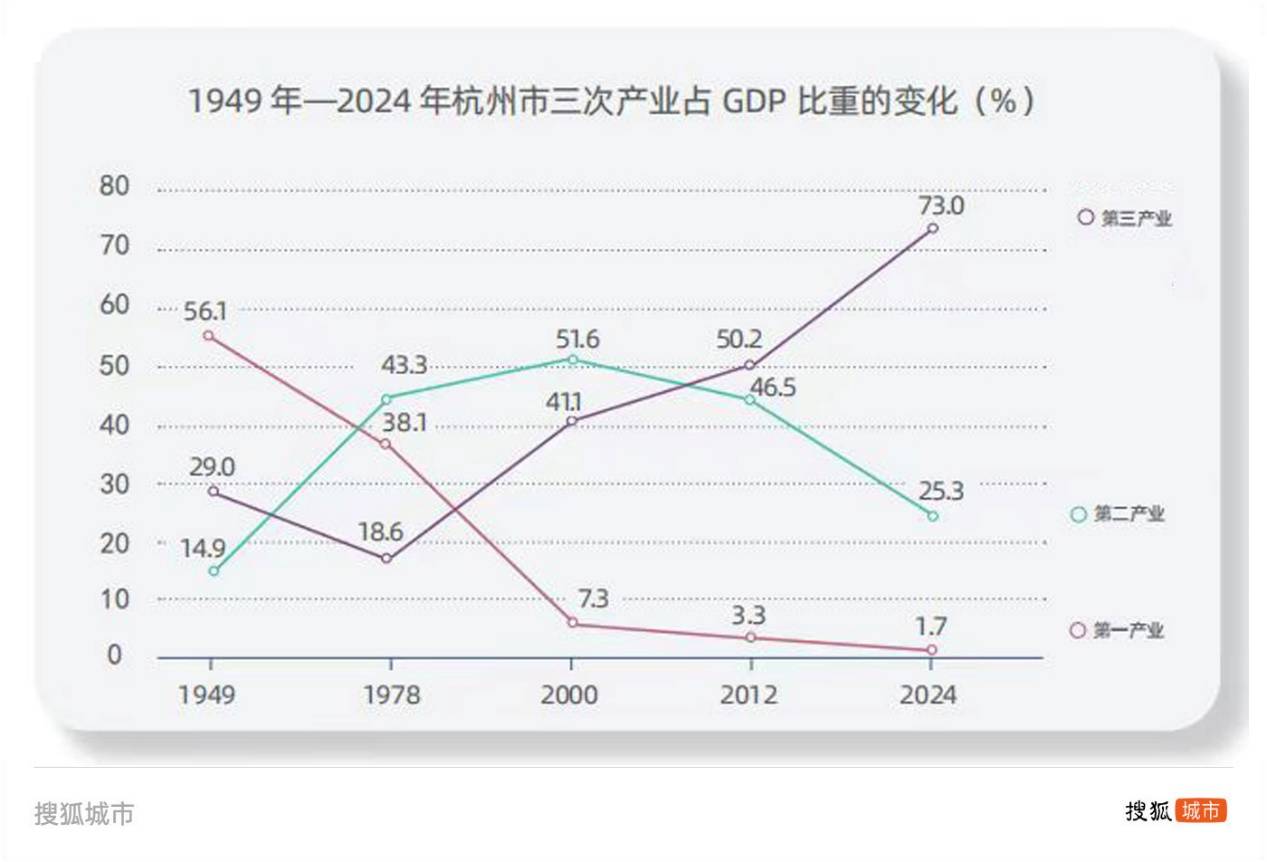
Economic Overview - Hangzhou's GDP is projected to reach 23,011 billion yuan by 2025, aligning with the "14th Five-Year Plan" target of 23,000 billion yuan [1] - The city aims for a GDP of 30,000 billion yuan and a per capita GDP exceeding 30,000 USD by 2030, requiring an average annual growth rate of over 5% in the next five years [1] Economic Structure - The economic growth in Hangzhou is driven by three main sectors: retail, foreign trade, and fixed asset investment, with retail sales expected to reach 9,499 billion yuan, foreign trade at 9,072 billion yuan, and a decline in fixed asset investment growth [1][4] - The service sector contributes significantly to the economy, with a value-added of 16,997 billion yuan and a growth rate of 5.3%, accounting for 73.4% of GDP [4] Sector Performance - The digital economy is a key growth area, with core industries in this sector seeing revenue growth of 13.2% and 12.1% for high-tech services [4] - Industrial output is also on the rise, with a total industrial value added of 4,624 billion yuan, marking a 6% increase, driven by advanced manufacturing clusters [4][10] - The automotive sector, particularly electric vehicles, has shown remarkable growth, with production increasing by 383% [2][4] Investment Trends - Investment in fixed assets is under pressure, with a notable decline in real estate and some infrastructure investments, reflecting a long-term downward trend from 20.3% growth in 2016 to 2.8% in 2023 [5] - Industrial investment has grown by 5.2%, but overall investment growth is expected to be negative in 2024 and 2025 [5] Consumer Market - The retail sales total is projected to reach 10,000 billion yuan by 2026, with a growth rate of around 5% [6] - The retail sales in Hangzhou have been revised upward to 9,151 billion yuan for 2024, reflecting a significant increase from previous estimates [8] - The consumption growth is supported by a stable service economy, with a focus on entertainment and experience-based consumption [10] Challenges and Future Outlook - Hangzhou's service sector, while substantial, still lags behind major cities like Beijing and Shanghai in absolute terms, indicating a need for structural improvements [12] - The manufacturing sector's contribution to GDP has decreased from 47.8% in 2010 to approximately 25% in 2024, highlighting a need for a more robust industrial base [12][14] - The city faces challenges in talent supply and demographic trends, which may impact its ability to achieve its ambitious economic goals [14]
官宣!山东GDP突破10万亿元
Ren Min Ri Bao· 2026-01-23 08:50
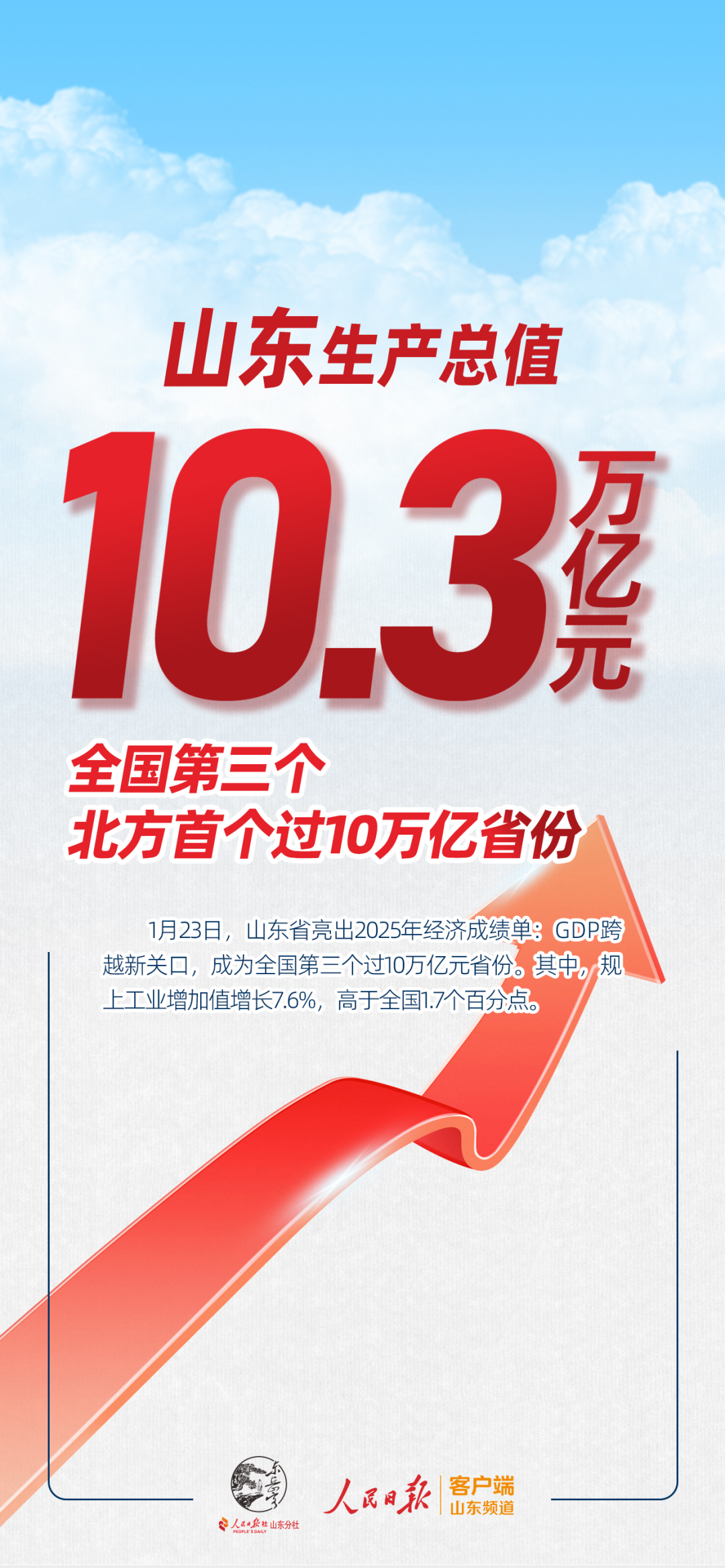
Group 1 - Shandong Province's GDP reached 10.3197 trillion yuan in 2025, marking a 5.5% increase from the previous year, making it the first northern province to surpass the 10 trillion yuan mark [1][4] - The GDP growth was driven by various sectors: primary industry added 677.5 billion yuan (4.0% growth), secondary industry added 4,054.1 billion yuan (5.0% growth), and tertiary industry added 5,588.1 billion yuan (6.1% growth) [1][4] Group 2 - The achievement of 10 trillion yuan in GDP reflects a significant transition from traditional industries to high-tech sectors, with high-tech industries accounting for over 55% of the industrial output [5] - Regional collaboration has strengthened, with multiple economic zones contributing to the overall growth, and 13 cities in Shandong entering the national top 100 cities by economic strength [5] - The economic development logic in China is shifting from focusing on scale and speed to emphasizing quality and efficiency, indicating a deeper transformation in the economic landscape [5][6]
解码数字里的“机遇清单”:全球首个“十四亿吨”级港映照的开放新气象
Ren Min Ri Bao· 2026-01-22 00:02
前些年,当国际上一些人产生"中国构建新发展格局,是否意味着舍弃开放"的疑问时,习近平总书记态 度鲜明地指出:"'双循环'不是要闭关锁国,而是当别人不给我们开门的时候,我们自己还能活下去、 活得更好。我们敞开大门,谁来与我们合作都欢迎。" 近期,浙江宁波舟山港公布了2025年成绩单:货物吞吐量突破14亿吨,连续17年位居全球第一,成为全 球首个迈入"14亿吨"级的超级大港。在经济全球化遭遇逆风、地缘政治格局与贸易政策复杂多变的当 下,这一成绩来之不易,背后是审时度势的前瞻布局,是发展理念的深刻变革。 "大进大出的环境条件已经变化,必须根据新的形势提出引领发展的新思路。"2020年,习近平总书记到 宁波舟山港考察,回京后不久就提出构建以国内大循环为主体、国内国际双循环相互促进的新发展格 局。近6年来,宁波舟山港的成长,清晰映照出中国高水平对外开放的新气象。 从"大进大出"到"优进优出",折射中国外贸的动力转换。出口产品更"新"更"绿"。观察宁波口岸的出口 数据,高新技术产品表现亮眼。2025年,"新三样"产品出口额同比增长76.3%,工业机器人走俏国际市 场,出口额同比增长113%。在创新引领和绿色加持下,新质生 ...