
数字贸易

Search documents
浙江聚力发展数字贸易
Jing Ji Ri Bao· 2025-09-14 05:59
Group 1 - Zhejiang Province is actively building a global digital trade center, with significant growth in digital technology, services, and cross-border e-commerce [1][2] - In the first half of this year, Zhejiang's digital trade imports and exports reached 414.95 billion yuan, marking a year-on-year increase of 13.2% [1] - The digital trade volume in Zhejiang has achieved double-digit growth for six consecutive years, with comprehensive advancements in policies, platforms, and standards [1] Group 2 - The "1+3+N" development layout includes one global digital trade expo, three centers in Hangzhou, Ningbo, and Yiwu, and encourages other cities to create distinctive digital trade projects [1] - The upcoming fourth Digital Trade Expo will focus on leading enterprises and new technologies, showcasing cutting-edge innovations like generative AI and embodied intelligent robots [1] - Hangzhou is developing a core area for digital trade, integrating high-end exhibitions, headquarters economy, and service sectors, aiming for a digital trade volume of 440 billion yuan by 2027 [2]
完善规划布局 用好展会平台 江聚力发展数字贸易
Jing Ji Ri Bao· 2025-09-14 02:04
Group 1 - The core viewpoint is that Zhejiang Province is actively building a global digital trade center, with significant growth in digital services and products, leading to a 13.2% year-on-year increase in digital trade imports and exports, totaling 414.95 billion yuan in the first half of the year [1] - Zhejiang's digital trade has achieved double-digit growth for six consecutive years, with comprehensive advancements in policies, platforms, and standards [1] - The "1+3+N" development layout includes one global digital trade expo, three centers in Hangzhou, Ningbo, and Yiwu, and encourages other cities to create distinctive digital trade projects [1] Group 2 - Hangzhou is developing a core area for digital trade, leveraging the digital trade expo and three free trade zones, with a focus on six digital trade bases [2] - The Xiaoshan area has become a model zone for digital trade in Zhejiang, fostering a number of exemplary enterprises [2] - The goal for Hangzhou is to achieve a digital trade volume of 440 billion yuan by 2027, integrating high-end exhibitions, headquarters economy, and digital services [2]
完善规划布局 用好展会平台 浙江聚力发展数字贸易
Jing Ji Ri Bao· 2025-09-13 22:10
Group 1 - Zhejiang Province is actively building a global digital trade center, with significant growth in digital technology, services, and cross-border e-commerce, leading to a digital trade import and export value of 414.95 billion yuan in the first half of the year, a year-on-year increase of 13.2% [1] - The digital trade value in Zhejiang has achieved double-digit growth for six consecutive years, with comprehensive progress in policies, platforms, and standards [1] - The "1+3+N" development layout proposed in the "Implementation Plan for the Reform and Innovation of Digital Trade in Zhejiang Province" includes one global digital trade expo, three centers in Hangzhou, Ningbo, and Yiwu, and encourages other cities to develop distinctive digital trade projects [1] Group 2 - Hangzhou is developing a core area for digital trade centered around the digital trade expo, with three free trade zones and six digital trade bases, aiming to achieve a digital trade value of 440 billion yuan by 2027 [2] - The Xiaoshan district has become one of the first digital trade demonstration zones in Zhejiang, fostering a number of exemplary digital trade enterprises [2] - The Qiantang district will focus on cross-border e-commerce and biomedicine, implementing five major enhancement projects including the construction of a comprehensive bonded zone [2]
2025数字贸易发展论坛搭建高效合作平台 探讨数字贸易出海战略机遇与实施路径
Xin Hua Cai Jing· 2025-09-13 08:44
Core Insights - The 2025 Digital Trade Development Forum was held in Beijing, focusing on strategic opportunities and implementation paths for digital trade expansion [1][2] - The forum emphasized the theme "Digital Empowerment for Global Integration," aiming to create a collaborative platform across regions and industries [1] - Key reports and case studies were presented, including the "2024 Sino-Japanese IT Service Business Cooperation Development Report" [1] Group 1: Government and Institutional Perspectives - The Chinese government prioritizes the development of the digital economy and trade as a core strategy for fostering new productive forces [1] - Beijing is positioned as a leader in exploring high-quality trade development, integrating digital trade with traditional goods trade [2] - The Haidian District has developed a knowledge-intensive industry cluster, fostering nearly 10,000 national-level high-tech service enterprises [2] Group 2: Corporate Contributions and Innovations - Huawei Cloud shared insights on its overseas strategy and localization practices [2] - Companies like Bo Yan Technology and Li Weike Technology presented best practices and innovations in digital trade, including AI applications [3] - The forum introduced an immersive "Overseas Market" concept, facilitating direct interaction and collaboration among participants [3] Group 3: International Collaboration - Representatives from Japan, the Philippines, Singapore, and Brazil participated, highlighting the importance of international cooperation in digital trade [4] - The forum aimed to deepen collaboration between Chinese and Japanese enterprises in exploring international markets [2]
海淀透露数字贸易“攻坚路线图”
Bei Jing Shang Bao· 2025-09-12 15:17
Group 1 - The global economy is entering a new phase characterized by digital productivity, with digital trade emerging as a new engine for growth [1] - Digital trade is a core component of the digital economy, driven by advanced technologies such as artificial intelligence and blockchain, facilitating deep integration of industrial, supply, and value chains [1] - China's digital trade market is projected to exceed 4.5 trillion yuan by 2025 and reach 8.2 trillion yuan by 2030, with a compound annual growth rate of over 12% [1] Group 2 - Beijing is leading the nation in digital trade, with a projected growth of 7.7% in digital economy value in 2024, and core industries growing over 10% [2] - Haidian District in Beijing is a key area for digital economy and trade development, with its core industries accounting for 53.1% of the district's GDP in 2024 [2] - Haidian District has developed a knowledge-intensive industrial cluster, housing nearly 10,000 high-tech enterprises, 262 listed companies, and 50 unicorns, with major firms like Douyin and Xiaomi originating from the area [2] Group 3 - The rapid growth of digital trade is closely linked to the emphasis placed by national and local governments, with policies such as the 18 measures to support digital trade reform introduced in August 2024 [3] - Haidian District has outlined its development strategy focusing on enhancing global competitiveness and fostering new digital industry clusters [3] - The district aims to create a high-standard open environment, aligning with international trade rules, and exploring innovative practices in technology governance and intellectual property protection [3]
鼎韬产业研究院发布《数字贸易蓝皮书》
Bei Jing Shang Bao· 2025-09-12 14:01
Group 1 - The core viewpoint of the article highlights the rapid growth of digital trade as a key driver of global economic growth and value chain restructuring in the context of an evolving digital economy and international trade landscape [1] - The "Digital Trade Blue Book" released by Dingtao Industrial Research Institute estimates that the global digital trade scale will reach $7.39 trillion in 2024, accounting for 22.22% of total global goods and services exports [1] - Digital delivery trade and digital ordering trade are identified as the dual engines of growth, with respective scales of $4.78 trillion and $2.62 trillion, representing 64.63% and 35.37% of the total digital trade [1] - The United States, the United Kingdom, and Ireland are the top three countries in global digital trade scale, while China ranks fourth with a strong competitive position at $765.9 billion [1] Group 2 - Artificial intelligence is recognized as a core variable shaping the future global trade landscape, moving beyond being merely an auxiliary tool [2] - It is projected that by 2040, artificial intelligence will drive growth in global digital delivery service trade by 18 percentage points above the baseline [2] - China is positioned as a global leader in the artificial intelligence industry, with significant advantages in scale, patent quantity, market application, and computing power deployment, indicating its potential to lead a new wave of digital trade transformation [2]
2025服贸会|鼎韬产业研究院发布《数字贸易蓝皮书》
Bei Jing Shang Bao· 2025-09-12 13:11
Core Insights - Digital trade is rapidly growing and becoming a key driver of global economic growth and value chain restructuring, with a projected scale of $7.39 trillion in 2024, accounting for 22.22% of global goods and services exports [1][2] Group 1: Digital Trade Growth - The report from Dingtao Industrial Research Institute indicates that global digital trade will reach a historic high of $7.39 trillion in 2024, representing 22.22% of total global exports [1] - Digital delivery trade and digital ordering trade are driving this growth, with respective scales of $4.78 trillion and $2.62 trillion, making up 64.63% and 35.37% of the total [1] - The United States, the United Kingdom, and Ireland are the top three countries in global digital trade scale, while China ranks fourth with $765.98 billion, showcasing strong competitiveness [1] Group 2: Role of Artificial Intelligence - Artificial intelligence is identified as a core variable shaping the future global trade landscape, moving beyond being just an auxiliary tool [2] - By 2040, AI is expected to drive growth in global digital delivery service trade by 18 percentage points above the baseline [2] - China is positioned as a leader in the AI industry, with advantages in scale, patent numbers, market applications, and computing power deployment, indicating significant potential to lead a new wave of digital trade transformation [2]
5部门发文支持北京市率先试行世贸组织电子商务协定
Xin Hua She· 2025-09-12 09:14
Core Points - The Chinese government has launched a work plan to support Beijing in implementing the WTO e-commerce agreement, which includes 41 specific measures across five key areas [1][2] - The e-commerce agreement, reached after over five years of negotiations, involves 71 members including China, the EU, and Australia, focusing on digital facilitation, openness, trust, and inclusiveness [1][2] Group 1: Key Areas of the Work Plan - The first area aims to enhance the digitalization of trade to improve efficiency and reduce operational costs for businesses [1] - The second area focuses on improving the data governance system to create a standardized, efficient, and secure data market [1] - The third area seeks to optimize the digital consumption environment to regulate market order and protect consumer rights [1] - The fourth area emphasizes the need for transparency in telecommunications business operations [1] - The fifth area is dedicated to strengthening international cooperation in digital trade [1] Group 2: Significance of the E-commerce Agreement - The agreement is seen as a significant achievement in the formulation of multilateral digital trade rules and a milestone in China's efforts to expand high-level opening-up [2] - It aims to provide a stable, transparent, and predictable regulatory environment for global digital trade and digital transformation, benefiting consumers and businesses worldwide [2] - Current participants, including China, are actively seeking consensus among all WTO members to expedite the agreement's incorporation into the WTO framework for implementation [2]
数贸会带动浙江数字贸易突破三个“千亿级”大关 力争2027年达1万亿元
Zhong Guo Jing Ying Bao· 2025-09-12 08:49
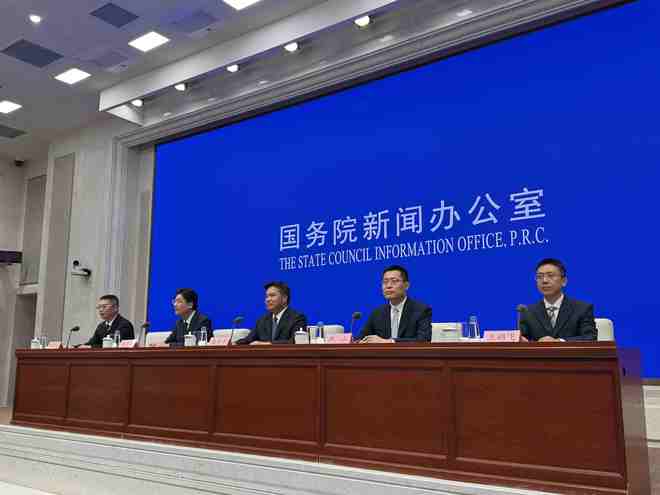
中经记者 孟庆伟 北京报道 义乌一位只会说中文的雨伞商户,依托Chinagoods AI模型的实时翻译功能,在去年的全球数字贸易博 览会(以下简称"数贸会")期间,把产品卖向全球,迅速走红。 借助"数字贸易+人工智能"的深度融合,今年的数贸会有望让更多企业主实现"互动全球"。 "今年数贸会,Chinagoods AI在智能翻译功能的基础上完成升级,还能帮助企业生成创意图片、制作专 业视频,通过'小生意+大模型'让贸易和交易更加便捷。"浙江省副省长卢山在9月11日国新办新闻发布 会上介绍了第四届数贸会的情况。 《中国经营报》记者获悉,第四届数贸会将于9月25日至29日在浙江杭州举办,主线进一步聚焦"数字贸 易与AI深度融合"。杭州市市长姚高员表示,本届展会将积极撮合参展商与采购商,推动双向合作与合 同签订,预计采购总金额将达300亿元。 数贸会显著拉动浙江数字贸易 浙江是数字经济先行省,数字贸易发展位居全国前列。自2022年首届数贸会举办以来,该展会已成为推 动浙江数字贸易高质量发展的重要引擎。 商务部数据显示,今年上半年,我国可数字化交付的服务进出口达1.5万亿元,跨境电商进出口达1.3万 亿元,均创历史新高 ...

有“服”同享,“贸”利全球
Ren Min Wang· 2025-09-12 08:19
Group 1 - The 2025 China International Service Trade Fair (CIFTIS) serves as a significant platform for open innovation and cooperation in the service trade sector, featuring 85 countries and international organizations and hosting 26 forums and meetings [1] - The integration of advanced technologies such as artificial intelligence, big data, and cloud computing with service trade is enhancing service efficiency and transforming service experiences, indicating a shift beyond mere economic considerations to encompass quality of life, cultural exchange, and social progress [1] - The fair promotes resource sharing and complementary advantages, allowing global service trade to flow freely and fostering collaboration among elite enterprises, experts, and industry leaders [1] Group 2 - China's commitment to optimizing the business environment, simplifying approval processes, and strengthening intellectual property protection is creating a fair and transparent development landscape for service trade enterprises, thereby enhancing their efficiency and reducing costs [2] - The fair facilitates a unique cooperative ecosystem where different civilizations share wisdom in the service sector, exemplified by African fintech companies accessing Chinese mobile payment technologies and European environmental service providers finding growth opportunities in China's dual carbon strategy [2] - The CIFTIS highlights the importance of mutual benefit and win-win cooperation as essential pathways for global economic collaboration and development, showcasing stories of shared progress through initiatives like digital education platforms and green technology [2]