激光雷达

Search documents
Luminar破产与激光雷达“战争”:当“机器之眼”成为大国博弈新前线
机器人大讲堂· 2025-12-21 08:04
Core Viewpoint - The collapse of Luminar, a leading American lidar company, coincides with a legislative push in the U.S. to exclude Chinese sensors from critical infrastructure, highlighting the shift of lidar technology from a commercial competition to a geopolitical battleground [1][3]. Group 1: Legislative Actions and Market Impact - A new bill proposed by U.S. Congressman Raja Krishnamoorthi aims to phase out Chinese-made lidar sensors in autonomous vehicles and critical infrastructure under the guise of national security [3][4]. - The bill sets a timeline for banning new purchases within three years and replacing existing equipment within five years, citing concerns over potential cyberattacks during conflicts [4]. - Concurrently, Luminar Technologies filed for bankruptcy, reporting assets between $100 million and $500 million against liabilities of $500 million to $1 billion, marking a significant downturn for a company once partnered with major automakers [7]. Group 2: Luminar's Business Model and Challenges - Luminar's strategy focused on a superior 1550 nm lidar technology, which was initially seen as a path to advanced autonomous driving, leading to a peak market valuation of nearly $10 billion in 2020 [8][11]. - However, the high costs associated with 1550 nm technology, reliant on expensive materials, resulted in unsustainable pricing, with sales failing to cover manufacturing costs [11]. - In contrast, Chinese competitors like Hesai and RoboSense successfully reduced costs to around $200, integrating into major automotive supply chains, which Luminar could not match [11][13]. Group 3: Market Dynamics and Competitive Landscape - The global lidar market is dominated by Chinese firms, holding 93% of the passenger vehicle lidar market and 89% of the overall lidar market, with the "Big Four" Chinese companies capturing 88% of the market [13][15]. - The rapid decline in lidar costs and improvements in reliability have transformed lidar from a high-tech product to a mass-market component, driven by demand in robotics and industrial automation [16][18]. - The U.S. legislative response reflects a growing anxiety over supply chain security, as evidenced by the inclusion of Hesai in a list of entities linked to the Chinese military [19][20]. Group 4: Future Outlook and Competitive Strategies - The future of lidar technology will depend on the ability to provide comprehensive perception solutions that integrate hardware and software, rather than just competing on technical specifications [21]. - Companies that can navigate specific application scenarios and build strong ecosystem partnerships will likely establish a competitive edge in the evolving market landscape [21].

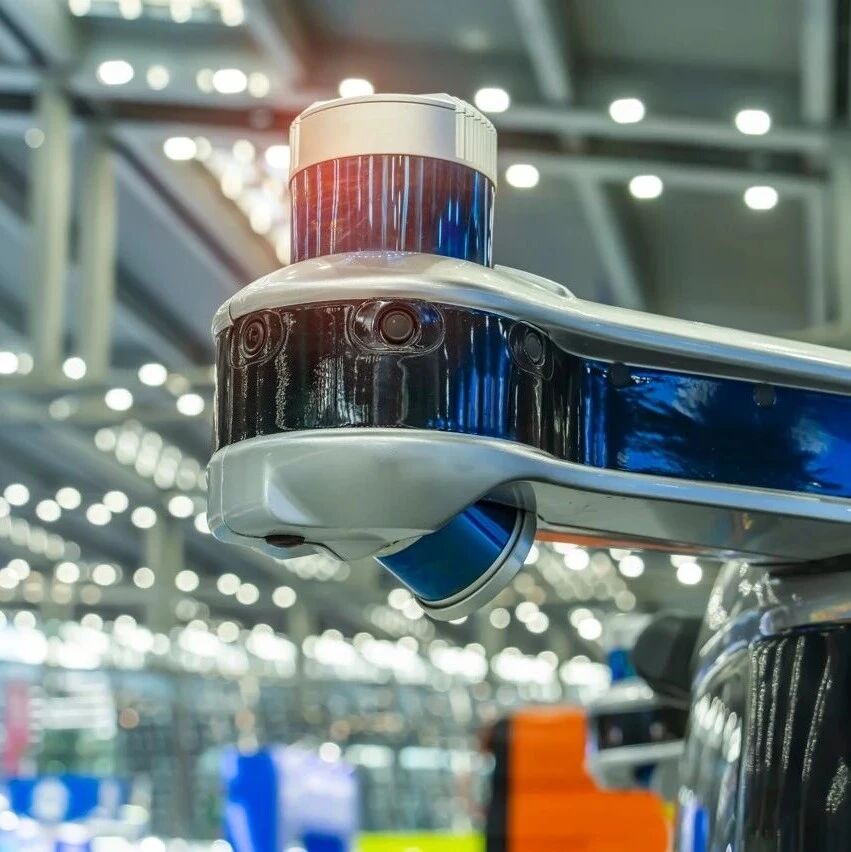
最高546亿市值的明星公司,破产了
投中网· 2025-12-21 02:03
Core Viewpoint - The article discusses the downfall of Luminar, a prominent player in the lidar industry, highlighting its bankruptcy and the implications for the U.S. lidar market, which is now largely dominated by Chinese manufacturers [5][6][12]. Group 1: Company Overview - Luminar was founded by Austin Russell, who showcased exceptional talent from a young age and aimed to revolutionize the lidar market by significantly reducing costs [14][15]. - The company initially gained traction by lowering the price of lidar systems from $75,000 to $500, achieving a competitive edge in the market [15][16]. - Luminar went public via a SPAC in 2020, raising $600 million and reaching a market valuation of $7.8 billion on its first trading day [16]. Group 2: Financial Struggles - Luminar's financial health deteriorated, with debts ranging from $500 million to $1 billion and a cash position that could only sustain operations until Q1 2026 [5][9][10]. - The company faced operational challenges, including a negative operating profit margin of -283.7% as of Q3 2025, leading to significant losses [8][10]. - The termination of a key partnership with Volvo further exacerbated Luminar's financial woes, potentially reducing its market share from approximately 8-10% to below 1% [9][10]. Group 3: Market Dynamics - The lidar market is increasingly competitive, with Chinese manufacturers capturing 93% of the passenger vehicle lidar market, while U.S. companies like Luminar see their market shares decline [10][12]. - The shift towards "pure vision" solutions, exemplified by Tesla, has led to skepticism about the necessity of lidar technology, further squeezing Luminar's market position [10][12]. Group 4: Leadership and Strategic Moves - Luminar's leadership faced turmoil, with the CEO being dismissed amid ethical investigations and the CFO leaving the company [10][11]. - The company has initiated self-rescue measures, including the sale of its semiconductor subsidiary for $110 million and plans to sell its lidar business [11][12]. - Despite the challenges, Luminar aims to continue operations during the bankruptcy process, maintaining deliveries of its lidar hardware and software [11][12].
最高546亿市值的明星公司,破产了
Xin Lang Cai Jing· 2025-12-20 02:19
Core Insights - Luminar, once a leading player in the lidar industry, announced bankruptcy restructuring, with assets valued between $100 million and $500 million and debts ranging from $500 million to $1 billion [1] Company Overview - Luminar's stock plummeted by 60.82% to $0.35 per share following the bankruptcy news, resulting in a market capitalization of only $27.45 million [2] - The company's journey from a promising startup to a significant market player, and now to bankruptcy, reflects the challenges faced in the lidar sector [2] Financial Performance - Luminar's operational profit margin was reported at -283.7% in Q3 2025, indicating severe financial distress [3] - The termination of a key partnership with Volvo, which was crucial for Luminar's revenue, has led to a drastic reduction in market share from approximately 8-10% to below 1% [4] Market Dynamics - The lidar market is increasingly dominated by Chinese manufacturers, who hold 93% of the market share, while international competitors like Luminar are losing ground [5] - The shift towards "pure vision" solutions, as advocated by companies like Tesla, has further diminished the perceived necessity for lidar technology [5] Leadership and Strategic Moves - Luminar has faced significant leadership challenges, including the dismissal of its CEO and CFO, and has initiated multiple rounds of layoffs, reportedly up to 30% of its workforce [6] - The company is attempting to stabilize its operations by selling assets, including its semiconductor division for $110 million, while continuing to deliver lidar products during the bankruptcy process [6] Historical Context - Founded by Austin Russell, Luminar aimed to revolutionize lidar technology by significantly reducing costs from $75,000 to $500 per unit, which initially positioned the company favorably in the market [8] - The company achieved a valuation of $10 billion shortly after its SPAC listing in 2020, making Russell one of the youngest billionaires [10]

遭索赔2000万元!图达通遇“专利劫”
Shen Zhen Shang Bao· 2025-12-19 13:23
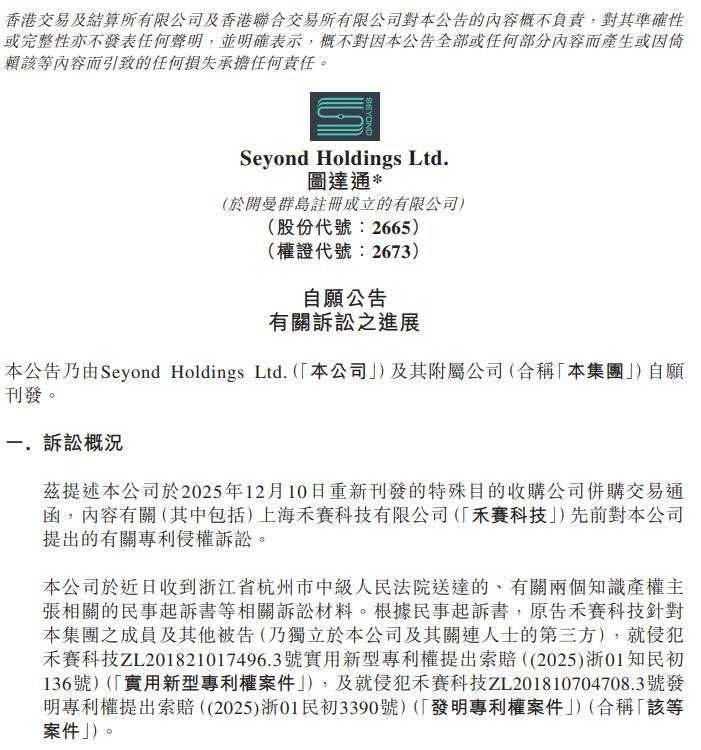
Core Viewpoint - The company, 图达通, is facing two patent infringement lawsuits from禾赛科技, which claims that the company has infringed on its utility model and invention patents related to laser radar systems, seeking a total compensation of 20 million RMB [1][4]. Group 1: Legal Issues - The lawsuits involve claims of infringement on the utility model patent ZL201821017496.3 and the invention patent ZL201810704708.3 by禾赛科技 [1][4]. -禾赛科技 demands that the company and other defendants cease the alleged infringement activities and pay for economic losses totaling 20 million RMB [4]. - The company asserts that it has a fully independent intellectual property layout for the laser radar systems in question and believes that禾赛科技's claims lack substantial basis [5]. Group 2: Company Background - 图达通, established in 2016, is a global provider of image-level laser radar solutions with R&D centers in Silicon Valley, Suzhou, and Shanghai, and a manufacturing base in Suzhou [5]. - The company went public on December 10, with an initial share price of 10 HKD [5]. Group 3: Financial Performance - Financial data shows that the company's revenues from 2022 to 2024 are projected to be 0.66 billion USD, 1.21 billion USD, and 1.60 billion USD, with adjusted net losses of 1.43 billion USD, 1.37 billion USD, and 0.83 billion USD respectively [6]. - In the global passenger car laser radar market,禾赛科技 holds a leading market share of 20.3%, while图达通's market share has decreased to 12.8% [6]. - On December 19, the company's stock price fell by 8.22%, closing at 14.41 HKD per share, with a total market capitalization of 18.716 billion HKD [6].
突发!又一汽车产业龙头破产
Xin Lang Cai Jing· 2025-12-19 12:36
作者:枫叶 突然破产! 又一汽车产业龙头崩盘了。 曾经的激光雷达一哥,这个曾让沃尔沃、奔驰抢着下单的激光雷达明星巨头,巅峰市值近千亿,如今跌到崩溃边缘。 Luminar(卢米纳尔),美国激光雷达最后的希望,最终还是破产了。 要说,激光雷达曾被卖到几十万元一颗,这些企业也赚得盆满钵满,不至于垮的如此之快。 可事实却是,美国激光雷达玩家接二连三地"死去"。 报告显示,中国激光雷达品牌占据了全球九成以上的市场份额,全球前三全是中国企业! 这就是中国新能源"超车"给行业带来的巨大变化,让豪车标配"大众化",把智驾驶入千家万户。 不禁感慨,汽车行业发展至今,已然迈入数字化大变革前夜,电动智能化已成大势所趋,走在技术前沿的中国汽车迎来狂欢。 究其根本,国产激光雷达企业不仅在技术上完成了突围成为世界第一,还一度成了"价格屠夫",把激光雷达做到了"白菜价"。 01 美国激光雷达最后的希望,还是破灭了。 不久前,曾经被视为激光雷达先驱的美国公司Luminar Technologies,正式向得克萨斯州南区法院提交了破产保护申请。 计划一边尽量维持交付与运营连续性,一边推进激光雷达主业出售,并同步剥离其半导体子公司。 若重整与出 ...

超200亿港元!苏州独角兽上市敲钟,蔚来李斌成最大赢家?
Sou Hu Cai Jing· 2025-12-19 10:43
超200亿港元!苏州独角兽成功奔赴港交所上市,背后站着千亿车企大佬。 文 | 创客公社 施润 2025年12月10日,Seyond Holdings Ltd.(以下简称"图达通")正式以"2665.HK"为股票代码在港交所挂牌上市。 作为第三家成功以De-SPAC方式登陆港交所的上市公司,图达通本次合计募集资金约10.27亿港元。截至当天10:40,图达通报于每股16.50港元,市值约 215亿港元。 从2018年蔚来资本领投A轮融资,到连续多轮加注成为最大外部股东;从蔚来NT2.0平台九款车型全面标配,到贡献近九成营收——蔚来不仅是图达通 的"金主",更是其最大的"粮仓"。上市前夕,蔚来再度掏出2.867亿港元认购股份,李斌用实际行动诠释了什么叫"扶上马、送一程"。 回顾图达通的上市,早已超越单一企业的成长叙事。当蔚来这样的整车巨头主动下场培育核心零部件企业,当苏州的产业土壤孕育出又一个硬科技独角 兽,中国新能源产业链正从"松散配套" 走向 "生态协同" 的新阶段。 但疑问也随之而来:蔚来"奶大"的图达通,能否摆脱单一客户依赖?这种 "整车厂孵化零部件" 的模式,会成为新能源产业的主流范式吗? 这家注册于苏 ...


“激光雷达芯片第一案”再起波澜,灵明光子反诉速腾聚创侵犯专利
经济观察报· 2025-12-19 10:15
Core Viewpoint - The ongoing legal disputes between Suoteng Juchuang and Lingming Photon revolve around allegations of technology secret infringement and patent rights, highlighting the competitive tensions in the laser radar and semiconductor industry [2][3][5]. Group 1: Legal Disputes - Suoteng Juchuang filed a lawsuit against Lingming Photon in November, claiming infringement of its self-developed SPAD chip technology secrets [2][5]. - Lingming Photon responded by filing a lawsuit regarding alleged patent infringements related to Suoteng Juchuang's E1 series products [3][4]. - Suoteng Juchuang stated that the core of the dispute is its accusation against Lingming Photon for infringing its technology secrets, while Lingming Photon has not provided a substantial response to these allegations [5][6]. Group 2: Company Backgrounds - Suoteng Juchuang, established in 2014 and headquartered in Shenzhen, is a leading player in the laser radar market with a global market share ranking first, serving over 3,400 clients in robotics and more than 350 automotive manufacturers [5][6]. - Lingming Photon, founded in 2018, specializes in chip design, particularly in SPAD dToF sensor chips, which are critical components in laser radar technology [5][6]. Group 3: Legal Proceedings and Responses - Suoteng Juchuang has initiated legal actions to counter Lingming Photon’s patent lawsuit and plans to utilize legal avenues such as patent invalidation [4][7]. - Both companies have filed multiple lawsuits against each other, with Suoteng Juchuang also pursuing claims of commercial defamation against Lingming Photon for its public statements related to the lawsuits [7].

突发!美国会通过立法,锁死对华科技投资,尤其是半导体与微电子、人工智能、量子信息等领域的投资!
是说芯语· 2025-12-19 06:30
Core Viewpoint - The recent signing of the National Defense Authorization Act (NDAA) by President Trump has formalized and expanded restrictions on U.S. investments in advanced technology sectors in China, indicating a bipartisan consensus in the U.S. government to prevent capital flow into these areas [1][4]. Summary by Sections Existing Restricted Areas - The NDAA reinforces previous restrictions on core areas such as semiconductors (chips), quantum information technology (quantum computing and communication), and artificial intelligence (AI technologies applicable to military and surveillance) [2]. Newly Added Restricted Areas - The act expands the scope of restrictions to include drone technology, specifically targeting companies like DJI and Daotong Intelligent, prohibiting the U.S. Department of Defense from purchasing their products and requiring supply chain risk assessments [2]. - Other newly restricted areas include lidar technology, biotechnology, quantum information science, hypersonic technology, autonomous robotics, and network technology, all aimed at slowing down China's industrial development [2]. Investment Exceptions - Not all investments are restricted; exceptions include index funds, publicly traded stocks, and passive investments that do not involve active participation in company operations. Additionally, previously completed compliant investments are not subject to retroactive withdrawal [2]. Regulatory Framework - A strict regulatory framework has been established, requiring U.S. entities to report sensitive investments in China to the Treasury Department for security review. Violations may result in fines and mandatory divestment [3]. - This regulation applies not only to domestic entities but also to U.S. companies' overseas branches, with multiple government departments collaborating to monitor compliance [3]. Implications for U.S.-China Relations - The NDAA marks a shift to a "hard constraint" phase in U.S.-China technological competition, making it more challenging for capital flows between the two nations and potentially disrupting global technology investment order and supply chain dynamics [4].

“激光雷达芯片第一案”再起波澜,灵明光子反诉速腾聚创侵犯专利
Jing Ji Guan Cha Wang· 2025-12-19 05:16
Core Viewpoint - Lingming Photon has filed a lawsuit against Suoteng Juchuang for alleged infringement of its invention patent rights related to the E1 series products, while Suoteng Juchuang has countered with its own lawsuit regarding the infringement of its technical secrets [2][3]. Group 1: Legal Disputes - Lingming Photon filed a lawsuit on December 17, claiming that Suoteng Juchuang's E1 series products infringe its invention patent rights [2]. - Suoteng Juchuang responded on December 18, stating it would counter the lawsuit through legal means, including a declaration of patent invalidity [2]. - Suoteng Juchuang had previously filed a lawsuit against Lingming Photon in November, accusing it of infringing on its self-developed SPAD chip's technical secrets [2][3]. Group 2: Company Background - Suoteng Juchuang, established in 2014 and headquartered in Shenzhen, holds the largest market share in the global lidar industry and has provided core components and solutions to over 3,400 clients in robotics and more than 350 automotive manufacturers [3]. - Lingming Photon, founded in 2018, specializes in chip design, with its SPAD dToF sensor chips considered essential for lidar technology [3]. Group 3: Evidence and Claims - Suoteng Juchuang claims to have established a complete chain of evidence regarding the alleged infringement of its core technology by Lingming Photon, including analysis of internal documents and technical comparisons [3]. - Lingming Photon previously stated it had not received any legal correspondence and reserved the right to pursue legal action against any actions that could harm its reputation [3]. Group 4: Ongoing Legal Proceedings - Suoteng Juchuang has confirmed that its lawsuits regarding technical secret infringement and invention patent infringement have been accepted by the court, with another patent infringement case currently under review [4]. - In response to Lingming Photon’s public statements and actions related to the lawsuits, Suoteng Juchuang has initiated a commercial defamation lawsuit and filed complaints with market supervision authorities [4].
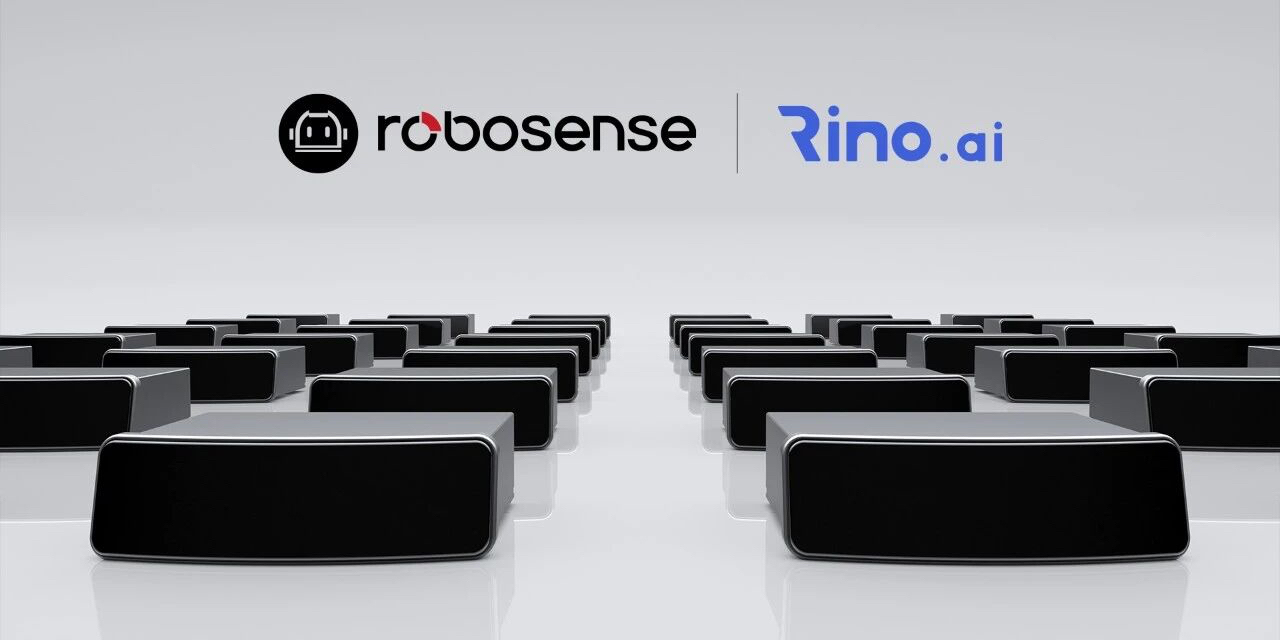
国内激光雷达行业“专利战”再升级
Nan Fang Du Shi Bao· 2025-12-18 23:10
Core Viewpoint - The domestic lidar industry is experiencing an escalation in patent disputes, with Shenzhen Lingming Photon Technology Co., Ltd. filing a countersuit against Suoteng Juchuang for patent infringement, marking a shift from one-sided accusations to mutual litigation [2][3][4]. Group 1: Legal Disputes - Lingming Photon has accused Suoteng Juchuang of infringing on its invention patents related to the E1 series products, including E1R and E1P [2][3]. - The legal battle is characterized as the "first case of SPAD chip" in the lidar industry, highlighting the intensifying competition and the importance of intellectual property rights [2][4]. - Suoteng Juchuang has responded by asserting that Lingming Photon has not provided substantial evidence regarding the core accusations of technology theft and has initiated its own lawsuits for alleged infringement of its technical secrets [4][5]. Group 2: Market Impact - The ongoing litigation has put pressure on Suoteng Juchuang's stock price, which closed at HKD 36.14 per share on December 18, with a total market capitalization of approximately HKD 17.07 billion [2]. - The disputes reflect a significant shift in the lidar industry from product integration to competition over foundational chip technologies, particularly SPAD (Single-Photon Avalanche Diode) technology [6][7]. Group 3: Company Backgrounds - Lingming Photon, established in 2018, focuses on the independent research and development of SPAD technology and has applied for over 260 patents, with more than 130 granted [6]. - Suoteng Juchuang is a leading player in the global lidar market, holding a 26% share of the automotive lidar market in 2024, and the E1 series is a strategic product in its transition to solid-state lidar technology [7].