生态修复

Search documents
蒙草生态(300355.SZ):上半年净利润5005.24万元 同比增长97.98%
Ge Long Hui A P P· 2025-08-26 12:31
Core Viewpoint - Mongolian Grass Ecological (300355.SZ) reported significant growth in both revenue and net profit for the first half of the year, driven by increased contract orders and improved accounts receivable collection [1] Financial Performance - The company achieved operating revenue of 823 million yuan, representing a year-on-year increase of 19.40% [1] - The net profit attributable to shareholders reached 50.05 million yuan, marking a substantial year-on-year growth of 97.98% [1] Operational Highlights - The increase in revenue was primarily due to a rise in confirmed income from increased contract orders during the reporting period [1] - The company enhanced its accounts receivable collection efforts, leading to an increase in cash inflow [1]

蒙草生态:2025年上半年净利润同比增长97.98%
Xin Lang Cai Jing· 2025-08-26 12:04
蒙草生态公告,2025年上半年营业收入8.23亿元,同比增长19.40%。净利润5005.24万元,同比增长 97.98%。基本每股收益0.03元/股,同比增长50.00%。 ...
东珠生态:筹划收购凯睿星通控股权,8月27日起停牌
Xin Lang Cai Jing· 2025-08-26 11:41
东珠生态8月26日公告,公司正在筹划以发行股份及支付现金的方式收购凯睿星通信息科技(南京)股 份有限公司的控股权,同时拟募集配套资金。经初步测算,本次交易预计构成《上市公司重大资产重组 管理办法》规定的重大资产重组。根据上海证券交易所相关规定,经公司申请,公司股票(证券简称: 东珠生态,证券代码:603359)将于2025年8月27日(星期三)开市起停牌,预计停牌时间不超过10个 交易日。 ...

盐碱地“变身”光伏电站,看东营如何平衡生态与能源
Qi Lu Wan Bao Wang· 2025-08-26 03:57
Core Insights - The innovative practice of "photovoltaics + ecology" in Dongying addresses the development paradox of fragile ecological areas by transforming saline-alkali land into a renewable energy base, achieving over 2 billion kilowatt-hours of annual electricity generation [1][2] Group 1: Ecological Restoration and Energy Production - Dongying utilizes the unique characteristics of saline-alkali land, where photovoltaic panels reduce surface evaporation by 40% and increase soil moisture by 15%-20%, creating a suitable environment for salt-tolerant plants [2] - The "fishing and solar complementarity" model allows for dual use of water resources, with a 100 MW project generating 120 million kilowatt-hours annually, saving 36,000 tons of standard coal and increasing fish and shrimp yield by 30% [2] Group 2: Economic Benefits and Ecological Safety - By June 2025, investments in saline-alkali photovoltaic projects in Dongying are expected to exceed 8 billion yuan, creating over 5,000 jobs, with local farmers earning an additional 24,000 yuan annually [3] - Strict adherence to ecological protection principles ensures that photovoltaic projects do not encroach on core wetlands or affect the Yellow River's flood flow, maintaining a harmonious relationship with the national nature reserve [3] Group 3: Technological Innovation and Long-term Governance Challenges - Dongying faces challenges such as long soil improvement cycles, high initial costs, and the need for integrated technology for photovoltaic panel maintenance and pest control [4] - The strategy to overcome these challenges involves a dual approach of technology and mechanisms, including collaboration with research institutions and establishing a benefit-sharing model for ecological restoration [4]
活力中国调研行丨砂石地里草原重生
Xin Hua Wang· 2025-08-26 01:31
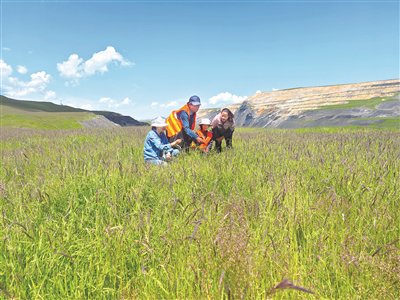
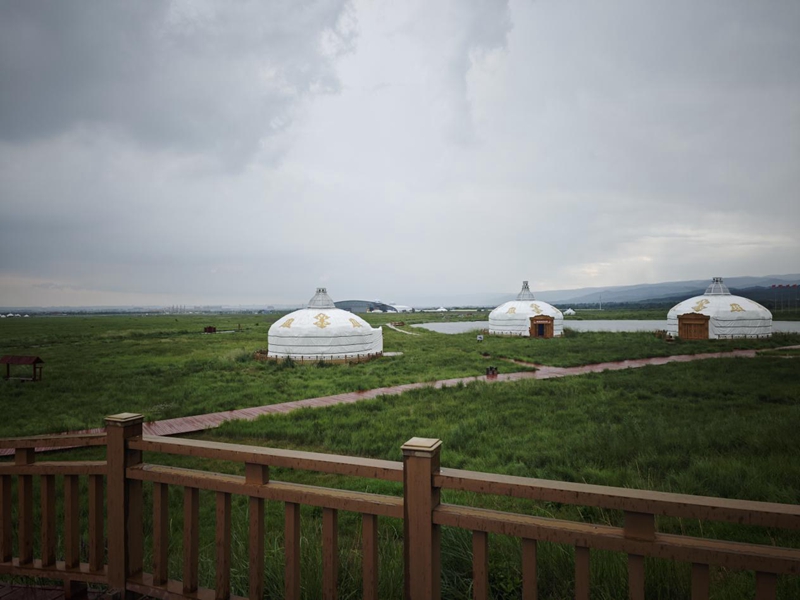
Core Insights - The article highlights the successful ecological restoration of the Chulu Ranch in Inner Mongolia, transforming it from a degraded landscape into a thriving grassland ecosystem [2][4][6]. Group 1: Ecological Restoration Efforts - Since 2012, Hohhot City has implemented a comprehensive governance project for the southern slope of the Yinshan Mountains, with the restoration of the Chulu Ranch as a key focus [4]. - The Mongolian Grass Group faced significant challenges in restoring vegetation in a rocky environment, initially experimenting on 1,000 acres before achieving broader success [6][7]. - The restoration team utilized a combination of natural simulation and artificial methods, developing "seed packages" that include integrated seeds and water-retaining agents, leading to natural succession of artificial grasslands within two years [6][7]. Group 2: Biodiversity and Ecosystem Improvement - The Mongolian Grass Group has successfully cultivated 295 species of native plants and established a national germplasm resource bank in Inner Mongolia, storing 2,300 plant germplasm resources and 65,000 samples [7]. - The restored Chulu Ranch now features over 40 species of natural forage, with vascular plants representing 27.2% of the region's total, significantly enhancing biodiversity and ecosystem stability [7]. - The area has seen an increase in animal diversity, with 30 species now present, including common animals such as badgers, snakes, and hares, contributing to a more robust ecological system [7]. Group 3: Economic and Tourism Development - The Chulu Ranch has evolved into a multifunctional international leisure and vacation complex, integrating tourism, ecological research, sports, and events [7]. - Visitor numbers at the Chulu Ranch reached approximately 1.4 million last summer, with expectations to exceed 1.6 million this year, indicating a growing interest in eco-tourism [7].

正和生态股价微跌0.61% 公司上调回购价格上限至16元
Jin Rong Jie· 2025-08-22 19:10
Group 1 - The stock price of Zhenghe Ecology closed at 11.35 yuan on August 22, 2025, down 0.61% from the previous trading day, with a trading volume of 0.66 billion yuan and a turnover rate of 6.94% [1] - The stock price fluctuated between 11.20 yuan and 11.50 yuan on the same day, with an amplitude of 2.63% [1] - Zhenghe Ecology's main business includes ecological environmental protection, focusing on water environment governance and ecological restoration, with its registered location in Beijing [1] Group 2 - On August 22, the company announced an adjustment to its share repurchase price ceiling, raising it to 16 yuan per share, and extending the repurchase period to February 22, 2026, to ensure the smooth implementation of the repurchase plan [1] - On the same day, the net outflow of main funds was 7.9991 million yuan, with a cumulative net outflow of 17.4894 million yuan over the past five days [1]

从“伤疤”到“财富”、从“砍”到“看” 绿水青山让百姓吃上“旅游饭”
Yang Shi Wang· 2025-08-22 07:42
Group 1 - The core viewpoint of the article highlights the transformation of Xuzhou Peixian from a coal mining area with severe environmental issues to a green and ecologically sustainable region, exemplified by the establishment of the Anguo Lake National Wetland Park [1][4] - The ecological restoration efforts in Peixian have involved the remediation of approximately 116 million cubic meters of collapsed land and the recovery of over 38 hectares of vegetation [7] - Since becoming a national wetland park in 2021, Anguo Lake has seen an increase in recorded wild bird species from 89 to over 140, with a wetland coverage rate of 75.84% [10] Group 2 - In Yichun, Heilongjiang, the region has shifted from logging to tourism, with the number of farmhouses increasing from 1 in 2016 to 42, following the cessation of commercial logging in 2014 [14] - The Blue Pine Lake in Baiyu County, Sichuan, is recognized for its unique geological and ecological significance, attracting research institutions for long-term observation [18]
宁夏平罗县毛乌素沙地生态修复成效显著
Zhong Guo Xin Wen Wang· 2025-08-21 00:23
Group 1 - The core viewpoint of the articles highlights the successful ecological restoration efforts in Ningxia Pingluo County, focusing on desertification control and the promotion of biodiversity through various innovative techniques and local plant species [1][2] - The implementation of a scientific desertification control strategy using drought-resistant plants such as Caragana, Haloxylon, and others has led to the comprehensive management of 76,300 acres of desertified land [1] - Technological innovations, including the "grass grid + sand crust" technique and the use of water drilling for shrub planting, have significantly improved survival rates of planted vegetation to over 80% [1] Group 2 - The ecological restoration efforts have resulted in substantial benefits, such as the Tianhe Bay wetland's annual water conservation of several million cubic meters and the enhancement of biodiversity, making it a crucial habitat for migratory birds [2] - The investment of 188 million yuan in six key projects aims to further improve desertification control and wetland restoration, targeting the management of an additional 50,300 acres of desertified land and 48,000 acres of wetland [2] - The overall goal is to strengthen the ecological security barrier in Northwest China by enhancing functions related to wind and sand prevention, soil conservation, carbon sequestration, and biodiversity protection [2]
【省气象局】陕西气象助力秦岭保护修复纪实
Shan Xi Ri Bao· 2025-08-20 00:18
Core Insights - Shaanxi Province's meteorological department is leveraging technology and data to enhance ecological protection and high-quality development in the Qinling region [1] Group 1: Ecological Transformation - Shanzhou City, as a key water source for the South-to-North Water Diversion Project, is prioritizing ecological protection as a core driver for high-quality development, with 99.4% of the Qinling Shaanxi section classified as ecologically sound by 2024 [2] - Key ecological indicators such as vegetation index and net primary productivity are showing steady improvement, with the vegetation index reaching its highest recorded value in 2024 [2] - Aerosol optical thickness has decreased by 45% compared to historical averages, indicating significant improvements in regional air quality [2] Group 2: Technological Empowerment - The meteorological department's climate suitability analysis and vegetation monitoring data are critical for informed decision-making in ecological restoration projects [3] - A climate ecological product value conversion platform has been established, supporting the quantification of climate ecological product values, with 23 "climate-friendly enterprises" in Shanzhou approved for "climate value loans" totaling 210 million [3] Group 3: Disaster Prevention and Mitigation - A "three-in-one" disaster prevention and mitigation command platform has been innovatively established, integrating data from 10 departments to facilitate coordinated disaster response [4] - The platform enabled timely evacuations during severe rainfall events, preventing casualties despite the occurrence of six flood peaks and two instances of water exceeding warning levels [4][5]
青海强化政治监督守护生态屏障,木里矿区复绿显成效
Zhong Yang Ji Wei Guo Jia Jian Wei Wang Zhan· 2025-08-19 00:38
中央纪委国家监委网站 徐菱骏 自青海报道 青海省海西州纪检监察机关强化政治监督,压紧压实生态环境保护责任,推动筑牢祁连山南麓生态安全 屏障,护航生态文明高地建设。图为8月16日,该州纪检监察干部协同生态管护员,查看天峻县木里矿 区聚乎更5号井植被复绿情况。王弋龙 摄 "保护好青海生态环境,是'国之大者'。要牢固树立绿水青山就是金山银山理念,切实保护好地球第三 极生态。" 转自:中央纪委国家监委网站 深度关注·"做实政治监督 推动绿色发展"之三 保护好青海生态环境,是"国之大者" "青海最大的价值在生态、最大的责任在生态、最大的潜力也在生态"。 "让绿水青山永远成为青海的优势和骄傲,造福人民、泽被子孙。" "重中之重是把三江源这个'中华水塔'守护好,保护生物多样性,提升水源涵养能力。" …… 党的十八大以来,习近平总书记对青海生态环境保护念兹在兹,多次作出重要指示批示。在"两山"理念 提出二十周年之际,记者走进青海,探寻当地纪检监察机关如何以有力监督,推动"两山"理念引领高原 蝶变。 木里重生—— 绿染矿坑复葱茏 习近平总书记对青海的重要指示批示中,木里多次出现。 祁连山南麓、地跨海北藏族自治州与海西蒙古族藏族 ...