
银行理财

Search documents
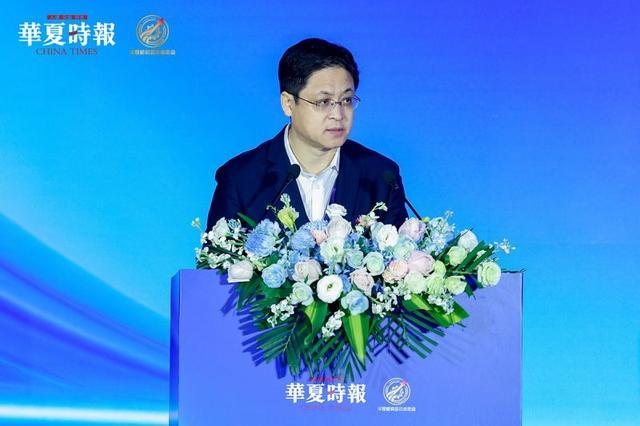
中国银行保险资产管理业协会秘书长贺竹君:银行保险资管业迈入协同发展新阶段|2025华夏机构投资者年会
Hua Xia Shi Bao· 2025-12-12 13:16
银行理财与保险资管双支柱作用显著 本报(chinatimes.net.cn)记者吴敏 北京报道 12月12日,由华夏时报社主办的第十九届华夏机构投资者年会暨华夏金融(保险)科技论坛在北京成功 举办。 本届论坛以"活力与韧性 拓新与赋能"为核心主题,由中央财经大学数字经济融合创新发展中心、华夏 时报金融思想荟、华夏时报金融研究院联合提供智力支持,意在回应时代之问,凝聚发展共识,探寻未 来路径。 中国银行保险资产管理业协会党委委员、秘书长贺竹君发表致辞指出,我国大资管行业正步入发展黄金 期,银行理财与保险资管合计受托管理规模约70万亿元,已成为资本市场稳定运行的"压舱石"和实体经 济长期资金的重要供给者。 他强调,行业将持续聚焦服务国家战略、培育耐心资本与支持新质生产力。同期,协会完成更名换届, 标志着我国资管行业自律管理进入协同发展的新阶段。 重点投向国家重大战略、新质生产力及耐心资本领域 贺竹君特别介绍了保险资金服务国家战略与赋能新质生产力的进展。在重大战略领域,保险资金通过债 权、股权投资计划支持长江经济带、京津冀协同发展、大湾区建设等项目,登记规模超3万亿元;同时 加大对医疗健康、绿色环保、新能源、半导体 ...


近34万亿元!银行理财规模再创新高
证券时报· 2025-12-12 10:09
Core Viewpoint - The article highlights the significant shift of low-risk preference funds towards bank wealth management products, driven by the decline in deposit rates and the increasing attractiveness of these products, leading to a record high in the bank wealth management market, which has surpassed 33 trillion yuan [1][3]. Group 1: Market Growth and Trends - As of November, the top 14 wealth management companies have a combined scale of 25.86 trillion yuan, with a growth of approximately 340 billion yuan from October [3]. - The total net increase in scale for these companies in the first 11 months of the year is about 3.43 trillion yuan, with nearly half of this growth occurring in the fourth quarter [3][4]. - The wealth management market is expected to stabilize around 33 trillion yuan by the end of the year, with the potential for the "2 trillion yuan club" to expand from 3 to 6 members by 2024 [2][3]. Group 2: Product Performance and Shifts - "Fixed income +" products have become a significant contributor to the growth of wealth management scales, with a net increase of approximately 1.32 trillion yuan in the first 11 months [6][8]. - The mixed product category has seen a notable increase, with a balance of about 820 billion yuan as of November, growing nearly 320 billion yuan since the beginning of the year [10]. - The introduction of new IPO underwriting regulations has allowed wealth management companies to participate in new stock subscriptions, with several companies actively engaging in both A-share and Hong Kong stock market IPOs [12]. Group 3: Investment Strategies - Wealth management companies are increasingly diversifying their portfolios by allocating more to equity assets, evidenced by a significant rise in index-type products and participation in stock market IPOs [9][11]. - The number of index-type wealth management products has surged, with 98 existing products and 58 launched this year, indicating a shift towards thematic and differentiated offerings [11]. - The performance of mixed products has improved significantly, with many achieving annualized returns exceeding 20%, attracting more investments [11].

信银理财贺晋:谱写科技金融大文章,赋能区域经济高质量发展
Di Yi Cai Jing Zi Xun· 2025-12-12 09:29
"科技创新的成功需要长期稳定的'耐心'。"贺晋强调,信银理财正着力构建覆盖企业"初创期引导、成长 期加速、成熟期跨越、转型期升级"的全生命周期服务体系。公司持续深化"财富管理—资产管理—综合 融资"价值链,通过"融资+投资""标+非标"并举的综合方案,为科技型企业穿越创新周期、实现技术转 化保驾护航。 在11月27日于山东济南举办的第三届济南科技金融论坛上,信银理财党委副书记贺晋出席并作主旨发 言。他表示,"十五五"时期是推动科技金融深度赋能实体经济的关键阶段,银行理财作为连接居民财富 与科技创新的重要桥梁,应积极培育"耐心资本",全周期、多维度服务科技型企业成长,深度融入"科 技—产业—金融"良性循环。 本届论坛以"科技金融 深度赋能"为主题,由财新传媒主办、齐鲁银行承办,汇聚了来自金融管理部 门、学术机构、领军金融机构及科创企业的众多嘉宾,共同探讨高质量科技金融如何更好支持高水平科 技自立自强。 贺晋在发言中指出,当前科技金融政策支持力度持续强化,引导金融资源"投早、投小、投长期、投硬 科技"已成为明确方向。截至2025年三季度末,理财产品存续规模达32万亿元,服务投资者超1.39亿 人,前三季度为投资者 ...
信银理财贺晋:谱写科技金融大文章,赋能区域经济高质量发展
第一财经· 2025-12-12 09:15
在 11 月 27 日于山东济南举办的第三届济南科技金融论坛上,信银理财党委副书记贺晋出席并作主 旨发言。他表示, " 十五五 " 时期是推动科技金融深度赋能实体经济的关键阶段,银行理财作为连 接居民财富与科技创新的重要桥梁,应积极培育 " 耐心资本 " ,全周期、多维度服务科技型企业成 长,深度融入 " 科技 — 产业 — 金融 " 良性循环。 本届论坛以 " 科技金融 深度赋能 " 为主题,由财新传媒主办、齐鲁银行承办,汇聚了来自金融管理 部门、学术机构、领军金融机构及科创企业的众多嘉宾,共同探讨高质量科技金融如何更好支持高水 平科技自立自强。 在财富管理端 ,信银理财打造了多元化科技主题产品矩阵。其中,作为行业股权投资先行者,累计 发行科技领域股权类私募理财 14 亿元;同时创设 " 蔚蓝智享 " 系列科技主题公募产品,规模已突破 23 亿元,并持续加强多资产多策略研究,进一步打造 " 固收 + 、混合、权益 " 等产品矩阵,加速培 育第二增长曲线。 在资产管理端 ,信银理财科学配置理财资金,积极投资科创票据、科创债,专项支持 " 投早、投 小、投硬科技 " ,助力打通股权基金的中长期资金供给通道。强化 ...

独家|近34万亿元!银行理财规模再创新高
券商中国· 2025-12-12 07:31
Core Viewpoint - The article highlights the significant shift of low-risk preference funds towards bank wealth management products, driven by the decline in deposit rates and the increasing attractiveness of these products, leading to a record high in the bank wealth management market, which has surpassed 33 trillion yuan [1][2]. Group 1: Market Growth and Trends - As of November, the top 14 wealth management companies have a combined scale of 25.86 trillion yuan, with a growth of approximately 340 billion yuan from October [2]. - The total net increase in scale for these companies in the first 11 months of the year is about 3.43 trillion yuan, with nearly half of this growth occurring in the fourth quarter [2][3]. - The wealth management market is expected to stabilize around 33 trillion yuan by the end of the year, with the potential for more companies to join the "2 trillion yuan club" [2]. Group 2: Product Performance and Types - Fixed income products remain the mainstream in bank wealth management, but there is a noticeable increase in equity asset allocation, with "fixed income plus" products seeing a net increase of 1.32 trillion yuan in the first 11 months [4][5]. - Mixed products have also shown significant growth, with a balance of approximately 820 billion yuan as of November, reflecting an increase of nearly 320 billion yuan since the beginning of the year [7]. - The introduction of new IPO underwriting regulations has allowed wealth management companies to participate in new stock subscriptions, with several companies actively engaging in both A-share and Hong Kong IPOs [8][9]. Group 3: Competitive Landscape - By the end of November, 14 wealth management companies have surpassed 1 trillion yuan in scale, with three companies expected to join the 2 trillion yuan club by 2024 [2][3]. - Companies like Guangda Wealth Management and Xinyin Wealth Management have shown substantial growth, with Guangda's scale nearing 2 trillion yuan [3]. - The top three companies in terms of scale are Zhaoyin Wealth Management, Xinyin Wealth Management, and Xinyin Wealth Management, with respective scales of 2.64 trillion yuan, 2.46 trillion yuan, and 2.32 trillion yuan [3].

破旧立新、价值重塑:银行理财风险管理变革
Xin Hua Cai Jing· 2025-12-11 14:23
Core Viewpoint - The banking wealth management industry is undergoing significant transformation from extensive growth to standardized development, driven by regulatory changes and market dynamics [1] Risk Management Goals - The essence of asset management is to act in the best interest of clients, requiring a dynamic balance between risk and return, necessitating deep integration of investment research and risk control [2] - Modern risk management should not only delineate "forbidden zones" but also proactively identify risks, achieve precise pricing, and effectively allocate resources to maximize risk-adjusted returns [2] Cultural Restructuring - A fundamental shift from credit culture to asset management culture is necessary, emphasizing dynamic adjustments and market-oriented pricing in risk management [4] - The risk management framework must be restructured to align with the characteristics of wealth management, focusing on risk management priorities, boundaries, methods, and processes [4] Market Risk Management - The banking wealth management clientele typically has low risk tolerance, making them sensitive to net value fluctuations; thus, effective market risk management is crucial [5] - A "three-dimensional empowerment" framework is proposed to enhance volatility management capabilities [5] Product Level - Risk budgeting is essential for quantifying client demands and providing actionable insights on risk-return relationships [6] Asset Level - Risk management departments should establish risk control frameworks before new strategies or assets are introduced, ensuring prudent operations within predefined safety boundaries [7][8] Strategy Level - Risk management should leverage quantitative analysis to create a comprehensive performance-risk attribution system, enabling proactive strategy optimization [9] Liquidity Risk Management - Liquidity risk is a critical concern, necessitating comprehensive monitoring and proactive management strategies [11] - A multi-tiered liquidity monitoring and early warning system is essential for effective risk management [11] Credit Risk Management - Credit risk management must adhere to three core principles: avoiding risky situations, practicing systematic diversification, and maintaining vigilant monitoring and timely response mechanisms [12] Risk Positioning - Accurate risk positioning is vital for effective risk management, requiring dynamic assessments and comparisons with industry peers [13] - Challenges in product risk measurement, total risk aggregation, and peer benchmarking hinder effective risk positioning [15][16][18] Reforming Risk Systems - The transformation of risk management systems should focus on intelligent and systematic restructuring, emphasizing collaboration between investment management and risk management [22][24] - The establishment of a comprehensive risk management framework is essential for adapting to external changes and internal demands [24] Human Resources and Data Foundation - Current risk teams face challenges in human resource allocation and data management, impacting the efficiency and accuracy of risk analysis [22] Model-Based and Intelligent Reform - The integration of model-based and intelligent approaches is crucial for enhancing risk management capabilities [23] Systematic Change as a Pillar - Systematic reforms in risk management are necessary to navigate the complexities of the current economic environment and ensure sustainable development [24] Conclusion - The banking wealth management industry must embrace a risk-first philosophy, restructured governance, and collaborative risk ecosystems to thrive in a rapidly changing market [26][27][29]
REITs迎来政策利好 银行理财“委外+打新”双线布局
Zhong Guo Jing Ying Bao· 2025-12-11 09:52
Core Viewpoint - The National Development and Reform Commission has issued a notice to promote the expansion of REITs in the infrastructure sector, indicating a strategic push towards increasing the scale and scope of REITs in China [1] Group 1: REITs Market Dynamics - Bank wealth management funds are actively entering the REITs market through various methods such as external management and initial public offerings, aiming to enhance portfolio returns [1][2] - The investment in REITs by bank wealth management is primarily through "fixed income plus" products, which aim to optimize risk-return characteristics and seize market opportunities [2][3] - The scale of trust and bank wealth management investments in REITs has significantly increased since 2024, with a higher proportion of investments in consumer-related sectors for newly listed REITs [3] Group 2: Investment Considerations - Key factors for investors in selecting REITs include stable dividends, low leverage, and well-integrated balance sheets, particularly in sectors like consumer infrastructure and municipal environmental protection [5][6] - The cash distribution rates of public REITs are attractive in the current low-interest-rate environment, providing a stable cash flow that meets the demand for steady returns from institutions and individuals [4] - The 2025 version of the REITs project industry scope list has expanded the range of issuable assets, enhancing the quality of supply-side REITs and clarifying long-term development potential [4] Group 3: Risk and Asset Management - The investment strategy for REITs involves considering the characteristics of underlying assets, valuation rationality, and interest rate performance, with a focus on the stability of operational income based on lease agreements [6] - Many high-quality REITs have seen their distribution rates rise to attractive levels, with some exceeding 5%, offering competitive returns compared to traditional fixed-income assets [6]
学习宣贯党的二十届四中全会精神 书写金融强国“理财答卷”
2 1 Shi Ji Jing Ji Bao Dao· 2025-12-11 09:08
兴银理财深刻认识到,要深刻理解把握"十五五"时期经济社会发展的战略任务和重大举措,对标对表重 大部署,找准工作着力点,将学习成果转化为发展共识与行动合力。 党的二十届四中全会将"高质量发展取得显著成效"作为"十五五"时期经济社会发展的主要目标之首,而 发展新质生产力是实现这一目标的核心路径。银行理财是连接金融与实体的重要纽带,做好以科技金融 为首的金融"五篇大文章"更是培育新质生产力的重要支撑。发展新质生产力是推动高质量发展、赢得大 国博弈战略主动的内在要求,也为新时代金融工作划定了核心赛道、指明了实践路径。 (原标题:学习宣贯党的二十届四中全会精神 书写金融强国"理财答卷") 党的二十届四中全会系统擘画了未来五年国家发展的宏伟蓝图,更为金融行业高质量发展提供了根本遵 循、注入了强劲动力。 迅速掀起学习热潮,凝聚发展共识 兴银理财将学习宣贯全会精神作为当前和今后一个时期的重大政治任务,精心部署组织多形式、分层 级、全覆盖的学习宣传。公司党委组织召开党委扩大会议专题学习,各支部通过"三会一课"、主题党日 等多种形式开展学习。同时,公司党委组织召开党外人士座谈会,与群众代表和民主党派员工代表共同 学习研讨,并将全 ...

2026年展望系列五:理财风光仍在,债基格局重塑
China Post Securities· 2025-12-11 08:28
1. Report Industry Investment Rating There is no information provided regarding the report's industry investment rating in the given content. 2. Core Views of the Report - Residents' investment preference is rising, but there is still a demand for safe assets. They show a contradiction of "declining risk preference but still having a desire for returns" [3]. - The scale of wealth management products is expected to continue growing, but their yields still face challenges. In the context of deposit disintermediation, there is still room for growth in the scale of wealth management in 2026 [4]. - Public - offering bond funds and wealth management are interacting more deeply. Attention should be paid to the changing trends in product structure. The public - offering bond fund market is undergoing a pattern reshaping [5]. 3. Summary According to the Directory 3.1 Liability Side: Residents' Investment Preference Rises, and the Demand for Safe Assets Remains - **Limited Asset Allocation Options and Sustained Demand for Safe Assets**: Residents' asset allocation shows a contradiction between balancing safety and returns. They have a reduced risk - bearing capacity on the asset side and a demand for "elastic returns" in low - risk assets [11][13]. - **Strengthened Deposit Disintermediation and Changed Investment Will**: Deposit rate cuts have strengthened the deposit disintermediation trend. The improvement of the equity market has made residents more willing to invest, and they prefer fund trusts over stocks [16][18]. 3.2 Wealth Management Products: Scale Expected to Continue Growing, Yields Still Facing Challenges - **Wealth Management Scale: Returned Above 30 Trillion, Investment Returns Under Pressure**: In Q3 2025, the bank wealth management scale reached 32.13 trillion yuan. The number of products increased steadily, with fixed - income products dominating. The number of participants also continued to grow. However, the yields of underlying assets of wealth management products have declined [19][24]. - **Wealth Management Behavior: Strategies for Stable Scale and Reduced Volatility**: To achieve stable scale and reduced volatility, wealth management has adjusted its asset allocation. It has increased the proportion of cash and deposits and changed its bond investment preferences, such as increasing the preference for inter - bank certificates of deposit and avoiding corporate bonds [26][29]. - **Regulatory Environment: Systemic Tightening Continues, a Major Source of Risk**: The regulatory environment for wealth management is tightening. Net - value reform and regulatory policies such as the "Asset Management Trust New Regulations" may affect the underlying assets of wealth management products. In the future, wealth management will focus more on high - liquidity assets [32][34]. 3.3 Public - Offering Bond Funds: Deep Interaction with Wealth Management, Focus on Product Structure Changes - **Public - Offering Scale Keeps Growing, Bond Fund Redemption Pressure Emerges**: As of the end of November 2025, the total scale of public - offering funds exceeded 36 trillion yuan. The combined proportion of bond funds and money market funds decreased compared to the end of 2024. The scale of bond funds fluctuated upward, but they faced redemption pressure [38]. - **During the Concentrated Opening Period of Fixed - Open Funds, Wealth Management Takes Over as the Main Allocator**: From December 2025 to May 2026, fixed - open bond funds will have a concentrated opening period. Wealth management is likely to increase its allocation of credit - type coupon assets through these funds and reduce the allocation of interest - rate products such as policy - financial bonds [42][45]. - **Expansion of ETF Bond Funds, Growing Interest from Wealth Management**: In 2025, the scale of bond ETFs expanded significantly. Wealth management products may become an important force in bond ETF allocation. In the future, the public - offering bond fund market will undergo a pattern reshaping [46][52].
理财公司“跑县城” 中小银行货架添大牌
Zhong Guo Zheng Quan Bao· 2025-12-10 20:17
12月10日,苏银理财发布公告称,公司部分理财产品新增浙江开化农商行、浙江绍兴瑞丰农商行为销售 机构。此前,苏银理财发布的关于旗下理财产品销售机构的公告显示,公司合作范围已延伸至江苏、浙 江、广东等地的中小银行,其中农商行占据多数席位。记者梳理发现,除苏银理财外,近期,兴银理 财、信银理财、中银理财等多家理财公司密集发布新增代销机构的公告,合作方不乏县域中小银行,布 局下沉市场趋势明显。 业内人士认为,理财公司与中小银行的合作是一场双向奔赴。对于理财公司而言,传统销售渠道增长乏 力、获客成本上升,寻找新的客户触达路径,可拓宽客户基础,抢抓下沉市场新机遇;对于中小银行而 言,代销业务可丰富理财产品货架,更好地满足本地客户的多元化理财需求,提升客户体验,增强客户 黏性,进而巩固区域市场优势。 ● 本报记者 石诗语 加速布局下沉市场 股份制银行及城商行理财公司的下沉布局更为积极。例如,信银理财11月下旬集中披露多则公告,新增 沛县农商行、仪征农商行、高邮农商行、丰县农商行等8家地方性中小银行为代销机构,重点深耕江苏 省县域市场。兴银理财10月以来已发布7条新增代销机构公告,销售渠道进一步向广西、山西、陕西、 新疆等 ...