无人机

Search documents
南京建邺区加速低空经济布局
Jiang Nan Shi Bao· 2025-06-24 14:41
Core Viewpoint - The development of low-altitude economy in Jianye District is gaining momentum with the signing of key projects, including the All-Space Unmanned Technology Island Flight Base, Jiangxinzhou FPV Racing Industry Base, and Agricultural Reclamation Intelligent Project, which will diversify the regional economy and enhance its competitiveness [1][2]. Group 1: Project Overview - The All-Space Unmanned Technology Island Flight Base will cover an area of approximately 285 acres and will establish four major centers: R&D, testing, consulting services, and training and exhibition, forming a comprehensive industrial system [2]. - The Jiangxinzhou FPV Racing Industry Base aims to create a national benchmark for drone training, with an annual training capacity of no less than 5,000 people, and will host national competitions such as the "National Drone Racing League" [2]. - Jianye District has signed contracts with over 20 leading enterprises in the low-altitude economy sector, establishing a development pattern of "leading enterprises + ecological enterprises" [2]. Group 2: Application Scenarios - The successful testing of logistics drones by Zhongtong Express demonstrates the efficiency of drone delivery, with a 15 kg drone completing a delivery in 4 minutes compared to 70 minutes by traditional delivery methods [3]. - Jianye District has established a commercial drone transportation route, which is now operating regularly, and has deployed four unmanned intelligent airports for rapid response [3]. - The district has initiated a drug delivery route that takes only 5 minutes, with an average of four flights per day, showcasing the integration of drones into daily life [3]. Group 3: Policy Support and Ecosystem Development - Jianye District benefits from its geographical advantage with minimal airspace restrictions, making it suitable for various drone applications [4]. - The district has established multiple public service and technology innovation platforms to support the low-altitude economy, including a flight service platform based on telecommunications [4]. - A three-year action plan for the low-altitude economy has been released, with financial incentives for innovation and collaboration with educational institutions to enhance technological capabilities [5]. Group 4: Future Prospects - Jianye aims to develop the low-altitude economy into a 10 billion yuan industry cluster, focusing on R&D, operations, and services while attracting leading enterprises [5]. - The district is committed to building the first all-space unmanned technology island in China, leveraging its strategic location and technological advancements [5].


基于产教融合的职业教育体系建构策略与实践探析
Yang Shi Wang· 2025-06-24 11:12
Group 1 - The core task of vocational education is to build a system that integrates education and industry, aiming to cultivate skilled talents to support economic and social development [1] - The demand for high-skilled talents is surging as companies shift towards high value-added sectors, emphasizing product quality, brand image, and technological innovation [2][4] - Enterprises, regardless of their size, are actively participating in school-enterprise cooperation to cultivate innovative and composite high-skilled talents [3][4] Group 2 - The mechanism of integration between education and industry shows a multi-dimensional effect on regional economic development, focusing on optimizing human capital and talent supply structure [4][5] - Collaborative innovation platforms between schools and enterprises are essential for overcoming technological barriers and enhancing industrial capabilities [4][5] - A diversified training service system is constructed through resource integration, providing customized training solutions to meet the skill upgrade needs of different stakeholders [4][5] Group 3 - Establishing a community for education-industry integration is crucial for gathering economic development forces, involving universities, enterprises, and industry associations [6][7] - New productive forces, such as digital technologies, are driving deeper integration between education and industry, moving beyond simple connections to a more profound collaboration [8] - A comprehensive policy framework is necessary to support the development of education-industry integration, particularly in key industries and regions [9]
“欧洲尝试自己造,达不到中国那技术水平”
Guan Cha Zhe Wang· 2025-06-24 08:40
Group 1 - China's tightening of drone export controls since September 2022 has led to significant price increases for drone components exported to the U.S., with some prices rising by three times or more [1] - The new regulations, effective from September 2024, include controls on engines, motors, laser devices for target indication, and anti-drone electronic jamming equipment [1] - Exports of infrared imaging devices, which can detect heat radiation at night, have seen a 30% decrease in volume but a nearly 50% increase in total export value, indicating a doubling of unit prices due to supply-demand tensions [1] Group 2 - The global export volume of inertial measurement devices has dropped by 80%, while their unit prices have quadrupled [2] - Prices for drone DC motors have increased by approximately 30%, and AC motors have risen by 16% [2] - A French military drone manufacturer reported that the price for thermal imaging cameras from China has doubled, highlighting the dependency on Chinese components due to European manufacturers lagging in technology by about three years [4] Group 3 - Approximately 70% to 80% of commercial drones globally are manufactured in China, which dominates the production of key components such as sensors and speed controllers [4] - DJI is identified as the largest commercial drone manufacturer in the world, holding a 90% market share in the U.S. commercial drone market [4] - Chinese drones are noted for being cheaper and technologically superior compared to U.S. counterparts, despite facing political scrutiny in the U.S. [4][5]

2025年“活力中国调研行”广东主题采访活动启动
Nan Fang Ri Bao Wang Luo Ban· 2025-06-24 07:58
Core Insights - Guangdong is leveraging technological innovation to drive the development of a modern industrial system, aiming to enhance its international competitiveness and support high-quality growth [1][2][3] Innovation-Driven Development - Guangdong has formed nine trillion-yuan industrial clusters, with a focus on advanced manufacturing as the backbone of its modern industrial system [2] - The province is actively promoting industrial technology innovation and has established a leadership group for the innovation and development of artificial intelligence and robotics [2] - The low-altitude economy in Guangdong has reached over 100 billion yuan, with the province accounting for 95% of the national market share in consumer drones and 54% in industrial drones [2] Technological Advancements - Guangdong is enhancing its foundational research and tackling key core technologies, with over one-third of provincial innovation funds directed towards basic research [3] - The province is implementing major technology projects to address "bottleneck" technologies and has achieved significant breakthroughs in core software and chip technology [3] Talent Development - Guangdong has conducted over 4,000 recruitment events this year, attracting more than 60,000 university graduates to support the development of new productive forces [4][5] - The province has established 348 modern industrial colleges across 51 universities, with a total of 214,000 students in graduate programs, leading the nation in talent cultivation [5] Financial Support for Innovation - Since 2022, Guangdong has signed comprehensive strategic cooperation agreements with 23 national financial institutions, facilitating 233 specific cooperation projects worth a total of 1.31 trillion yuan [5] - The province has developed a modern technology financial system to support innovation, with over 5.27 billion yuan in financing already realized [5][6]
蓝天实验室 “逐梦”展新篇
He Nan Ri Bao· 2025-06-23 23:27
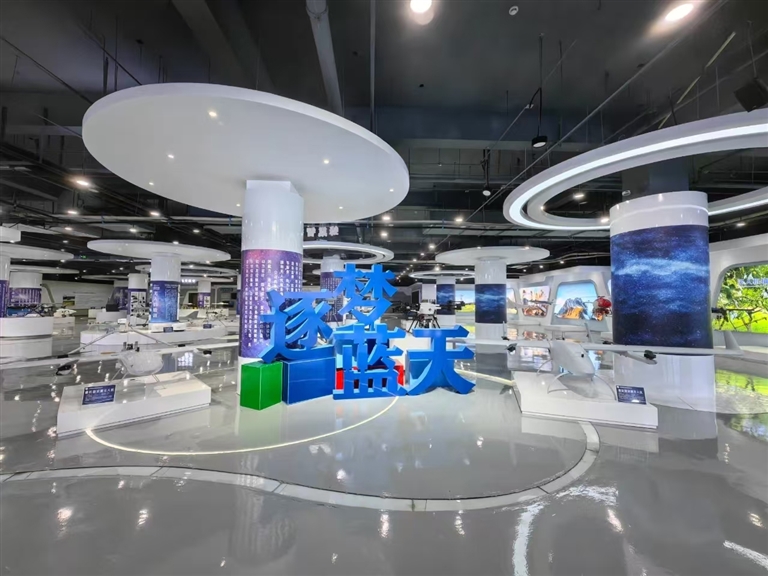
Core Viewpoint - The article highlights the rapid development of the low-altitude economy in Anyang, driven by the establishment of the Blue Sky Laboratory, which focuses on drone technology and its applications in various sectors, particularly law enforcement [4][5][12]. Group 1: Blue Sky Laboratory and Its Innovations - The Blue Sky Laboratory is the only provincial-level lab in the region focusing on the low-altitude economy, showcasing significant research dynamics and innovations [3]. - The laboratory's flagship product, the "Poppy Spectrum Hunter," features a 61-megapixel camera and operates effectively in extreme weather conditions, enhancing monitoring efficiency for law enforcement [3][4]. - The lab has developed a model for "research upstairs, production downstairs, testing in the park, and market application," facilitating a chain development in the drone industry [7][8]. Group 2: Policy Support and Economic Opportunities - The low-altitude economy is recognized as a national strategy and a new opportunity for Anyang, with local authorities emphasizing the need to seize this opportunity [5][7]. - The local government has issued action plans to develop low-altitude infrastructure, expand the consumer market, and enhance public services, outlining seven key tasks for industry development [7][8]. - The province has introduced supportive policies to accelerate the construction of the Anyang Drone Industrial Park and related projects [7]. Group 3: Industry Growth and Market Impact - The drone industry in Anyang has seen significant growth, with over 100 companies established and an annual output value of approximately 1.65 billion yuan, reflecting a 30% year-on-year increase [11]. - The Blue Sky Laboratory has successfully transformed scientific innovations into marketable products, with plans for mass production of the "Poppy Spectrum Hunter" by the end of the year [9][11]. - The laboratory has participated in various industry events, showcasing its technological advancements and contributing to the visibility of Anyang's drone industry [10]. Group 4: Future Plans and Talent Development - The laboratory aims to initiate 12 primary research projects and prepare 28 subsequent projects, focusing on key technological challenges in the drone sector [13]. - There is a strong emphasis on talent acquisition, with plans to establish an expert pool and recruit a significant number of professionals to support ongoing research and development [13][14]. - The laboratory is positioned as a leading entity in the low-altitude economy, with aspirations to become a national brand in this sector [14].
大疆“展翅”:飞向更多生活图景
Shen Zhen Shang Bao· 2025-06-23 22:39
Core Insights - DJI is expanding its technological reach beyond drones into various sectors, including electric bicycles, smart driving, and soon, a sweeping robot, integrating its flying technology into everyday life [1][5][6] - The company has established itself as a leader in the drone market, capturing nearly 80% of the global market share and expanding its product offerings to over 100 countries [2][4] - DJI's commitment to innovation is evident with over 12,000 patents filed, and it continues to release new products that set industry standards [3][5] Group 1: Company Growth and Market Position - DJI was founded in 2006 in a small rental space and quickly rose to prominence with the launch of the DJI Phantom, which revolutionized the consumer drone market [2] - The company has diversified its product line to include stabilizers, action cameras, and energy storage solutions, further solidifying its market presence [2][4] - In 2024, Shenzhen's drone export value is projected to reach 14.57 billion yuan, marking a 19.6% year-on-year increase, highlighting DJI's role in the low-altitude economy [4] Group 2: Technological Innovation - DJI has a strong focus on technological innovation, with new product launches that push the boundaries of drone capabilities, such as the recently released DJI Mavic 4 Pro [3] - Upcoming products like Mini 5 Pro and Avata 3 are expected to enhance imaging systems, flight performance, and obstacle avoidance technology [3] Group 3: Strategic Initiatives and Future Plans - DJI is actively involved in shaping the low-altitude economy in Shenzhen, supported by government policies aimed at fostering innovation and regulatory frameworks [4][5] - The company is planning to establish a second headquarters, "Sky City 2.0," which will serve as a hub for technology development and industry collaboration [7] - DJI aims to integrate its flying technology into various aspects of daily life, including smart home devices and transportation solutions, thereby redefining the interaction between technology and everyday activities [5][6][7]
低空经济加速走进日常生活
Jing Ji Ri Bao· 2025-06-23 22:00
当前,低空经济正迎来前所未有的发展机遇,成为科技创新和经济增长的新引擎。随着相关政策法规持 续完善、基础设施建设不断夯实、技术成果不断涌现,低空经济产业格局正加速构建,市场活力显著增 强。 应用场景日益丰富 "这款系留高空灭火无人机可携挂消防水带升至150米至200米高空中悬停,在地面指挥系统配合下完成 锁定火灾区域、破窗、喷射泡沫灭火剂等工作,并通过双光吊舱实时回传火场画面,协助指挥中枢决 策,实现高空火灾精准扑灭。"在北京卓翼智能科技有限公司展厅内,公司创办人任雪峰指着一款大型 消防专用无人机介绍道。 2018年,卓翼智能创立飞思实验室,聚焦无人装备的飞行控制、集群协同、智能感知及博弈对抗等核心 领域的技术攻坚与生态赋能。"飞思实验室链接300余所高校及科研院所,形成了庞大的技术支撑体系, 加速了无人机智能化算法开发与场景验证,深度赋能低空经济产业生态圈建设。"任雪峰说。 中科创星创始人米磊认为,不断迭代和优化的技术是推动低空经济发展的重要基础。当前,低空经济呈 现技术路线多元、应用场景下沉的特点,但整个行业仍处于发展起步阶段,需要加速产品研发、加大基 础设施建设、加快应用市场培育。 恩力动力是一家聚焦固 ...
长三角议事厅·周报丨长三角软信产业需以标准互认促生态共融
Xin Lang Cai Jing· 2025-06-23 10:19
Core Insights - The article discusses the rapid restructuring of the software and information technology services industry in the Yangtze River Delta region, highlighting the competitive cluster development around industrial software [1][4] - Shanghai's government has approved measures to promote high-quality development in the software and information services sector, aiming to create a globally competitive innovation hub [1][4] - By 2024, the total revenue of the software and information services industry in the Yangtze River Delta is expected to reach 3.88 trillion yuan, accounting for nearly 30% of the national total [1][4] Group 1: Regional Development and Collaboration - Shanghai's software and information services industry revenue is projected to exceed 380 billion yuan in Q1 2025, with a year-on-year growth of 15.3%, contributing 13.6% to the city's GDP [2] - Jiangsu is focusing on the integration of software and manufacturing, with a software business revenue growth of 8.7% in 2024, and industrial software chain growth reaching 15.9% [2] - Zhejiang is building an industrial APP ecosystem with over 60,000 applications to support deep digital transformation in manufacturing [3] Group 2: Standardization and Ecosystem Integration - The Yangtze River Delta is promoting standard recognition and ecosystem integration as key strategies to break regional barriers, with a joint release of the "Yangtze River Delta Industrial Software Recommendation Directory" covering 35 quality software products [4][5] - The G60 Science and Technology Corridor is facilitating interconnectivity among 31 industrial internet platforms, reducing technical barriers for cross-regional collaboration [4] - Shanghai's "Gongfu Chain Master" platform has shared over 35,000 industrial knowledge models with Jiangsu, Zhejiang, and Anhui, fostering a collaborative model of "Shanghai R&D + Regional Application" [4] Group 3: Challenges and Future Directions - Despite progress, challenges remain in achieving ecosystem integration, including the lack of a unified regional standard system and insufficient collaborative applications in manufacturing scenarios [5][6] - The need for a standardized certification center and open-source platform is emphasized to enhance cross-regional collaboration and build a foundational trust mechanism [5][6] - The article suggests that the ability to establish an efficient and unified collaborative mechanism will directly impact the Yangtze River Delta's competitiveness in the global software and information services industry [6]
星逻智能完成超亿元B+轮融资,苏州港航集团领投
Sou Hu Cai Jing· 2025-06-23 00:14
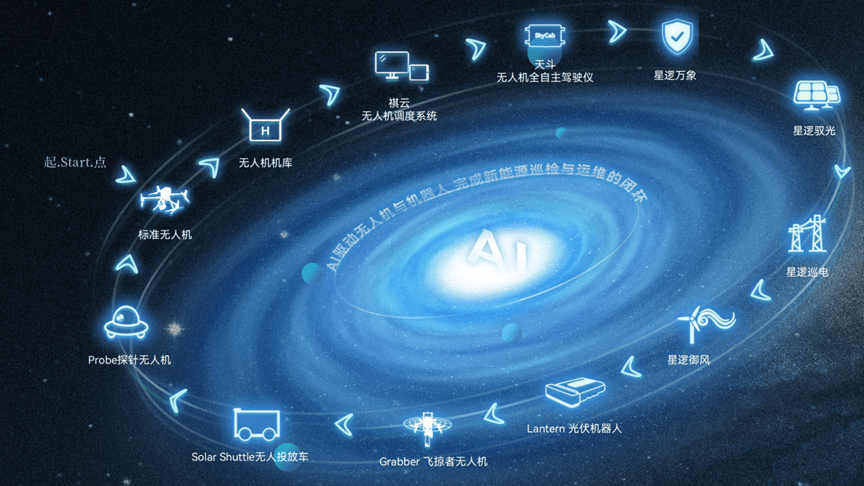
Core Insights - Starlogic Intelligent has completed over 100 million RMB in Series B+ financing, led by Suzhou Port and Shipping Group, to enhance its position in the drone AI and new energy operation sectors [1] - The financing will focus on productization of new energy robots and urban low-altitude economic applications, marking a significant step in Starlogic's strategic layout [1] Company Overview - Founded in 2017, Starlogic Intelligent specializes in the research and commercialization of drone empowerment technology, with innovative products covering over 700 new energy stations globally [1][6] - The company has introduced China's first drone hangar and unmanned photovoltaic inspection system, with applications in Europe, Southeast Asia, and Japan [1] Strategic Developments - The recent financing follows a previous round in June 2024, indicating a milestone in Starlogic's industrialization phase in new energy and low-altitude urban sectors [1] - Starlogic aims to build a complete "aerial ecosystem" by transitioning from hardware to comprehensive solutions, addressing the industry's technological transformation and strategic opportunities [3] Product and Market Impact - Starlogic's photovoltaic inspection system has covered over 17 GW of installed photovoltaic capacity, improving energy generation efficiency by 8%-30% through the integration of drones and robots [6] - The company is recognized as a leading enterprise in low-altitude economy and artificial intelligence applications, contributing to the development of low-altitude economy and providing new directions for AI technology [7] Investment Insights - Suzhou Port and Shipping Group's investment in Starlogic is part of a strategic move to enhance its capabilities in low-altitude economy and AI sectors, aligning with its business development needs [7] - Frontier Investment acknowledges Starlogic's continuous efforts in new energy unmanned inspection and efficient cleaning, highlighting the company's potential for future growth in the intelligent operation sector [7]
低空经济赋能医疗场景 杭州余杭8条无人机航线破解山区
Zhong Guo Jin Rong Xin Xi Wang· 2025-06-21 10:48
转自:新华财经 在杭州余杭区的青山绿谷间,一架搭载着医疗样本的TR9S无人机正沿着数字航线飞驰而过——这片低空领域正成为解决当地群众就医难题的新样板。作为 杭州低空经济创新应用的领跑者,余杭区第三人民医院联合中国移动杭州分公司、迅蚁科技打造的医疗无人机运输网络,通过8条定制化航线将检验样本 运输时效提升60%,提高了县镇乡医共体医疗资源使用效率,让山区群众在家门口就能享受县级医院的样本检测服务。 据余杭三院副院长白洪斌介绍,当前"看病难"的难题之一就是检验难,地方医院不具备样本检验条件,样本运输具有高时效性要求,而无人机能够解决县 域医共体的样本检验、紧急医疗物资运输问题,推动分级诊疗和医共体内资源共享。 "借助科技力量让技术流动,而不是增加患者的出行负担。我们和杭州移动、迅蚁科技携手开发了这个无人机运送医疗样本的项目,通过5G技术发展与低 空经济政策双轮驱动,实现了无人机恒温运输、自动化飞行、实时监控系统,确保检验样本、医疗物资的安全运送,起到了很好的效果。"白洪斌说。目 前径山镇全域9个村级卫生服务站,通过"村级采样-云端追踪-中心检测"服务闭环,保障患者在家门口卫生站完成采样后,无人机可在12分钟内安全 ...