
便利店

Search documents
劳动力短缺,日本零售商店加强AI使用
news flash· 2025-07-23 10:12
由于劳动力短缺,日本一些零售商店引入人工智能(AI)来帮助处理订单和管理库存,以提高工作效率。 据日本广播协会22日报道,全家便利商店今年6月在日本约500家门店引入AI技术,可通过分析过去一 年的销售额、客流量和天气,为商店推荐采购清单。全家方面表示,该系统能将下单时间缩短一半,缺 货率降低约4%。未来可能会在更多门店引入这项技术。 ...
台湾便利店通过“店中店”积极转型
Sou Hu Cai Jing· 2025-07-22 17:40
Group 1 - The core viewpoint of the articles highlights the transformation of convenience stores into comprehensive ecosystems that integrate retail, services, and experiences, driven by the need to differentiate in a saturated market [2] - The convenience store industry in China is facing challenges such as homogenization and competition from other retail formats, with total sales reaching 424.8 billion yuan in 2023 and store numbers exceeding 320,000, while average daily sales per store have declined from 5,117 yuan in 2021 to 4,634 yuan in 2024 [2] - The market is characterized by a "multi-polar" structure, with brands like Meiyijia leading with 33,800 stores, followed by Sinopec's Easy Joy and PetroChina's Kunlun, while foreign brands like 7-ELEVEn and FamilyMart focus on high-end markets in first and second-tier cities [2] Group 2 - The beverage category continues to dominate convenience store sales, with water and beverages occupying 58 positions in the top-selling products list for 2024, indicating a structural adjustment in the beverage market [3] - The shift from merely selling products to building brand loyalty is evident, as convenience stores like 7-ELEVEn and FamilyMart are evolving their beverage offerings into brand assets, focusing on high-frequency, high-margin categories like coffee and hand-shaken tea [9][10] - The introduction of new product categories in convenience stores involves a meticulous process of market research, product testing, and performance evaluation to ensure successful brand transformation and market expansion [11][12][13] Group 3 - 7-ELEVEn's "Incredible Tea Bar" represents a significant experiment in brand development, transitioning from a product-focused approach to creating a recognizable brand in the tea market, with plans for independent store openings [22][23] - FamilyMart's strategy includes deepening its coffee brand "Let's Cafe" and expanding its tea offerings under "Let's Tea," showcasing a dual approach to brand development and market penetration [24][28] - The future trend indicates that convenience stores will increasingly focus on brand building and customer engagement, moving beyond traditional product sales to create unique consumer experiences [29][30][31]

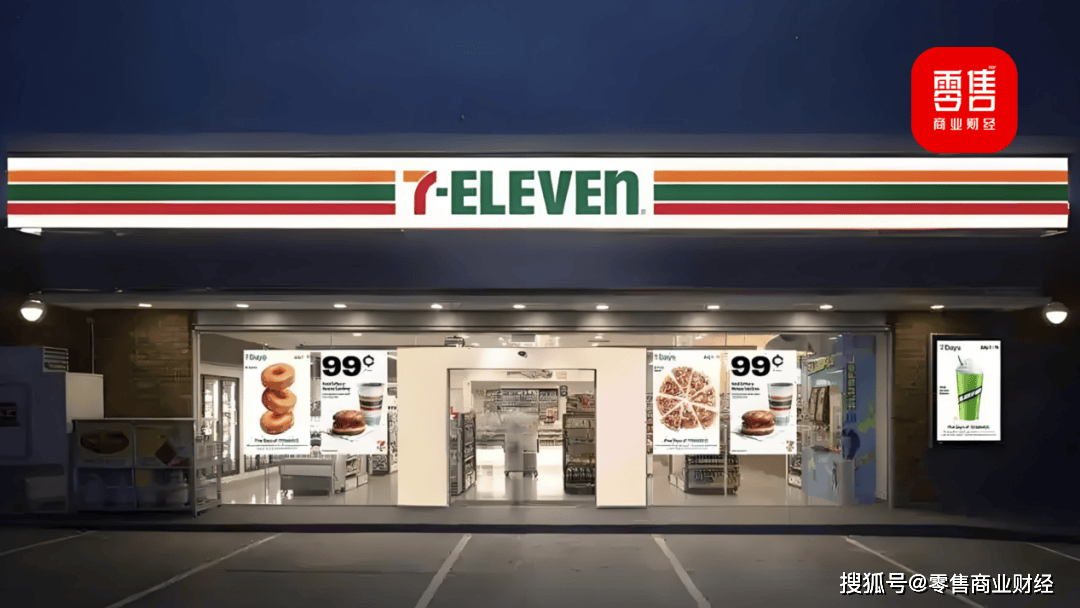
711便利店收购案告吹!母公司7&i被控诉损害股东利益
Nan Fang Du Shi Bao· 2025-07-22 11:12
Core Viewpoint - The acquisition attempt of Seven & I Holdings by Alimentation Couche-Tard has failed after a year of negotiations, with ACT withdrawing its proposal due to perceived lack of constructive engagement from 7&i [1][5][8]. Group 1: Acquisition Attempt - ACT announced the withdrawal of its acquisition proposal for 7&i, citing a lack of sincere participation from 7&i [1][5]. - The initial acquisition proposal was made in August last year, with ACT increasing its offer to 2,600 yen per share, representing a 47.6% premium over 7&i's unaffected stock price [7][12]. - 7&i has consistently rejected ACT's offers, citing antitrust regulatory risks as a primary concern [1][12]. Group 2: Company Responses - 7&i responded to ACT's withdrawal by expressing disappointment and disagreement with ACT's claims, stating that they had been engaging in good faith discussions [8][9]. - 7&i emphasized that significant changes in the global economy and financing markets had occurred since ACT's initial proposal, which affected the negotiations [9][20]. - The company plans to focus on its value creation strategy, including an IPO for its North American business and a stock buyback plan worth approximately 2 trillion yen by the end of fiscal year 2030 [9][20]. Group 3: Market Context and Financial Performance - The acquisition attempt highlights the challenges of cross-border mergers, particularly regarding governance and control issues prevalent in Japanese companies [21][25]. - 7&i's recent financial performance shows a 1.6% year-on-year revenue increase to 27,773.7 billion yen for the first quarter of fiscal year 2025, with a significant 129.2% increase in net profit [23]. - Despite the overall revenue growth, the company's domestic market performance has been declining, with a 0.7% drop in revenue from its convenience store operations in Japan [24].

近470亿美元收购告吹!7-11母公司开启自救之路
Huan Qiu Wang· 2025-07-22 02:13
Group 1 - Alimentation Couche-Tard (ACT) withdrew its acquisition proposal for Seven & i Holdings (7&i), valued at nearly $47 billion, marking the end of a year-long negotiation that was expected to be the largest retail merger globally by 2025 [1][3] - Following the announcement, 7&i's stock price fell by 9.16% on July 17, marking the largest single-day drop in three months, while ACT's stock surged by 17% [1][3] - ACT cited limited due diligence opportunities and a lack of genuine discussions from 7&i's management and major shareholder, the Ito family, as reasons for the withdrawal [3] Group 2 - The failed acquisition has implications for investment banks like Goldman Sachs and Morgan Stanley, which stand to lose tens of millions to billions in potential commissions [3] - The transaction's collapse highlights the complexities of foreign acquisitions in the Japanese market, despite a significant increase in merger activity in the first half of the year [3] - In response to ongoing poor performance, 7&i has initiated reforms, including appointing a new CEO and planning to sell its supermarket business to Bain Capital for 814.7 billion yen, as well as a potential IPO for its North American 7-Eleven business by 2026 [3]

470亿美元收购案告吹!加拿大ACT撤回对日本7&i收购,7-Eleven股价暴跌9%
Jin Rong Jie· 2025-07-21 23:44
Group 1 - ACT officially withdrew its nearly $47 billion acquisition proposal for Japan's Seven & i Holdings on July 16, marking the end of a potential deal that could have been the largest merger in 2025 [1] - The negotiation process was described as extremely difficult, with limited due diligence opportunities and a lack of genuine discussions from Seven & i's special committee and major shareholder, the Ito family [3] - Despite ACT's concessions on regulatory coordination and other aspects, they received no sincere response, leading to the decision to terminate the transaction [3] Group 2 - Following the announcement of the acquisition withdrawal, Seven & i's stock price plummeted by 9.16%, the largest single-day drop in three months, while ACT's stock surged by 17% [4] - Seven & i has been facing deteriorating operational performance, with "7-Eleven Japan" reporting Q1 2025 revenue of 223.47 billion yen, a 0.7% year-on-year decline, and operating profit of 54.53 billion yen, down 11.0% [4] - To address its challenges, Seven & i has implemented several reforms, including appointing a new CEO and selling its supermarket business to Bain Capital for 814.7 billion yen, as well as planning to spin off its North American 7-Eleven business by 2026 [4]

韩媒:韩政府启动“惠民消费券”申请,地方政府忧虑财政压力
Huan Qiu Shi Bao· 2025-07-21 22:47
Group 1 - The South Korean government has launched the "Welfare Consumption Voucher" program as a major economic stimulus initiative aimed at boosting grassroots consumption and revitalizing local economies [1][2] - The vouchers are available to all South Korean citizens, with amounts varying based on individual economic status and residence, ranging from 150,000 KRW to 450,000 KRW [1][2] - The application period for the vouchers will last until September 12, with distribution methods including credit cards, debit cards, prepaid cards, and local love coupons [1] Group 2 - The usage of the vouchers is strictly limited to small merchants with annual sales not exceeding 3 billion KRW, excluding large supermarkets, department stores, and e-commerce platforms [2] - Public sentiment towards the voucher program is generally positive, with many citizens expressing intentions to support local businesses [2] - Major financial institutions and retail chains have quickly responded to the program, launching promotional activities to encourage voucher usage, including a lottery with a total prize of 2.5 billion KRW [2] Group 3 - Large chain supermarkets are experiencing a downturn as they are excluded from the voucher program, with a retail outlook index score of 89, indicating pessimism in the sector [3] - Concerns have been raised regarding the financial burden of the voucher program on local governments, with significant tax revenue declines reported [3] - A second phase of the voucher program is planned to start on September 22, targeting the lowest 90% income earners with an additional subsidy of 100,000 KRW per person [3]
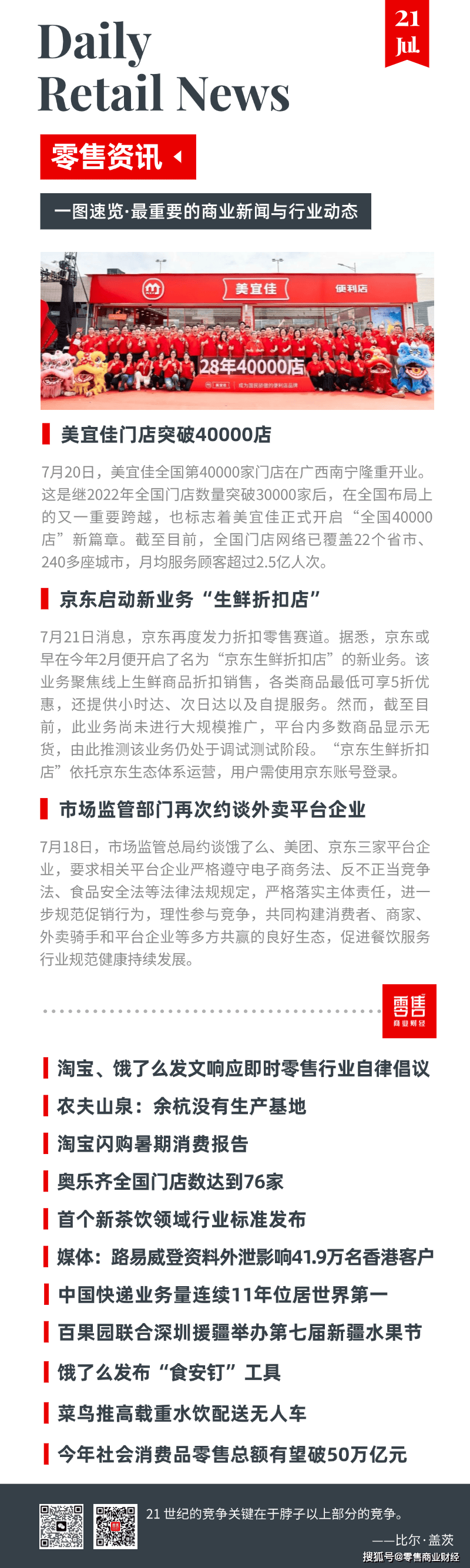
美宜佳门店突破40000店;京东启动新业务“生鲜折扣店”
Sou Hu Cai Jing· 2025-07-21 16:56
Group 1: Company Developments - Meiyijia has opened its 40,000th store in Nanning, Guangxi, marking a significant milestone in its national expansion, with coverage in 22 provinces and over 240 cities, serving more than 250 million customers monthly [6] - ALDI has expanded its presence in China, reaching a total of 76 stores nationwide, with new openings in Wuxi and Suzhou [14] - JD.com has launched a new business called "JD Fresh Discount Store," focusing on online discounts for fresh products, although it is still in the testing phase with limited product availability [8] Group 2: Market Trends and Consumer Behavior - Taobao Flash Sale reported a significant increase in night-time orders, with a more than 100% month-on-month growth in 127 cities since July, particularly in central and western regions [10] - The Chinese express delivery industry continues to lead globally, with an average of over 500 million packages collected daily, reflecting efficient resource allocation [15] - The retail sales of consumer goods in China are expected to exceed 50 trillion yuan this year, maintaining the country's position as the second-largest consumer market globally [22] Group 3: Regulatory and Industry Standards - The State Administration for Market Regulation has held discussions with major food delivery platforms, emphasizing compliance with e-commerce laws and promoting fair competition [9] - The first industry standard for fresh tea beverages has been officially released, which will take effect in January 2026, setting quality requirements for ingredients and packaging [14] - A new digital tool called "Food Safety Nail" has been launched by Ele.me to enhance food safety monitoring across the supply chain [18]




3373亿元巨额收购告吹,7-11便利店不卖了
21世纪经济报道· 2025-07-21 12:49
Core Viewpoint - The withdrawal of Alimentation Couche-Tard's acquisition proposal for Seven & i Holdings marks a significant failure in a potential major merger, highlighting the strategic challenges faced by traditional retail giants in a changing market landscape [1][2][8]. Group 1: Acquisition Details - Alimentation Couche-Tard announced the withdrawal of its nearly $47 billion acquisition proposal for Seven & i Holdings after a year of limited due diligence opportunities and unproductive discussions with the management [1][6]. - Seven & i confirmed the unilateral termination of negotiations and expressed disagreement with ACT's claims, but was not surprised by the decision [1][10]. - Following the announcement, Seven & i's stock price plummeted by 9.16%, while ACT's stock surged by 17% [10]. Group 2: Market Context - The global convenience store market is shifting from expansion to competition, with operational efficiency becoming the core competitive advantage [2][11]. - The Japanese convenience store market is experiencing significant changes, with a notable increase in M&A activity, as evidenced by a 232% year-on-year growth in transaction value in the first half of 2025 [8]. - Seven & i's performance has been declining, with a 0.7% drop in revenue and an 11% decrease in operating profit in Q1 of FY2025, marking five consecutive quarters of negative growth [10][12]. Group 3: Strategic Responses - In response to its challenges, Seven & i is undergoing leadership changes and restructuring, including the appointment of a new CEO and the sale of non-core assets [12]. - Seven & i aims to enhance shareholder returns through stock buybacks and potential IPOs of its North American business, despite the failed acquisition [12]. - The company must redefine its value creation logic to adapt to the structural changes in the convenience store industry and find new growth opportunities [12].

470亿美元收购告吹,7-Eleven便利店不卖了
2 1 Shi Ji Jing Ji Bao Dao· 2025-07-21 11:40
Core Insights - Alimentation Couche-Tard (ACT) has withdrawn its nearly $47 billion acquisition proposal for Seven & i Holdings (7&i), marking the end of a potential major merger in the convenience store sector [1][4] - The withdrawal highlights the strategic challenges faced by traditional retail giants amid a shift from growth to competition in the convenience store market [2][10] Company Overview - ACT operates over 16,700 stores across 31 countries, primarily under the Couche-Tard and Circle K brands, while 7&i, the parent company of 7-Eleven, has over 80,000 stores globally [3] - ACT's Circle K holds a 3.8% market share in the U.S., while 7&i leads with an 8.5% share [3] Financial Performance - 7&i's financial struggles are evident, with a 0.7% year-on-year decline in revenue for Q1 2025, marking five consecutive quarters of negative growth [7] - In China, 7-Eleven's sales growth has slowed significantly, dropping from 30.0% in 2023 to 19.7% in 2024 [7] Strategic Challenges - The failed acquisition reflects broader issues in the Japanese market, including regulatory complexities and the need for improved corporate governance to attract foreign investment [5][6] - 7&i's leadership changes and restructuring efforts, including the sale of non-core assets and plans for an IPO of its North American business, indicate attempts to enhance operational efficiency and shareholder value [9][10] Market Dynamics - The convenience store industry is experiencing saturation, cost pressures, and intensified competition, necessitating a reevaluation of business strategies [8][10] - The Japanese merger and acquisition landscape is evolving, with significant growth in transaction volumes, indicating a potential shift in market dynamics [5]
今年全球最大并购案告吹:Seven&i拒谈致加企弃购,投行错失数亿佣金
智通财经网· 2025-07-17 09:43
Group 1 - Alimentation Couche-Tard Inc. terminated its acquisition of Japan's Seven & i Holdings Co., leading to significant losses for investment banks like Goldman Sachs and Morgan Stanley [1] - The acquisition was valued at 6.77 trillion yen (approximately 46 billion USD) and was expected to be the largest global merger by 2025 [1] - The failure of the deal is attributed to prolonged negotiations and Couche-Tard's claim of "meaningful negotiations" not taking place [1] Group 2 - Following the announcement, Seven & i's stock price fell by 9.16%, marking the largest single-day drop in three months [2] - Seven & i plans to maintain its independent operational strategy and aims for approximately 2 trillion yen in shareholder returns by the end of fiscal year 2030 through stock buybacks and strategic partnerships [2] - The failed acquisition also impacted other sectors, with Mitsui & Co. missing a chance to sell its 2% stake in Seven & i for about 1 billion USD [2] Group 3 - The Japanese M&A market saw a significant increase, with transaction volumes reaching 232 billion USD in the first half of 2025, more than doubling year-on-year [2] - This surge is driven by government reforms aimed at improving corporate governance and a low-interest-rate environment that encourages foreign investment and private equity activity [2][3] - Major Japanese companies like Toyota and NTT are pursuing privatization of listed subsidiaries, while investment banks are expanding their operations in Japan to capitalize on this trend [3]