
港口运输

Search documents
向海而兴,“洋太”破浪 如东洋口港“洋太”集装箱航线正式开通
Yang Zi Wan Bao Wang· 2025-09-28 04:39
Core Points - The "Yangtai" container shipping route has officially opened, connecting key ports in Jiangsu and enhancing regional logistics efficiency [1][2] - The route operates on a fixed weekly schedule, significantly reducing logistics costs and carbon emissions [1][2] Group 1: Route Details - The "Yangtai" route starts from Lianyungang, stops at Yancheng Dafeng Port and Rudong Yangkou Port, and ends at Taicang Port, covering approximately 159 kilometers with a one-way journey of about 12 hours [1] - This route fills the gap in container transportation at Yangkou Port, which has long lacked efficient shipping options despite its deep-water advantages [1] Group 2: Strategic Importance - The route is seen as a critical logistics artery linking the Yangtze River Economic Belt and the Coastal Economic Belt, marking a "zero breakthrough" for container business at Yangkou Port [1][2] - The development is expected to enhance the overall service capability of the port, particularly in container logistics, which has been a limitation for regional industry chains [2] Group 3: Economic Impact - The fixed schedule and reduced transit time provide certainty for businesses, aiding in production planning and contract fulfillment, which is crucial for cost reduction and efficiency [2] - The establishment of this route is anticipated to attract high-value industries sensitive to logistics costs, promoting local economic growth and creating a positive cycle of port-driven industrial development [2]
受台风影响 海口“三港”、海南铁路进出岛列车停运
Yang Shi Xin Wen Ke Hu Duan· 2025-09-27 02:35
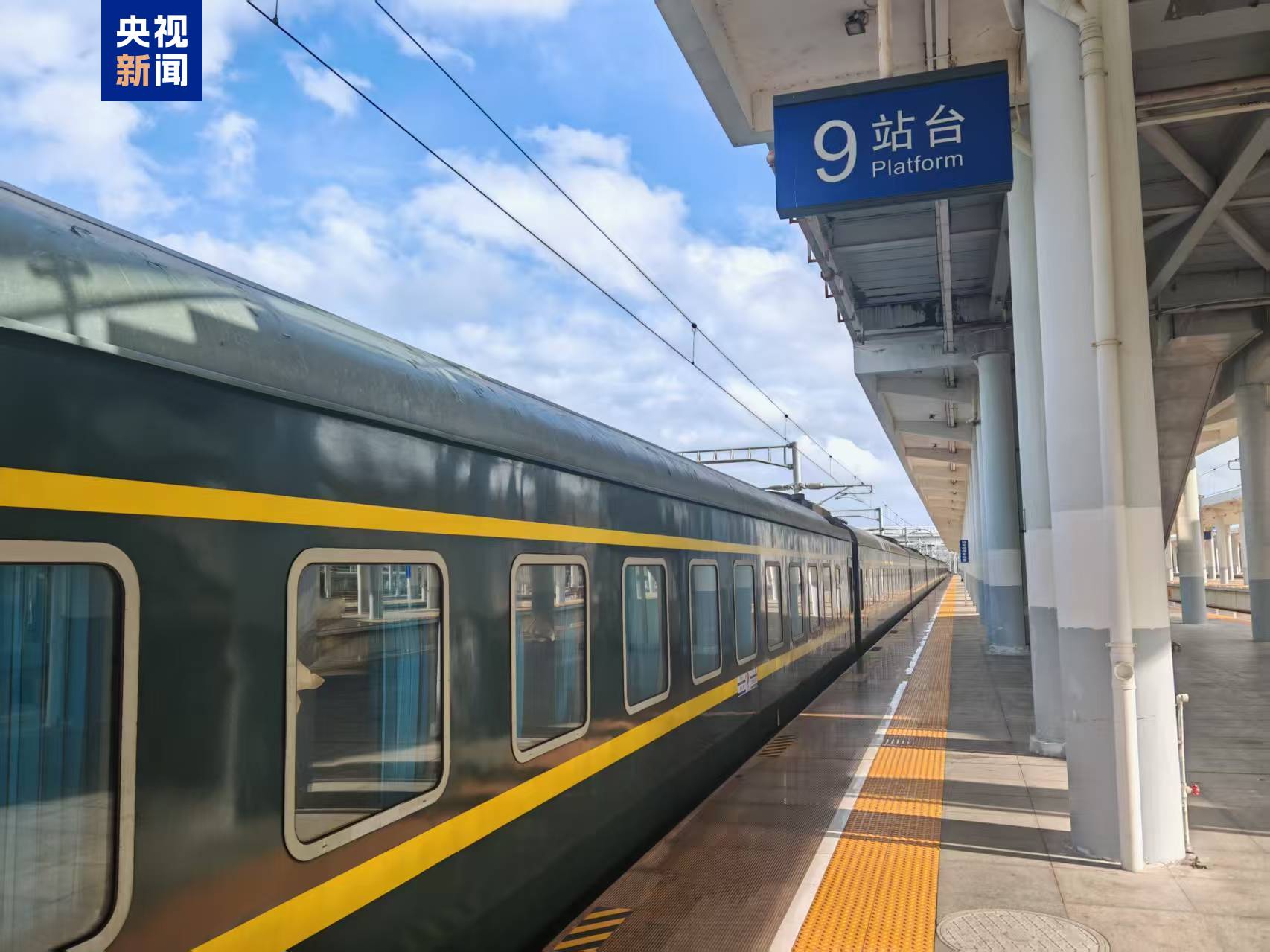
Core Points - The transportation and port management authority of Haikou City announced the suspension of operations at Xinhai Port, Xiuying Port, and Railway South Port due to Typhoon "Bolaven" on September 27, with operations expected to resume by the night of September 28, depending on weather conditions [1] - All vehicles and passengers are unable to cross the sea during the suspension period, and travelers are advised to wait locally and avoid gathering in Haikou [1] - The Hainan Railway has also suspended all inbound and outbound train services due to the typhoon, with specific train numbers listed for suspension on September 27 and 28 [1] Transportation Impact - Haikou's ports (Xinhai and Xiuying) and Railway South Port are closed as of September 27 at 9 AM, with a potential reopening on September 28 night [1] - All ferry services are halted, and travelers are instructed to find safe locations to wait for updates on service resumption [1] - Specific train services have been suspended, including Z385, K457 for inbound and all outbound trains on September 27, with further suspensions on September 28 and 29 [1] Ticketing Information - Passengers with tickets for suspended train services can apply for a full refund without a cancellation fee within 30 days from the date of travel [3] - For cash payments or printed reimbursement vouchers, passengers must return to the station within 180 days to receive their refunds [3]

达喀尔港成为2024年撒南非洲集装箱港口绩效指数排名最高的港口
Shang Wu Bu Wang Zhan· 2025-09-25 17:44
Core Insights - The 2024 Container Port Performance Index (CPPI) ranks Dakar Autonomous Port as the best port in Sub-Saharan Africa, reflecting a significant improvement in its performance score from -82 in 2023 to +23 in 2024, making it one of the fastest-growing ports globally [1] Investment and Infrastructure - The remarkable improvement in Dakar Port's performance is attributed to substantial investments by DP World, which include the installation of new cranes, expansion of storage areas, and the establishment of a modern digital port community system [1] - Enhancements in land connectivity, such as road modernization, railway repairs to Mali, and the establishment of a customs one-stop window, have significantly reduced cargo processing times [1] Competitive Positioning - Dakar has emerged as an essential logistics hub in Africa, ranking just behind Egypt's Port Said (global rank 3) and Morocco's Tangier Med Port (global rank 5), and far ahead of several competitors in Africa, including Madagascar's Toamasina Port (global rank 177), Egypt's Alexandria New Port (global rank 190), and others [1]
9月25日15时起海口“三港”恢复运输
Zheng Quan Shi Bao Wang· 2025-09-25 03:35
Core Viewpoint - The transportation services at Haikou New Port, Xiuying Port, and Railway South Port are set to resume on September 25 at 15:00, following the weather conditions in the Qiongzhou Strait [1] Group 1 - The announcement was made by the Haikou Transportation and Port Management Bureau on September 25 at 11:00 [1]
从物流大通道到国际经济走廊
Guang Xi Ri Bao· 2025-09-25 03:33
Core Insights - The Western Land-Sea New Corridor has seen a significant increase in freight volume, with the annual cargo volume rising from 3,382 TEUs in 2017 to 960,000 TEUs in 2024, marking an 283-fold increase over eight years [3] - The corridor is becoming a vital international economic corridor, enhancing connectivity and operational efficiency through improved transportation infrastructure [3][5] Transportation Infrastructure - The railway sector has made substantial progress, including the electrification of the Jiao-Liu Railway and the early operation of the Gui-Nan High-Speed Railway, which enhances the transportation capacity and connectivity of major ports [4] - The North Bay Port's container throughput has increased from 3.82 million TEUs in 2019 to 9.02 million TEUs in 2024, with an average annual growth rate of 18.7% [5] Economic Development - The Western Land-Sea New Corridor is evolving from a "channel economy" to a "logistics + trade + industry" development model, attracting more industries to the western inland regions [5] - New industrial clusters with annual outputs exceeding 10 billion yuan are emerging, focusing on sectors like new energy, green chemicals, and advanced equipment manufacturing [5] Logistics and Connectivity - The railway department has expanded the number of regular routes from the initial "Yugui New" line to 24 established routes, facilitating seamless connections with China-Europe freight trains [6] - The integration of sea-rail intermodal transport has improved operational efficiency, reducing transfer times from 3 hours to 1.5 hours, and increasing overall efficiency by 30% [7] Trade and Market Reach - The variety of goods transported via the corridor has expanded from over 50 types to 1,316 types, covering 18 provinces and reaching 577 ports in 127 countries and regions [7]
港股主要指数低开高走 恒指涨1.37% 科指涨2.53%
Zhong Guo Jin Rong Xin Xi Wang· 2025-09-24 09:36
Core Points - The Hong Kong stock market showed a positive trend on September 24, with the Hang Seng Index rising by 1.37% to 26,518.65 points, the Hang Seng Tech Index increasing by 2.53% to 6,323.15 points, and the National Enterprises Index up by 1.64% to 9,442.99 points [1] - The Hang Seng Index opened lower at 85.43 points but experienced a steady upward movement throughout the day, closing with a gain of 359.53 points and a total turnover exceeding 288.7 billion HKD [1] - The southbound trading (Hong Kong Stock Connect) saw a net inflow of over 13.7 billion HKD [1] Sector Performance - Most sectors exhibited mixed performance, with technology, chips, wind power, and stablecoin concepts showing gains, while real estate, banking, insurance, brokerage, innovative drugs, and port transportation had varied results [1] - Sectors such as biomedicine, gold, non-ferrous metals, and gas predominantly experienced declines [1] Individual Stock Movements - Notable stock movements included: - Lens Technology up by 6.38% - Giant Bio down by 11.96% - Dazhong Public Utilities down by 12.50% - TCL Electronics up by 6.87% - China Everbright Holdings up by 8.90% - China National Heavy Duty Truck Group up by 7.03% - Zhongchuang Zhiling up by 5.05% - Jitu Express up by 3.48% - Kuaishou up by 3.78% - NIO down by 0.72% - China Traditional Chinese Medicine up by 16.28% - Guotai Junan International down by 5.76% - SenseTime up by 2.25% [1] Top Traded Stocks - The top three traded stocks were: - Alibaba up by 9.16% with a turnover exceeding 44 billion HKD - Tencent Holdings up by 2.05% with a turnover exceeding 11.8 billion HKD - SMIC up by 5.72% with a turnover exceeding 11.4 billion HKD [1]
中科海讯:与北部湾港集团签订战略合作协议
Mei Ri Jing Ji Xin Wen· 2025-09-22 11:29
Core Viewpoint - The announcement of a strategic cooperation agreement between Zhongke Haixun and Guangxi Beibu Gulf International Port Group aims to enhance development in smart port construction, marine big data, and marine intelligent equipment [1] Group 1: Strategic Cooperation - Zhongke Haixun has signed a strategic cooperation agreement with Guangxi Beibu Gulf International Port Group [1] - The partnership will focus on areas such as smart port construction, marine big data, and marine intelligent equipment [1] - This agreement is expected to facilitate the company's development in the aforementioned fields [1]


中国宏观周报(2025年9月第3周)-20250922
Ping An Securities· 2025-09-22 07:06
Industrial Sector - Daily average pig iron production increased, and Shandong's independent refineries' operating rates improved[2] - Cement clinker capacity utilization rate and petroleum asphalt operating rates showed marginal declines[2] - Polyester operating rates remained stable, while tire production rates for both radial and semi-radial tires increased[2] Real Estate - New home sales in 30 major cities increased by 37.6% year-on-year as of September 19, 2025, significantly up from the previous week[2] - The average selling price index for second-hand homes decreased by 0.69% in the last four weeks as of September 8, 2025[2] Domestic Demand - Movie box office revenue averaged 118.63 million yuan per day, up 58.6% year-on-year as of September 19, 2025[2] - Retail sales of major home appliances grew by 5.3% year-on-year, an increase of 0.7 percentage points from the previous week[2] - Domestic flight operations increased by 5.6% year-on-year, with a notable rise in execution rates[2] External Demand - Port cargo throughput increased by 7.3% year-on-year, while container throughput rose by 10.9% as of September 14, 2025[2] - South Korea's export value grew by 3.8% year-on-year in the first ten days of September, up 2.5 percentage points from August[2] Price Trends - The Nanhua Industrial Price Index rose by 1.0%, with the black raw materials index increasing by 3.1%[2] - Rebar futures closed up 1.4%, while spot prices increased by 0.7%[2] - Coking coal futures rose by 7.6%, with Shanxi coking coal spot prices up by 2.8%[2]
交通运输部:9月15日—9月21日全国邮政快递揽收量约38.87亿件 环比增长1.49%
智通财经网· 2025-09-22 03:47
Core Insights - The Ministry of Transport reported logistics operation data for the week of September 15 to September 21, highlighting various transportation metrics across the country [1] Transportation Metrics - National railway freight volume reached 80.606 million tons, with a month-on-month increase of 0.21% [1] - The number of freight trucks on national highways was 58.82 million, reflecting a month-on-month growth of 1.92% [1] - Monitored ports achieved a cargo throughput of 264.647 million tons, marking a month-on-month increase of 0.14%, and a container throughput of 6.664 million TEUs, up by 0.18% [1] Aviation and Postal Services - Civil aviation supported 123,000 flights, including 5,023 cargo flights (3,400 international and 1,623 domestic), with a month-on-month increase of 0.69% [1] - The volume of postal express collection was approximately 3.887 billion items, showing a month-on-month growth of 1.49%, while the delivery volume was about 3.844 billion items, with a month-on-month increase of 0.55% [1]
交通运输部:上周国家铁路运输货物8060.6万吨 环比增长0.21%
Zheng Quan Shi Bao Wang· 2025-09-22 03:25
Core Insights - The national railway transported 80.606 million tons of goods from September 15 to September 21, reflecting a week-on-week increase of 0.21% [1] - The number of freight trucks on national highways reached 58.82 million, showing a week-on-week growth of 1.92% [1] - Port monitoring recorded a total cargo throughput of 264.647 million tons, with a week-on-week increase of 0.14%, and a container throughput of 6.664 million TEUs, up by 0.18% [1] - Civil aviation supported 123,000 flights, marking a week-on-week increase of 0.69% [1] - The postal and express delivery sector saw an intake of approximately 3.887 billion items, with a week-on-week growth of 1.49%, and a delivery volume of about 3.844 billion items, increasing by 0.55% [1]