
茶业

Search documents
西双版纳吴大叔的茶茶业有限公司成立 注册资本50万人民币
Sou Hu Cai Jing· 2025-10-30 11:15
Core Insights - A new company named Xishuangbanna Wu Dashu's Tea Industry Co., Ltd. has been established with a registered capital of 500,000 RMB [1] - The legal representative of the company is Wu Weiping [1] Business Scope - The company is authorized to produce tea products, subject to approval from relevant authorities [1] - General business activities include tea planting, initial processing of edible agricultural products, sales of agricultural by-products, wholesale and retail of edible agricultural products, primary agricultural product acquisition, and internet sales of food (only pre-packaged food) [1] - Additional activities include personal internet live streaming services, import and export of goods, and import and export of food (only pre-packaged food) [1]
昆明成理茗茶业有限公司成立 注册资本10万人民币
Sou Hu Cai Jing· 2025-10-30 11:15
Core Points - A new company, Kunming Chengli Ming Tea Industry Co., Ltd., has been established with a registered capital of 100,000 RMB [1] - The legal representative of the company is Yang Kun [1] - The business scope includes food sales, tea planting, tea utensils sales, and various advertising services [1] Business Scope - The company is authorized to engage in food sales, specifically pre-packaged food, and requires approval from relevant authorities for certain projects [1] - General projects include tea planting, food internet sales, and wholesale of edible agricultural products [1] - The company can independently conduct business activities as per its business license, excluding projects that require legal approval [1]
双江县龙盛茶业厂(个体工商户)成立 注册资本50万人民币
Sou Hu Cai Jing· 2025-10-30 11:15
Core Viewpoint - The establishment of Shuangjiang Longsheng Tea Industry Factory indicates a growing interest in the tea production sector, with a registered capital of 500,000 RMB, reflecting potential investment opportunities in the agricultural and food industry [1] Company Summary - Shuangjiang Longsheng Tea Industry Factory is registered as an individual business entity with a legal representative named Li Fulong [1] - The factory has a registered capital of 500,000 RMB, which may suggest a moderate scale of operations at the outset [1] Industry Summary - The business scope includes licensed projects such as tea product manufacturing, which requires approval from relevant authorities before operations can commence [1] - General projects encompass tea planting, sales of agricultural products, wholesale and retail of edible agricultural products, initial processing of food products, and internet sales of pre-packaged food [1] - The factory also engages in the cultivation of nuts and coffee beans, indicating diversification within the agricultural sector [1]
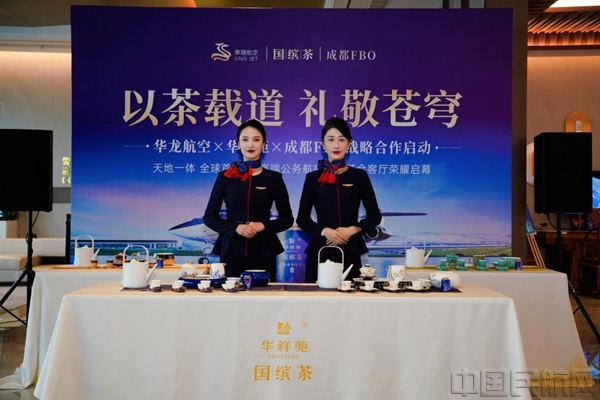
“公务机出行+茶文化IP”深度融合 成都公务机基地(FBO)设立首个国缤茶会客厅
Zhong Guo Min Hang Wang· 2025-10-30 05:01
Core Viewpoint - The strategic cooperation between Hualong Aviation and Huaxiangyuan aims to integrate high-end business aviation services with Chinese tea culture, marking a shift towards cultural empowerment and experiential upgrades in the high-end service industry [1][5]. Group 1: Service Innovation - The collaboration introduces a complete tea culture experience system from air to ground, featuring the innovative "cloud tea banquet" on business jets, which pairs gourmet dishes with tea flavors, enhancing the in-flight experience [3]. - The ground service at Chengdu FBO includes a dedicated tea space that combines the expertise of Huaxiangyuan with a comfortable and ceremonial environment, integrating business travel, tea appreciation, and high-end social functions [3]. Group 2: Company Profiles - Hualong Aviation is recognized as a leading business aviation company in Asia, known for its integrated service network and high standards in premium travel [5]. - Huaxiangyuan represents a high-end tea brand in China, committed to quality control across the entire production chain and maintaining the standard of "state guest tea" [5]. Group 3: Leadership Insights - The president of Hualong Aviation emphasized that this strategic upgrade exemplifies the company's commitment to refined service, introducing top-tier customized tea products and creating themed tea banquets to enhance the value and experience for guests [6]. - The chairman of Huaxiangyuan expressed the vision of transcending traditional boundaries of tea culture, aiming to elevate it from everyday consumption to a scene of aesthetic appreciation, and to embed Chinese tea culture into the global elite travel experience [6].

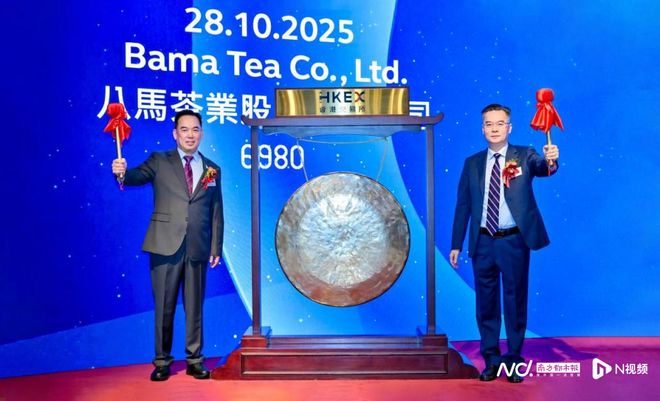
八马茶业成功登陆港交所,上市后面临哪些机遇和挑战?
Sou Hu Cai Jing· 2025-10-29 08:49
Core Viewpoint - The successful listing of Baima Tea on the Hong Kong Stock Exchange marks a significant step towards standardization and branding in the fragmented Chinese tea industry, which consists of over 1.6 million companies [1][4]. Company Overview - Baima Tea officially listed on the Hong Kong Stock Exchange on October 28, with an initial stock price increase of 86.7%, closing at HKD 93.35 per share and achieving a market capitalization of HKD 7.935 billion [2][3]. - The company plans to use the raised funds, totaling up to HKD 450 million, for supply chain enhancements, brand building, and international expansion [2][6]. Financial Performance - Baima Tea's revenue for 2022, 2023, and 2024 is projected at CNY 1.818 billion, CNY 2.122 billion, and CNY 2.143 billion, respectively, with net profits of CNY 166 million, CNY 206 million, and CNY 224 million [3]. - In the first half of the current year, Baima Tea reported a revenue of CNY 1.063 billion, a year-on-year decline of approximately 4.2%, and a net profit of CNY 120 million, down about 17.8% [3]. Market Position - Baima Tea holds the largest number of tea chain stores in China, with 3,716 offline stores, of which over 90% are franchise stores [5][4]. - The company ranks first in the high-end tea market, oolong tea market, and black tea market in China by revenue [4]. Business Model - The company operates on a dual-channel model of direct sales and franchising, with franchise stores accounting for 3,482 of its total stores [5]. - The gross profit margin for franchise channels is approximately 46%, significantly lower than the 78.2% margin for direct sales [5]. Future Opportunities and Challenges - Baima Tea aims to strategically invest in expanding its channel network, upgrading its supply chain, and enhancing brand recognition, particularly in Southeast Asia and countries involved in the Belt and Road Initiative [6]. - The company faces challenges due to its heavy reliance on the franchise model, which may weaken control over retail channels and lead to potential brand dilution [7].
首日开盘涨超80%,港股“高端中国茶第一股”诞生
Nan Fang Du Shi Bao· 2025-10-29 07:22
Core Viewpoint - Baima Tea Co., Ltd. officially listed on the Hong Kong Stock Exchange, becoming the first high-end Chinese tea stock, showcasing the capital vitality of regional consumer enterprises [1][3]. Group 1: Company Performance - On its debut, Baima Tea's stock surged by 86.7%, reaching HKD 93.35, with a market capitalization exceeding HKD 79.35 billion [3]. - The IPO set a new record for tea companies in Hong Kong, with public offerings oversubscribed by over 2,600 times and total subscription funds exceeding HKD 120 billion [3]. Group 2: Company Background - Baima Tea's roots trace back to the establishment of Shenzhen Xiyuan Tea Co., Ltd. in the 1990s, evolving from a single store in Luohu to a national chain with 3,716 stores, the largest in the country [3]. - The company has successfully modernized traditional tea production by integrating technology throughout its supply chain, creating a smart system that includes smart tea gardens, factories, and supply chains [3]. Group 3: Future Plans - The company plans to use the funds raised for expanding production bases, upgrading its brand, optimizing stores, enhancing digital capabilities, and pursuing industry acquisitions, aiming to add 1,500 new stores in the next three to five years [4]. - International expansion is a key focus, with plans to prioritize Southeast Asia and countries involved in the Belt and Road Initiative before entering mainstream markets in Europe and the U.S. [4].
三百年制茶世家的资本答卷:八马茶业上市背后的三重飞轮
Bei Ke Cai Jing· 2025-10-29 06:31
Core Viewpoint - Eight Horses Tea, known as the "first high-end Chinese tea stock," has officially listed on the Hong Kong Stock Exchange, demonstrating strong market demand with an oversubscription of 2,680.04 times and a first-day closing surge of 86.7% to HKD 93.3, resulting in a market capitalization of nearly HKD 8 billion [2][22]. Group 1: Market Position and Business Model - Eight Horses Tea has established itself as a leading player in the fragmented Chinese tea market, which consists of over 1.6 million companies, with the top five players holding only about 5.6% market share in the high-end tea segment as of 2024 [2][3]. - The company has achieved the highest number of tea chain stores in China and ranks first in revenue in the high-end tea market, oolong tea market, and black tea market [3]. Group 2: Competitive Advantages - Eight Horses Tea has successfully overcome the traditional challenges of the tea industry, characterized by "variety without brand," particularly in the three major tea categories: black tea, rock tea, and Tieguanyin, where it has established significant revenue leadership [8]. - The company’s core competitive advantages are driven by three key elements: product quality, channel strategy, and technological innovation [8][12]. Group 3: Product Quality and Brand Strategy - The company emphasizes a "quality first" philosophy, ensuring high-quality tea through stringent standards and a commitment to authentic production origins, which has led to high premium pricing and stable repurchase rates [9][11]. - Eight Horses Tea has built a network of over 3,700 chain stores across all provinces in mainland China, creating a strong brand presence and customer experience [11]. Group 4: Channel Strategy - The unique "direct sales + franchise" model has enabled Eight Horses Tea to achieve significant scale and establish strong channel barriers, with 3,716 stores nationwide as of the last report [12][13]. - The company supports franchisees through centralized procurement and logistics, enhancing operational efficiency and benefiting franchise partners [13]. Group 5: Technological Innovation - Eight Horses Tea is addressing the non-standardization challenge in the traditional tea industry by investing in smart, digital, and information-based production lines, including a leading "super factory" [14][17]. - The company has actively participated in setting industry standards, converting traditional practices into modern quality control metrics, which is crucial for scaling operations and enhancing profitability [17]. Group 6: Future Growth and Strategic Plans - The successful listing is seen as a lever for deeper integration within the Chinese tea industry, with funds raised aimed at expanding channel networks, upgrading supply chains, and enhancing brand recognition both domestically and internationally [18][22]. - The company plans to target Southeast Asia and countries along the "Belt and Road" initiative for international market expansion, aiming to elevate Chinese tea culture globally [22].
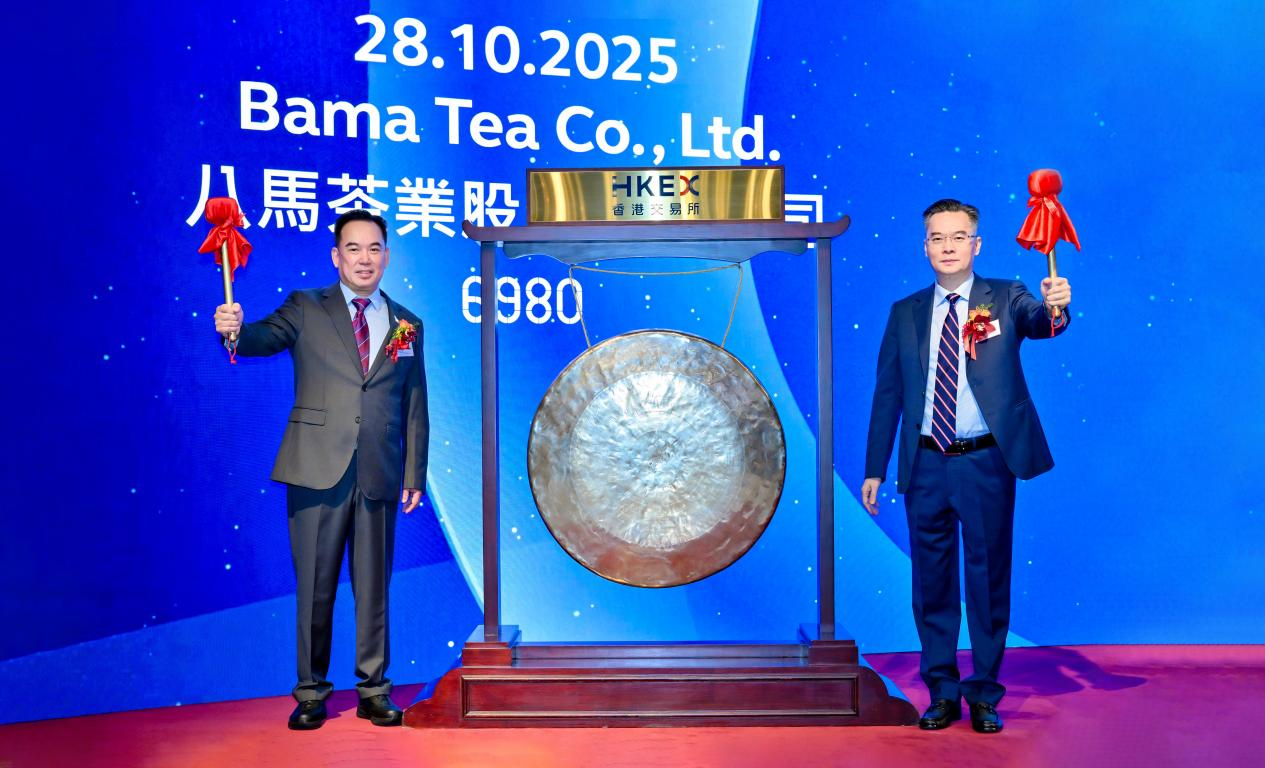
八马茶业成功登陆港交所 上市首日股价大涨86.7%
Sou Hu Cai Jing· 2025-10-29 06:28
Core Viewpoint - The successful listing of Baima Tea on the Hong Kong Stock Exchange marks a significant step towards standardization and branding in the fragmented Chinese tea industry, which consists of over 1.6 million companies [1][4]. Company Overview - Baima Tea officially listed on the Hong Kong Stock Exchange on October 28, with an initial stock price increase of 86.7%, closing at 93.35 HKD per share and achieving a market capitalization of 7.935 billion HKD [3]. - The company plans to use the raised funds, totaling up to 450 million HKD, to enhance supply chain capabilities, brand development, and international expansion [3][7]. Financial Performance - Baima Tea's revenue for 2022, 2023, and 2024 is projected to be 1.818 billion, 2.122 billion, and 2.143 billion CNY, respectively, with net profits of 166 million, 206 million, and 224 million CNY [3]. - In the first half of the current year, Baima Tea reported a revenue of 1.063 billion CNY, a year-on-year decline of approximately 4.2%, and a net profit of 120 million CNY, down about 17.8% [3]. Market Position - Baima Tea holds the largest number of tea chain stores in China, with 3,716 offline stores, of which 3,482 are franchise stores, accounting for over 90% of its outlets [5][6]. - The company ranks first in the high-end tea market, oolong tea market, and black tea market in China by revenue [4]. Business Model - The company operates on a dual-channel model of direct sales and franchising, with franchise channels having a gross margin of approximately 46%, significantly lower than the 78.2% margin from direct sales [5][6]. - Baima Tea has implemented centralized procurement and logistics to support franchisees, enhancing operational efficiency and reducing costs [6]. Future Opportunities and Challenges - The company aims to strategically invest in expanding its channel network, upgrading supply chains, and enhancing brand recognition, particularly in Southeast Asia and Belt and Road Initiative countries [7]. - While the franchise model allows for market penetration, it may weaken the company's control over retail channels, potentially harming brand image and pricing strategies [8].
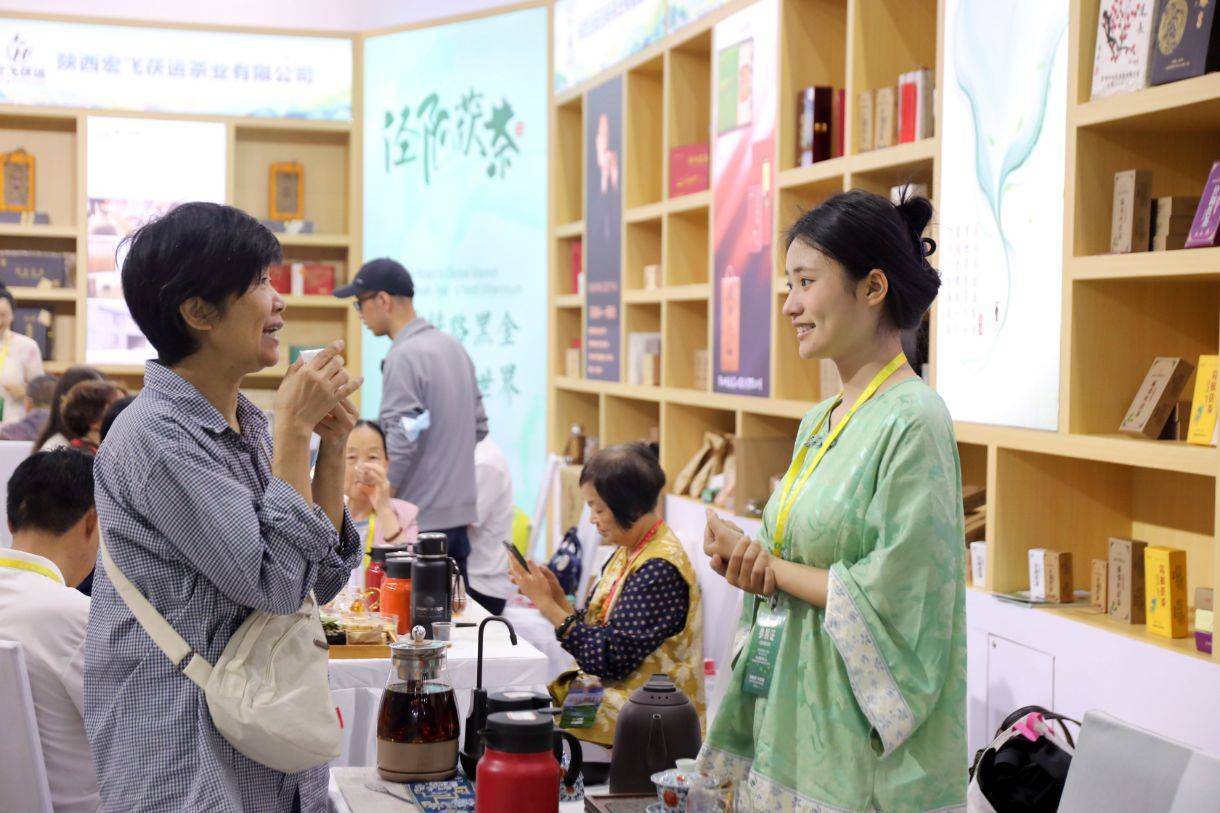
孝昌御茶村茶业有限公司成立 注册资本200万人民币
Sou Hu Cai Jing· 2025-10-29 05:52
Core Viewpoint - Recently, Xiaochang Yuchacun Tea Industry Co., Ltd. was established with a registered capital of 2 million RMB, focusing on various tea-related activities and services [1] Company Summary - The legal representative of the company is Hu Mingyu [1] - The registered capital of the company is 2 million RMB [1] - The business scope includes tea planting, sales of agricultural products, retail of edible agricultural products, initial processing of edible agricultural products, leisure sightseeing activities, and development of rural crafts and tourism resources [1] - The company is authorized to produce tea products, subject to relevant approvals [1]
首日涨幅86.7% 八马茶业12年IPO修成正果
Bei Jing Shang Bao· 2025-10-28 16:40
Core Viewpoint - Baima Tea's successful listing on the Hong Kong Stock Exchange marks a significant milestone for the Wang family, with shares opening at 80.1 HKD, a 60.2% increase from the issue price of 50 HKD, and closing at 93.3 HKD, reflecting an 86.7% rise, amidst challenges in the fragmented tea market [1][2]. Group 1: Company Overview - Baima Tea, established in 1997, has developed a comprehensive sales system combining direct sales, franchising, and both online and offline channels, leveraging digital tools for operational efficiency [2][4]. - The company primarily engages in the research, design, standard output, and retail of various tea products, including six major categories of Chinese tea and related products [4]. - The Wang family, as the controlling shareholders, holds a combined voting power of 55.9% in Baima Tea, indicating strong family governance [4]. Group 2: Financial Performance - Baima Tea's projected revenues for 2022 to 2025 are approximately 1.818 billion, 2.122 billion, 2.143 billion, and 1.063 billion CNY, respectively, with net profits of about 166 million, 206 million, 224 million, and 120 million CNY [2]. - The company's gross profit margins are relatively strong, with figures of 53.3%, 52.3%, 55%, and 55.3% for the same periods [2]. Group 3: Market Position and Challenges - The Chinese tea market remains highly fragmented, with over 1.6 million companies involved in tea cultivation, production, and distribution, leading to a market share of only 5.6% for the top five companies by sales revenue [6]. - Baima Tea's market share in the high-end tea segment has increased from approximately 1.1% in 2020 to 1.7% in 2024, indicating growth despite the competitive landscape [6]. - The company faces challenges such as potential franchisee attrition and the need for digital supply chain upgrades to enhance profitability [6][7]. Group 4: Strategic Initiatives - The chairman of Baima Tea has proposed a "cultural elevation" strategy to transform tea from a mere agricultural product into a cultural entity, aiming to enhance brand recognition and consumer engagement [5]. - The company is also focusing on developing sub-brands to cater to diverse consumer preferences, particularly targeting younger demographics [6]. Group 5: Market Sentiment and Future Outlook - The initial public offering (IPO) was met with overwhelming demand, achieving a subscription rate of 2680.04 times, raising 3.9 billion HKD for expansion purposes [2][3]. - The strategic choice to list on the Hong Kong Stock Exchange is attributed to its flexible listing process and higher acceptance of tea companies, which may enhance Baima Tea's international brand influence [3].