财富管理

Search documents
深圳财富管理总规模超31万亿元 设立全国首只AIC母基金
Sou Hu Cai Jing· 2025-10-21 12:28
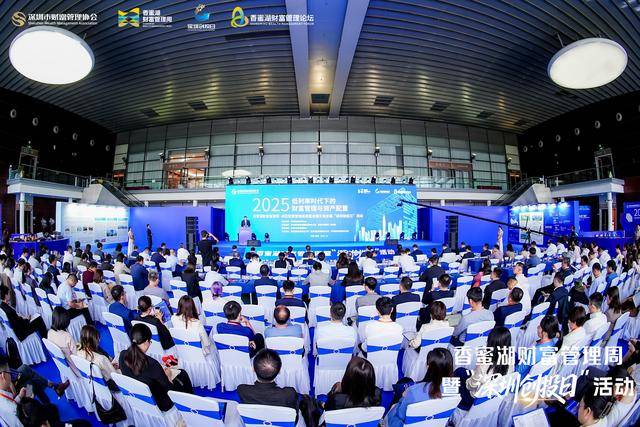
Core Insights - The "2025 Xiangmi Lake Wealth Management Week" is a significant annual event aimed at promoting Shenzhen as an international wealth management center, featuring over 900 representatives from various financial institutions [1][3] - Shenzhen's wealth management ecosystem has grown to manage over 31 trillion yuan, nearing the levels of Hong Kong and Singapore, with a strong focus on integrating technology and finance [4][5] Group 1: Wealth Management Growth - As of now, the total assets under management by trust, wealth management, and insurance asset management institutions in China exceed 100 trillion yuan, with a year-to-date growth of nearly 6% and a year-on-year increase of over 15% [3] - Shenzhen's wealth management institutions manage assets exceeding 31 trillion yuan, with the financial center of Futian accounting for approximately 60% of this total [4][5] Group 2: Financial Innovation and Collaboration - The establishment of the first AIC mother fund in Shenzhen, with a scale of 7 billion yuan, aims to support the city's "20+8" industrial development strategy [6] - The wealth management sector in Shenzhen is actively exploring new paths for value creation through technology innovation and industrial upgrades, particularly in emerging industries [5] Group 3: Market Position and Future Outlook - By the end of 2024, the total asset management scale in China is projected to reach approximately 163 trillion yuan, with Shenzhen's share being 31 trillion yuan, ranking third among major cities [7] - The Shenzhen Wealth Management Association has facilitated a growth of 2 trillion yuan in the Bay Area's wealth management sector and organized over 90 exchange events in the field [9][10]

西南财经大学教授蔡栋梁:“产品透明度”是大众对财富管理市场的第一需求
Xin Lang Cai Jing· 2025-10-21 07:41
Core Insights - The central viewpoint emphasizes the importance of wealth management in supporting the real economy and achieving high-quality financial development in China, as outlined in the recent Central Financial Work Conference [1]. Wealth Management Market Development - The Chinese wealth management market is transitioning from a phase of rapid growth to one focused on high-quality development, with competition shifting from product quantity to long-term customer value realization [3][4]. - The market has seen significant changes, including a decline in interest rates and a diversification of residents' financial asset demands, indicating a shift from "incremental drive" to "stock optimization" [3][4]. Customer Demands and Transparency - There is a growing demand for product transparency among customers, who now seek detailed information about investment logic, underlying assets, risk distribution, and fee structures [2][3][4]. - Wealth management institutions are encouraged to enhance their disclosure methods from static to dynamic, focusing on process transparency rather than just results [2][5]. Technological Integration and Future Trends - The integration of AI and data capabilities is seen as crucial for the future of wealth management, shifting the focus from product-centric to customer goal-centric approaches [6][9]. - Institutions are expected to develop comprehensive research and investment capabilities, along with a deep understanding of customer needs through data-driven insights [6][9]. Green Finance and Risk Management - The concept of "green finance" is highlighted, with a focus on using financial technology to create quantifiable and verifiable systems for assessing green investments, thereby mitigating "greenwashing" risks [9][10]. - A dual scoring system for evaluating green projects is proposed, combining commercial viability and emission reduction effectiveness [10][12]. Investment Opportunities and Strategies - The wealth management market is projected to evolve towards net value-based products, with opportunities arising from lower interest rates and new themes in green and technology investments [14][15]. - Investment strategies should focus on stable cash flow and long-term growth, utilizing a "core + satellite" approach to asset allocation [16].
中国资产迎来新一轮价值重估,财富管理怎么变?
Zhong Guo Xin Wen Wang· 2025-10-21 07:05
Core Insights - The Chinese asset market is undergoing a new round of value reassessment amid a global monetary order restructuring, prompting significant changes in the wealth management industry [1] Group 1: Industry Transformation - The wealth management industry is shifting from a "product-selling" model to a "service-oriented" approach, establishing a solid foundation for the growth of client-centered advisory models [2] - As of July this year, the assets under management for the client advisory service of China International Capital Corporation (CICC) Wealth Management surpassed 100 billion, recently exceeding 120 billion [2] Group 2: Global Asset Allocation - The importance of global asset allocation is increasingly recognized, with policies promoting cross-border capital flow and service integration being introduced [2][3] - Investors face challenges due to information asymmetry and a lack of appropriate investment tools when attempting global asset allocation [2] Group 3: Technological Advancements - The advent of AI is expected to break existing limitations and provide more inclusive financial services [3] - The development of a systematic service framework that is accessible, understandable, and easy to invest in is currently lacking, despite the availability of various investment products and channels [3] Group 4: Financial Inclusion - China's inclusive finance has progressed from the "existence" stage to the "quality" stage, emphasizing the need for investor education and low-threshold, high-liquidity investment products [3]
2025上海苏河湾大会展现金融开放高度与创新活力
Zhong Guo Fa Zhan Wang· 2025-10-21 02:39
Group 1 - The Global Wealth Management Forum 2025 held in Shanghai focused on the profound changes in the digital era and the opportunities and challenges in global financial cooperation [1] - The establishment of the "Shanghai AI-FI Laboratory" aims to promote the integration of artificial intelligence technology with the financial industry, marking a significant step in Shanghai's innovation practices in the "AI+Finance" sector [1] - In the first half of this year, the financial services industry in Jing'an District achieved a value-added output of 28.817 billion yuan, maintaining a leading position in both scale and growth rate within the city [1] Group 2 - Foreign investment institutions are increasingly confident in the Chinese market, reflecting the continuous release of institutional opening dividends and the optimization of the business environment [2] - Jing'an District has established the Shanghai Jing'an Capital Investment Operation Company to enhance investments in strategic emerging industries and future industries, collaborating with industry leaders to set up specialized funds [2] - The financial sector is urged to embrace and lead change as the world undergoes unprecedented transformations [2] Group 3 - Jing'an District has set up a comprehensive financing service window at the administrative service center, establishing a financing service center to support the real economy [3] - The district has launched the first cross-border financial service center in the city, providing one-stop overseas service for investment projects [3]
政治动荡下法国加速“财富外逃”,卢森堡与瑞士成首选避风港
Di Yi Cai Jing· 2025-10-20 09:35
Core Insights - The trend of capital flow from France to Luxembourg has been uninterrupted since the start of the election cycle last year, driven by political instability and the shadow of wealth tax, leading to unprecedented asset transfers by French entrepreneurs and wealthy families [1][4]. Group 1: Capital Flow Trends - Investment in Luxembourg life insurance products by French clients surged over 58% in 2024, reaching a historical high of €13.8 billion, indicating a strong preference for these financial instruments [1]. - The appeal of Luxembourg lies in its diverse product offerings and political and financial stability, which have become increasingly attractive to French investors amid ongoing political uncertainty [5][6]. Group 2: Political Context - The political turmoil in France has eroded economic expectations, with President Macron's administration facing challenges in implementing pro-business policies due to a lack of a majority in parliament [4]. - The recent downgrade of France's long-term foreign currency issuer default rating by S&P from "AA-" to "A+" reflects the growing fiscal challenges, including a projected budget deficit of 5.4% of GDP for 2025 [4]. Group 3: Wealth Tax Proposals - The current wealth tax proposals by the French Socialist Party are seen as politically motivated rather than economically beneficial, with experts suggesting that the focus should be on expanding the economy rather than merely redistributing wealth [2]. - The government plans to impose taxes on holding company structures and a one-time additional tax on high-income earners, which has caused panic among the wealthy, leading to increased consultations about moving assets to Luxembourg [5][7]. Group 4: Migration Trends - There is a resurgence of the "millionaire migration wave," with many wealthy individuals considering relocating to Switzerland and Luxembourg for stability and favorable tax conditions [7][8]. - According to a report, France is expected to experience a net outflow of 800 high-net-worth individuals, while countries like Italy and Switzerland are projected to benefit from significant inflows [8].

“5A配置模型”亮相!中金财富勾勒财富管理新图景
券商中国· 2025-10-20 06:03
Core Viewpoint - The wealth management industry is increasingly recognized for its core role in serving the real economy and enhancing residents' wealth amid comprehensive financial system reforms [1] Group 1: Company Development - CICC Wealth has achieved a significant milestone with its buy-side advisory assets surpassing 120 billion yuan, marking a transition from product selling to service-oriented wealth management [2][3] - The "China 50" product, launched in 2019, has generated over 10.1 billion yuan in returns for clients, with more than 98% of clients achieving positive returns [3][4] Group 2: Service Model and Methodology - CICC Wealth introduced the "5A Configuration Model," focusing on client preferences, asset allocation, strategy attribution, alpha generation, and risk assessment to enhance asset allocation capabilities [4][6] - The company has developed a comprehensive service system that includes various buy-side advisory services tailored to meet diverse client needs [3][6] Group 3: Global Asset Management - CICC International Wealth Management has expanded its international business, with an asset management scale reaching 2.2 billion USD, establishing itself as a professional benchmark among Chinese institutions [6][7] - The firm aims to bridge international investors with the Chinese capital market while assisting Chinese enterprises in accessing global resources [7] Group 4: AI Integration in Wealth Management - CICC Wealth is leveraging AI technology to enhance its wealth management services, including the launch of the E-Space advisory platform and the RITAS intelligent configuration navigator [10][11] - The upgraded CICC Wealth APP features AI-driven functionalities, aiming to provide a more personalized and efficient client experience [12][13] Group 5: Commitment to Inclusive Finance - CICC Wealth is committed to promoting inclusive finance by integrating product and tool services for a broader range of investors and supporting small and medium-sized enterprises [13][14] - The company collaborates with academic institutions to conduct research on financial health, aiming to translate theoretical findings into practical applications for clients [13][14]

聚势而行启新局、进而有为筑未来 “2025中金财富1018发布会”圆满结束
Zheng Quan Ri Bao Zhi Sheng· 2025-10-19 10:15
Core Insights - The event "2025 CICC Wealth 1018 Conference" focused on macro research, buy-side advisory, global allocation, fintech, and inclusive finance, highlighting the unique attractiveness of the Chinese market driven by technological breakthroughs and resilient manufacturing upgrades [1] - The wealth management industry is transitioning from a "product-selling" model to a "service-oriented" model, with CICC Wealth leading the buy-side advisory transformation, achieving over 120 billion yuan in assets under management by July 2023, and recently surpassing 120 billion yuan [1][2] Group 1: Buy-Side Advisory Transformation - CICC Wealth has developed a buy-side advisory service system, including "China 50" and "Micro 50," focusing on long-term value and detailed customer needs [1] - The company has constructed over 11,000 different strategy lines across equity assets, alternative assets, and global assets to address clients' asset allocation challenges in a low-interest-rate environment [2] - CICC Wealth is innovating its trading business model to be more client-centric, integrating research, multi-product trading, and exclusive execution services [2] Group 2: AI and Global Investment Opportunities - The introduction of cross-border investment channels like Stock Connect and Wealth Management Connect has expanded product choices and investment tools for investors [3] - CICC Wealth aims to provide a comprehensive service framework for global asset allocation, leveraging its global network and deep research capabilities [3] - The application of AI technology is accelerating the transformation of the wealth management industry, with discussions on how AI can enhance client experience in wealth management [3]
静安上半年金融服务业增加值288.17亿元 全球财富管理论坛·2025上海苏河湾大会举办
Jie Fang Ri Bao· 2025-10-19 02:35
Core Insights - The "Global Wealth Management Forum 2025 Shanghai Suhewan Conference" was held in Shanghai, highlighting the city's financial service sector growth and innovation in AI and finance [1][2] Financial Performance - Jing'an District achieved a financial services value-added of 28.817 billion yuan in the first half of the year, maintaining a leading position in both industry scale and growth rate within the city [1] Event Highlights - The forum featured over a hundred prominent domestic and international guests discussing topics such as digital transformation, technological benefits in wealth creation, global financial cooperation, and investment outlooks [1] Technological Innovation - The establishment of the "Shanghai AI-FI Laboratory" aims to promote the integration of artificial intelligence with the financial industry, focusing on key issues in the "AI+Finance" sector to drive technological innovation and application [1]
调研|港股IPO火爆!人才短缺,中外资投行变更招聘计划
券商中国· 2025-10-18 23:33
Core Viewpoint - The Hong Kong IPO market has seen a significant increase in financing, exceeding last year's figures by more than double, leading to a tight supply of investment banking talent in the region [1][5]. Group 1: Investment Banking Expansion - Major international investment banks like Goldman Sachs and JPMorgan are accelerating their recruitment plans in Hong Kong to match the growing demand for IPO projects [3][4]. - Goldman Sachs has expressed optimism about the Chinese market, increasing its target for the CSI 300 index to 4900 points, reflecting a positive outlook on liquidity and valuations [3]. - JPMorgan's Asia-Pacific corporate banking division has seen a 20% increase in personnel as of July this year, doubling its original growth target for 2025 [4]. Group 2: Talent Shortage and Integration - There is a temporary shortage of top investment banking talent in Hong Kong, with over 200 companies currently queued for IPOs, leading to competitive hiring practices [5][6]. - Chinese investment banks benefit from integrated domestic and international operations, allowing them to allocate talent more flexibly compared to their international counterparts [6]. Group 3: Wealth Management Development - Both domestic and foreign investment banks are expanding their wealth management services in response to a significant increase in cross-border asset allocation needs, with Chinese household savings rising by 55 trillion yuan in recent years [7]. - Companies like CICC have successfully expanded their wealth management teams in Hong Kong from about 30 to over 150 members in seven years, indicating a strong focus on internationalization [7].

2025中金财富1018发布会圆满结束:聚势而行启新局,进而有为筑未来
中国基金报· 2025-10-18 13:41
Core Insights - The article emphasizes the significant transformation in the wealth management industry, driven by macroeconomic changes and a shift from product selling to service-oriented approaches, particularly in the context of the "14th Five-Year Plan" [1][4] - The company, CICC Wealth, has successfully transitioned to a buyer advisory model, achieving a scale of over 120 billion in assets under management for its buyer advisory services [2][4][5] Wealth Management Transformation - The wealth management industry is undergoing profound changes, moving from a product-centric model to a service-oriented approach, which lays a solid foundation for the growth of the buyer advisory model [4] - CICC Wealth has developed a comprehensive buyer advisory service system, including products like "China 50," which has generated over 10.1 billion in cumulative client returns since its launch in 2019 [4][5] Buyer Advisory Model - CICC Wealth's buyer advisory model is built on the "5A Configuration Model," focusing on client preferences, asset allocation, strategy attribution, alpha generation, and risk assessment [5][6] - The company aims to enhance client experience and investment outcomes by continuously refining its buyer advisory approach and providing tailored asset allocation strategies [6][8] Global Asset Allocation - The importance of global asset allocation is highlighted, with CICC Wealth positioning itself as a partner for clients navigating international investment opportunities [9][10] - The company has established a robust international business framework, managing assets worth 2.2 billion USD and receiving multiple international awards for its investment management capabilities [10][11] AI Integration in Wealth Management - The integration of AI technology is a key focus, with CICC Wealth leveraging AI to enhance client experience and operational efficiency [12][13] - The company has developed AI-driven platforms and tools to provide personalized investment solutions and streamline advisory processes [14][16] Commitment to Inclusive Finance - CICC Wealth is dedicated to promoting inclusive finance by offering accessible investment products and enhancing financial literacy among investors [18][19] - The company is actively involved in supporting small and medium-sized enterprises (SMEs) through tailored financial services and partnerships with academic institutions [19][20] Future Outlook - CICC Wealth aims to continue its mission of "Finance for the People," focusing on high-quality development in wealth management and expanding its global reach [20][21]