
连锁超市

Search documents
高质量发展看中国|宁夏县域商业“多点突围”:日间消费得实惠 夜间养生有新意
Sou Hu Cai Jing· 2025-09-26 03:18
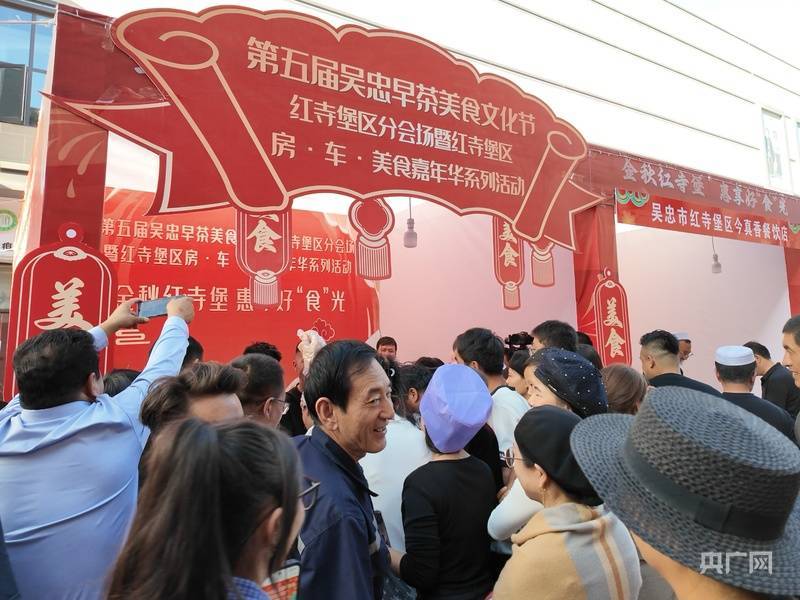
Core Insights - The article highlights the transformation of county-level consumption in Ningxia, moving from a traditional single-sale model to a diversified approach that enhances consumer experience and convenience [1][10]. Group 1: Consumer Experience and Engagement - Residents in Ningxia are experiencing improved consumer satisfaction through initiatives like the use of discount coupons, which allow for significant savings during shopping [1][2]. - The Red Temple area has introduced a "dual linkage" model that combines promotional events with everyday shopping, enabling residents to enjoy various discounts and a more convenient shopping experience [5][10]. Group 2: Economic Impact and Growth - The Red Temple district's promotional activities involved an investment of 1.2 million yuan to stimulate consumption, with 54 participants covering food, agricultural products, and household appliances [4]. - The introduction of government consumption vouchers has led to a 30% increase in foot traffic at local stores, with average transaction values rising from 30 yuan to between 60 and 80 yuan [5][10]. Group 3: Night Market and Cultural Integration - The Longde County's night market has diversified its offerings by incorporating traditional Chinese medicine and cultural activities, creating a vibrant night-time economy [6][9]. - The night market features six functional areas and 60 stalls, transforming traditional night market experiences into interactive cultural and wellness activities [9][10]. Group 4: Policy Alignment and Future Outlook - The shift in county-level commercial strategies aligns with national policies aimed at expanding domestic demand and revitalizing urban-rural consumption [10]. - As of July 2025, the online transaction volume for life services in Ningxia's county markets has increased by 18.55%, with a 31.5% rise in the number of new businesses, indicating robust growth in the sector [11].

国光连锁最新股东户数环比下降12.40%
Zheng Quan Shi Bao· 2025-09-23 10:03
Group 1 - The core point of the article highlights that Guoguang Chain reported a decrease in the number of shareholders, with a total of 33,691 shareholders as of September 20, which is a reduction of 4,771 shareholders compared to the previous period, reflecting a month-on-month decline of 12.40% [1] - The closing price of Guoguang Chain was 16.24 yuan, down by 1.87%, and the stock price has cumulatively decreased by 9.68% since the concentration of shares began, with 3 days of increase and 6 days of decrease, including one limit-up day [1] - The company's semi-annual report indicated that it achieved an operating income of 1.448 billion yuan in the first half of the year, representing a year-on-year growth of 6.50%, and a net profit of 19.8979 million yuan, which is a year-on-year increase of 4.15%, with basic earnings per share of 0.0402 yuan and a weighted average return on equity of 1.76% [1]

时隔快一百年,胖东来又把自有品牌带火了?
3 6 Ke· 2025-09-23 04:18
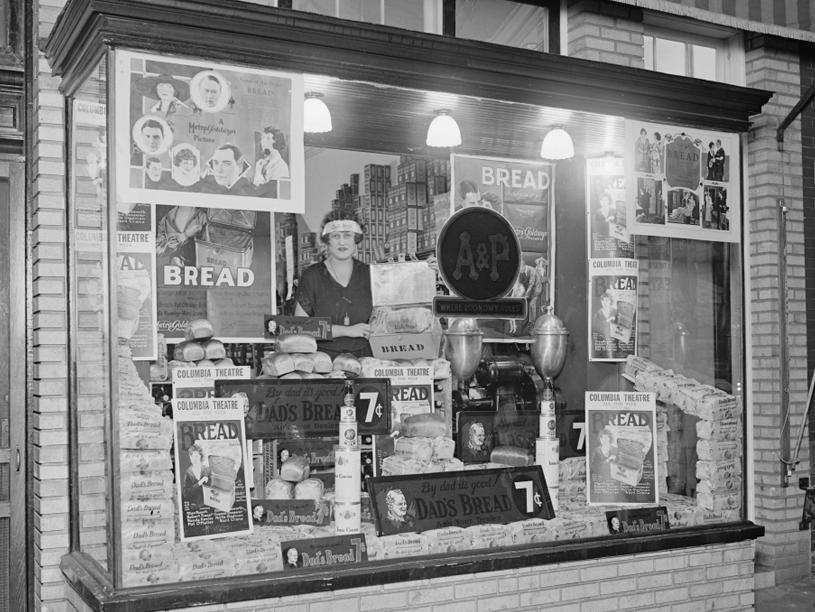
Core Insights - The article discusses the resurgence of private label brands in the retail industry, drawing parallels to the historical dominance of A&P in the early 20th century [1][25] - Major retailers are increasingly focusing on developing their own brands to gain competitive advantages and improve profit margins [3][12] Group 1: Market Trends - Large supermarkets are aggressively promoting their private label products, with some brands like 超盒算 NB achieving a 60% sales share from private labels [3] - The trend of retailers creating their own brands is not limited to traditional supermarkets; platforms like 叮咚买菜 are also venturing into private label products [5] - The success of private labels is evident in the performance of brands like 胖东来, which has a wide range of self-branded products [7] Group 2: Competitive Landscape - Traditional supermarkets are facing significant challenges, with many reporting losses and store closures, leading to a shift towards private label strategies as a means of survival [9][11] - The retail battle is increasingly centered around product strength, as traditional models struggle against e-commerce and new retail formats [11][12] - Retailers with strong supply chain management and product innovation capabilities are better positioned to succeed in the private label market [30][32] Group 3: Profitability and Cost Structure - Private label products can yield higher profit margins, with reported profits of 30%-40% compared to 10%-20% for branded products [16] - The cost breakdown of private label products shows that retailers can optimize pricing and quality by eliminating middlemen [19] - Successful private label brands can create a strong customer loyalty, as seen with brands that have become synonymous with their retailers [22] Group 4: Challenges and Considerations - Entering the private label market requires significant upfront investment and a deep understanding of consumer preferences [27][29] - Retailers must ensure quality control and supply chain reliability to avoid risks associated with private label products [30][32] - The article emphasizes that while private labels can be a lifeline for struggling retailers, they also require careful execution and market insight to avoid potential pitfalls [35]


从15岁搬运工,到壕掷$4.9亿新加坡置业!神秘东南亚大亨的逆袭之路~
Sou Hu Cai Jing· 2025-09-20 14:52
Group 1 - The article highlights the successful bid of 81-year-old Thai billionaire Su Xuming, who won a prime residential land plot in Singapore for 4.9 billion SGD (approximately 3.87 billion USD), outbidding prominent local families [2][7][9] - Su Xuming, known as the "Beer King" of Thailand, is the fourth richest person in Thailand with a net worth of 10.5 billion USD, showcasing his significant influence in the Southeast Asian business landscape [2][5] - The land plot is located in a highly sought-after area with a projected selling price of 3,200 SGD per square foot, indicating substantial profit potential for the development [9] Group 2 - Su Xuming's journey from humble beginnings, starting as a delivery worker for a brewery, to becoming a leading figure in a vast business empire is emphasized, illustrating a remarkable rags-to-riches story [4][11][15] - His business acumen was further developed through key partnerships, including a joint venture with Carlsberg to produce beer in Thailand, which significantly boosted his company's market presence [19][21] - The TCC Group, founded by Su Xuming, has diversified into various sectors, including real estate, finance, and retail, with notable acquisitions such as the purchase of Singapore's fourth-largest listed property company and a major supermarket chain [26][28]

“90”后硕士,任永辉超市新CEO!
Sou Hu Cai Jing· 2025-09-19 14:24
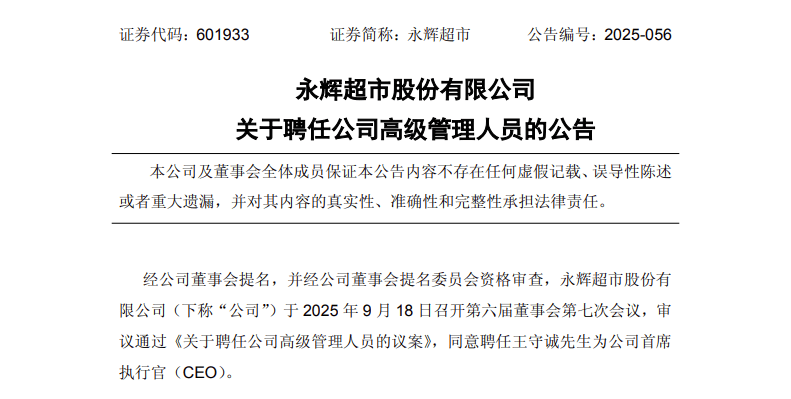
Group 1 - The new CEO of Yonghui Supermarket, Wang Shoucheng, has been appointed after a vacancy of nearly six months [2][4] - Wang Shoucheng, born in April 1991, holds a master's degree from Peking University and joined Yonghui in 2017 as a management trainee [2][4] - Following the acquisition of 29.4% of Yonghui's shares by Miniso's subsidiary Jun Cai International for 6.27 billion yuan, Miniso became the largest shareholder of Yonghui [4] Group 2 - The management structure of Yonghui has been adjusted after Miniso became the largest shareholder, with the establishment of a reform leadership group led by Miniso's founder Ye Guofu [4] - The previous CEO, Li Songfeng, was not reappointed during the temporary shareholders' meeting held on March 17, 2025, leading to the interim delegation of CEO responsibilities to the reform leadership group [4]

成都红旗连锁董事会、监事会换届选举工作延期
Xin Lang Cai Jing· 2025-09-19 07:51
Core Viewpoint - Chengdu Hongqi Chain Co., Ltd. announced the postponement of the board and supervisory committee elections due to the need to adjust governance structure according to newly revised regulations [1] Group 1 - The term of the fifth board of directors and supervisory committee has expired [1] - The elections for the new board and supervisory committee will be appropriately delayed [1] - The current members of the fifth board and supervisory committee will continue to perform their duties until the elections are completed [1] Group 2 - The company assures that the postponement will not affect normal operations [1] - The company will actively promote the election process and disclose relevant information in a timely manner [1]

供销大集:截至9月,顺客隆社区团购业务订单量已超去年全年
Zheng Quan Shi Bao Wang· 2025-09-19 02:11
Core Viewpoint - The company is expanding its community group buying business by integrating resources from various platforms such as Ele.me, Meituan, JD Daojia, Douyin, Duoduo Maicai, and Little Elephant Supermarket, focusing on fresh produce and daily necessities [1] Group 1 - The company has achieved over the total order volume of last year in its community group buying business by September [1] - The company’s single product, Shaanxi kiwifruit, achieved over 30,000 orders and sales exceeding 1 million yuan in a single live broadcast on Douyin [1]

美国彭博社刊文:世界开始讨厌美国品牌了吗?
Huan Qiu Shi Bao· 2025-09-18 22:34
Core Insights - The article discusses the declining global interest in American brands due to rising anti-American sentiment and changing consumer preferences [1][2][3] Group 1: Consumer Sentiment - A significant portion of consumers outside the U.S. are distancing themselves from American products, with 37% of respondents in a survey indicating they will stop purchasing U.S. goods due to tariff issues, rising to 57% in Canada [2] - The anti-American sentiment is not just a temporary boycott but may indicate a long-term structural shift in consumer behavior, with European consumers increasingly preferring non-American products for emotional reasons rather than price [2] Group 2: Brand Perception - American brands are losing their appeal globally, as evidenced by the stagnation of the U.S. in the Global Soft Power Index, while China has risen to second place, surpassing the UK for the first time [2] - Companies like Levi's have noted a rise in anti-American sentiment in markets like the UK, which could impact sales [1] Group 3: Corporate Strategy - To navigate the changing landscape, American companies may need to adopt a more localized approach, presenting themselves as multinational rather than distinctly American [3] - Walmart has successfully implemented this strategy by focusing on local market needs and avoiding direct association with U.S. government policies, leading to growth in markets like Canada and Mexico [3][4] Group 4: Lessons Learned - Walmart's past failure in Germany due to cultural misalignment has led to a more cautious and collaborative approach in international expansion, emphasizing the importance of understanding local norms [4] - As American brands face credibility challenges, companies will increasingly need to build their reputation independently of U.S. branding [4]

三江购物龙虎榜数据(9月16日)
Zheng Quan Shi Bao Wang· 2025-09-16 12:51
Group 1 - The stock of Sanjiang Shopping (601116) fell by 7.15% today, with a turnover rate of 14.95% and a trading volume of 1.416 billion yuan, showing a fluctuation of 8.45% [1] - The stock was listed on the Shanghai Stock Exchange due to a daily decline deviation of -7.18%, with a net sell of 63.212 million yuan from the Shanghai-Hong Kong Stock Connect [2] - The top five trading departments accounted for a total transaction of 223 million yuan, with a buying amount of 98.866 million yuan and a selling amount of 124 million yuan, resulting in a net sell of 25.122 million yuan [2] Group 2 - The main funds for Sanjiang Shopping experienced a net outflow of 93.2815 million yuan today, with a large single net outflow of 36.6629 million yuan and a big single fund net outflow of 56.6186 million yuan. Over the past five days, the main funds have seen a net outflow of 245 million yuan [3] - As of September 15, the margin trading balance for the stock was 17.6 million yuan, with a financing balance of 17.6 million yuan and a securities lending balance of 727,600 yuan. Over the past five days, the financing balance decreased by 5.093 million yuan, a decline of 2.82%, while the securities lending balance increased by 237,200 yuan, an increase of 48.36% [3] - The company's semi-annual report released on August 29 showed that it achieved an operating income of 1.988 billion yuan in the first half of the year, a year-on-year increase of 1.3%, and a net profit of 91.3758 million yuan, a year-on-year increase of 17.55% [3]

三江购物股价大幅波动 9月以来已累计涨近70%
Zheng Quan Shi Bao Wang· 2025-09-16 07:24
Core Viewpoint - Sanjiang Shopping (601116) experienced a significant drop in stock price, falling over 8% at one point, and is currently down approximately 7% with a trading volume of nearly 1.4 billion yuan. Despite this, the stock has risen nearly 70% since September [1] Group 1: Company Operations - As of the evening of the 15th, the company reported that its production and operational activities are normal, with no significant changes detected [1] - The company stated that there have been no adjustments in market environment or industry policies, and production costs and sales have not experienced substantial fluctuations [1] - Internal operational order remains normal, and the company has not identified any media reports or market rumors that could significantly impact its stock trading price [1] Group 2: Market Activity - The company's stock has shown a notably high turnover rate, with rates of 10.18%, 18.63%, and 17.95% recorded on September 11, 12, and 15, respectively [1] - The turnover rate is significantly higher than the industry average, indicating increased trading activity [1] - Investors are advised to be cautious of secondary market trading risks and to make rational investment decisions [1]