风险投资

Search documents
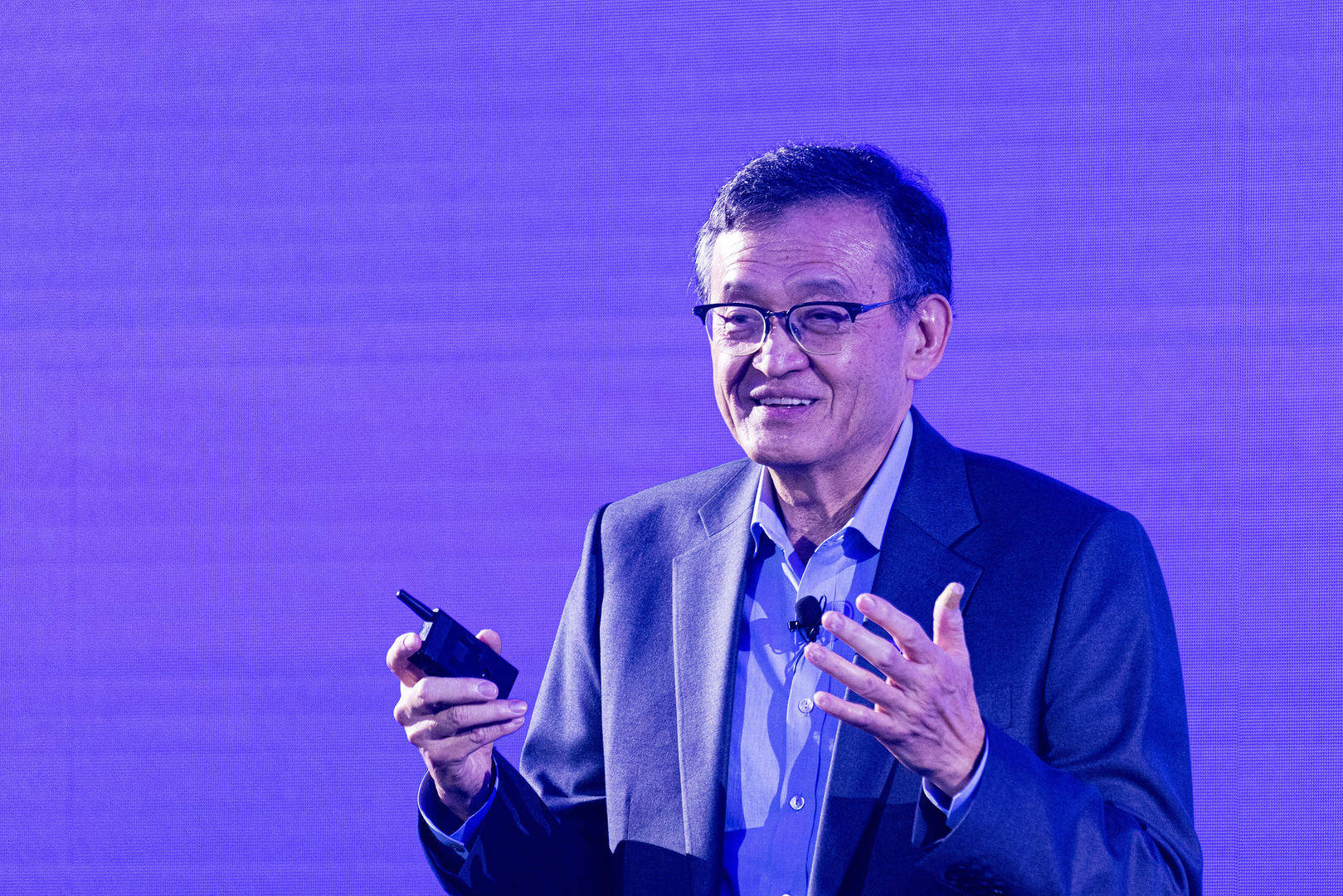
被特朗普要求辞职的英特尔CEO是何许人?他曾放弃攻读核工程博士,投资眼光独到
Sou Hu Cai Jing· 2025-08-08 12:24
Core Viewpoint - Intel's newly appointed CEO Lip-Bu Tan faces pressure from President Trump to resign due to alleged serious conflicts of interest, leading to a 3.14% drop in Intel's stock price on the same day [1][3]. Group 1: CEO Background and Experience - Lip-Bu Tan was born in Malaysia and has a diverse background, having studied in Singapore and the United States, where he has built a successful career in various industries [1][5]. - He has a strong academic and engineering background, having earned degrees in physics and nuclear engineering from prestigious institutions, but shifted his focus to business after the Three Mile Island nuclear accident in 1979 [5][6]. - Tan founded Walden International, a venture capital firm, in 1987, growing its capital from $20 million to $2 billion by 2001, earning recognition as an "Asian venture capital pioneer" [8]. Group 2: Investment and Leadership Achievements - Under Tan's leadership, Cadence Design Systems saw its stock price increase by over 3200% from 2008 to 2021, showcasing his effective management and investment strategies [8][9]. - He has made significant investments in Chinese semiconductor companies, accounting for over 40% of U.S. venture capital participation in China's semiconductor deals from 2017 to 2020 [8]. - Tan is noted for his unique combination of technical expertise, economic knowledge, and strong industry connections, which led to his appointment as Intel's CEO in March 2025 [9][11].


我,42岁,在一级市场轮回
Hu Xiu· 2025-08-05 06:05
Core Insights - The article discusses the career journey of a former investment professional who transitioned from a large investment firm to a full-time financial advisor (FA) after experiencing challenges in the investment landscape [1][2][3]. Group 1: Career Transition - The individual has over ten years of experience in various roles, including research and development, marketing, and investment, which culminated in a shift to a full-time FA role due to a lack of suitable opportunities in traditional investment firms [2][4]. - The decision to become an FA was influenced by the current contraction in the investment sector, making it difficult to find appropriate positions that matched the individual's experience and expectations [3][4]. Group 2: Investment Philosophy - The individual expresses a strong preference for engaging with founders and leveraging industry knowledge to support startups, emphasizing the importance of meaningful work over mere financial gain [5][6]. - Despite the challenges faced in the investment market, the individual believes that opportunities still exist, and the key is to be prepared to seize them when they arise [6][11]. Group 3: Current Activities and Success - In the current FA role, the individual has successfully completed one project and anticipates two more deals by the end of the year, indicating a positive start in this new phase of their career [8]. - The individual has built a proprietary database of information from industry contacts, which aids in identifying investment opportunities that align with current market demands [9][10]. Group 4: Advice for Industry Peers - The individual advises others in the investment sector to maintain a broader perspective and continuously seek knowledge and insights, as the market operates in cycles and opportunities will eventually present themselves [11].
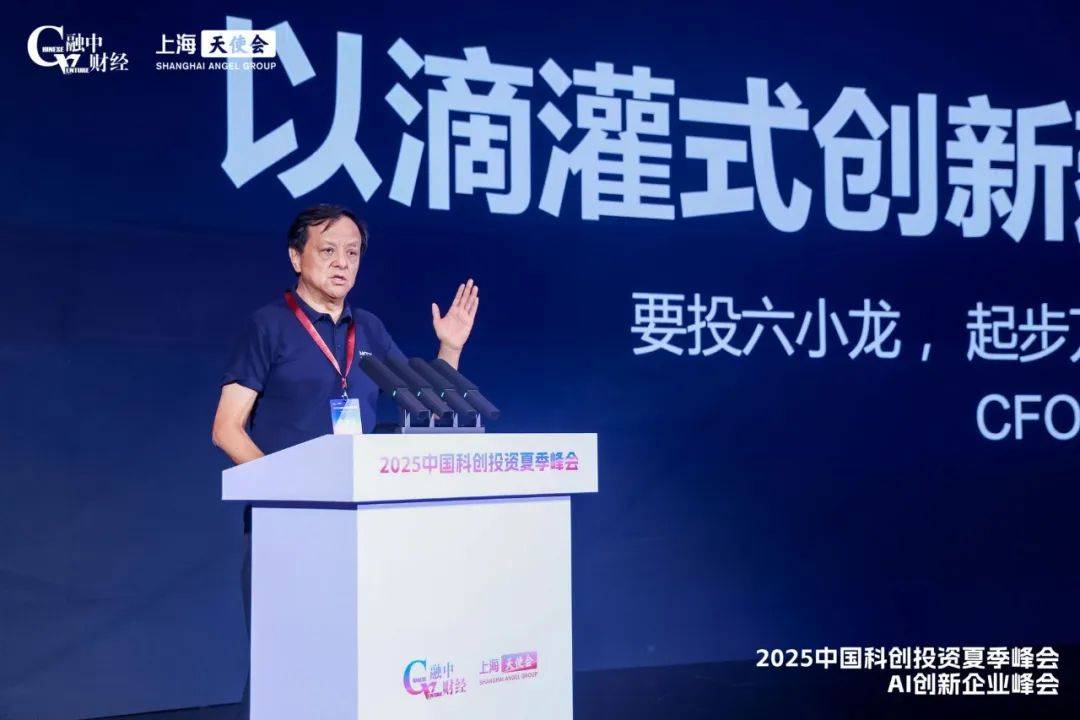
李小加:以滴灌式创新建立科创投资新蓝海
Sou Hu Cai Jing· 2025-08-04 14:01
近日,"2025中国科创夏季投资峰会——AI未来创新企业峰会"在上海盛大举行。会上,滴灌通集团创始人及主席、前港交所集团行政总裁、资深金融专家 李小加以《以滴灌式创新建立科创投资新蓝海》发表主旨演讲。 李小加指出,传统股权投资方式过于聚焦于寻找少数有望腾飞的"龙"企业,忽视了大量处于早期"虫"和中期"蛇"阶段的中小企业,这些企业虽难以成 为"龙",但却是经济的中坚力量,创造了大部分财富、税收和就业机会。他提出,应采用CFO(Cashflow Obligation,现金流权)模式,以现金流而非股权 为投资标的,通过类似债权的形式,让投资者在企业产生现金流时获得回报,同时承担风险。这种模式能帮助中小企业在早期获得资金支持,避免因资金 短缺而夭折,同时为投资者提供更广泛的回报机会。 以下为演讲内容精编: 中国创新正在迈向新的发展阶段。今天,我想谈谈投资方法的变革。如今,许多投资者都热衷于投资所谓的"六小龙"。这种投资方式本质上是传统的股权 投资,目标是找到那个有望腾飞的"龙",并从中获利。然而,我们必须认识到,"六小龙"最初也是从众多普通的"万小虫"起步的,经过层层筛选和成长, 才逐渐发展成为"千小蛇"和"百小蟒" ...
济南市机器人产业联盟揭牌,由济南工控集团牵头成立;上半年我国智能手机产量达5.63亿台丨智能制造日报
创业邦· 2025-08-03 03:09
Group 1 - The "Jinan Robot Industry Alliance" was officially established on August 1, led by Jinan Industrial Investment Holding Group, aiming to enhance technological innovation and collaboration among member companies, promote resource sharing, and strengthen the overall competitiveness of Jinan's robot industry [2] - Alphabet's venture capital firm CapitalG and Nvidia are in talks to invest in Vast Data, with the company's valuation potentially reaching $30 billion [2] - The SpaceX "Dragon" spacecraft successfully docked with the International Space Station, carrying four astronauts as part of the Crew-11 mission, marking the 11th crew rotation for the ISS [2] - In the first half of 2025, China's smartphone production reached 563 million units, a year-on-year increase of 0.5%, while total mobile phone production decreased by 4.5% to 707 million units [2]
阿尔及利亚成立首个私人风险投资共同基金
Shang Wu Bu Wang Zhan· 2025-08-01 15:42
Group 1 - Algeria's Securities Exchange Organization and Supervision Commission (COSOB) has officially approved the establishment of Afiya Investments, the first private investment fund in the form of a risk capital mutual fund (FCPR) aimed at financing startups [1] - The establishment of Afiya Investments marks a significant step in Algeria's efforts to create a new financing ecosystem, complementing traditional bank financing and providing dedicated financing services for productive investments [1] - Afiya Investments will specifically provide financing support for non-listed companies in sectors such as healthcare, pharmaceuticals, and renewable energy [1] Group 2 - COSOB is set to introduce new regulations regarding risk capital mutual investment companies (OPCR) in October 2024 [1] - According to regulatory requirements, Tell Markets must commence the actual operation of the fund within three months of its approval [1] - FCPR is part of OPCR, which acquires shares in non-listed companies and directly invests in startups and innovative projects based on the principle of shared risk and profit between investors and entrepreneurs [1]
深创投集团总裁刘苏华: 风投行业呈现七大新趋势
Zheng Quan Shi Bao Wang· 2025-07-30 23:11
Core Viewpoint - The venture capital industry is undergoing significant changes and entering a new era, driven by the backdrop of a "century-long change" [1] Group 1: New Trends in Venture Capital - The focus of innovation and entrepreneurship is shifting from model innovation to hard technology entrepreneurship, with emphasis on sectors like artificial intelligence, robotics, semiconductors, biomedicine, new generation information technology, and new energy [2] - The technology environment is facing complex challenges such as "decoupling and supply chain disruptions," impacting international cooperation and technology exchanges for Chinese tech companies [2] - There is an increasing alignment between venture capital and national strategies, with unprecedented government support for technology innovation through a series of policies enhancing the venture capital industry's development [2] - State-owned capital is becoming the main force in China's venture capital market, with state-owned limited partners (LPs) accounting for over 80% of funding, and state-owned institutions becoming more active in direct investments [2] Group 2: Economic and Technological Landscape - Investment pace is expected to align with a long-term economic growth rate of around 5%, indicating a slowdown in corporate growth due to the broader economic environment [3] - China's technological innovation is transitioning from imitation to leading innovation, with significant breakthroughs in fields such as artificial intelligence, new energy vehicles, aerospace, and biomedicine, enhancing global competitiveness [3] - Various industries are rapidly entering the artificial intelligence era, which is transforming production and lifestyle, and will likely reshape organizational structures and business logic in the near future [3]
深创投集团总裁刘苏华:风投行业呈现七大新趋势
Zheng Quan Shi Bao· 2025-07-30 19:03
Core Insights - The venture capital industry is entering a new era characterized by significant changes due to the current "century-long changes" backdrop [1] Group 1: New Trends in Venture Capital - Innovation and entrepreneurship are shifting from model innovation to hard technology entrepreneurship, focusing on areas like artificial intelligence, robotics, semiconductors, biomedicine, new-generation information technology, and new energy [2] - The technology environment is facing complex challenges such as "decoupling and disconnection," with Chinese tech companies encountering obstacles in international cooperation and supply chain risks for key technology components [2] - The alignment between venture capital and national strategies is increasing, with unprecedented government support for tech innovation through a series of policies enhancing the venture capital industry's development [2] - State-owned capital is becoming the main force in China's venture capital market, with state-owned limited partners (LPs) accounting for over 80% of funding, and state-owned institutions becoming more active in direct investments [2] Group 2: Economic and Technological Shifts - Investment pace is synchronizing with the economic growth center, with expectations of long-term economic growth around 5%, leading to a slowdown in corporate growth rates [3] - China's technological innovation is transitioning from imitation to leading innovation, with significant breakthroughs in fields like artificial intelligence, new energy vehicles, aerospace, and biomedicine, enhancing global competitiveness [3] - Various industries are rapidly entering the artificial intelligence era, which is transforming production, lifestyle, and business logic, indicating that effective use of AI will determine future winners [3]
信任正在吞噬流量经济?
3 6 Ke· 2025-07-26 01:28
Group 1 - The core argument presented is that the value of media is significantly underestimated, as it serves as a foundational infrastructure for connection rather than merely a tool for information dissemination [3][6][24] - Media's role has evolved to become a "data asset" and a "reputation generator," influencing consumer decisions and establishing professional knowledge [3][4] - The cost of content creation has decreased, while the value of attention and trust has increased, leading to a shift towards what is termed the "attention economy" [4][21] Group 2 - The concept of "audience partners" is introduced, emphasizing the importance of individuals who can attract users and build brand recognition in the entrepreneurial landscape [11][12] - Traditional media relies on institutional authority for trust, while new media builds trust through transparency and direct interaction with individuals [7][16] - The decline in trust towards traditional institutions is attributed to their shift in focus from serving users to maintaining their own existence [17][18] Group 3 - The emergence of "reality entrepreneurs" is highlighted, who redefine reality through technology and content, influencing societal values and worldviews [26][28] - Turpentine, a hybrid model of media and investment, exemplifies a new business ecosystem that leverages media content to build trust and data assets for early-stage investments [33][36] - This model represents a shift from a product-driven era to a trust-driven era, indicating a potential new standard for content companies and media-driven investment firms [37]
Allotment of Shares under DRIS
Globenewswire· 2025-07-25 13:50
Core Points - The Company has allotted 1,474,949 Ordinary Shares under its Dividend Reinvestment Scheme (DRIS) to shareholders who opted for shares instead of cash dividends [2][4] - The allotment price for the shares was set at 35.06 pence per Ordinary Share, based on the last reported ex-dividend net asset value as of July 11, 2025 [3] - Following this issuance, the total number of Ordinary Shares in circulation will be 372,633,288, with each share carrying one vote [5] Shareholder Details - Justin Ward, a Person Discharging Managerial Responsibility (PDMR), was allotted 1,895 shares, bringing his total holding to 55,052 shares [4] - Elizabeth Ward, closely associated with the PDMR, received 739 shares, resulting in a total holding of 21,466 shares, which represents 0.02% of the issued share capital [4] Regulatory Compliance - The Company has applied for the new shares to be admitted to the Official List of the Financial Conduct Authority and for trading on the London Stock Exchange, with dealings expected to commence around August 1, 2025 [4]
科技媒体,现在进化成什么样子了?
虎嗅APP· 2025-07-25 13:31
Core Viewpoint - The article discusses the evolution of technology and business media driven by the rise of personal brands and the creation of a new "Republic of Letters," where individuals share insights and knowledge across borders, forming a decentralized intellectual community [4][26]. Group 1: Evolution of Media - The emergence of personal storytelling and narrative construction has become increasingly valuable in a world overwhelmed by information and rapid technological advancement [3][5]. - The acquisition of the podcast brand Turpentine VC by a16z highlights the growing importance of personalized media and storytelling in venture capital [5][7]. - The article emphasizes that the intersection of investment, networking, and media has become a focal point for many in the tech industry, with figures like Erik Torenberg leading this trend [7]. Group 2: The Rise of Blogs and Podcasts - The blogosphere has been a significant platform for technology discourse since its inception, with influential figures like Paul Graham and Marc Andreessen contributing to its growth [16][17]. - The COVID-19 pandemic catalyzed a surge in startup media, with many individuals starting their own blogs and podcasts to share insights and narratives [22][23]. - The article notes that podcast networks have gained traction, with established shows expanding into new formats and themes, reflecting the growing demand for specialized content [24][42]. Group 3: Characteristics of the New Intellectual Community - The new "Republic of Letters" is characterized by a decentralized approach to knowledge sharing, emphasizing insight over credentials and fostering a distrust of traditional institutions [30][31]. - The article draws parallels between historical intellectual communities and the current tech landscape, highlighting the commitment to producing new knowledge and the importance of meritocratic ideas [29][31]. - The emergence of various platforms, including blogs, podcasts, and social media, has created a vibrant ecosystem for knowledge production and sharing [36][37]. Group 4: The Importance of Personal Narratives - The article emphasizes the significance of personal narratives in shaping the tech industry's discourse, with creators encouraged to share their unique perspectives and insights [49][50]. - The concept of "hyperlegibility" is introduced, suggesting that clarity and distinctiveness in communication are essential for standing out in a crowded information landscape [51][52]. - The article advocates for the act of creation as a means of personal growth, encouraging individuals to engage in storytelling and knowledge sharing, regardless of audience size [59][60].