硬科技创业

Search documents
【申报入口】2026年《财富》中国40位40岁以下的商界精英
财富FORTUNE· 2026-03-24 13:08
Group 1 - The article emphasizes the importance of young business leaders under 40 years old as key players in shaping the future of commerce in China [2][3] - It highlights that these leaders are driving innovation through new business models and technological advancements, such as artificial intelligence and hard tech entrepreneurship, which are redefining industry standards [3] - The article announces the 16th edition of the "Fortune" list of 40 under 40 Chinese business elites, aiming to recognize those who drive growth through innovation and social responsibility [3] Group 2 - The selection process involves independent research and evaluation by the editorial team after candidates submit their applications [4] - Candidates must be founders or co-founders of companies with strong social responsibility and innovative products, and must be under 40 years old at the time of the list's publication [8] - The application requires basic information about the candidate and their company, including business model, company size, and industry position, along with a focus on technological innovation, business model innovation, or social impact [8]

真正的未来,由青年定义 | 创业邦2026「新青年创投榜」调研启动!
创业邦· 2026-03-13 04:11
Core Insights - The article highlights the emergence of young entrepreneurs and investors in the hard technology sector, emphasizing their role in addressing complex problems and driving innovation [2][3]. Group 1: Young Entrepreneurs - Peter Steinberger, an Austrian developer, created PSPDFKit, a PDF rendering tool, which has become a crucial component in thousands of applications globally [2]. - The "35 Under 35 Entrepreneur Pioneers" list by Chuangyebang has consistently recognized that true innovation often occurs in quiet persistence rather than in the spotlight [2]. - By 2025, the average funding for the 30 young entrepreneurs listed reached nearly 400 million, with all having completed at least two rounds of financing, indicating a robust entrepreneurial ecosystem [2]. Group 2: Young Investors - The "40 Under 40 Investors" list features investors with an average age of 37.5 years, with 60% holding partner-level positions, showcasing a young and dynamic investment landscape [3]. - A significant 72.5% of these investors focus on early-stage projects, while 82.5% invest in growth-stage companies, reflecting a commitment to nurturing innovation from the ground up [3]. - Over the past three years, their exit cases have yielded an average return of 11.7 times, underscoring the value of long-term engagement and professional judgment in investment [3]. Group 3: Emerging Trends - The article identifies key areas of innovation led by young entrepreneurs and investors, including AI applications, humanoid robots, automotive chips, commercial aerospace, controllable nuclear fusion, synthetic biology, 6G communication, solid-state batteries, quantum encryption, and brain-computer interfaces [3]. - These sectors are characterized by a shift away from concept financing towards building real barriers through products, technology, and customer trust [3].

登上春晚!98年小伙造的机器人火爆出圈,诞生于顺义别墅,公司曾三次差点死掉!
混沌学园· 2026-02-17 02:36
Core Viewpoint - The article discusses the entrepreneurial journey of Songyan Power, a startup in the humanoid robot sector, highlighting its challenges and breakthroughs in funding, technology, and commercialization [5][32]. Funding Challenges - In September 2023, the founder faced significant difficulties in securing funding due to the team's lack of prestigious backgrounds and industry experience, which made investors skeptical about their ability to develop humanoid robots [9][10]. - The team initially self-funded 1 million RMB to create a demo robot, which eventually attracted interest from investors, leading to a seed round financing of 7.6 million RMB [14]. - After securing initial funding, the company quickly progressed from a prototype to a functional humanoid robot, which helped them raise an additional 25 million RMB [17]. Technical and Talent Bottlenecks - The company faced a critical challenge when it encountered technical and talent bottlenecks, leading to a cash burn rate of 3 million RMB per month and a realization that their cash reserves would only last for ten months [19][20]. - The founder recognized the need for organizational restructuring and decided to pivot towards deep reinforcement learning to enhance their technology, despite the high demand and low supply of qualified engineers in this field [25][26]. - By focusing on nurturing potential talent rather than hiring established experts, the company successfully built a capable team that enabled them to achieve significant technological advancements [27][31]. Commercialization Struggles - Entering 2025, the company faced a new challenge in commercialization, lacking a dedicated marketing and sales team, which hindered their visibility in a competitive market [32][33]. - To break through, the company planned a marketing strategy centered around a high-profile demo of a backflip, which showcased their technical capabilities and attracted media attention [36][38]. - Following the successful marketing campaign, the company received numerous sales inquiries, leading to over 1,000 orders for their humanoid robots, effectively overcoming their commercialization challenges [41][42]. Key Lessons - The company learned that demonstrating tangible products is more effective than merely discussing business logic when it comes to gaining investor trust [44]. - It emphasized the importance of identifying and nurturing potential talent rather than relying solely on a high-profile team to overcome technical challenges [44]. - The experience highlighted the necessity of integrating marketing and sales strategies into a technology-driven company to ensure sustainable growth and visibility in the market [44].

第62期服务民企365·新宁商沙龙举行 推动OPC赛道从“软服务”迈向“硬科技”
Nan Jing Ri Bao· 2026-02-09 03:03
Group 1 - The rise of "One Person Company" (OPC) in Nanjing began last year, with a focus on upgrading from "soft services" to "hard technology" in entrepreneurship [1] - The intelligent hardware sector is identified as a golden opportunity for OPC startups, emphasizing the importance of core competitiveness and risk avoidance for success [1] - Nanjing's various districts have incorporated OPC into the core of the "Artificial Intelligence+" initiative, aiming to create an entrepreneurial ecosystem for single-person companies [1] Group 2 - Nanjing has significant advantages for developing OPC, aligning with the city's goal of fostering an innovative private economy and transforming technological talent into practical applications [2] - The local software and information services industry, a trillion-level industrial cluster, is well-suited to support the OPC model [2] - Nanjing's private entrepreneurs are encouraged to leverage OPC as a means to adapt and evolve, seizing development opportunities to drive deep changes in their respective industries [2]
上海985,正在盛产IPO
投资界· 2026-01-13 07:49
Core Viewpoint - The article highlights the remarkable rise of companies associated with Shanghai Jiao Tong University (SJTU) in the hard technology sector, evidenced by three companies achieving a market capitalization exceeding 100 billion HKD within a month, showcasing the university's significant influence in fostering innovation and entrepreneurship in China [2][9]. Group 1: Recent IPOs - On January 9, 2023, the AI company MiniMax went public in Hong Kong, achieving a closing price increase of 109.09% on its first day, with a market capitalization surpassing 1000 billion HKD [3]. - Wallran Technology also debuted on the Hong Kong Stock Exchange shortly before MiniMax, with its market value exceeding 1000 billion HKD after an opening surge of over 80% [5]. - Mu Xi, another company linked to SJTU, had already listed on the STAR Market, reaching a peak market value of 3500 billion HKD with a first-day increase of 692.95% [7]. Group 2: Influence of SJTU - The founders of these companies, including Wallran Technology and Mu Xi, have strong ties to SJTU, with key leadership positions held by alumni and faculty members [7][10]. - SJTU has produced over 400,000 talented individuals, contributing significantly to China's technological advancements and innovation [10]. - The university's emphasis on high-level education in fields such as semiconductor technology and AI has positioned its alumni as leaders in the current tech wave [10]. Group 3: Investment and Support - The SJTU Future Industry Mother Fund was established to support technology projects emerging from the university, successfully investing in Wallran Technology, Mu Xi, and MiniMax [12]. - The fund's model of "mother fund + direct investment" has nurtured several potential unicorns, indicating a robust support system for startups [12]. - The collaboration between the university and the city of Shanghai has created a conducive environment for tech companies, with significant investments from local government entities [14]. Group 4: Broader Implications - The success of these SJTU-affiliated companies reflects a larger trend in Shanghai, where the city has become a hub for tech innovation, attracting top talent and fostering a vibrant ecosystem [13]. - The article suggests that other cities with universities should take note of this model, as retaining talent is crucial for attracting businesses and fostering industrial growth [15].

松禾厉伟:登顶珠峰前果断投资壁仞,愿助力更多中国科技企业勇攀高峰
IPO早知道· 2026-01-02 03:24
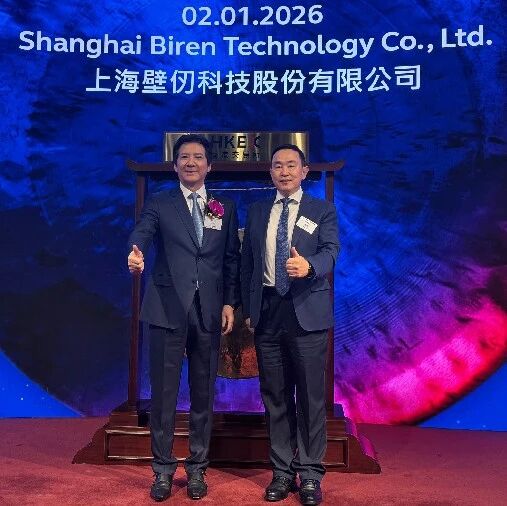
Core Viewpoint - Wallran Technology has officially listed on the Hong Kong Stock Exchange, marking a significant milestone for the domestic GPU sector and indicating its accelerated rise in the market [3][12]. Investment Strategy - Songhe Capital emphasizes "investing in people over projects," highlighting the strategic vision and execution capabilities of Zhang Wen, the founder of Wallran Technology [5][6]. - The firm has consistently supported Wallran through various funding rounds, demonstrating a commitment to accompany the company through its entire lifecycle from technology development to market entry and IPO [8]. Market Opportunity - 2019 was identified as a golden investment period for the GPU sector, characterized by a strong demand in China and a significant opportunity for domestic manufacturers following Huawei's inclusion on the entity list [7]. - The domestic GPU market is expected to evolve through three stages: "usable," "usable and optimized," and "leading," with the current phase being a critical transition from "usable" to "usable and optimized" [12][13]. Financial Performance - Wallran Technology's revenue surged from 62.03 million yuan in 2023 to 337 million yuan in 2024, reflecting a staggering year-on-year growth of 443% [14]. - The company has secured approximately 820 million yuan in unfulfilled orders and has a total sales contract reserve of 1.24 billion yuan, indicating robust business expansion [14]. Future Outlook - The successful IPO of Wallran Technology not only validates the capital market's recognition of the GPU sector but also positions the company for accelerated growth [15]. - Songhe Capital aims to support more hard-tech enterprises in the AI and GPU waves, anticipating that domestic GPUs will transition from "replacement" to "leadership" in the global market over the next 5-10 years [15].
直面掌门人 | 健信超导许建益:硬科技创业需守初心育恒心
Shang Hai Zheng Quan Bao· 2025-12-24 07:59
Core Insights - The core viewpoint of the articles emphasizes the importance of domestic production of MRI equipment, particularly focusing on the self-sufficiency of key components like superconducting magnets and permanent magnets, which are crucial for overcoming industry bottlenecks [1][4]. Company Overview - Jianxin Superconducting has achieved significant technological breakthroughs and large-scale manufacturing in core components such as superconducting magnets and permanent magnets, becoming one of the earliest manufacturers in China to produce high-field superconducting magnets on a large scale and the largest global supplier of MRI equipment permanent magnets [1][4]. - The company has developed a diverse product matrix that includes 1.5T zero-evaporation superconducting magnets, 1.5T liquid helium-free superconducting magnets, and 3.0T zero-evaporation superconducting magnets [4]. Market Position and Strategy - The company aims to make MRI scans more affordable, reducing costs from thousands of yuan to hundreds, and has integrated these services into medical insurance, thereby enhancing access to quality healthcare [1][3]. - Jianxin Superconducting has established deep collaborations with leading manufacturers like Wandong Medical and Shenzhen Anke, ensuring stable supply of 1.5T products and gradually increasing supply of 3.0T products to rural hospitals [6]. Technological Innovation - The company has mastered 13 core technologies with independent intellectual property rights, covering areas such as electromagnetic fields, cryogenics, finite element analysis, structural design, intelligent control, and large-scale manufacturing processes [4]. - Jianxin Superconducting has successfully developed the world's first 1.5T liquid helium-free superconducting magnet, which does not require liquid helium and can automatically recover after quenching, making it suitable for emerging markets with limited maintenance capabilities [6][7]. Global Expansion - The company is actively expanding its overseas market presence, with over 50% of its MRI equipment products sold internationally. It has established local service networks in regions like India and Italy to address the affordability and usability issues in international markets [6][7]. - Jianxin Superconducting's global layout and technological innovations are expected to significantly reduce the overseas delivery and maintenance costs of superconducting magnets, thereby supporting leading manufacturers in promoting their products globally [7]. Long-term Vision - The company emphasizes a long-term commitment to technological innovation and market needs, focusing on core business areas while exploring the feasibility of applying superconducting technology in industrial sectors like wind power and power transmission [9]. - Jianxin Superconducting plans to invest in projects aimed at producing 600 sets of liquid helium-free superconducting magnets annually and upgrading high-field superconducting magnet production, reinforcing its commitment to sustainable growth and innovation in the healthcare sector [9].

吴世春:星河动力,从一张图纸到160亿估值的商业奇迹
创业家· 2025-12-14 10:01
Core Insights - The article emphasizes the importance of believing in and supporting innovative projects, particularly in the commercial aerospace sector, as exemplified by the success story of Xinghe Power [1][30]. Group 1: Investment Philosophy - Investment is fundamentally about people, and the commitment to a project is crucial, as demonstrated by the founders of Xinghe Power who had relevant experience and a strong determination to succeed [8][9]. - The investment journey is characterized by long-term commitment, with the company having supported Xinghe Power through multiple funding rounds from 2017 to 2025, culminating in a D round valuation of 24 billion [18][28]. Group 2: Company Development - Xinghe Power started as a "three-no" company (no company, no product, no revenue) but has evolved into a significant player in the commercial aerospace industry, drawing parallels to SpaceX [6][10]. - The company successfully launched its "Vesta-1" rocket and has developed the reusable "Cangqiong-50" engine, marking it as the first domestic commercial rocket company to achieve a closed-loop business model [24][25]. Group 3: Market Potential - The commercial aerospace sector is highlighted as a lucrative field, with Xinghe Power having launched 85 satellites and achieving a valuation increase to between 150 billion and 160 billion [25][20]. - The article notes that the success of top projects in this sector often leads to significant funding opportunities, reinforcing the attractiveness of commercial aerospace investments [20][26]. Group 4: Future Outlook - Xinghe Power is preparing for an IPO, which could position it as the first publicly listed commercial aerospace company in China, showcasing the growth potential within the industry [28]. - The article concludes with a call for collaboration and investment in promising projects, indicating a proactive approach to fostering innovation in the technology and manufacturing sectors [36][38].

“未来[士]界”论坛展望2026:硬科技创业迈向产业深度融合新阶段
Guo Ji Jin Rong Bao· 2025-12-01 08:42
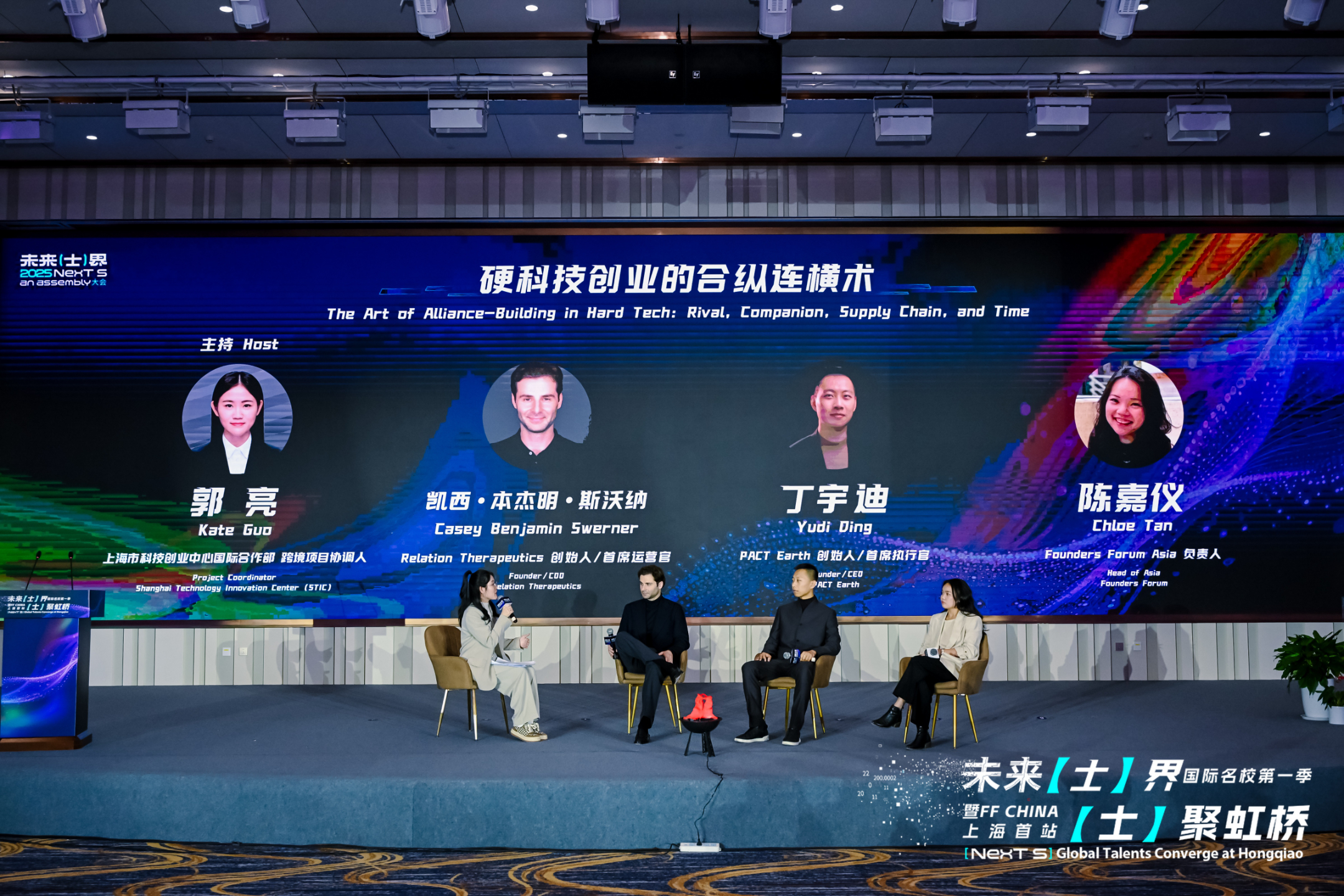
Core Insights - The integration of artificial intelligence and integrated circuits is expected to drive interdisciplinary entrepreneurial trends by 2026, with embodied intelligent robots relying on high-performance, low-power chips for new applications in home services and industrial collaboration [1] - The "Future [士]界 [士]聚虹桥" International Hard Technology Entrepreneurship Forum highlighted the need for deep integration of technology and industry to accelerate innovation and empower industries [1][6] Industry Trends - The international competition landscape is being reshaped, with high-tech sectors being the core arena for competition [1] - The forum emphasized that hard technology entrepreneurship will increasingly focus on the combination of technology with real industrial scenarios by 2026, requiring entrepreneurs to possess both R&D capabilities and collaborative skills [7] Company Developments - Qianxun Future, founded in 2017, specializes in the development and manufacturing of AI-based non-contact high-speed scanning robots, aiming to redefine the digital transformation of physical documents [8] - The company’s products are designed to outperform traditional scanning devices significantly, achieving speeds up to dozens of times faster than conventional equipment [8] - Qianxun Future's market strategy includes three tiers: a hardware market estimated at 20 billion, a data processing and service market at 50 billion, and an ecosystem market centered on "knowledge interconnection" projected to reach 500 billion [9] Global Interest - International entrepreneurs expressed strong interest in the Chinese market, with companies like Relation Therapeutics and Vertus Energy looking to collaborate with Chinese firms to leverage advancements in biotechnology and renewable energy [10]

大疆背后的大佬,要去IPO
创业家· 2025-11-22 09:52
Core Viewpoint - The article discusses the upcoming IPO of Xidi Zhijia, a company founded by Li Zexiang, known as the "father of DJI," focusing on autonomous mining trucks, highlighting both the potential and challenges faced by the company in the competitive landscape of autonomous driving [4][5][21]. Group 1: Company Background - Li Zexiang, a prominent figure in the tech industry, has a history of nurturing successful startups, including DJI, which dominates over 70% of the global drone market [10][11]. - Xidi Zhijia aims to become the first publicly listed company in the autonomous mining truck sector, leveraging Li's entrepreneurial legacy and expertise [4][14]. - The company has developed China's first fully autonomous electric mining truck fleet and has achieved significant operational milestones, including a revenue increase from 31.06 million yuan in 2022 to 410 million yuan in 2024 [14][15]. Group 2: Financial Performance - Despite impressive growth, Xidi Zhijia has faced cumulative losses exceeding 1.1 billion yuan over three years, with losses of 263 million yuan, 255 million yuan, and 581 million yuan in 2022, 2023, and 2024, respectively [18][19]. - The company has raised a total of 1.546 billion yuan across eight funding rounds, with a valuation of 9 billion yuan following the C+ round in 2024 [15][16]. - As of the end of 2024, Xidi Zhijia had cash reserves of only 306 million yuan against total liabilities exceeding 1 billion yuan, indicating a tight cash flow situation [19]. Group 3: Market Position and Challenges - Xidi Zhijia holds a 16.8% market share in the commercial autonomous vehicle sector, positioning itself as a leader in the autonomous mining truck market [14][15]. - The company faces significant competition from established players and new entrants, including Huawei, which has also entered the autonomous mining solutions market [20][21]. - The impending IPO is critical for Xidi Zhijia to secure necessary funding for continued operations and to meet a contractual obligation to go public by February 5, 2026, or face potential buyback demands from investors [18][19][21].