
核聚变能源

Search documents
2025电力设备及新能源行业报告:核聚变太阳能量的地球复刻,产业化进程有
Sou Hu Cai Jing· 2025-10-13 04:08
Core Insights - The report discusses the acceleration of nuclear fusion technology, which is seen as a potential ultimate solution to the global energy crisis, with significant advancements expected by 2025 [1][2]. Group 1: Nuclear Fusion Overview - Controlled nuclear fusion aims to replicate the sun's energy production on Earth by fusing isotopes of hydrogen, deuterium, and tritium, releasing substantial energy [1][2]. - The process requires three critical conditions: temperatures exceeding 100 million degrees Celsius, sufficient plasma density, and a stable energy confinement time, collectively known as the "fusion triple product" [1][20]. Group 2: Advantages of Nuclear Fusion - Nuclear fusion offers significant advantages over traditional energy sources, including zero greenhouse gas emissions and minimal long-lived radioactive waste, making it an environmentally friendly option [2][29]. - The energy density of nuclear fusion is extremely high; for instance, one liter of seawater contains enough deuterium to produce energy equivalent to 300 liters of gasoline, indicating that fusion could provide energy for over 10 billion years [2][29]. Group 3: Technological Developments - The global nuclear fusion research landscape is divided into two main technological routes: magnetic confinement and inertial confinement, with notable advancements in both areas [2][3]. - The ITER project, a collaborative international effort, aims to achieve a fusion energy gain greater than 10 by 2034, while the SPARC project in the U.S. plans to produce plasma by 2026 and achieve net energy gain by 2027 [3][4]. Group 4: China's Nuclear Fusion Initiatives - China has established a diverse development framework in nuclear fusion, involving state research institutes, universities, and private enterprises, with significant projects like the BEST project and the "Spark" project underway [4][5]. - The BEST project, set to begin assembly in May 2025, aims to achieve net energy gain by 2027, while the "Spark" project targets 100 megawatts of power by 2030 [4][5]. Group 5: Future Prospects - The transition from experimental to demonstration and commercial fusion reactors is underway, with clear plans from major players like China, the U.S., and the EU [5]. - If technological breakthroughs continue, nuclear fusion could become a primary energy source in the latter half of the 21st century, supporting global carbon neutrality goals [5].


可控核聚变催生万亿级新赛道商业化前夜基金提前“卡位”
Zheng Quan Shi Bao· 2025-10-12 22:01
Core Insights - The construction of China's self-developed nuclear fusion device (BEST) has achieved a key breakthrough with the successful installation of the first critical component, marking a new phase in the main engineering construction [1] - The nuclear fusion index reached a historical high on October 10, with a cumulative increase of 116.67% since last year's "9·24" market rally, and an annual increase of 81.61% [1] - The global nuclear fusion market is expected to exceed $40 trillion by 2050, with the number of nuclear fusion companies projected to grow from 33 in 2022 to 45 in 2024 [3][4] Industry Developments - The rapid advancements in high-temperature superconducting materials and artificial intelligence are accelerating the realization of controllable nuclear fusion, which is seen as a new battleground for major powers [2] - Controllable nuclear fusion is viewed as a key path to achieving clean, safe, and nearly limitless energy, with advantages over traditional nuclear fission, including higher energy density and lower radioactive waste [2] - The past five years have seen significant investment in controllable nuclear fusion, with annual investments exceeding 10 billion yuan, indicating heightened capital interest [3] Market Opportunities - The potential for controllable nuclear fusion to replace other forms of energy, except hydropower, positions it as a market with a value exceeding trillions of yuan [6] - Investment opportunities are emerging in the nuclear fusion sector, particularly in upstream components and key projects in cities like Hefei and Chengdu [6][7] - The materials segment, especially in magnets and first walls, is identified as having the highest value within the controllable nuclear fusion industry chain [7] Future Outlook - The period from 2025 to 2030 is anticipated to be crucial for the construction of experimental fusion reactors, with commercial viability expected by 2050 [3] - The economic feasibility of expanding commercial nuclear fusion power plants is critical, as current development costs are high and need to be significantly reduced [5] - The nuclear fusion industry is in a phase of parallel technological routes, with various countries making breakthroughs in magnetic confinement and inertial confinement technologies [4]
造太阳的人 ——记核工业西物院新一代人造太阳团队
Jing Ji Ri Bao· 2025-10-11 22:14
Core Insights - The article discusses the advancements in nuclear fusion research at the Southwest Institute of Physics, focusing on the development of the "artificial sun" project, which aims to replicate the sun's energy production process on Earth [1][3][4]. Group 1: Technological Breakthroughs - The new generation of the artificial sun, "China Circulation No. 3," achieved significant milestones, including reaching an atomic nucleus temperature of 117 million degrees Celsius and an electron temperature of 160 million degrees Celsius [4]. - The team has developed several innovative technologies, such as high-power microwave cyclotron tubes and a high-power neutral beam injection heating system, which are now operational [4][6]. - The team has also introduced a new method to enhance core energy confinement, showcasing the progress in domestic technology development [4]. Group 2: Team Dynamics and Collaboration - The research team, with an average age of 35, emphasizes collaboration and knowledge sharing, which has been crucial in overcoming challenges and achieving breakthroughs [2][10]. - The team members engage in regular discussions and brainstorming sessions, leading to the rapid iteration of experimental plans, resulting in over a thousand iterations in just 120 days [9]. - The collaborative spirit is highlighted by the notion that every team member plays a vital role, contributing to the overall success of the project [10][11]. Group 3: Historical Context and Development - The journey of the artificial sun project began in 2004, with initial reliance on foreign technology, but has since transitioned to a focus on domestic innovation and self-reliance [4][5]. - The development of the high-power microwave cyclotron tube involved extensive research and numerous trials over four years, reflecting the team's perseverance and commitment to innovation [5][6]. - The legacy of past researchers, such as the late expert Cao Jianyong, continues to influence current developments, demonstrating the importance of foundational work in advancing the project [11].
城记 | 一周聚焦:抢抓新兴赛道,长三角未来产业布局“快马加鞭”
Xin Hua Cai Jing· 2025-10-11 09:25
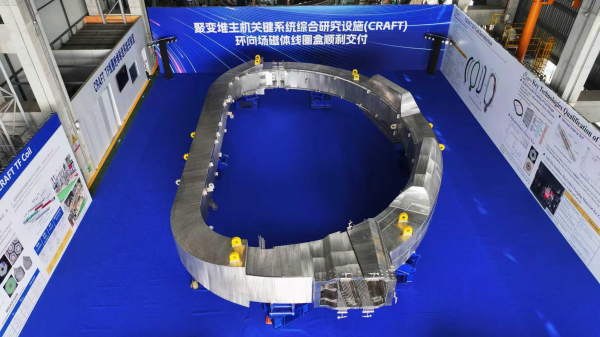
Core Insights - The article emphasizes the importance of cultivating "future industries" as a strategic pivot for leading technological innovation and reshaping industrial patterns, particularly in the context of the ongoing technological revolution and industrial transformation [1] Group 1: Future Industries Development - The Yangtze River Delta region has emerged as a leader in technological innovation in China over the past decade, with a collaborative development model among the three provinces and one city laying a unique foundation for future industry cultivation [1] - Shanghai has introduced several measures to accelerate the innovation of frontier technologies and the cultivation of future industries, aiming to establish itself as a globally influential hub for future industries [5][6] Group 2: Key Technological Advancements - The successful delivery of the ring-shaped magnetic coil box for the CRAFT project marks a significant step towards the commercialization of fusion energy, with the component being the largest of its kind globally, measuring 21m x 12m and weighing 400 tons [2] - The launch of the Kexin Computing Power Scheduling Platform in Wuxi, which manages approximately 7000P of operational computing resources, aims to provide standardized and efficient computing power services to enterprises [3][4] Group 3: Strategic Initiatives and Goals - Shanghai's "Several Measures" aim to systematically and proactively cultivate future industries, targeting the establishment of around 20 leading enterprises in future industry ecosystems by 2027 and fostering several strategic emerging industries by 2030 [6] - The focus areas for development include future manufacturing, information, materials, energy, space, and health, with specific support for technologies such as brain-computer interfaces, quantum computing, and 6G [6]
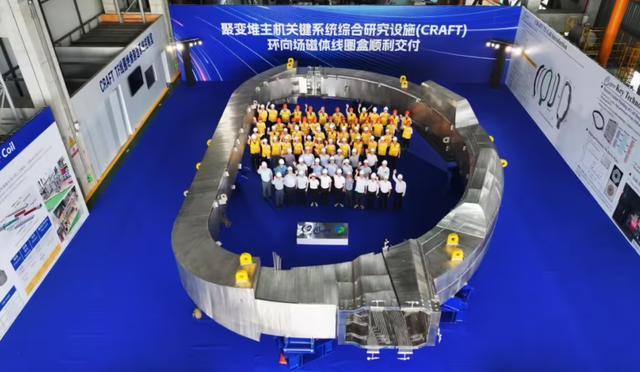
全球最大环向场磁体线圈盒交付,我国聚变能源商业化迈出关键一步
Huan Qiu Wang Zi Xun· 2025-10-11 04:44
Core Insights - The Chinese Academy of Sciences' Hefei Institute of Plasma Physics has achieved a significant breakthrough with the delivery of the world's largest toroidal field (TF) magnet coil box, weighing 400 tons, which is crucial for the commercial development of fusion energy [1][3][4] Group 1: Project Details - The TF coil box measures 21 meters by 12 meters, with a maximum welding thickness exceeding 360 millimeters, and its weight is double that of similar components used in the International Thermonuclear Experimental Reactor (ITER) [3] - The successful delivery of the TF coil box signifies that China has mastered several core technologies in high-end equipment manufacturing for fusion devices, establishing a comprehensive industrial supply chain covering design, processing, inspection, and transportation [3] Group 2: Technological Impact - The CRAFT project aims to tackle key systems and core technologies for fusion reactors, providing essential technical support for the design, construction, and operation of future fusion reactors [4] - The technologies developed during the manufacturing of the TF coil box, such as large precision component manufacturing and extreme environment material applications, are expected to benefit other high-end manufacturing sectors, including aerospace, energy equipment, and marine engineering [3]
【科技日报】世界最大环向场磁体线圈盒在安徽合肥交付
Ke Ji Ri Bao· 2025-10-11 01:41
Core Insights - The successful delivery of the toroidal field coil box marks a significant step towards the commercialization of fusion energy [2] - The technology developed for the coil box has potential applications in aerospace, energy equipment, and marine engineering sectors [2] Group 1: Project Development - The toroidal field coil box, measuring 21 meters by 12 meters and weighing 400 tons, is the largest of its kind in the world, exceeding the dimensions of similar components in the International Thermonuclear Experimental Reactor (ITER) by more than 1.2 times and weighing about twice as much [1] - The project team took over 5 years to overcome multiple key technical challenges, including the domestication of low-temperature stainless steel 316LMn and the development of large-scale 316LN forgings and ultra-thick steel plates [1] - Advanced manufacturing techniques were developed, such as a combination of laser welding for thick materials and phased array non-destructive testing, to ensure the precision of the coil box welding [1] Group 2: Material and Technology Innovations - The coil box is constructed from ultra-low temperature austenitic stainless steel 316LN and 316LMn materials, showcasing advancements in material science for fusion applications [1] - Precision forming technology for 30-meter-long cooling pipes and the use of low-temperature resin with brazing for pipe installation were also developed, enhancing the overall assembly process [1]
可控核聚变“引燃”哈焊华通股价,大摩、高盛提前“埋伏”
Huan Qiu Lao Hu Cai Jing· 2025-10-10 11:49
Core Viewpoint - The A-share market is experiencing a surge in the controlled nuclear fusion concept, driven by significant advancements in the field and the involvement of foreign capital in related stocks [1][2][3]. Group 1: Market Performance - The controlled nuclear fusion sector has seen notable stock price increases, with Ha Welding Huaton reaching a historical high of 55.31 yuan per share, marking a 186.54% increase in 2025 [1][3]. - Other stocks in the sector, such as Hezhong Intelligent, Antai Technology, and China Nuclear Construction, have also shown significant gains [1][3]. - Ha Welding Huaton's market capitalization is currently 9.054 billion yuan [3]. Group 2: Key Developments - The BEST project in Hefei achieved a critical breakthrough with the successful delivery of the Dewar base, marking a new phase in the project [3]. - The BEST project aims to demonstrate fusion energy generation by 2025, with the potential to light the first lamp by 2030 [3][10]. Group 3: Foreign Investment - Ha Welding Huaton has attracted significant foreign investment, with major institutions like Barclays, Morgan Stanley, Goldman Sachs, and UBS entering its top ten circulating shareholders [1][6]. - The company has seen a "big turnover" in its top shareholders, with seven new entrants, indicating strong foreign interest [6]. Group 4: Financial Performance - Ha Welding Huaton's revenue for 2022-2024 is projected at 1.571 billion, 1.579 billion, and 1.573 billion yuan, with net profits of 46.05 million, 57.99 million, and 40.48 million yuan respectively [4]. - In the first half of 2025, the company reported a revenue of 806 million yuan, a year-on-year increase of 12.89%, but a net profit decline of 14.01% [4]. Group 5: Broader Industry Trends - The global fusion industry has seen explosive growth, with total investments rising from 1.9 billion USD in 2021 to 9.7 billion USD by 2025 [9]. - The Chinese fusion energy company has received significant investments, totaling approximately 11.492 billion yuan from major state-owned enterprises [9]. - Optimistic outlooks for the controlled nuclear fusion sector are supported by increasing policy clarity, enhanced financing, and accelerated construction of facilities [10].
可控核聚变撬动万亿蓝海!这5大“终极能源”龙头,比寒武纪更具爆发
Xin Lang Cai Jing· 2025-10-10 09:28
Core Insights - The recent breakthrough in China's compact fusion energy experimental device (BEST) marks a significant advancement, paving the way for the world's first fusion energy demonstration in 2027 [3] - Controlled nuclear fusion is considered the "ultimate energy solution," comparable to historical revolutions like the steam engine and electrification, with the potential to transform the global energy landscape [3] - The fusion reactor market is projected to be a trillion-dollar opportunity, with upstream materials and key components expected to benefit first [3] Company Highlights - **Ingeteam**: This company has been providing critical power supply services for national fusion projects, covering essential systems such as magnetic field and heating power supplies, successfully applied in multiple key national projects [4] - **Xiamen Tungsten**: The first domestic company to develop and produce ITER filter tungsten probe components, possessing precision processing capabilities for large-scale ITER-grade tungsten materials, supplying core tungsten components for various fusion devices [5] - **China Nuclear Technology**: Supplies 80% of the vacuum sealing valves and connectors for the Chinese Circulation III project, with products capable of withstanding plasma impacts of 160 million degrees and a lifespan of 100,000 hours, breaking the technical monopoly of France's Framatome [6] - **Western Superconducting Technologies**: Achieved significant breakthroughs in NbTi superconducting wire for nuclear fusion, developing engineering production technology that produces superconducting wire lengths of up to 90,000 meters, meeting ITER project requirements [7] - **Potential Leading Company**: The only global company capable of full industrial chain manufacturing for fusion reactors, securing orders for core components like ITER superconducting coils and vacuum chambers, with proprietary micron-level precision vacuum chamber welding technology [8]



“人造太阳”照进现实!核聚变商业化稳步推进,多家A股公司布局
Shang Hai Zheng Quan Bao· 2025-10-10 01:07
Group 1: Recent Developments in Nuclear Fusion - The field of controllable nuclear fusion has seen significant advancements, with the Southwest Institute of Physics announcing progress in intelligent control of magnetic confinement fusion plasma on October 8 [1] - The BEST project in Hefei achieved a major milestone with the successful installation of a 400-ton core component with millimeter-level precision [1] - The "China Circulation No. 4" R&D plan revealed by China Fusion Energy Co. has sparked heightened market interest in nuclear fusion technology [1] Group 2: Market Response - On October 9, nuclear fusion-related stocks surged, with the Wande Nuclear Fusion Concept Index rising by 7.82% and the Wande Superconducting Concept Index increasing by 6.17% [1] - Several companies, including Western Superconducting, Hanhai Huaton, and China Nuclear Construction, reached their daily trading limits [1] Group 3: Commercialization Efforts - Multiple enterprises are actively pursuing the commercialization of nuclear fusion, although achieving practical power generation from fusion will take time [2] - China Fusion, representing the "national team," aims for commercial fusion energy by 2050 and has established five business centers in Shanghai and Chengdu [2] - Hanhai Fusion, the first linear field reverse configuration fusion company in China, is utilizing neutrons generated during fusion for various applications, thereby realizing some commercial value ahead of full-scale fusion power [2] Group 4: Application Scenarios and Market Projections - Hanhai Fusion plans to achieve a market scale exceeding 1 billion in industry testing by 2026 and over 10 billion in nuclear medicine by 2027 [3] - The company aims for significant market scales in semiconductor neutron irradiation and environmental applications by 2029 [3] - New entrants from universities, such as Dongsheng Fusion and Honghu Fusion, are also making strides in the fusion sector [3] Group 5: A-Share Companies Involvement - Several A-share listed companies are entering the nuclear fusion sector, focusing on core components, key systems, and supporting materials [4] - Hongxun Technology is investing in key subsystems while collaborating with research institutions and private fusion companies [4] - Guo Da Special Materials has successfully won a bid for the BEST coil box machining project and has begun mass production of superconducting coil armor materials [4] Group 6: Technological Contributions - Zhongtai Co. is applying its cryogenic technology to the low-temperature aspects of controllable nuclear fusion, with successful operations in South Korea [5] - Guojin Securities believes that the commercialization path for nuclear fusion technology is becoming clearer, with global investments increasing [5] - The industry is expected to enter a capital expenditure acceleration cycle during the 14th Five-Year Plan period, presenting potential investment opportunities [5]


圣湘生物董事长创立核聚变公司?公司回应来了
Zhong Guo Zheng Quan Bao· 2025-10-09 13:36
Core Viewpoint - The establishment of Honghu Fusion by Dai Lizhong, the chairman of Shengxiang Bio, is a personal investment and does not involve the daily operations of the company [1][2]. Company Overview - Shengxiang Bio focuses on innovative gene technology and provides integrated diagnostic solutions, including in vitro diagnostic reagents, instruments, third-party medical testing services, and biopharmaceuticals [3]. - In the first half of 2025, Shengxiang Bio achieved revenue of 869 million yuan, a year-on-year increase of 21.15%, and a net profit attributable to shareholders of 163 million yuan, up 3.84% [3]. Investment in Fusion Energy - Honghu Fusion, founded in 2023, is a commercial fusion enterprise specializing in high-temperature superconducting stellarator technology, which is seen as a strategic area in global energy technology competition [2]. - The company has established a deep collaboration with Shanghai Jiao Tong University for laboratory co-construction, technology research and development, and talent cultivation [2]. - Dai Lizhong has been advocating for the integration of national and market resources to promote the commercialization of fusion energy for several years [4].
