
锂电

Search documents
3月19-20日 常州!2026锂电关键材料及应用市场高峰论坛
鑫椤锂电· 2026-02-11 06:41
Core Viewpoint - The lithium battery industry is poised for a significant growth cycle starting in 2026, characterized by strong demand recovery, accelerated global expansion, and disruptive technological advancements, leading to a "spiral rise" in both volume and price [3]. Group 1: Market Predictions - By 2025, global lithium battery production is expected to reach 2297 GWh, with a growth rate of 34.6% in 2026. The shipment growth rate for energy storage cells is projected to be as high as 70%, driven by both domestic and international demand [5]. - There is a notable supply gap in the production capacity of battery cells and various materials, which poses a challenge for ensuring a stable and efficient supply chain [5]. Group 2: Conference Overview - The 2026 Lithium Key Materials and Application Market Summit will be held on March 19-20, 2026, in Changzhou, Jiangsu, organized by Xinluo Information [4]. - The summit will focus on two main topics: in-depth discussions on cutting-edge technologies and market supply-demand dynamics, and B2B procurement matchmaking to connect top battery manufacturers and material suppliers [6]. Group 3: Key Topics and Participants - The conference will feature specialized sessions on lithium carbonate futures, market volatility responses from lithium battery companies, and the potential of global lithium resources [7][8]. - Notable participants include leading battery companies like CATL and BYD, as well as material suppliers covering the entire supply chain, including cathode materials, anode materials, electrolytes, and separators [6]. Group 4: Strategic Importance - The lithium battery industry is expected to play a crucial role in energy transition and carbon neutrality goals as it enters a new planning phase with the end of the 14th Five-Year Plan and the beginning of the 15th [6]. - The summit aims to provide authoritative data releases, benchmark company rankings, and deep industry connections to help businesses seize growth opportunities and achieve high-quality development [6].






AI高景气外溢:寻找下一个存储
Shenwan Hongyuan Securities· 2026-02-11 05:44
Core Insights - The report highlights the phenomenon of "AI-driven price spillover," indicating that demand for AI hardware is leading to price increases in various industries, with traditional capacities being squeezed and driving supply-demand turning points earlier than expected [1][6][7] - The report summarizes the basic rules of the "high prosperity spillover" market since September 2025, emphasizing that while the fundamental elasticity may not be as strong as the high prosperity itself, there can still be elasticities in spillover markets [1][22] - It identifies specific sectors in the A-share market that are experiencing AI price spillover, recommending attention to fiberglass and optical fiber due to their favorable valuations and visible price increases [1][26][31] Summary by Sections AI Price Spillover - AI hardware demand is experiencing high prosperity, leading to traditional industries facing supply constraints and price increases [1][6] - The spillover market can yield returns from two sources: performance improvements from supply being squeezed and valuation recovery from previously low historical levels [1][22] - The report notes that the success rate of such markets is not very high, suggesting the need for additional alpha logic, such as companies with strong pricing power or potential entry into high prosperity sectors [1][25] Industry Analysis - **Fiberglass**: Driven by AI computing demand, special fabrics are experiencing high prosperity, with traditional fiberglass showing a confirmed bottom in asset turnover and manageable downside risks [1][26][28] - **Optical Fiber**: The industry has confirmed a bottom in the operating cycle, with traditional capacity being squeezed and a clear upward option due to high-profit products entering the market [1][31][32] - **Niche Storage**: Benefiting from AI price spillover, with supply shortages driving price increases, although mid-term performance may be limited [1][11][37] - **Wafer Foundry**: The exit of overseas leaders from 8-inch plants is expected to benefit domestic foundries, with short-term price increases anticipated [1][37] - **Power Semiconductors**: AI-driven demand is strong, but the uncertainty in fundamental recovery may limit the potential for similar market performance as seen in lithium batteries [1][40] - **CPU**: The supply of CPUs is tight due to AI chip demand, but the corresponding A-share market shows limited fundamental realization [1][43]
碳酸锂日报(2026年2月11日)-20260211
Guang Da Qi Huo· 2026-02-11 05:10
1. Report Industry Investment Rating - No information provided in the content. 2. Core Viewpoints of the Report - Yesterday, the lithium carbonate futures contract 2605 rose 2.04% to 137,230 yuan/ton. The average price of battery - grade lithium carbonate increased by 500 yuan/ton to 136,000 yuan/ton, the average price of industrial - grade lithium carbonate rose by 500 yuan/ton to 132,500 yuan/ton, and the battery - grade lithium hydroxide (coarse particles) increased by 750 yuan/ton to 133,750 yuan/ton. The warehouse receipt inventory increased by 940 tons to 35,537 tons [3]. - On the supply side, the weekly output decreased by 825 tons to 20,744 tons. The production schedule of battery - grade lithium carbonate in February decreased by 17.6% month - on - month to 58,835 tons, and that of industrial - grade lithium carbonate decreased by 12.7% month - on - month to 23,095 tons. On the demand side, the production schedule of ternary materials in February decreased by 14.6% month - on - month to 69,250 tons, and that of lithium iron phosphate decreased by 10.7% month - on - month to 354,000 tons. On the inventory side, the weekly social inventory of lithium carbonate decreased by 2,019 tons to 105,463 tons, with downstream inventory increasing by 3,058 tons to 43,657 tons, other links decreasing by 4,430 tons to 43,450 tons, and upstream inventory decreasing by 647 tons to 18,356 tons [3]. - Previously, the spot trading volume increased, mainly from downstream. The downstream's Spring Festival stocking is basically over, and there has been some strategic stocking. If the price runs strongly in the short term, actual purchases may turn cold, which will drag down the price. The January shipment data from Chile increased significantly month - on - month, but it was due to early shipments because of the Spring Festival, and the volume is unsustainable. The significant supply pressure on China may be reflected after the Spring Festival. At the same time, domestic production will gradually resume in March. The key will be whether there is an unexpected increase in demand. If it is only the same as in December last year, the inventory reduction of over 6,000 tons in February will turn into a tight - balance or slight inventory accumulation in March. However, the continuous decline in post - festival inventory levels may become a significant bullish support, and the short - term price may fluctuate widely [3]. 3. Summary by Relevant Catalogs 3.1 Daily Data Monitoring - In the futures market, the closing price of the main contract was 137,340 yuan/ton on February 10, 2026, up 340 yuan from the previous day; the closing price of the continuous contract was 135,880 yuan/ton, down 460 yuan. The price of lithium spodumene concentrate (6%, CIF China) was 1,900 US dollars/ton, up 3 US dollars [5]. - Among lithium ores, the prices of lithium mica (Li₂O: 1.5% - 2.0%), lithium mica (Li₂O: 2.0% - 2.5%), phospho - lithium - aluminum stone (Li₂O: 6% - 7%), and phospho - lithium - aluminum stone (Li₂O: 7% - 8%) remained unchanged [5]. - In the lithium carbonate market, the price of battery - grade lithium carbonate (99.5% battery - grade/domestic) was 136,000 yuan/ton, up 500 yuan; the price of industrial - grade lithium carbonate (99.2% industrial zero - grade/domestic) was 132,500 yuan/ton, up 500 yuan. In the lithium hydroxide market, the price of battery - grade lithium hydroxide (coarse particles/domestic) was 133,750 yuan/ton, up 750 yuan; the price of battery - grade lithium hydroxide (micropowder) was 140,250 yuan/ton, up 750 yuan; the price of industrial - grade lithium hydroxide (coarse particles/domestic) was 123,200 yuan/ton, up 700 yuan. The price of battery - grade lithium hydroxide (CIF China, Japan, and South Korea) remained unchanged at 17.25 US dollars/kg. The price of lithium hexafluorophosphate remained unchanged at 125,000 yuan/ton [5]. - Regarding price differences, the price difference between battery - grade lithium carbonate and industrial - grade lithium carbonate remained unchanged at 3,500 yuan/ton. The price difference between battery - grade lithium hydroxide and battery - grade lithium carbonate increased by 250 yuan to - 2,250 yuan/ton. The difference between CIF China, Japan, and South Korea battery - grade lithium hydroxide and SMM battery - grade lithium hydroxide decreased by 862 yuan to - 13,934.95 yuan/ton [5]. - In the precursor and cathode material market, among ternary precursors, the prices of ternary precursor 523 (polycrystalline/power type), ternary precursor 523 (single - crystal/consumer type), ternary precursor 622 (polycrystalline/consumer type), and ternary precursor 811 (polycrystalline/power type) remained unchanged. Among ternary materials, the price of ternary material 523 (polycrystalline/consumer type) was 182,500 yuan/ton, up 200 yuan; the price of ternary material 523 (single - crystal/power type) was 174,000 yuan/ton, up 200 yuan; the price of ternary material 622 (polycrystalline/consumer type) was 177,450 yuan/ton, up 200 yuan; the price of ternary material 811 (power type) was 199,450 yuan/ton, up 250 yuan. The prices of lithium iron phosphate (power type), lithium iron phosphate (mid - to - high - end energy storage), and lithium iron phosphate (low - end energy storage) increased by 120 yuan/ton. The prices of lithium manganate (power type) and lithium manganate (capacity type) remained unchanged. The price of cobalt acid lithium (60%, 4.35V/domestic) remained unchanged at 407,000 yuan/ton [5]. - In the battery market, the prices of 523 square ternary cells (yuan/Wh), 523 soft - pack ternary cells (yuan/Wh), and square lithium iron phosphate cells (yuan/Wh) remained unchanged. The price of 523 cylindrical ternary batteries was 6.25 yuan/piece, up 0.1 yuan. The price of square lithium iron phosphate batteries was 0.318 yuan/Wh, up 0.003 yuan [5]. 3.2 Chart Analysis - **Ore Prices**: Charts show the price trends of lithium spodumene concentrate (6%, CIF), lithium mica (1.5% - 2.0%), lithium mica (2.0% - 2.5%), and phospho - lithium - aluminum stone (6% - 7%) from 2024 to 2026 [6][9]. - **Lithium and Lithium Salt Prices**: Charts display the price trends of metallic lithium, battery - grade lithium carbonate average price, industrial - grade lithium carbonate average price, battery - grade lithium hydroxide price, industrial - grade lithium hydroxide price, and lithium hexafluorophosphate price from 2024 to 2026 [12][14][18]. - **Price Differences**: Charts present the price differences between battery - grade lithium hydroxide and battery - grade lithium carbonate, battery - grade lithium carbonate and industrial - grade lithium carbonate, CIF China, Japan, and South Korea battery - grade lithium hydroxide and domestic battery - grade lithium hydroxide, battery - grade lithium carbonate (CIF Asia) and domestic battery - grade lithium carbonate, and the basis from 2024 to 2026 [20][22][25]. - **Precursor and Cathode Materials**: Charts show the price trends of ternary precursors, ternary materials, lithium iron phosphate, lithium manganate, and cobalt acid lithium from 2024 to 2026 [27][29][31]. - **Lithium Battery Prices**: Charts display the price trends of 523 square ternary cells, square lithium iron phosphate cells, cobalt acid lithium cells, and square lithium iron phosphate batteries from 2024 to 2026 [33][36]. - **Inventory**: Charts show the inventory trends of downstream, smelters, and other links from June 2025 to February 2026 [38][41]. - **Production Costs**: The chart shows the production profit trends of lithium carbonate from different raw materials such as外购三元极片黑粉 (Li: 5.5% - 6.5%),外购磷酸铁锂极片黑粉 (Li: 3.2% - 4.2%),外购锂云母精矿 (Li₂O: 2.5%), and外购锂辉石精矿 (Li₂O: 6%) from 2024 to February 2026 [42][43].
宁德时代入股260亿锂电上市公司!
起点锂电· 2026-02-11 04:52
Core Viewpoint - Yongtai Technology plans to acquire a 25% stake in Yongtai High-tech from CATL through a share issuance, aiming to enhance its lithium battery materials business and improve profitability [2][4]. Group 1: Acquisition Details - The acquisition will make Yongtai High-tech a wholly-owned subsidiary of Yongtai Technology, while CATL will become a shareholder of the listed company [4]. - Yongtai Technology currently holds a 75% stake in Yongtai High-tech, which specializes in lithium battery materials such as lithium hexafluorophosphate and lithium bis(fluorosulfonyl)imide [5]. Group 2: Financial Performance - Yongtai High-tech's revenue fluctuated significantly, with reported revenues of 779 million yuan in 2021 and 1.454 billion yuan in 2022, but dropped to 639 million yuan in 2023 and is expected to decline further to 457 million yuan in 2024 [8]. - The company faced net losses of 325 million yuan in 2023 and 154 million yuan in 2024, but is projected to reduce losses to between 25.6 million and 48.6 million yuan in 2025, a decrease of over 90% compared to the previous year [8]. Group 3: Market Dynamics - The demand for lithium battery materials surged due to the rapid growth in the electric vehicle and energy storage markets, leading to significant increases in sales and prices of core products [9]. - The price of lithium hexafluorophosphate saw a dramatic increase from around 60,000 yuan per ton to 180,000 yuan per ton within a few months, marking a rise of over 280% [8]. Group 4: Strategic Implications - The acquisition is expected to maximize shareholder value by integrating assets at a reasonable price, while also enhancing collaboration with CATL in technology development and market expansion [9]. - CATL's investment aims to secure a stable supply of electrolyte materials and mitigate price volatility, reinforcing its long-term partnership with Yongtai Technology [10]. Group 5: Industry Trends - The transaction reflects a trend of consolidation at the bottom of the lithium battery supply chain, with leading companies strengthening collaboration through capital ties [13]. - CATL has invested in numerous suppliers across various segments of the lithium battery industry, creating a comprehensive ecosystem known as the "CATL system" [13].

有色金属、石化等周期概念板块爆发,石化ETF(159731)涨2.35%
Sou Hu Cai Jing· 2026-02-11 03:06
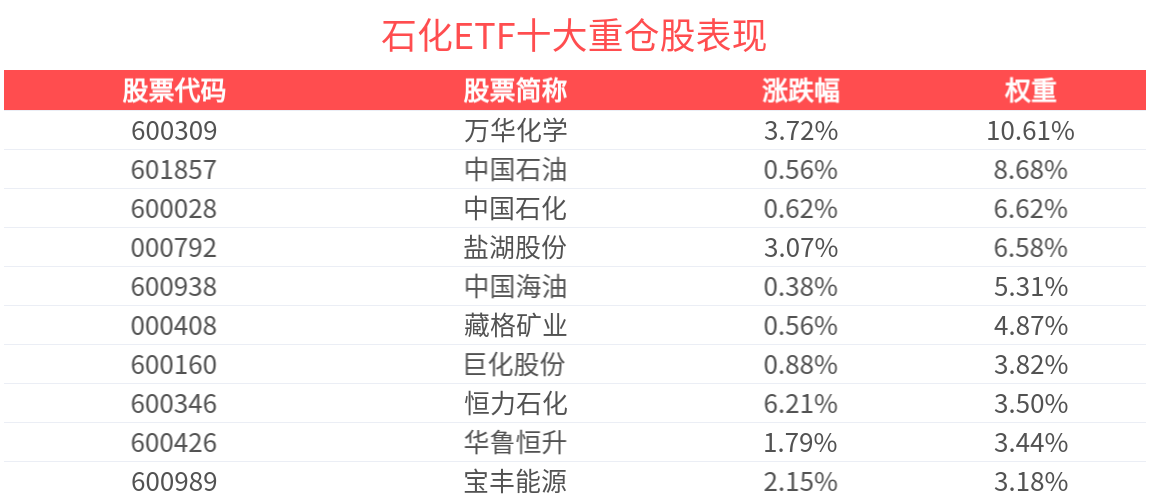
Group 1 - The core viewpoint of the articles highlights the strong performance of cyclical sectors such as petrochemicals, precious metals, and agriculture, with the Petrochemical ETF (159731) rising by 2.35% and individual stocks like Tongkun Co. and Xin Fengming increasing by 7.06% and 6.96% respectively [1] - The Petrochemical ETF has seen continuous net inflows over the past four days, totaling 76.6445 million, with its latest share count reaching 1.768 billion and total assets hitting 1.805 billion, both marking all-time highs since inception [1] - Huazhang Securities notes that lithium prices are experiencing a high-level decline, while demand in the energy storage sector is exceeding expectations, leading to a recovery in the lithium battery industry and a shift in market sentiment regarding lithium demand [1] Group 2 - The Petrochemical ETF (159731) closely tracks the CSI Petrochemical Industry Index, benefiting from both basic chemicals and oil & petrochemical sectors, and includes high dividend and high growth assets [2] - Key weighted stocks in the ETF include Wanhua Chemical (global MDI leader), China Petroleum (domestic oil and gas leader), China Petrochemical (domestic refining leader), and Salt Lake Potash (domestic potassium fertilizer leader) [2] - The table lists the performance and weight of key stocks within the ETF, with Wanhua Chemical showing a rise of 3.72% and holding a weight of 10.61% [4]





东吴证券晨会纪要2026-02-11-20260211
Soochow Securities· 2026-02-11 02:46
Macro Strategy - The core viewpoint indicates that recent liquidity shocks in overseas markets, driven by concerns over the AI software bubble and subsequent momentum selling, have led to significant volatility in equities, commodities, and cryptocurrencies. It suggests that some assets may have been "wrongly killed" due to these liquidity shocks, as the macroeconomic fundamentals and broad liquidity environment have not changed significantly [1][13] - The report anticipates that the upcoming U.S. non-farm employment and CPI data for January may present upward risks, potentially reversing the slight increase in expectations for Federal Reserve rate cuts observed this week [1][13] Financial Products - The report highlights that overseas market liquidity shows signs of stabilization, which may improve market sentiment. It predicts a positive outlook for the A-share market in February, with a historical probability of 78.57% for an increase following a macro timing model score of 0 [1][16] - Fund allocation recommendations suggest a balanced ETF configuration due to expected short-term market fluctuations, with a focus on sectors like chemicals and electric grid equipment, which continue to see increasing fund sizes [1][16] Commodity Market - The report discusses the impact of liquidity shocks on commodity prices, noting that certain commodities, which rely on supply-demand improvements, have been "wrongly hurt" but may return to fundamental pricing logic as market conditions stabilize [2][17] - It emphasizes that the recent volatility in silver and other precious metals indicates a potential end to the liquidity shock, with silver becoming a key indicator of market sentiment [2][17] Environmental Industry - The report stresses the importance of advancing the national carbon market and outlines investment recommendations in clean energy, energy conservation, and recycling sectors. It highlights specific companies such as Longjing Environmental and others involved in renewable energy and waste management [6][10] Non-Banking Financial Sector - The report notes a recovery in the IPO and refinancing market, with significant year-on-year growth in both areas. It indicates that the capital market reforms and increased market activity are expected to benefit brokerage firms' investment banking revenues [9] AI Industry and Bond Financing - The report focuses on the AI industry, highlighting the need for a diversified financing system to support technology companies, particularly private firms with high growth potential. It reviews case studies of leading tech companies' bond financing paths to assess the feasibility of similar strategies in China [4]

科创新能源ETF(588830)受益AI算力修复与太空光伏催化,固态电池产业化加速
Xin Lang Cai Jing· 2026-02-11 01:56
Group 1 - The market is experiencing a broad rise due to the alleviation of overseas risks and the recovery of the AI computing power sector, with the space photovoltaic concept gaining attention following Elon Musk's mention of its cost advantages [1] - The solid-state battery industry is accelerating its commercialization process, with a clear goal for cell product finalization by 2026, and improvements in energy density and cycle performance indicators [1] - Demand is rebounding post-holiday, solid-state tenders are starting, and inflation expectations in the supply chain are forming three catalysts for growth [1] Group 2 - The Kexin New Energy ETF closely tracks the Shanghai Stock Exchange's New Energy Index, which selects 50 large-cap stocks from the photovoltaic, wind power, and new energy vehicle sectors to reflect the overall performance of representative new energy companies [2] - As of January 30, 2026, the top ten weighted stocks in the Shanghai Stock Exchange New Energy Index include Trina Solar, JinkoSolar, and others, accounting for 46.03% of the total index weight [2] Group 3 - Related products include Kexin New Energy ETF (588830) and Penghua ChiNext New Energy ETF (159261) [3]
锂电产业链:需求向好+技术升级,固态电池引领风口
Mei Ri Jing Ji Xin Wen· 2026-02-11 01:17
Group 1: Lithium Battery Industry Overview - The lithium battery industry chain has shown relatively average performance recently due to capital shifts, weak demand from the automotive sector, and strong price increases in upstream raw materials like lithium carbonate, raising concerns about cost pressures across the industry chain [1] - Despite short-term fluctuations in lithium carbonate prices affecting marginal demand and slowing down project development, the overall demand for lithium batteries is expected to remain positive throughout the year [1] - The current weak sales of power batteries are attributed to demand overhang from the previous year, but with the implementation of new subsidy policies in 2026, domestic sales are expected to stabilize [1] Group 2: Energy Storage Sector - The cost of domestic energy storage systems has significantly decreased due to ongoing reductions in cell costs and technological advancements, enhancing their cost-effectiveness [2] - The widening price gap in the electricity market due to large-scale renewable energy integration is creating more opportunities for energy storage to profit from arbitrage [2] - Policy support for capacity pricing and compensation is expected to improve the profitability of energy storage, with demand anticipated to remain strong in 2026 [2] Group 3: International Demand and Market Dynamics - Internationally, demand for energy storage has been improving since 2024, with both large-scale and residential storage markets growing [3] - In Europe, the inventory of residential storage has normalized, and the profitability of commercial energy storage is increasing due to dynamic pricing mechanisms [3] - In regions like Africa, Asia, and Latin America, unstable power supply and rising electricity prices continue to drive energy storage demand growth [3] Group 4: Battery Material Composition and Market Trends - The lithium battery is primarily composed of four main materials: cathode, anode, electrolyte, and separator, which collectively determine battery performance [4] - The electrolyte segment has a favorable competitive landscape, with leading companies holding significant market share and a strong willingness to maintain prices [4] - The iron-lithium cathode segment shows stable market shares for leading firms, while smaller firms are experiencing market share fluctuations due to varying competitive dynamics [4] Group 5: Investment Recommendations - The electrolyte segment, particularly lithium hexafluorophosphate and VC, is recommended for short-term investment due to its favorable competitive landscape and higher price elasticity [5] - The separator and battery segments are also recommended for medium to long-term investment, as they are capital-intensive with strong industry logic [5] Group 6: Solid-State Battery Opportunities - Solid-state batteries are emerging as a next-generation battery technology, addressing key limitations of traditional lithium-ion batteries, such as energy density, safety, and fast-charging capabilities [6] - The initial application of solid-state batteries is expected in consumer electronics, followed by aerospace and robotics, where performance requirements are stringent [7] - The technology for solid-state batteries is advancing, with significant progress in materials and manufacturing processes, indicating readiness for industrialization [8] Group 7: Equipment and Policy Implications - The manufacturing process for solid-state batteries requires significant upgrades to existing equipment, benefiting equipment manufacturers as the technology scales [8] - Policies are increasingly recognizing the importance of solid-state battery technology, with initiatives aimed at accelerating its development during the current five-year plan [8] - Recent positive performance forecasts from lithium battery equipment companies suggest a potential recovery in the sector, with ongoing bidding activities from leading battery manufacturers [8] Group 8: Investment Vehicle Recommendation - The recommended investment vehicle in the lithium battery sector is the "Guotai" New Energy ETF (159387), which tracks the entrepreneurial board new energy index, providing comprehensive exposure to the battery, photovoltaic, and wind energy sectors [9]
发启锂程,信创未来丨建发能化成功举办碳酸锂期货运用交流会
Xin Lang Cai Jing· 2026-02-10 12:51
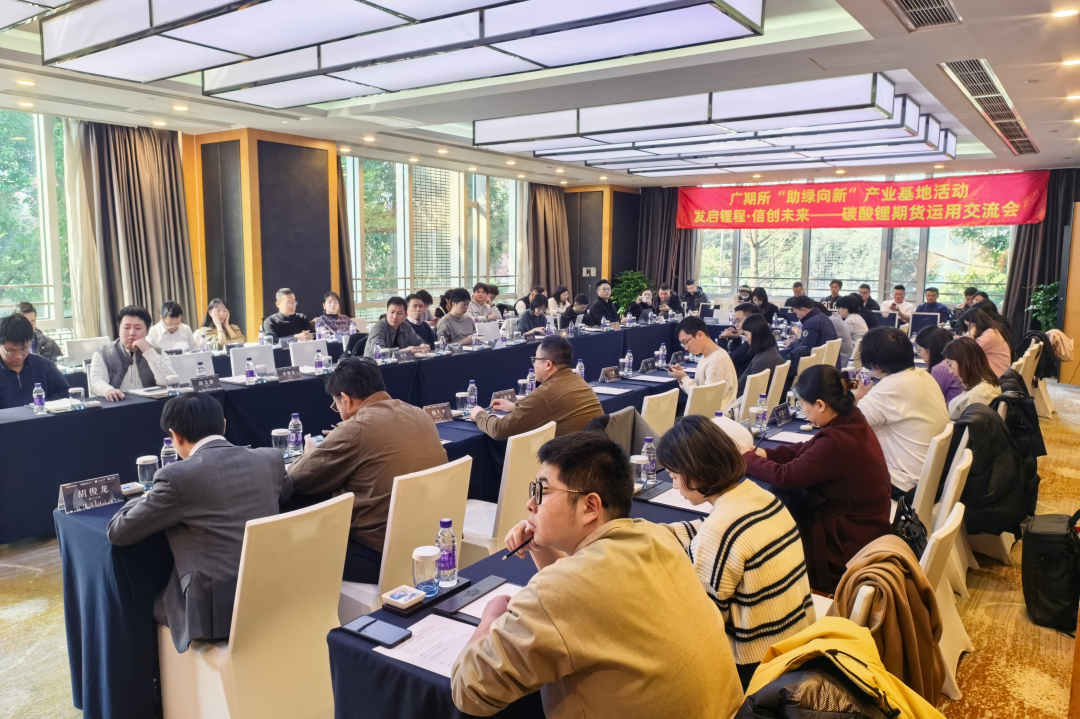
Core Viewpoint - The conference focused on the application of lithium carbonate futures in the new energy industry, aiming to enhance industry collaboration and innovation [1][7]. Group 1: Conference Overview - The event was hosted by Jianfa Co., Ltd. and supported by various financial institutions, providing a platform for in-depth discussions on market trends and futures tools related to lithium carbonate [1][7]. - Key leaders from Jianfa Co., Ltd., CITIC Futures, and Guangzhou Futures Exchange attended the conference, highlighting the importance of the event in promoting green development [1][3]. Group 2: Key Presentations - Zhang Yuan from CITIC Futures discussed the specific applications of lithium carbonate futures and options in enterprise risk management, offering targeted risk control suggestions [5][12]. - Hu Junlong from Shanghai Zeyuan Business Consulting reviewed the lithium battery industry's trends and provided forecasts for the rapid growth of energy storage projects by 2026, impacting lithium salt demand [5][12]. - Xia Meng, Assistant General Manager of Jianfa Chemical, shared insights on how the company utilizes futures and options to lock in costs and manage risks, while planning for future industry collaboration [5][12]. Group 3: Industry Insights - Jianfa Co., Ltd. has been exploring a business model that combines futures and spot markets, focusing on core products like lithium carbonate to enhance financial services and risk management capabilities [6][13]. - The company aims to provide a safety net for upstream producers through price management and capacity locking, while offering flexible pricing models to downstream application enterprises [6][13]. - The successful hosting of the conference marks a new phase in collaboration and innovation between Jianfa Co., Ltd., Guangzhou Futures Exchange, CITIC Futures, and industry partners, with a commitment to the stable and high-quality development of the lithium carbonate industry [6][13].

赛伍技术:公司致力于成为平台化的多元应用领域企业
Zheng Quan Ri Bao Wang· 2026-02-10 12:42
Core Viewpoint - The company aims to become a platform-based enterprise across multiple application fields, with a focus on integrating upstream material research and downstream brand and channel operations through the acquisition of Jinlan Nano [1] Group 1: Business Strategy - The company has expanded its business segments to include photovoltaic materials, lithium battery and new energy vehicle materials, consumer electronics, and semiconductor materials [1] - The acquisition of Jinlan Nano represents a strategic extension from the B2B market to the B2C end-consumer sector [1] - The integration of Jinlan Nano's automotive aftermarket brand and channels is intended to achieve full-chain value coverage from material development to terminal brand and channel operations [1]
