风电光伏

Search documents
A股指数集体低开:沪指跌0.87%,有色金属、油气、光伏等板块跌幅居前
Feng Huang Wang Cai Jing· 2026-02-06 01:35
Market Overview - Major indices opened lower, with the Shanghai Composite Index down 0.87%, Shenzhen Component Index down 1.09%, and ChiNext Index down 1.15% [1] - The sectors with the largest declines included non-ferrous metals, oil and gas, and photovoltaic [1] Index Performance - Shanghai Composite Index: 4040.30, down 0.87%, with 322 gainers and 1804 losers [2] - Shenzhen Component Index: 13801.03, down 1.09%, with 362 gainers and 2346 losers [2] - ChiNext Index: 3222.88, down 1.15%, with 177 gainers and 1132 losers [2] External Market Impact - The software sector and cryptocurrency experienced significant declines, influenced by weak U.S. employment data, leading to broader market sell-offs [3] - The S&P 500 Index fell 1.23% to 6798.4 points, the Nasdaq Composite Index dropped 1.59% to 22540.59 points, marking the most severe three-day sell-off since April of the previous year [3] Institutional Insights - CITIC Securities predicts high profit growth for listed brokerages by 2025, driven by increased average daily trading volume and high margin financing balances, with some brokerages seeing profit increases exceeding 70% [4] - Huatai Securities remains optimistic about the recovery of wind and solar power profitability by 2026, despite short-term pressures from low-priced projects and rising costs [5] - China Galaxy Securities emphasizes the stability of the long-term bull market for gold, with central bank purchases expected to continue [6] - CITIC Securities highlights the strong demand for storage driven by AI, predicting sustained high demand and price increases for storage chips through 2026 [7]


以新质生产力推进转型发展 山西:2026年GDP增长目标为4.5%至5%
Shang Hai Zheng Quan Bao· 2026-02-02 18:44
Economic Growth Targets - Shanxi Province aims for a GDP growth target of 4.5% to 5% for 2026, with fixed asset investment and social retail sales also targeted to grow by 5% [1] - The province emphasizes the importance of high-quality development and comprehensive transformation during the 14th Five-Year Plan period [1] Key Development Strategies - Shanxi will focus on ten key tasks including expanding domestic demand, promoting energy transition, upgrading industries, and fostering moderate diversification [1] - The province plans to continue major project construction, targeting over 600 billion yuan in transportation infrastructure investment, over 220 billion yuan in water conservancy investment, and over 600 billion yuan in municipal infrastructure investment [1] Energy Transition Initiatives - Energy transition is highlighted as a critical focus, with plans to implement nine paths for energy technology innovation and build a new energy system [2] - Specific initiatives include constructing 60 intelligent coal mines, expanding wind and solar power installations, and developing smart grids and virtual power plants [2] Industrial Upgrading Efforts - Shanxi aims to strengthen emerging pillar industries through innovation and large-scale application of new technologies [3] - The province will focus on developing new materials, high-end equipment manufacturing, and electronic information industries, while also promoting sustainable development in non-coal mining [3]
有力度 有速度 有温度
Xin Lang Cai Jing· 2026-01-27 21:04
Core Viewpoint - Inner Mongolia Autonomous Region is focusing on high-quality development and implementing the "1571" work deployment as a guiding framework for its future growth, aiming to ensure a strong start for the 14th Five-Year Plan [1][2]. Group 1: "1571" Work Deployment - The "1571" work deployment includes: "1" focusing on building a model autonomous region with a strong sense of national community; "5" emphasizing the construction of two barriers, two bases, and one bridgehead; "7" targeting seven key tasks to develop a modern industrial system with Inner Mongolia's characteristics; and "1" reinforcing the comprehensive leadership of the Party [2][3]. - The deployment is characterized by its political, strategic, systematic, and continuity aspects, providing clear direction for economic work in 2026 and beyond [2]. Group 2: Key Development Initiatives - The completion of the 500 kV power transmission project in Keshiketeng Banner enhances the regional grid's capacity by 30%, facilitating the delivery of green energy [2]. - The opening of the Baoyin High-Speed Railway connects Inner Mongolia to the national market, promoting regional economic integration and opportunities [3]. - The construction of the China Mobile Intelligent Computing Center in Hohhot and Linhe New District is part of the focus on developing a modern industrial system [3]. Group 3: Improvement of Business Environment - The establishment of a major project review and approval mechanism in Xingan League has reduced the time for obtaining land pre-approval for wind power projects to just 2 working days, enhancing the business environment [4]. Group 4: Social Welfare Initiatives - The implementation of the "Ten Major Livelihood Projects" aims to improve the quality of life for residents, including healthcare reforms that reduce patient costs [5][6]. - The introduction of electronic consumer vouchers for elderly care services is part of the efforts to enhance the quality of life for senior citizens [6]. - The overall goal of these initiatives is to ensure that the benefits of development are more equitable and accessible to all residents, laying a solid social foundation for achieving economic and social development goals [6].
川能动力2026年1月23日涨停分析:锂电业务增长+国企资源整合+项目储备丰富
Xin Lang Cai Jing· 2026-01-23 02:40
Group 1 - The core point of the article is that Chuaneng Power (SZ000155) reached its daily limit with a price of 14.26 yuan, reflecting a 9.26% increase and a total market capitalization of 26.142 billion yuan, driven by growth in lithium battery business, state-owned enterprise resource integration, and rich project reserves [1] Group 2 - Chuaneng Power's lithium battery production capacity has significantly increased, with the Lijiagou lithium mine achieving an annual output of 180,000 tons of concentrate and 45,000 tons of lithium salt, leading to a staggering 1210.80% year-on-year increase in net profit in Q3 2025 [1] - The new controlling shareholder, Sichuan Energy Development Group, has integrated resources from the Energy Investment Group and Chuan Investment Group, which may create synergistic effects [1] - The company has received approval for a 2.5 billion yuan debt financing tool, enhancing its financial strength, and its wind power business benefits from high-altitude wind resource advantages, with 2.07 million kilowatts of wind and photovoltaic projects expected to be operational by 2026 [1] - The renewable energy and lithium battery sectors are currently market hotspots, with potential capital inflows driving stock price increases [1] - Technical analysis suggests that significant inflows of main funds and a breakthrough of key resistance levels could also contribute to the stock's limit-up performance [1]

8组数据,见证中国经济向“新”而行
Ren Min Wang· 2025-12-30 21:57
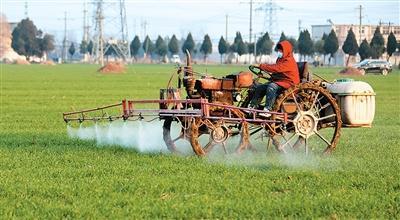
Group 1: Agriculture and Food Production - China's grain production reached 14,297.5 billion jin in 2025, an increase of 167.5 billion jin or 1.2% from the previous year, maintaining a stable level above 14 trillion jin [11][12] - The grain planting area in China increased to 1.791 billion mu, up by 1.348 million mu, marking six consecutive years of growth [11] - The average grain yield reached 399.1 kg per mu, an increase of 4.4 kg or 1.1% from the previous year, supported by improved agricultural policies and technology [12] Group 2: New Energy Industry - By the end of Q3 2025, China's installed capacity for wind and solar power exceeded 1.7 billion kilowatts, accounting for 46% of the national power generation capacity [13] - Wind and solar power generation reached 1.73 trillion kWh, representing 22.3% of the total electricity consumption during the same period [13] - The first batch of wind and solar power bases is expected to be operational, with plans for an additional 50 million kilowatts of capacity in subsequent phases [13] Group 3: E-commerce and Logistics - China's express delivery volume surpassed 18 billion pieces for the first time, with an average of over 6,200 pieces processed per second [15][16] - The express delivery business in central and western regions saw an increase in revenue share, indicating improved logistics accessibility [15] - The postal and express industry has become a significant driver for consumption and economic growth [16] Group 4: Telecommunications and Technology - China has built 4.83 million 5G base stations, achieving over 90% coverage in administrative villages [17][18] - The 5G network is integrated into 91 sectors of the national economy, with a complete industrial chain established from chips to base station equipment [18] - The development of 6G technology is underway, with over 300 key technologies in reserve, aiming for commercial capabilities by 2030 [18] Group 5: Infrastructure and Transportation - The national comprehensive transportation network is over 90% complete, connecting more than 80% of county-level administrative regions [21][22] - In 2025, transportation fixed asset investment is expected to exceed 3.6 trillion yuan, with significant expansions in highways and railways [21] - The construction of the "6 axes, 7 corridors, and 8 channels" framework is progressing, enhancing connectivity between major economic regions [22] Group 6: Automotive Industry - In the first 11 months of 2025, China's production and sales of new energy vehicles approached 15 million units, with exports exceeding 2.315 million units, reflecting over 30% growth [23][24] - The overall automotive market is expected to achieve record highs in production and sales, driven by policy support and market demand [24] - The number of electric vehicle charging facilities reached 19.322 million, alleviating previous concerns about charging accessibility [25]
中国经济这一年:能源领域现三大突破
Zhong Guo Xin Wen Wang· 2025-12-27 07:40
Group 1 - China's total electricity consumption is expected to exceed 10 trillion kilowatt-hours in 2025, surpassing the combined total of the EU, Russia, India, and Japan from the previous year, marking a significant milestone in China's energy development [1] - China's oil and gas production is projected to reach historical highs in 2025, with crude oil production around 215 million tons and natural gas production exceeding 260 billion cubic meters, continuing a trend of over 10 billion cubic meters of annual growth for nine consecutive years [1] - The stability and resilience of China's energy supply have improved significantly, with the National Energy Administration confirming that energy supply has effectively met peak demand during the summer [1] Group 2 - As of March 2025, China's cumulative installed capacity for wind and solar power has reached 1.482 billion kilowatts, surpassing that of thermal power for the first time, with an expected addition of 37 million kilowatts in 2025 [2] - The new national contribution targets announced for 2025 aim for wind and solar power capacity to reach six times that of 2020 by 2035, with a goal of 3.6 billion kilowatts [2] - The energy supply security and resilience in China are expected to further enhance, with a continuous acceleration of green transformation and stronger momentum for high-quality development [2] Group 3 - The National Development and Reform Commission emphasizes the need to address new challenges in energy security, carbon reduction, technological innovation, and institutional reforms in 2026, aiming to establish a new energy system by 2030 [3] - The focus will be on balancing economic development with energy structure, ensuring energy supply security while promoting energy conservation and carbon reduction [3] - The implementation of a comprehensive carbon emission control system is anticipated to create a larger market space for the growth of green and low-carbon industries [2][3]
国投证券(香港)
国投证券(香港)· 2025-12-17 04:43
Group 1: Core Insights - The report highlights a mixed economic outlook with concerns over employment and market differentiation, as evidenced by the decline in major Hong Kong stock indices [2][4][5] - The report indicates that the private hospital sector in China is experiencing significant growth, with revenues projected to increase from 437.9 billion in 2019 to 944.7 billion by 2024, reflecting a compound annual growth rate of 16.6% [8] Group 2: Company Overview - The specific company, Ming Kee Hospital, is noted for its operational management experience from Taiwan and is recognized as the largest private profit-oriented hospital group in East China, holding a 1.0% market share in the region [7] - Financial projections for Ming Kee Hospital show revenues of 2.34 billion, 2.69 billion, 2.66 billion, and 1.31 billion for the years 2022, 2023, 2024, and the first half of 2025 respectively, with corresponding net profits of 89.55 million, 170 million, 110 million, and 48.7 million [7] Group 3: Industry Status and Prospects - The number of private hospitals in China is expected to grow from 22,424 in 2019 to 27,652 by 2024, while the number of public hospitals is projected to decrease from 11,930 to 11,798 during the same period [8] - The trend of public hospitals converting to private entities aligns with government policies aimed at promoting a more balanced distribution of medical institutions [8] Group 4: Strengths and Opportunities - Ming Kee Hospital benefits from brand recognition and a strong operational model, which contributes to its robust profitability [9] - The company has established an integrated service platform that attracts talent and creates business synergies, supported by its parent company, Qisda Technology [9] Group 5: Fundraising and Use of Proceeds - The IPO is scheduled from December 12 to December 17, 2025, with the listing date set for December 22, 2025 [11] - Approximately 74.3% of the raised funds will be allocated for the expansion and upgrading of existing hospitals, while 16.0% will be used for investment and acquisition opportunities [13]
\十五五\规划建议的产业体系布局与有色金属产业格局展望
Chang Jiang Qi Huo· 2025-12-01 10:08
Report Summary 1. Report Industry Investment Rating No relevant information provided. 2. Core View of the Report During the 15th Five - Year Plan period, the development of non - ferrous related industries will prioritize high - quality development, resolve supply - side involution, reduce ineffective supply, and control smelting - end production capacity. Copper, aluminum and other non - ferrous metals and new energy materials will continue to benefit from the optimization and upgrading of traditional industries and the booming development of emerging and future industries. The industrial pattern of non - ferrous and new energy varieties will be further improved and optimized, and price trends will be more boosted by the supply and demand sides [1][2]. 3. Summary by Directory 3.1 "Importance of the 15th Five - Year Plan Period" The 15th Five - Year Plan period is crucial for basically realizing socialist modernization, serving as a connecting link between the past and the future. It is necessary to consolidate advantages, break through bottlenecks, and strengthen weak points. Adhering to high - quality development is particularly important for the non - ferrous metal industry pattern [6]. 3.2 "Main Goals and Industrial System Planning of the 15th Five - Year Plan" - **Main Goals**: The main goals include significant achievements in high - quality development, a substantial increase in the level of scientific and technological self - reliance, new breakthroughs in further comprehensive deep - seated reforms, a notable improvement in social civilization, continuous improvement in people's living standards, new major progress in building a beautiful China, and a more solid national security barrier. High - quality development is prioritized, and the non - ferrous metal industry will focus on high - quality development, addressing supply - side issues and strengthening effective demand. The goal of a substantial increase in scientific and technological self - reliance highlights the importance of science and technology, which will drive the high - quality development of the non - ferrous new energy industry [8][11][12]. - **Industrial System Planning Clues for Non - Ferrous Metals**: In the industrial system planning, traditional industries such as mining and metallurgy related to non - ferrous metals will continue supply - side reforms. Emerging and future industries, such as new energy and quantum technology, will drive the demand for non - ferrous and new energy materials. Non - ferrous metals and new energy materials will benefit from the development of both traditional and emerging/future industries [14][15][16]. 3.3 "Prospects for Non - Ferrous Metal Terminal Industries in the 15th Five - Year Plan" - **Wind Power, Photovoltaic and Grid Energy Storage**: The 15th Five - Year Plan aims to accelerate the construction of a new energy system. The scale of new energy installations is expected to reach a new high, and the demand for energy storage and grid investment will increase to support the consumption and stable operation of new energy [17][20]. - **New Energy Vehicles**: The 15th Five - Year Plan emphasizes green development. The penetration rate of new energy vehicles in China is expected to further increase. Although the growth rate may decline, new energy vehicles will remain an important driver of the domestic economy [21][23]. - **AI Industry**: The 15th Five - Year Plan has higher requirements for scientific and technological self - reliance. The development of the AI industry will drive the growth of semiconductor chips and increase the demand for energy storage in AI data centers, becoming a new growth engine for non - ferrous and new energy materials [24].
商务部:加快建立绿色低碳产品技术服务标准体系
Yang Shi Wang· 2025-10-31 18:37
Core Viewpoint - The Chinese government is accelerating the establishment of a green low-carbon product, technology, and service standard system to align with international standards and reduce trade costs due to standard discrepancies [1] Group 1: Green Products and Technology - China's manufacturing scale and technological advancements have made green products increasingly affordable for global consumers [1] - Chinese products in wind power, photovoltaics, and new energy vehicles have been exported to over 200 countries and regions worldwide [1] Group 2: Cost Reduction Contributions - China has contributed significantly to the global response to climate change and green transformation by reducing wind power and photovoltaic generation costs by over 60% and 80%, respectively [1]
前三季度31省GDP预测:湖北远超福建,江西升至14,甘肃增速第2
Sou Hu Cai Jing· 2025-10-19 01:52
Core Insights - The economic development pattern of China's regions is becoming clearer by the third quarter of 2025, with leading provinces like Guangdong and Jiangsu continuing to play a stabilizing role in the economy [1] - Emerging provinces such as Hubei, Jiangxi, and Gansu are showing strong growth, injecting new vitality into the national economic landscape through unique advantages in industrial transformation [1] Economic Performance by Province - Hubei Province ranks seventh nationally with a GDP of 45,142.19 billion, significantly surpassing Fujian, driven by breakthroughs in the "light-core-screen-end-network" industrial cluster and a digital economy growth rate exceeding 15% for three consecutive years [3] - Jiangxi Province has achieved a predicted GDP of 25,788.46 billion, ranking 14th nationally, benefiting from the transfer of industries from the Yangtze River Delta and a 47% year-on-year increase in cross-border e-commerce transactions [4] - Gansu Province enters the top thirty with a predicted GDP of 9,999.46 billion and a growth rate of 6.2%, supported by a significant increase in renewable energy capacity and investment in strategic emerging industries [5] Regional Development Trends - The eastern coastal regions continue to deepen innovation-driven development, with Guangdong's AI industry cluster and Zhejiang's digital economy maintaining strong momentum [6] - The central provinces, including Hubei and Jiangxi, show enhanced capacity for industrial transfer, with notable growth in the new energy vehicle industry in Anhui and engineering machinery in Hunan [6] - The western regions are accelerating the development of characteristic industries, with significant achievements in the electronic information technology sector in the Chengdu-Chongqing economic circle and big data center construction in Guizhou [6]