先进制造

Search documents
“立园满园”一年看变
Si Chuan Ri Bao· 2025-10-30 20:24
Core Insights - Chengdu is implementing the "Optimize Quality, Characteristic Park, Empower Efficiency, Full Park" initiative to enhance industrial park development and economic growth [2][3] - The initiative aims to address previous issues such as overlapping industrial layouts and unclear functional positioning within Chengdu's industrial parks [2] - A significant focus is on creating a supportive environment for enterprises, streamlining processes, and enhancing service efficiency [2][3] Summary by Sections Project Development - The Chengdu Economic and Technological Development Zone has expedited project approvals, exemplified by the rapid processing of construction permits for the reusable liquid rocket production base by Star Glory Aerospace [2] - The establishment of a project construction service bureau has reduced the time from project initiation to groundbreaking to less than 40 days [2] Institutional Reforms - Chengdu's industrial parks are undergoing institutional reforms to align with the entire lifecycle of enterprise development, from attraction to construction and operation [2] - The creation of enterprise service centers in various parks aims to eliminate barriers in the operational processes for businesses [2] Specialization and Competitive Advantage - Chengdu has developed a "3+22+N" park development system, encouraging parks to identify and cultivate their unique characteristics based on local resources [2] - Successful examples include the Tianfu Long Island Digital Cultural and Creative Park and Chengdu Film City, which leverage different advantages to thrive in the film industry [2] Economic Impact - In the first eight months of the year, Chengdu's industrial parks completed investments of 130.64 billion, contributing to a 7.8% increase in the city's industrial output [2] - The "Optimize Quality, Characteristic Park" initiative has shown preliminary success in enhancing the economic landscape of Chengdu [2] Future Directions - Chengdu's government has introduced a "2.0 upgrade" plan to further the "Optimize Quality, Characteristic Park" initiative, focusing on solidifying foundations and enhancing growth dynamics [3] - Future industrial developments are being prioritized in areas such as controlled nuclear fusion and brain-computer interface technology, indicating a forward-looking approach to emerging industries [3]


创投铁幕之后,再筑新墙
3 6 Ke· 2025-10-30 17:21
Core Points - The core message of the "America First Investment Policy" is that American investors should focus on investing in the future of the United States rather than in other countries [1][2] Summary by Sections Policy Changes - The "America First Investment Policy" significantly expands the scope of the Reverse CFIUS (Committee on Foreign Investment in the United States) restrictions from three sensitive sectors (semiconductors, artificial intelligence, quantum computing) to include biotechnology, hypersonic technology, aerospace, advanced manufacturing, directed energy, and other areas influenced by China's "military-civil fusion" strategy [1][3] - The policy restricts various types of investments, including private equity, venture capital, greenfield investments, corporate expansions, and public securities trading [1][2] - It also limits funding sources, including pension funds, university endowments, and other limited partner investors [1][3] Impact on Chinese Investments - The policy may exert pressure on Chinese concept stocks (Chinese companies listed in the U.S.) from multiple angles, potentially affecting their market performance and regulatory scrutiny [2][10] - The expansion of restricted sectors under the policy indicates a more aggressive stance from the U.S. towards curbing China's technological advancements [2][4] Historical Context - The changes reflect a broader historical trend of the U.S. attempting to contain China's development in strategic industries and advanced technologies, a strategy that has been consistent since Trump's first term [4][5] Investment Environment - The "America First" label emphasizes that American capital should be directed towards U.S. industries, while investments from "friendly" nations are encouraged, contrasting with restrictions on investments from "foreign adversaries" [6][7] - The policy signals a potential increase in scrutiny for Chinese dollar funds investing in the U.S. market, which may face stricter CFIUS reviews [7][8] Regulatory Measures - The policy outlines enhanced regulatory measures for Chinese concept stocks, including stricter auditing requirements and potential risks of forced delisting if compliance with U.S. auditing standards is not met [10][11] - It emphasizes the need for thorough reviews of the auditability and corporate governance of foreign adversaries' companies listed in the U.S., particularly focusing on VIE (Variable Interest Entity) structures [14][15] Taxation Agreements - The policy raises the possibility of suspending or terminating the 1984 U.S.-China tax treaty, which could significantly increase the tax burden on economic exchanges between the two countries, impacting capital, labor, trade, and technology flows [2][17]
晶采观察丨前三季度多项数据表明 新质生产力加速成长
Yang Guang Wang· 2025-10-30 14:02
Core Insights - China has made significant progress in major engineering projects, including the upcoming launch of the Shenzhou 21 spacecraft and the launch of the world's largest electric cargo ship, indicating advancements in green shipping and smart vessel technology [2][3] - The concept of "new quality productivity" is crucial for China's economic future, emphasizing the need to balance the cultivation of new driving forces with the upgrading of old ones through technological innovation [2][4] - The high-tech and equipment manufacturing sectors have shown robust growth, with sales revenues increasing by 15.2% and 9% year-on-year, respectively, driven by the integration of artificial intelligence into traditional industries [2][3] Industry Performance - In the first three quarters, new quality productivity has become a key driver for stable industrial economic growth, supported by government policies that promote smart manufacturing and digital technology [4][5] - Specific regions like Henan and Jiangxi have reported strong growth in new energy vehicles and strategic emerging industries, with Jiangxi's fixed asset investments in these sectors increasing by 9.5%, 6.4%, and 10.9% respectively [3][4] - Retail sales of technology-related products have surged, with wearable smart device sales in Zhejiang growing by 105.6% and smart home appliances in Jiangsu increasing by 53.5% [3] Policy and Strategic Direction - The recent release of the 15th Five-Year Plan emphasizes the importance of high-level technological self-reliance and the development of new quality productivity as a strategic priority [4][5] - The plan highlights the need to build a modern industrial system, reinforcing the foundation of the real economy and maintaining a reasonable proportion of manufacturing [4]
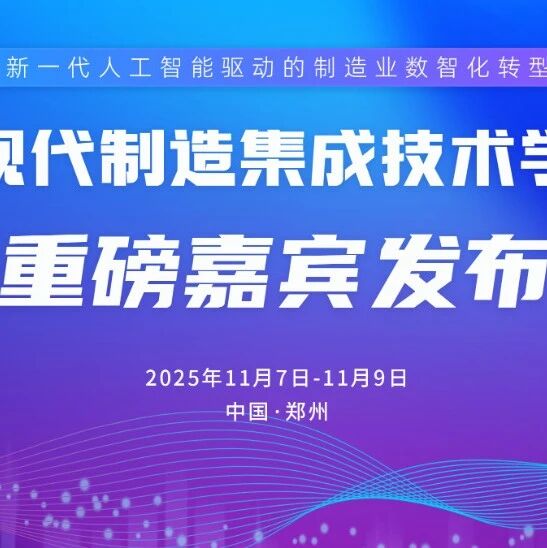
第七届现代制造集成技术学术会议报告嘉宾
机器人圈· 2025-10-30 11:07
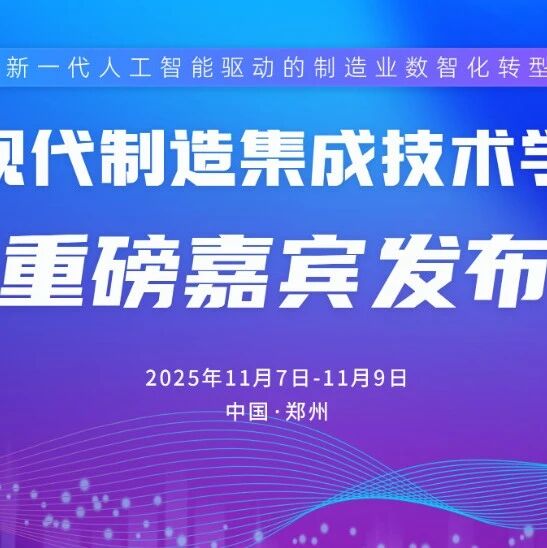
Core Viewpoint - The 7th Modern Manufacturing Integration Technology Academic Conference will be held from November 7 to November 9 in Zhengzhou, focusing on the intelligent transformation of manufacturing driven by the new generation of artificial intelligence [3]. Event Details - The conference will be hosted by Zhengzhou University of Light Industry and aims to attract participation from numerous higher education institutions, research organizations, and enterprises in the advanced manufacturing sector [3]. - The conference will feature a series of invited guest speakers, with names to be announced gradually [3]. Forums and Topics - Forum 1 will focus on AI-driven product design and simulation, chaired by prominent figures in the field [15]. - Forum 2 will address AI-driven manufacturing process optimization, also led by notable experts [15]. - Additional forums will cover topics such as equipment fault diagnosis and intelligent operation, industrial software, and digital twins in industry [19]. Registration and Fees - Registration fees are set at 1500 RMB for students, 2800 RMB for general participants, and 3800 RMB for corporate representatives [21]. - Payment can be made via bank transfer or QR code, with specific instructions provided for each method [21][23]. Accommodation - Participants are advised to book accommodations early due to high demand during the conference period, with recommended hotels listed for convenience [24][25].
光大证券:美联储降息周期开启 港股未来或继续震荡上行
智通财经网· 2025-10-30 08:16
Core Viewpoint - The A-share and Hong Kong stock markets experienced fluctuations in October, with Hong Kong showing strong overall profitability and low valuations despite recent gains [1][2][4]. A-share Market Summary - The A-share market showed mixed performance in October, with the Shanghai Composite Index rising by 2.7% while the Sci-Tech Innovation 50 Index fell by 1.6% [2]. - Various sectors exhibited significant performance divergence, with coal, telecommunications, and banking sectors performing well due to market sentiment and profit-taking [2][3]. - Positive factors such as the approval of the 15th Five-Year Plan and ongoing US-China trade negotiations are expected to bolster market confidence [3]. Hong Kong Market Summary - The Hong Kong stock market faced a pullback in October due to increased overseas uncertainties and a decline in domestic risk appetite, with major indices showing mixed results [2]. - Despite recent increases, the overall valuation of the Hong Kong market remains low, indicating a favorable long-term investment opportunity [1][4]. - The market is expected to continue a volatile upward trend, supported by the ongoing development of the AI industry and the commencement of the Federal Reserve's interest rate cuts [4]. Industry Configuration - Mid-term focus should be on the TMT (Technology, Media, Telecommunications) and advanced manufacturing sectors, with a shift to high-dividend and consumer sectors during market fluctuations [3][4]. - A "barbell" strategy is recommended, emphasizing both technology growth and high-dividend stocks, particularly in sectors like telecommunications, utilities, and banking [4].

全球科技竞争路线图:胜任者有力,自胜者强
Western Securities· 2025-10-30 08:03
Group 1: Global Technology Competition Scenarios - The global technology competition may unfold in three scenarios: 1) Benchmark scenario: strategic equilibrium is achieved globally, with China maintaining its manufacturing lead but facing challenges in complex technology fields[1] - 2) Optimistic scenario: China becomes the innovation leader, shifting the global innovation production center's geographic location[1] - 3) Pessimistic scenario: China's industrial upgrade progresses slower than expected[1] Group 2: Key Technologies and Innovations - Key technologies include frontier technologies such as AI, semiconductors, quantum computing, and biotechnology, as well as advanced manufacturing and critical infrastructure technologies[1] - In AI, the performance gap between Chinese and American models is narrowing, with the number of significant AI models in the U.S. at 40 compared to China's 15 in 2024[2] - In semiconductors, China's institutional advantages and large-scale market are expected to help local companies overcome technological barriers[2] Group 3: Economic and Policy Implications - The U.S. manufacturing sector is projected to gain 244,000 jobs in 2024 due to reshoring initiatives and foreign direct investment[2] - Risks include policy uncertainty, economic risks from demand weakness and inflation, and supply chain disruptions due to geopolitical factors[3] - The U.S. government is focusing on enhancing supply chain resilience and economic security through increased spending and subsidies[2] Group 4: Biotechnology and Healthcare - In biotechnology, both the U.S. and China show similar overall performance, with the U.S. excelling in gene engineering and vaccine research, while China leads in drug production due to large-scale public investment[2] - In 2023, the U.S. FDA approved 55 new drugs, with 3 from Chinese developers, while China's NMPA approved 87 drugs, including 5 innovative drugs[2]
擘画新蓝图 开启新征程 “十五五”规划建议系统部署未来五年高质量发展路径
Jin Rong Shi Bao· 2025-10-30 00:44
Core Viewpoint - The "15th Five-Year Plan" emphasizes high-quality development, technological self-reliance, green transformation, and institutional openness, indicating a shift in China's development logic from "responding to uncertainty" to "shaping new certainties" [1][2]. Group 1: Future Development Goals - The plan identifies that China's development is characterized by both strategic opportunities and risks, with a focus on maintaining economic growth within a reasonable range and synchronizing income growth with economic growth [2][3]. - Key goals include steady economic growth, improvement in total factor productivity, and expansion of the middle-income group [2]. Group 2: Modern Industrial System - The plan stresses the importance of a modern industrial system centered on advanced manufacturing, highlighting the need for a resilient and competitive industrial framework amid global competition [4]. - Emphasis is placed on the role of the real economy, with advanced manufacturing and smart infrastructure being pivotal for future growth [4]. Group 3: Technological Self-Reliance - The plan calls for accelerating high-level technological self-reliance, enhancing the national innovation system, and fostering a robust environment for independent innovation [5][6]. - It advocates for deep integration of technological and industrial innovation, promoting efficient conversion of research outcomes into productive forces [6]. Group 4: Domestic Market and Investment - The plan aims to build a strong domestic market, emphasizing the need to increase disposable income and stimulate consumer confidence [7]. - It highlights the importance of optimizing government investment structures and activating private investment to align with national strategic directions [7]. Group 5: Institutional Openness - The plan outlines a strategy for gradually expanding institutional openness, maintaining a multilateral trade system, and enhancing international cooperation [8]. - It focuses on optimizing trade structures, particularly in goods, services, and digital trade, while creating a favorable environment for foreign investment [8].
创业板开市十六载:改革引领新程 创新驱动成长
Zheng Quan Ri Bao· 2025-10-29 17:08
Core Insights - The ChiNext board has evolved from a "test field" for institutional innovation to a "demonstration field" nurturing new productive forces, with a total market value exceeding 17 trillion yuan as of October 29, 2025 [1] - The China Securities Regulatory Commission plans to deepen reforms on the ChiNext board, introducing more tailored listing standards for emerging industries and innovative enterprises [1][2] Micro Foundations - The establishment of the ChiNext board addressed the financing bottlenecks faced by innovative and growth-oriented companies during China's economic transition [2] - Over the past 16 years, the ChiNext board has continuously adapted its systems to support high R&D and fast-growing enterprises, facilitating their access to capital markets [2][3] - The introduction of the third set of listing standards has enabled companies like Shenzhen Dapu Microelectronics to raise significant funds for R&D and production projects [3] Growth Dynamics - As of 2024, over 600 companies listed on the ChiNext board have reported revenue growth exceeding 100%, with more than 100 companies achieving revenue growth over tenfold [4] - The ChiNext board has demonstrated strong resilience in growth, with a significant number of companies achieving substantial profit increases [5] Mid-level Synergy - The ChiNext board has fostered a collaborative ecosystem that supports the development of new industries, focusing on advanced manufacturing, digital economy, and green low-carbon sectors [6] - Nearly 48.09% of the companies on the ChiNext board are from these key sectors, accounting for over 55.35% of the total market value [6] Macro Empowerment - The ChiNext board has played a crucial role in optimizing the funding supply structure and reducing the cost of capital for innovative enterprises, facilitating a healthy cycle between technology, industry, and finance [10][11] - The board has successfully attracted long-term capital by enhancing the investor structure and transaction mechanisms, leading to increased market activity and investor participation [11][12]


第七届现代制造集成技术学术会议报告嘉宾
机器人圈· 2025-10-29 09:35
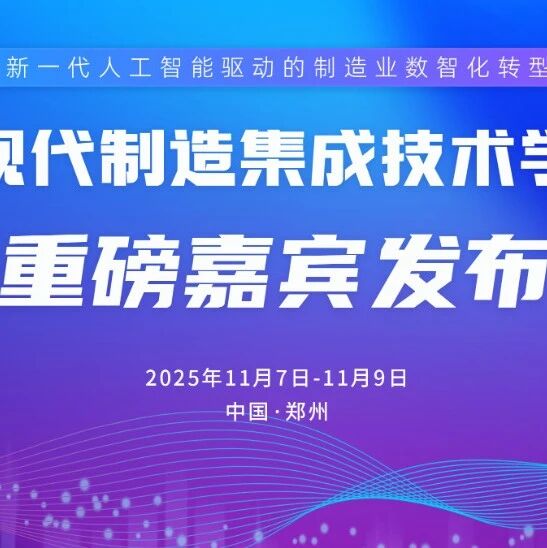
Conference Overview - The 7th Modern Manufacturing Integration Technology Academic Conference will be held from November 7 to November 9 in Zhengzhou, focusing on the intelligent transformation of manufacturing driven by the new generation of artificial intelligence [3][21]. - The conference is organized by Zhengzhou University of Light Industry and has received enthusiastic participation from numerous higher education institutions, research organizations, and enterprises in the advanced manufacturing field [3]. Keynote Speakers and Forums - Notable speakers include academicians and professors from prestigious universities such as Zhejiang University, Tsinghua University, and Southwest Jiaotong University [7][13][14]. - Various forums will be held, including topics on AI-driven product design and simulation, manufacturing process optimization, equipment fault diagnosis, and industrial digital twins [15][20]. Registration and Fees - Registration fees are categorized as follows: - Student participants: 1500 RMB - General participants: 2800 RMB - Corporate representatives: 3800 RMB [22]. - Payment can be made via bank transfer or QR code, and participants must send a registration receipt to the editorial office after payment [24]. Accommodation and Logistics - Recommended hotels include the conference hotel, Zhongzhou Huayue Hotel, and Zhengzhou Fengleyuan Hotel, with a note that accommodation and transportation costs are self-managed [26]. - Participants are encouraged to book accommodations early due to limited availability during the conference [25].
第七届现代制造集成技术学术会议报告嘉宾
机器人圈· 2025-10-28 10:25
Core Points - The 7th Modern Manufacturing Integration Technology Academic Conference will be held from November 7 to November 9 in Zhengzhou, focusing on the intelligent transformation of manufacturing driven by the new generation of artificial intelligence [3][21] - The conference is organized by Zhengzhou University of Light Industry and has attracted participation from numerous higher education institutions, research organizations, and enterprises in the advanced manufacturing field [3][21] Conference Details - The conference will feature various forums, including topics such as AI-driven product design and simulation, manufacturing process optimization, equipment fault diagnosis, and industrial digital twins [15][20] - Registration fees are set at 1500 RMB for students, 2800 RMB for general participants, and 3800 RMB for corporate representatives [22] - Participants are required to send a conference receipt to the editorial office after successful payment [24] Venue and Accommodation - The conference will take place at Hongrun Huaxia Hotel, located at No. 96 Fengle Road, Jinshui District, Zhengzhou [26] - Due to high demand, participants are advised to book accommodations in advance to secure the agreed price [25][26]