
蔬菜种植

Search documents
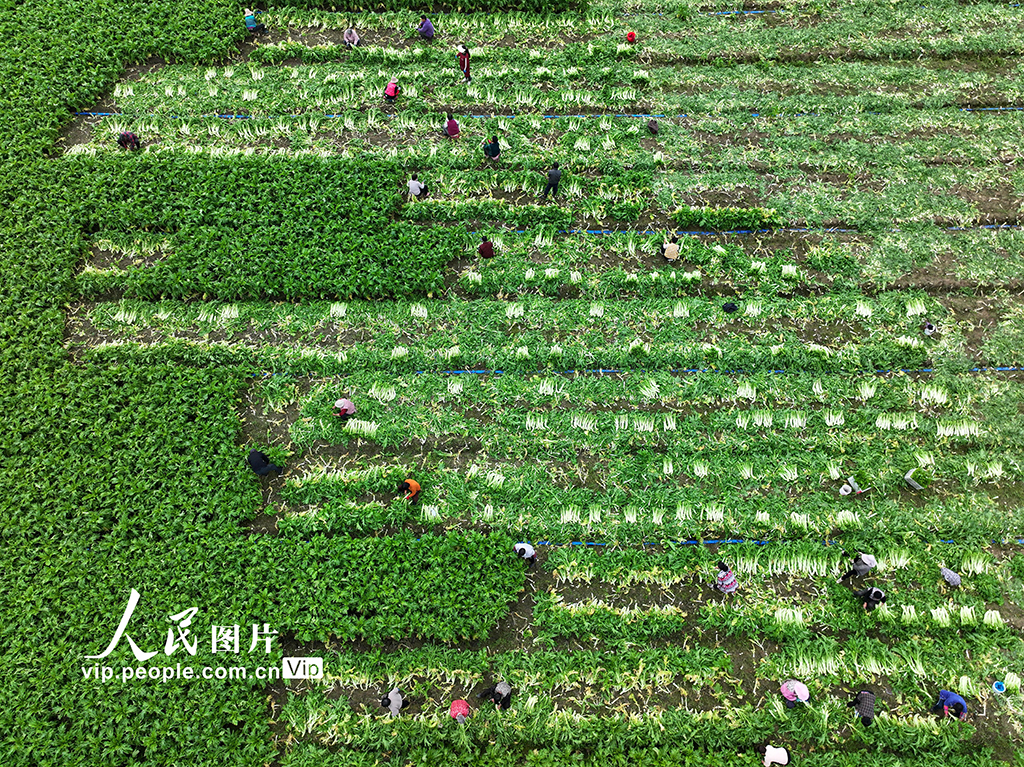
安徽蒙城:抢收芥菜 供应市场
Ren Min Wang· 2025-11-14 02:22
Core Insights - The article discusses the urgent harvesting of mustard greens in Mengcheng, Anhui, to ensure supply to the market [2][4][5][6] Group 1 - The local farmers are actively engaged in the harvesting process to meet market demand [2][4] - The harvesting is described as a race against time to prevent losses due to potential weather changes [5][6] - The article highlights the importance of timely harvesting for maintaining supply chain stability in the agricultural sector [4][6]

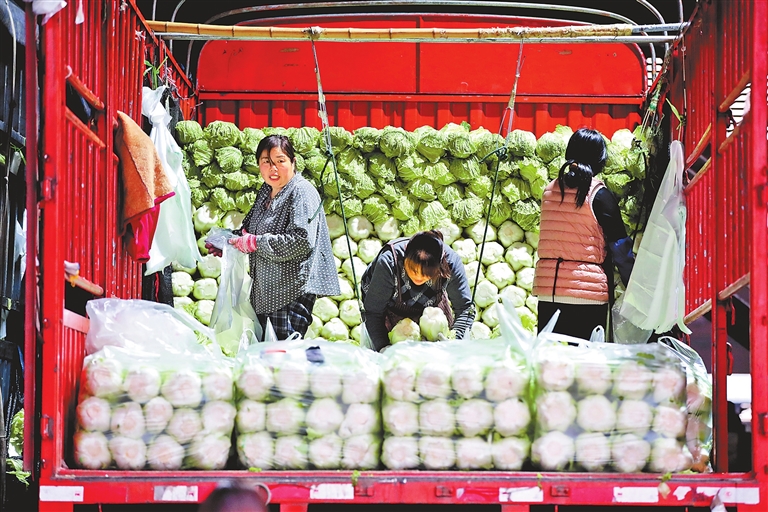
菜价走高 如何稳住“菜篮子”
He Nan Ri Bao· 2025-11-13 23:55
Core Insights - The rising vegetable prices in Henan province are causing significant pressure on consumers, with prices increasing by over 30% compared to previous years [2][5][14] - The primary reasons for the price surge include supply-demand imbalance, delayed harvests, and adverse weather conditions affecting crop yields [6][9][15] Price Trends - Vegetable prices in Henan have seen an average increase of 0.2% as of November 10, with the average price for 28 monitored vegetables at 5.79 yuan per kilogram [5] - Specific vegetables like cabbage and tomatoes have seen prices rise significantly, with tomatoes nearing 4 yuan per kilogram and cabbage exceeding 1 yuan [2][5] Supply Chain Dynamics - Local farmers are facing challenges with both delayed harvests and reduced yields, leading to a significant drop in sales volume for wholesalers [5][6] - The market is experiencing a supply shortage, with many vegetables not reaching the market in expected quantities due to adverse weather conditions [7][8] Weather Impact - Unusual weather patterns, including high temperatures followed by excessive rainfall, have severely impacted vegetable growth and harvest timing [9][11] - The combination of drought and subsequent heavy rains has led to lower yields and delayed harvests, exacerbating the supply-demand imbalance [11][15] Future Outlook - The continuation of high vegetable prices will depend on weather conditions and the timely arrival of crops like cabbage and carrots to the market [14][15] - If adverse weather persists, it could further hinder vegetable production and maintain elevated prices [15]
昌江今年计划种植15万亩冬季瓜菜
Hai Nan Ri Bao· 2025-11-12 01:57
Core Viewpoint - The winter vegetable planting in Changjiang Li Autonomous County has commenced, with a total planned area of 150,000 acres, of which over 40,000 acres have already been planted [1] Group 1: Planting Details - The current planting includes 16,000 acres of melons, 3,000 acres of beans, 3,000 acres of peppers, 4,000 acres of eggplants, and 17,000 acres of other vegetables [1] - The Changhua Town vegetable base has over 1,100 acres, with 600 acres of vegetable heart planted since October 20, expected to be harvested around November 25 [1] Group 2: Agricultural Infrastructure - The Changjiang year-round vegetable base covers over 3,855 acres, with a self-sufficiency rate exceeding 75% for year-round vegetables [1] - The county's agricultural bureau has formed a team of technical experts in agronomy, plant protection, and soil fertility to provide comprehensive technical guidance from variety selection to standardized harvesting [1]
湖北嘉鱼“蔬”写振兴 “菜”富一方
Jin Rong Shi Bao· 2025-11-11 03:37
Core Insights - The article highlights the significant impact of financial support on the agricultural development in Jia Yu County, particularly in the vegetable industry, showcasing the successful implementation of credit loans and innovative financial products to enhance productivity and income for local farmers [1][2][8] Financial Support and Agricultural Development - Jia Yu County has implemented the "Two Farmers Credit Loan" program, providing timely and favorable credit loans to agricultural enterprises, with a notable example being Hubei Jinrun Agricultural Development Co., which received a credit loan of 5 million yuan [2][3] - The actual financing cost for enterprises benefiting from fiscal interest subsidies is only 2.75%, significantly reducing their borrowing costs and enabling more investment in research and development [2][3] Crop Production and Innovation - The agricultural base in Jia Yu County cultivates over 2,000 vegetable varieties annually, with 300 varieties currently in trial, including the "Siterdan" cabbage seed, which has a 20% higher yield than ordinary varieties and fills a market gap for winter cabbage [3][8] - The vegetable planting area in Pan Jia Wan Town spans 100,000 mu, generating an annual output value exceeding 1 billion yuan, positioning it among the top ten agricultural specialty towns in China [3][8] Financial Institutions and Services - Jia Yu Rural Commercial Bank has established a comprehensive credit system, achieving a high registration rate of 96% among local vegetable producers, and aims to cover 80% of the vegetable industry loan market by the end of 2027 [4][5] - The bank has launched various tailored financial products, such as "Jia Nong Loan," which assesses credit based on planting area, thus incentivizing larger-scale farming operations [5][6] Policy Support and Infrastructure Development - The People's Bank of China has allocated a special re-lending quota of 100 million yuan for the vegetable industry in Jia Yu County, facilitating the launch of multiple credit products [6][7] - Infrastructure improvements, such as irrigation systems and access roads, have been funded through loans, enhancing the efficiency of vegetable production and transportation [7][8] Economic Impact - By the end of September, Jia Yu County saw an increase of 2.7 billion yuan in agricultural loans, a year-on-year growth of 17.3%, with vegetable planting area expanding to 460,000 mu and annual output value surpassing 6 billion yuan [8]
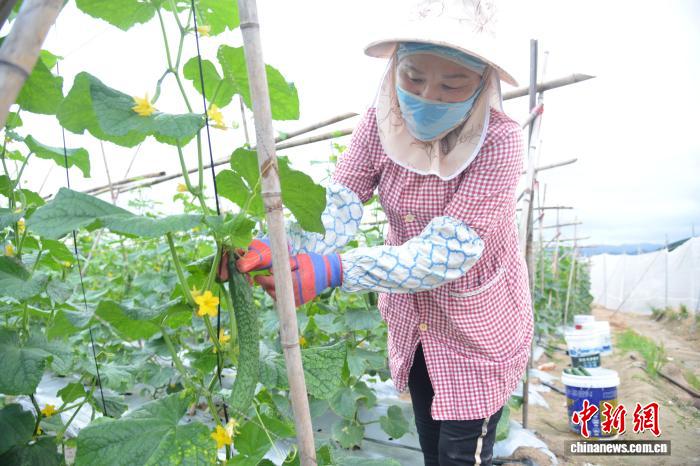
三亚首批冬季瓜菜开摘 明年1月将大规模上市
Zhong Guo Xin Wen Wang· 2025-11-07 13:46
Core Insights - The winter vegetable harvest in Sanya, Hainan, has begun, with significant production expected to support the market before the Spring Festival [1][3] - Sanya's winter vegetable planting area is projected to reach 166,100 acres, with an expected yield of over 340,000 tons [3][5] Group 1: Production and Harvesting - Farmers in Sanya are currently harvesting cucumbers, with individual farmers like Li Junning expecting to collect two to three thousand pounds in a single day [1][5] - The largest area for winter vegetable cultivation in Sanya is located in the Yazhou District, where 30,000 acres have been prepared for planting, involving approximately 4,300 households [3][5] - The peak harvest period for Sanya's vegetables will see products shipped nationwide, with cucumbers and other vegetables expected to be available in large quantities starting January next year [5][7] Group 2: Agricultural Strategy and Crop Management - The Hainan Provincial Department of Agriculture has proposed adjustments to winter vegetable planting, focusing on stabilizing melon production, increasing bean varieties, and reducing pepper cultivation [5][7] - Sanya is implementing advanced agricultural techniques, such as the "insect net+" green pest control technology for cowpeas, and promoting the "netted cowpea" brand [5][7] - The introduction of high-yield, disease-resistant varieties through the "South Breeding" program has resulted in significant yield increases, with cowpea varieties yielding over 4,000 pounds more per acre compared to traditional varieties [7] Group 3: Research and Development - Sanya is leveraging its favorable climate and research partnerships with institutions like the Chinese Academy of Tropical Agricultural Sciences to introduce and test new vegetable varieties [7] - The establishment of a healthy seedling production base aims to support local vegetable production, with plans to produce at least 10 million seedlings annually through intensive factory-style cultivation [7]
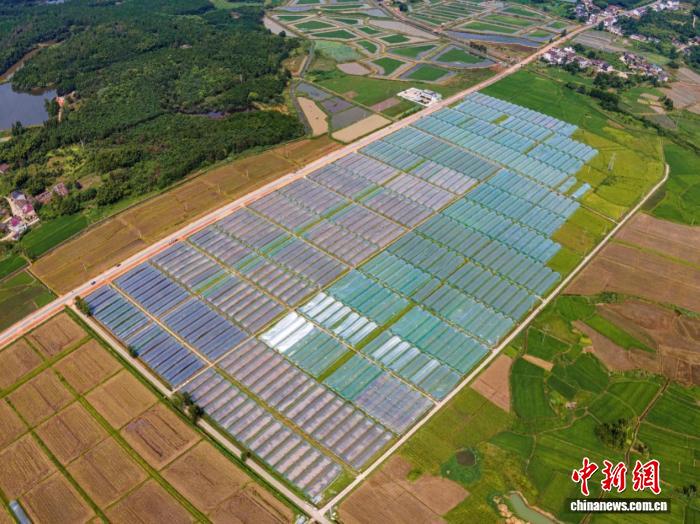
(乡村行·看振兴)村企“双向奔赴” 江西崇仁绘就产业振兴新“画卷”
Zhong Guo Xin Wen Wang· 2025-11-07 13:46
Core Viewpoint - The article highlights the successful implementation of the "Ten Thousand Enterprises Support Ten Thousand Villages" initiative in Chongren County, Jiangxi Province, showcasing the collaboration between government, enterprises, and local communities to drive rural revitalization and economic growth [1][4]. Group 1: Economic Impact - The establishment of a high-standard vegetable base in Guanqu Village has become a "star project," attracting local agricultural investment and enhancing infrastructure such as irrigation and standardized greenhouses [1][3]. - The vegetable base employs over 200 local villagers during peak seasons, with an average daily income of 150 yuan, and provides 150 fixed positions with an annual income of approximately 40,000 yuan per person [3][4]. Group 2: Community Benefits - Local residents have reported significant improvements in their economic conditions due to employment opportunities at the vegetable base, with one villager stating a monthly income of 3,750 yuan, which is considerably higher than previous external work [3]. - The initiative has led to the implementation of 18 various projects, with a total investment of 480 million yuan, benefiting over 580 farming households [4]. Group 3: Future Prospects - Chongren County plans to continue promoting the "Ten Thousand Enterprises Support Ten Thousand Villages" initiative by leveraging successful experiences and encouraging more private enterprises to engage in rural tourism, specialty agricultural product processing, and rural e-commerce [4].
物丰价稳!多举措协同应对低温 保障百姓“菜篮子”无忧
Yang Shi Wang· 2025-11-07 12:14
Group 1 - Strong snowfall began on November 5 in the Tianshan area of Xinjiang, prompting Urumqi to enhance vegetable supply stability through community direct sales points and wholesale markets [1] - Urumqi has 666 community vegetable direct sales points and 80 meat direct sales points, all of which are well-stocked and supply is stable [5] - The trading volume of vegetables in Urumqi reached approximately 1,500 tons, an increase of 15% compared to normal levels, due to proactive engagement with suppliers from Yunnan, Shandong, and local bases [7] Group 2 - In response to the cold wave affecting vegetable production, Henan's Huai County is taking measures to ensure stable production and supply of vegetables [8] - A ginger planting base in Huai County is currently in the harvest phase, with villagers actively engaged in harvesting and packaging [10] - Huai County maintains a stable planting area of over 540,000 acres for melons and vegetables, producing more than 2 million tons annually, while providing technical guidance to farmers and adjusting production based on market demand [15]
宁夏首票“远程属地查检”业务落地
Zhong Guo Xin Wen Wang· 2025-11-07 06:03
Core Points - The first remote inspection and quarantine business in Ningxia has been successfully implemented, allowing for real-time video inspections of exported goods, specifically 16.8 tons of broccoli from a local company [1][2] - The remote inspection process has significantly reduced the inspection time to under 25 minutes, cutting the inspection cycle by 80% [1][2] - The remote inspection model is part of the "Smart Customs" initiative, which aims to optimize resource allocation and reduce logistics costs for enterprises [1][2] Group 1 - The remote inspection model allows for non-contact inspections of eligible import and export goods, enhancing efficiency and reducing waiting times for businesses [1][2] - The implementation involved thorough preparation, including understanding enterprise willingness, testing networks, and training for companies on the new process [2] - The new model has reportedly increased logistics speed for export orders by 7%, while maintaining enforcement standards [2]
屯昌打造千亩应急保供蔬菜基地
Hai Nan Ri Bao· 2025-11-06 01:39
海南省台风季节应急保供蔬菜(屯昌)基地项目位于屯昌县枫木镇加彩洋、奇石洋、枫木洋、排营 洋、蒙贡洋等区域范围,占地总面积约1300亩。在设施建设方面,将搭建980亩以单体避风棚为主的生 产大棚,配套"智慧农业+钢结构大棚"系统,配备水肥一体化设施和自动遮阳系统。同时,建设20亩智 能化育苗大棚,建立蔬菜品种筛选库,配备自动化育苗设备。此外,配套的150吨冷链物流仓库项目已 启动建设,确保蔬菜采后处理与仓储运输需求。 屯昌打造千亩应急保供蔬菜基地 种植"15+N"保供蔬菜品种 海南日报屯城11月5日电(海南日报全媒体见习记者 祁夏 记者 曾毓慧)屯昌县已启动占地千余亩 的台风季节应急保供蔬菜基地试点建设,主要种植"15+N"保供蔬菜品种,目前该项目已进入运营招商 阶段。这是海南日报全媒体记者11月5日从屯昌县有关部门获悉的。 屯昌县农业发展有限公司有关负责人介绍,得益于丰富的水系资源与适宜气候,屯昌具有发展蔬菜 产业的天然条件,也能有效规避台风侵袭。此外,这一项目基地紧邻海三高速、万洋高速等交通干线, 有利于蔬菜生产的农资供应,也有助于蔬菜快速转运。 "目前,我们正面向社会公开招募合作运营方。"屯昌县农村产权交 ...
京蒙合力打造环京蔬菜保供基地 筑牢首都“菜篮子”供应根基
Yang Guang Wang· 2025-11-04 08:19
Core Viewpoint - The collaboration between Beijing and Inner Mongolia aims to establish a stable supply chain for vegetables to Beijing, ensuring both food security for the capital and promoting regional development through the creation of vegetable production bases [1][2]. Group 1: Background and Context - Inner Mongolia is positioned in an ideal agricultural zone for cool-season vegetables due to its ample sunlight, significant temperature variations, and clean soil [2]. - The demand for green, high-quality, and safe vegetables in the Beijing market is increasing as the integration of the Beijing-Tianjin-Hebei region accelerates [2]. Group 2: Key Practices and Achievements - A collaborative mechanism has been established between Beijing and Inner Mongolia, with the issuance of implementation plans and management methods to strengthen top-level design [3]. - A total of nearly 8 million yuan has been invested in the collaboration over two years, resulting in the establishment of 42 vegetable production bases covering 60,000 acres, supplying over 100,000 tons of quality vegetables annually to Beijing [1][3]. - The initiative has created approximately 10,000 jobs, with an average income increase of 10,000 yuan per person [1]. Group 3: Technological Empowerment and Standard Control - The vegetable production bases focus on technological advancement and standard control to enhance quality and efficiency [4]. - Smart agricultural technologies have been implemented, such as a 120 million yuan investment in a smart agriculture park in Ningcheng County, which has improved water and fertilizer management and increased tomato yields [4]. Group 4: Cold Chain Logistics - A comprehensive cold chain logistics system has been established to ensure fresh produce reaches the market quickly, maintaining a freshness retention rate of over 95% [5]. - Various counties have developed integrated systems for seedling cultivation, planting, storage, and sales, ensuring temperature control during transportation [5]. Group 5: Market Integration - A stable and diverse sales network has been created to meet the consumption demands of Beijing, promoting the branding and regular supply of Inner Mongolia's vegetables [6]. - Partnerships with major markets and supermarkets in Beijing have been established to facilitate direct supply of branded agricultural products [6]. Group 6: Inclusive Growth and Farmer Engagement - Innovative mechanisms have been introduced to ensure farmers are deeply involved in the industry and share in the value-added benefits [7]. - Various models have been adopted to enhance farmers' incomes, with some farmers experiencing income growth of over 30% [7]. Group 7: Lessons and Insights - Policy collaboration is essential for the successful establishment of vegetable supply bases, providing necessary support and funding [8]. - The application of smart agricultural technologies is crucial for improving production quality and efficiency [8]. - A complete supply chain from production to sales is vital for ensuring market responsiveness and sustainability [8]. - Establishing effective profit-sharing mechanisms is important for the sustainable development of the agricultural sector [8]. - Market orientation is key to aligning production with consumer preferences, ensuring competitive regional branding [9].