Funds

Search documents
PIMCO Short Term Municipal Bond Active Exchange-Traded Fund (SMMU US) - Investment Proposition
ETF Strategy· 2026-01-18 12:17
Core Viewpoint - PIMCO Short Term Municipal Bond Active Exchange-Traded Fund (SMMU) offers a conservatively managed portfolio of short-maturity municipal securities aimed at providing federally tax-exempt income with low interest-rate sensitivity [1] Group 1: Investment Strategy - The fund prioritizes capital preservation, broad issuer diversification, and rigorous credit surveillance across various states, sectors, and revenue streams [1] - SMMU has the flexibility to adjust its structure, call profiles, and curve positioning as market conditions evolve [1] - Income generation is primarily driven by high-quality tax-exempt cash flows, while return variability is influenced by yield-curve shifts, call activity, and municipal credit spreads [1] Group 2: Target Investors - SMMU is suitable for taxable investors in higher brackets as a cash-management or sweep vehicle [1] - It serves as a defensive municipal core to reduce volatility in a broader tax-exempt portfolio [1] - The fund is also appropriate for constructing time-segmented income ladders where preservation and flexibility are essential [1] Group 3: Market Conditions and Risks - Supportive market conditions include stable growth with anchored policy rates, while abrupt risk-off episodes or heavy refunding waves can impact pricing and reinvestment dynamics [1] - A specific risk associated with the fund is call and reinvestment risk at the short end, which may reduce portfolio yield potential or require repositioning under less favorable terms [1]


Pimco's 4.6% ETF Only Looks Good For Retirees At First Glance
247Wallst· 2026-01-18 12:10
Core Insights - PIMCO Enhanced Short Maturity Active Exchange-Traded Fund (NYSEARCA:MINT) provides a yield of 4.6% for retirees by investing in short-term bonds with maturities under three years [1] Group 1 - The fund focuses on short-term bonds, which are less sensitive to interest rate fluctuations, making it a suitable option for risk-averse investors [1]

FlexShares Real Assets Allocation Index Fund (ASET US) - Investment Proposition
ETF Strategy· 2026-01-17 15:39
Use of this website is subject to the terms of our disclaimer, cookies statement and privacy policy. By continuing to browse the site, you are indicating your acceptance of these terms. ...
谭珺喊话广发基金杨冬:我怀孕了!
Xin Lang Cai Jing· 2026-01-17 15:03
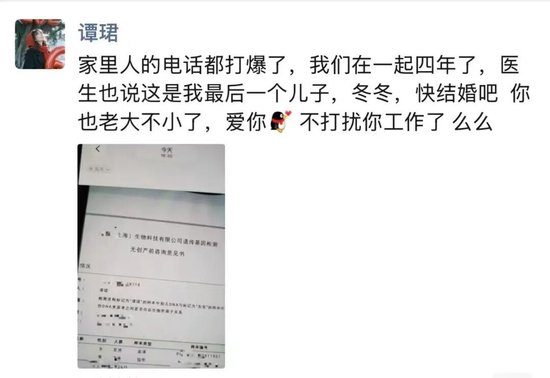
Core Viewpoint - The recent social media posts by Tan Jun, revealing her pregnancy and urging Yang Dong, a fund manager at Guangfa Fund, to marry her, have sparked significant public interest and discussion about their personal and professional relationship [1][17]. Group 1: Personal Relationship Dynamics - Tan Jun publicly announced her pregnancy and shared a non-invasive prenatal testing report to confirm the biological relationship between her unborn child and Yang Dong, indicating a pressing desire for marriage after four years of being together [3][20]. - The narrative constructed by Tan Jun emphasizes the urgency of marriage, mentioning family pressure and the notion of "unmarried pregnancy" [4][21]. - Despite Tan Jun's vocal expressions on social media, Yang Dong has not publicly responded to the situation, which adds to the intrigue surrounding the event [16][33]. Group 2: Professional Implications - The incident has drawn attention to a prior conflict involving Tan Jun accusing Yang Dong of misconduct related to a knowledge-sharing platform, which may involve ethical violations concerning his role as a fund manager [17][34]. - Tan Jun's allegations suggest that Yang Dong may have engaged in activities that conflict with the professional conduct expected of fund managers, potentially harming investor trust [18][35]. - The situation has led to a divided public opinion, with some supporting Tan Jun's revelations about industry practices, while others criticize her for making personal grievances public [34][35].
公募基金能否接下这50万亿?
投中网· 2026-01-17 07:03
Core Viewpoint - The article discusses the significant inflow of funds into public offerings, particularly focusing on "fixed income +" and Fund of Funds (FOF) products, as a response to the upcoming maturity of a large volume of fixed deposits, estimated to be between 30 trillion to 60 trillion yuan by 2026, with an average forecast of around 50 trillion yuan [4]. Group 1: Performance of Multi-Asset Products - The "fixed income +" and FOF products have shown impressive performance, with the total management scale of public FOF funds reaching 238.3 billion yuan by the end of 2025, marking a historical high with an annual growth of 100 billion yuan [5]. - The "fixed income +" funds reached a scale of 2.53 trillion yuan, growing over 700 billion yuan within the year, indicating a strong market demand for these products [5][20]. - Notable performances include the "fixed income +" fund from China Universal, which achieved a return of 37% in 2025, and the FOF fund from Guotai, which returned 66.14% [6][17]. Group 2: Trends in Public Fund Products - There are two prominent trends in public fund products: the toolization of products, particularly ETFs, and the multi-asset allocation strategy that aims for stable performance across different market conditions [9][10]. - The toolization trend is evident in both equity and bond products, with a significant increase in bond ETFs, which have surpassed 700 billion yuan [9]. - The multi-asset allocation strategy seeks to balance investments between stocks and bonds based on market conditions, enhancing the potential for stable returns [10][12]. Group 3: Market Dynamics and Future Outlook - The growth of multi-asset products is expected to continue, driven by the increasing acceptance of "fixed income +" and FOF products among retail and institutional investors [22]. - The public fund industry is witnessing a shift towards more systematic and quantitative asset allocation strategies, moving away from reliance on subjective judgment [24][27]. - The competitive landscape is changing, with companies like China Universal and Invesco Great Wall rapidly expanding their multi-asset offerings, indicating a potential shift in market leadership [38][41].

开年密集调整基金经理,权益类占比近六成
证券时报· 2026-01-17 03:30
密集调整。 年初至今,公募基金行业迎来一波基金经理变动潮。例如大成基金近日连发多条基金经理变动公告,旗下多只权益类产品增聘新基金经理,其中涉及王帅 管理的4只产品。拥有11年科技投资经验的郭玮羚此次被增聘为3只基金的基金经理。 证券时报·券商中国记者梳理发现,已有华夏基金、大成基金、广发基金、摩根基金等多家公司基金经理变动,涉及产品超50只基金,其中权益类基金占 比近六成。 郭玮羚被增聘为大成科创主题混合、大成互联网思维混合、大成领先动力混合的基金经理,与王帅共同管理。郭玮羚拥有11年证券从业经验,2015年加入 大成基金,现任股票投资部基金经理,长期聚焦科技领域投资。 在近日大成基金举办的2026年策略会上,郭玮羚表示,2026年市场对AI的投资回报关注度将显著提升,投资重心将从"总量扩张"转向"结构分化",光通 信、存储、液冷等细分领域有望引领新一轮资本配置。 此外,李煜被增聘为大成睿鑫股票型基金的基金经理,与刘旭共同管理;同时与王帅共同管理大成国家安全主题灵活配置混合。 在业绩方面,王帅管理的4只产品表现分化。截至1月15日,大成互联网思维A近三年、一年业绩回报分别为71.63%,34.10%。大成科创 ...

FOF发行持续回暖 银行渠道强力驱动,资产配置需求释放
2 1 Shi Ji Jing Ji Bao Dao· 2026-01-16 23:49
Core Insights - The FOF (Fund of Funds) market is experiencing a resurgence, with significant fundraising activity observed at the beginning of 2026, indicating strong demand for asset allocation products [1][13] - The total scale of FOF funds reached 2,442.92 billion yuan as of January 14, 2026, marking a steady increase from the end of 2025 and a significant growth compared to 2024 [14][15] - The issuance of new FOF funds is robust, with 23 funds expected to open for subscription in January 2026, reflecting a shift towards more stable investment strategies [3][15] Fundraising Activity - On January 5, 2026, Wanji Fund's FOF raised 2.099 billion yuan in a single day, while GF Fund's FOF raised 3.288 billion yuan in just two days [1][14] - By January 16, 2026, four newly established FOF products had collectively raised over 6 billion yuan, accounting for approximately 30% of the total new fund issuance during the same period [1][15] Market Growth - The FOF market has seen a continuous growth trend, with a 79.03% increase in scale in 2025 and a further 2.48% growth in early 2026 [14][15] - The total number of FOF funds reached 2,241.01 million shares, with a year-on-year growth of approximately 65% in 2025 [15] Product Structure - The FOF market is predominantly composed of mixed-asset FOFs, which account for 91.75% of the total scale, catering to various risk preferences [16] - Major fund managers like E Fund, GF Fund, and others have established a significant presence in the mixed-asset FOF space, with several products exceeding 10 billion yuan in scale [16] Distribution Channels - The resurgence in FOF popularity is closely linked to the support from banking channels, particularly the customized FOF offerings from banks like China Merchants Bank [5][17] - The "TREE Long-term Profit Plan" launched by China Merchants Bank has significantly boosted FOF scale, with over 10 million clients participating by the end of 2024 [5][17] Investment Strategies - FOF products are increasingly adopting passive investment strategies, focusing on index-based investments through ETFs, while also diversifying into multiple asset classes such as gold and REITs [16] - The average return of FOFs in 2025 was nearly 15%, which has positively influenced investor confidence [9][17] Market Dynamics - The current FOF sales surge is partly driven by sales efforts rather than purely organic demand from clients, indicating a potential reliance on marketing strategies [19] - Investors are advised to prioritize diversified FOFs that align with their risk preferences and investment goals, emphasizing the importance of long-term holding for compounding returns [19][20]
多只新基金提前结募宽基ETF频现天量成交
Shang Hai Zheng Quan Bao· 2026-01-16 18:34
Group 1 - The market is experiencing a mixed trend in fund flows, with equity funds announcing early closure of fundraising due to high subscription amounts exceeding their limits [1] - Several broad-based ETFs have seen significant trading volumes but are also facing substantial redemptions [1] - Industry experts believe that while equity assets still hold investment value, caution is advised to avoid blindly chasing high prices and to focus on quality targets based on industry trends [1] Group 2 - New fund issuance has accelerated, with multiple equity funds announcing early closure of fundraising, some within a single day [2] - For instance, Penghua Fund's ETF for industrial and non-ferrous metals closed fundraising early on January 15, having met the necessary conditions [2] - The trend of shortening fundraising periods indicates that fund managers aim to establish funds quickly and capitalize on market momentum [2] Group 3 - The issuance of equity funds has seen significant interest, with notable funds like E Fund's enhanced index fund raising 2.15 billion and Robeco's fund raising 1.262 billion [3] - However, there is a noticeable decline in fund flows for ETFs, with a net redemption of 68.5 billion on January 15 and 8.8 billion on January 14 [3] - Specific ETFs faced large redemptions, including Huatai-PB CSI 300 ETF with a net redemption of 20.157 billion and E Fund's Sci-Tech 50 ETF with 10.479 billion [3] Group 4 - On January 16, several broad-based ETFs continued to see significant trading volumes, with Huaxia CSI 300 ETF achieving a record trading volume of 22.7 billion [4] - Huatai-PB CSI 300 ETF also recorded a trading volume of 25.9 billion, ranking second only to a previous high [4] - Experts predict increased market volatility in 2026 but highlight the presence of structural opportunities, particularly in sectors like AI, solid-state batteries, robotics, and innovative pharmaceuticals [4]
NBXG: Flawed Portfolio Structure Limits Appeal (Rating Downgrade)
Seeking Alpha· 2026-01-16 14:39
Core Insights - Market indices are trading near all-time highs, making it challenging to find discounted investment opportunities [1] - Income-focused funds are trading at discounted valuations, presenting potential opportunities for long-term investors [1] - A hybrid investment strategy combining classic dividend growth stocks, Business Development Companies, REITs, and Closed End Funds can enhance investment income while achieving total returns comparable to traditional index funds like the S&P [1]

50万亿“笼中虎”何处去?
2 1 Shi Ji Jing Ji Bao Dao· 2026-01-16 12:53
Core Viewpoint - The upcoming maturity of approximately 50 trillion yuan in fixed-term deposits in China by 2026 is creating significant uncertainty among depositors regarding asset allocation strategies, as interest rates have declined from 3.1% to around 1.5% [1][2]. Group 1: Scale of Maturing Deposits - The discussion around the 50 trillion yuan in maturing fixed-term deposits has gained traction since the end of 2025, highlighting the challenges banks will face in managing liabilities [2]. - The surge in maturing deposits can be traced back to 2022-2023, when funds flowed back into fixed-term deposits due to a downturn in the real estate market and volatility in the stock and bond markets [3]. - Estimates from various research institutions indicate that the total maturing fixed-term deposits in 2026 will significantly impact banks' liabilities and residents' asset allocation [4][5]. Group 2: Potential Directions for Maturing Funds - The maturing funds are expected to be reallocated, but it is important to note that not all funds will leave the banking system; many will be optimized within it [6]. - Consumer spending is anticipated to be a primary outlet for these funds, with projected household consumption reaching 53 trillion yuan in 2025 [8]. - A portion of the funds will also be directed towards repaying mortgages, with an estimated 3 trillion yuan expected for early mortgage repayments in 2025 [8]. Group 3: Banking Strategies and Market Dynamics - Banks are currently engaged in competitive strategies to attract deposits, including raising interest rates on fixed-term deposits [7]. - The trend of "funds moving" within the banking system is evident, as depositors seek higher interest rates offered by smaller banks [6][7]. - The overall environment suggests that while some funds may flow into the stock market, the majority will likely remain within the banking system, reflecting a cautious approach among depositors [10][12]. Group 4: Impact on Banking Sector - The upcoming wave of maturing deposits presents a unique opportunity for banks to reprice their liabilities, potentially reducing annual costs by approximately 1.5 trillion yuan [14][16]. - The People's Bank of China has indicated that there is still room for interest rate cuts, which could further stabilize banks' interest margins [15][16]. - Banks are focusing on optimizing their liability structures, encouraging a shift from long-term to short-term deposits while promoting financial products to manage funds effectively [17][18].