存款入市

Search documents
中金研究 | 本周精选:宏观、策略、量化及ESG
中金点睛· 2026-01-31 01:31
Strategy - Trump's recent actions and statements have led to significant market volatility, with the U.S. experiencing a "triple hit" in stocks, bonds, and currencies [3] - Understanding the underlying objectives of Trump's policies is crucial, as some aggressive measures may lead to severe market fluctuations while others may have counterproductive effects [3] Macroeconomy - The Federal Reserve maintained interest rates at its January meeting, aligning with market expectations, while one member voted against this decision, possibly due to aspirations for the Fed chair position [6] - The Fed's statement indicated that the unemployment rate is stabilizing, and Powell suggested that monetary policy is currently in an appropriate position, raising the threshold for future rate cuts [6] - It is anticipated that the Fed may lower rates twice in 2026, with the first cut potentially delayed until the second quarter, as the core issue in the U.S. economy is income distribution imbalance rather than insufficient growth [6] Macroeconomy - The concept of "deposit migration" highlights the importance of both new and exiting funds in determining net inflows, which are closely related to stock prices and reflect residents' willingness to invest [8] - Residents' willingness to invest correlates positively with income expectations, and factors such as employment and service inflation align with these expectations [8] - The expected net inflow of funds from residents in 2026 is projected to be similar to the previous year, with high-net-worth individuals and insurance funds providing some independent support to the stock market, although this support may diminish in 2026 [8] Quantitative & ESG - Since 2025, the market has entered an upward cycle, but fluctuations have occurred; tracking implied volatility indicators has shown high sensitivity and accuracy in predicting weekly to monthly market movements [10] - The strategy implemented since April 2025 has yielded a 32% return, outperforming the CSI 1000 index, which achieved a 15% excess return [10]


中金:在基准情形下,预计居民新增入市资金体量可能与去年相比变化不太大
Jin Rong Jie· 2026-01-29 00:24
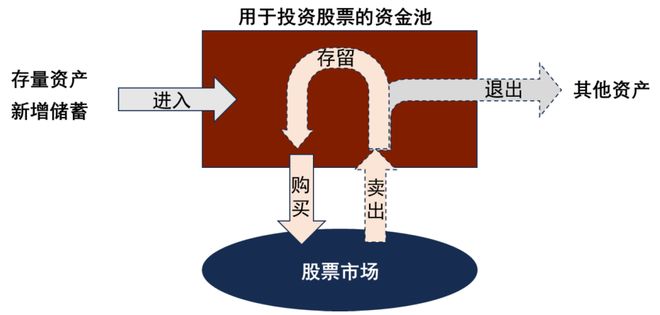
Group 1 - The core concept of "deposit into the market" emphasizes the importance of "net new funds" rather than just "new funds," as net new funds have a stronger correlation with stock prices [1][3][5] - The willingness of residents to enter the market is closely related to income expectations, which are expected to stabilize or improve, potentially leading to an increase in the growth rate of new funds entering the market, although it may be lower than in 2025 [1][6][11] - The analysis framework for income expectations includes employment and service inflation indicators, as well as leading indicators such as resident credit pulses and housing prices [1][15][44] Group 2 - The relationship between new funds and stock market performance is weak; however, the growth rate of new funds shows a better correlation with stock market fluctuations [6][9][11] - The investment willingness of residents is a decisive factor for market dynamics, with a strong connection to income expectations; if investment willingness declines, even with high levels of deposits, market entry funds may not increase significantly [21][23][28] - High-net-worth individuals and insurance funds may contribute to market support, but their impact may diminish in 2026 as their investment willingness may not be as influenced by broader income expectations [36][39][41]
券商晨会精华 | 关注AIDC电源产业链投资前景
智通财经网· 2026-01-28 02:08
Market Overview - The market rebounded yesterday with all three major indices turning positive, and the ChiNext Index rose over 1% at one point. The total trading volume in the Shanghai and Shenzhen markets was 2.89 trillion, a decrease of 353.2 billion from the previous trading day. Over 3,400 stocks declined across the market [1] - The semiconductor industry chain continued to rise, with Huahong Semiconductor reaching a historical high, and stocks like Yaxing Integrated and Shenghui Integrated hitting the daily limit. Precious metals maintained strong performance, with China Gold achieving three consecutive limit-ups and Hunan Gold two consecutive limit-ups [1] - The CPO concept showed active performance, with Yuanjie Technology rising over 10% to reach a historical high, and Huilv Ecology hitting the daily limit. The space photovoltaic concept continued to recover, with Yujing Co. achieving three limit-ups in four days, and Saiwu Technology achieving two limit-ups in three days [1] - In contrast, the coal and battery sectors saw significant declines, with the battery industry chain collectively dropping, and stocks like Tianji Co. and Huasheng Lithium Battery falling over 6%. By the end of the trading day, the Shanghai Composite Index rose 0.18%, the Shenzhen Component Index rose 0.09%, and the ChiNext Index rose 0.71% [1] AIDC Power Supply Industry - CITIC Securities highlighted investment opportunities in the AIDC power supply industry chain, driven by the increasing power of single AI chips and AI computing cabinets, leading to iterations towards high power, direct current, and high voltage. Investment opportunities include four categories: (1) AIDC power supply mainframes such as PSU, HVDC, and SST, which have high value concentration and technical barriers; (2) Station-level energy storage, which is becoming a necessity for AI data center grid connection; (3) Core components, particularly solid-state circuit breakers, CBU/BBU, DC/DC devices, and electronic fuses/relays; (4) Third-generation semiconductors like GaN and SiC [2] Market Sentiment and Investment Trends - CICC noted that the "deposit into the market" effect may diminish by 2026. This effect emphasizes the importance of "new funds" while also considering "exit funds" to determine "net new funds," which have a stronger correlation with stock prices. The willingness of residents to enter the market is closely related to income expectations. Even when focusing on new funds, the growth rate of new funds is more closely related to stock market performance. The entry of high-net-worth individuals and insurance funds has provided significant support to the stock market in 2025, but this influence may wane in 2026 [3] AI Cloud Infrastructure - Open Source Securities reported that Amazon AWS announced a price increase of approximately 15% for its EC2 machine learning capacity blocks, marking the first break from its long-standing pricing tradition of only decreasing prices. This service model was introduced to address the supply-demand imbalance of high-performance GPU resources. The price increase confirms the high demand for AI computing resources globally and indicates that the scarcity of resources in the AI cloud industry may become more pronounced [4]
A股三大指数开盘集体上涨,创业板指涨0.51%
Feng Huang Wang Cai Jing· 2026-01-28 01:34
Group 1 - The A-share market opened with all three major indices rising, with the Shanghai Composite Index up by 0.25%, the Shenzhen Component Index up by 0.29%, and the ChiNext Index up by 0.51%. Sectors such as precious metals, cultivated diamonds, and oil and gas saw significant gains [1] Group 2 - CITIC Construction Investment highlights the investment prospects in the AIDC power supply industry chain, driven by the increasing power of individual AI chips and AI computing cabinets, leading to iterations towards high power, direct current, and high voltage [2] - Investment opportunities identified include four categories: (1) AIDC power supply mainframes like PSU, HVDC, and SST, which have high value concentration and technical barriers; (2) Station-level energy storage, becoming a necessity for AI data center grid connection; (3) Core components, particularly solid-state circuit breakers, CBU/BBU, DC/DC devices, and electronic fuses/relays; (4) Third-generation semiconductors such as GaN and SiC [2] Group 3 - CICC notes that the "deposit into the market" effect may diminish by 2026, emphasizing the importance of considering both "new funds" and "exit funds" to understand "net new funds," which have a stronger correlation with stock prices [3] - The willingness of residents to enter the market is closely related to income expectations, and while high-net-worth individuals and insurance funds have provided support to the stock market in 2025, this influence may wane in 2026 [3] Group 4 - Open Source Securities reports that Amazon AWS announced a price increase of approximately 15% for its EC2 machine learning capacity blocks, marking the first break from its long-standing pricing tradition of only decreasing prices [4] - This price adjustment reflects the high demand for AI computing resources and indicates a growing scarcity in the AI cloud infrastructure supply chain, confirming the robust demand side of global AI development [4]

中金:宏观视角下的存款搬家与股市定价——存款到期的股债汇影响(一)
Xin Lang Cai Jing· 2026-01-27 23:53
Core Insights - The concept of "deposit into the market" emphasizes the importance of "new funds" while also considering "exit funds" to determine "net new funds," which have a greater correlation with stock prices. Ultimately, this reflects the willingness of residents to invest in the market, which is strongly correlated with income expectations [3][70][71] - The growth rate of new funds is more significant than the absolute amount of new funds, as it has a stronger correlation with stock market performance. High-net-worth individuals and insurance funds may provide independent support to the market in 2025, but this influence may diminish in 2026 [3][70][71] - The analysis framework for income expectations is based on employment and service inflation, with indicators such as resident credit pulses and housing prices leading to income expectations. In the baseline scenario, the amount of new funds entering the market is expected to remain relatively stable compared to the previous year [3][70][71] Group 1 - New funds do not equate to net new funds; stock price increases are more closely related to the growth rate of new funds. The relationship between new funds and stock market performance is not strong, as evidenced by fluctuations in new funds from 2015 to 2025 [4][7][75] - The correlation between the growth rate of new funds and stock market performance is more significant. For instance, in 2016, new funds reached 4.9 trillion yuan, but the market declined by 12.9%, while in 2019, lower new funds coincided with a 33% market increase [7][75][78] - The willingness of residents to invest in the stock market is a decisive factor, closely linked to income expectations. A decline in investment willingness can lead to reduced market participation, as seen in 2022 when a 14% increase in maturing deposits did not translate into increased market investment [21][25][90] Group 2 - The investment willingness of residents is significantly influenced by income expectations. As of Q3 2025, the tendency to save remains high, indicating potential for increased risk asset allocation if saving tendencies normalize [25][94] - Employment perceptions are closely tied to income expectations, which in turn affect stock market trends. Historical data shows a negative correlation between unemployment rates and stock market performance in the U.S. and Japan [30][99] - High-net-worth individuals' willingness to invest in the stock market may not be significantly affected by broader income expectations, and insurance funds may contribute to market investments, although their growth may be limited compared to 2025 levels [34][35][106]

50万亿“笼中虎”何处去?
2 1 Shi Ji Jing Ji Bao Dao· 2026-01-16 12:53
Core Viewpoint - The upcoming maturity of approximately 50 trillion yuan in fixed-term deposits in China by 2026 is creating significant uncertainty among depositors regarding asset allocation strategies, as interest rates have declined from 3.1% to around 1.5% [1][2]. Group 1: Scale of Maturing Deposits - The discussion around the 50 trillion yuan in maturing fixed-term deposits has gained traction since the end of 2025, highlighting the challenges banks will face in managing liabilities [2]. - The surge in maturing deposits can be traced back to 2022-2023, when funds flowed back into fixed-term deposits due to a downturn in the real estate market and volatility in the stock and bond markets [3]. - Estimates from various research institutions indicate that the total maturing fixed-term deposits in 2026 will significantly impact banks' liabilities and residents' asset allocation [4][5]. Group 2: Potential Directions for Maturing Funds - The maturing funds are expected to be reallocated, but it is important to note that not all funds will leave the banking system; many will be optimized within it [6]. - Consumer spending is anticipated to be a primary outlet for these funds, with projected household consumption reaching 53 trillion yuan in 2025 [8]. - A portion of the funds will also be directed towards repaying mortgages, with an estimated 3 trillion yuan expected for early mortgage repayments in 2025 [8]. Group 3: Banking Strategies and Market Dynamics - Banks are currently engaged in competitive strategies to attract deposits, including raising interest rates on fixed-term deposits [7]. - The trend of "funds moving" within the banking system is evident, as depositors seek higher interest rates offered by smaller banks [6][7]. - The overall environment suggests that while some funds may flow into the stock market, the majority will likely remain within the banking system, reflecting a cautious approach among depositors [10][12]. Group 4: Impact on Banking Sector - The upcoming wave of maturing deposits presents a unique opportunity for banks to reprice their liabilities, potentially reducing annual costs by approximately 1.5 trillion yuan [14][16]. - The People's Bank of China has indicated that there is still room for interest rate cuts, which could further stabilize banks' interest margins [15][16]. - Banks are focusing on optimizing their liability structures, encouraging a shift from long-term to short-term deposits while promoting financial products to manage funds effectively [17][18].

新增2.14万亿元流向A股?多家券商解读
证券时报· 2025-08-17 03:55
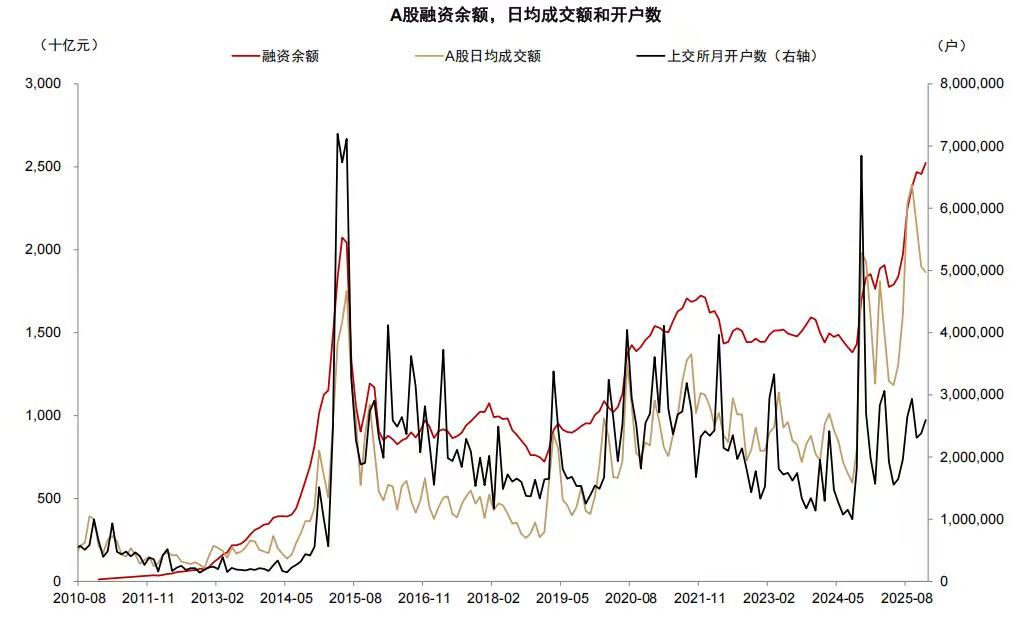
Core Viewpoint - The significant increase in non-bank deposits in July, reaching 2.14 trillion yuan, is attributed to heightened financial investment activity and may indicate a shift of funds towards the stock market, reflecting a broader trend of liquidity in the financial system [1][4][5]. Group 1: Non-Bank Deposits - In July, non-bank deposits increased by 2.14 trillion yuan, the highest level for the same period since 2015, with a year-on-year increase of 1.39 trillion yuan [1][4]. - The increase in non-bank deposits is linked to a rise in stock market activity, with many analysts suggesting that these funds may be flowing into equities rather than remaining in traditional savings [2][3]. - From January to July, non-bank deposits cumulatively increased by 4.69 trillion yuan, which is 1.73 trillion yuan more than the same period last year, indicating a structural trend of funds moving from bank deposits to non-bank financial institutions [2][3]. Group 2: Market Dynamics - The rise in non-bank deposits coincides with a decline in household deposits, which decreased by 1.1 trillion yuan in July, suggesting a potential migration of funds into the capital markets [5][6]. - Analysts note that the current market sentiment is strong, but caution that the increase in non-bank deposits may not directly correlate with a surge in retail investor participation, as high-net-worth individuals are more actively entering the market [7][8]. - The liquidity in the market is supported by the People's Bank of China's actions, including a net injection of 400 billion yuan through monetary policy tools, which has contributed to the overall increase in non-bank deposits [4][6]. Group 3: Investment Behavior - There is a distinction between high-net-worth investors entering the market and the general public, with the latter not showing significant direct investment in stocks but rather through bank wealth management products [7][8]. - The current environment suggests that while there is potential for increased retail participation in the market, it is primarily driven by sentiment rather than a fundamental shift in investment behavior [6][8]. - The long-term trend indicates that as deposit rates decline, there may be a gradual shift of wealth towards the capital markets, but this process is expected to be slow and should be approached with caution [6].