
中小企业

Search documents
四川成都:“政金协同”赋能中小企业发展
Zhong Guo Jing Ji Wang· 2025-11-28 07:53
Core Insights - The "2025 Easy Financing and Industrial Integration" annual conference aims to explore new paths for financial empowerment of small and medium-sized enterprises (SMEs) in Chengdu [1] - Chengdu has established two trillion-level and ten hundred-billion-level industrial clusters, with eight national-level characteristic industrial clusters for SMEs [1] - In 2024, financial products like "Zhuangda Loan" and "Rongyi Loan" helped technology-based SMEs secure credit loans totaling 10.4 billion yuan [1] Group 1 - The conference gathered over 260 participants from government agencies, banks, and securities companies to discuss financial empowerment for the real economy [1] - The event aims to convert policy dividends into development momentum, addressing financing challenges for 410 national-level specialized and innovative "little giant" enterprises [1] - Chengdu's Economic and Information Bureau introduced the "Chenggong Jingxiao Industrial Taobao" platform to assist enterprises in market expansion, brand strengthening, and order acquisition [1] Group 2 - A new "Scenario Application Promotion Office" was established to deepen the integration of manufacturing and cutting-edge technology [1] - The "Four Special One Family" service model was launched to enhance service delivery [1] - The "Economic New Scenario Steward" online channel was introduced to link innovative services with market demands in real-time [1] Group 3 - The "2025 Policy Handbook" e-book was launched to facilitate quick policy inquiries and intelligent matching for enterprises [2] - The conference included a ceremony for the "Expert Service Team" representatives to strengthen the intellectual support of the service system [2]
工信部:我国已培育国家级专精特新“小巨人”企业超1.76万家
Ren Min Ri Bao· 2025-11-17 00:50
Core Insights - As of now, China has cultivated over 600,000 technology and innovation-oriented small and medium-sized enterprises (SMEs), with more than 140,000 specialized and innovative SMEs, and over 17,600 national-level "little giant" enterprises [1] Group 1: Scale and Growth - The scale of SMEs is continuously expanding, with the number of registered SMEs expected to exceed 60 million by the end of 2024 [1] - "Little giant" enterprises, which represent 3.5% of the total number of industrial SMEs, contribute 9.6% of the total operating income and 13.7% of the profits of these enterprises [1] Group 2: Development Quality - The proportion of independently developed effective invention patents among SMEs is projected to reach 75.3% in 2024 [1]
我国专精特新“小巨人”企业超1.76万家 各地多举措培育专精特新中小企业
Yang Shi Xin Wen· 2025-11-14 08:48
Core Insights - The development conference for specialized and innovative small and medium-sized enterprises (SMEs) highlighted significant growth in China's specialized SMEs, with over 14,000 such enterprises and more than 17,600 "little giant" companies established to date [1][2]. Group 1: Growth of Specialized SMEs - During the 14th Five-Year Plan, the number of specialized and innovative SMEs increased from less than 40,000 to over 140,000, while "little giant" enterprises grew from over 5,000 to 17,600 [2]. - Currently, there are over 60 million SMEs in China, accounting for 99.9% of all enterprises, 84.3% of employment, and 78% of total assets [2]. Group 2: Innovation Capabilities - In 2024, 75.3% of effective invention patents were independently developed by SMEs, with "little giant" companies averaging 26.6 invention patents each and over 30 million yuan in R&D investment [3]. - More than 3,000 "little giant" enterprises have participated in national major science and technology projects [3]. Group 3: Industry Distribution - Over 60% of "little giant" enterprises focus on industrial foundational sectors, with nearly 80% located in key industry chain segments [4]. - 90% of these enterprises directly support at least three well-known domestic or international companies, with around 6,000 "little giant" firms operating in future industries such as quantum technology and artificial intelligence [4]. Group 4: AI Applications in SMEs - The conference introduced 238 typical AI application scenarios for SMEs, aimed at enhancing business processes and product innovation [5][6]. - These applications focus on R&D design, production operations, and management, promoting technological innovation and business model upgrades [6][8]. Group 5: Digital Transformation Initiatives - The Ministry of Industry and Information Technology launched a national digital transformation service platform for SMEs, providing reference paths for digital upgrades across 50 sub-industries [10]. - Local governments are actively promoting the emergence of more specialized and innovative SMEs, with Chongqing aiming to double its specialized SMEs and "little giant" enterprises by the end of the 15th Five-Year Plan [12]. Group 6: Policy Support - Numerous policies supporting specialized SMEs have been introduced this year, totaling over 20 initiatives from national to local levels, covering funding, innovation support, and digital transformation [15]. - The central government has allocated support for over 4,200 "little giant" enterprises to enhance innovation capabilities and has initiated programs to connect large and small enterprises for technology innovation needs [17].


我国专精特新中小企业展现“硬实力” “小体量”迸发科创“大能量”
Yang Shi Wang· 2025-11-13 06:59
Core Insights - The 2025 Specialization, Refinement, Characteristic, and Innovation (专精特新) Small and Medium Enterprises (SMEs) Development Conference will be held on November 12 in Chongqing, highlighting the growth and support for specialized SMEs in China [1] Group 1: Growth of Specialized SMEs - China has cultivated over 17,600 "Little Giant" enterprises and more than 140,000 specialized SMEs, with over 600,000 quality SMEs being developed steadily [1][3] - During the 14th Five-Year Plan period, the number of specialized SMEs increased from less than 40,000 to over 140,000, while "Little Giant" enterprises grew from over 5,000 to 17,600 [3] Group 2: Innovation and R&D Capabilities - In 2024, 75.3% of effective invention patents were independently developed by SMEs, with "Little Giant" enterprises averaging 26.6 invention patents per company and over 30 million yuan in R&D investment [5] - More than 3,000 "Little Giant" enterprises have participated in major national science and technology projects, with over 60% focusing on industrial foundational sectors [5] Group 3: AI Applications and Digital Transformation - The conference will showcase 238 typical AI application scenarios for SMEs, aimed at optimizing business processes and innovating products and services [8] - The Ministry of Industry and Information Technology has launched a national digital transformation service platform for SMEs, providing reference paths for digital upgrades across 50 sub-industries [10] Group 4: Policy Support and Local Initiatives - Local governments are intensifying efforts to support specialized SMEs, with Guangzhou introducing an upgraded support policy and Beijing releasing a service list with 22 measures for SMEs [13][15] - The central government has allocated over 4,200 million yuan to enhance the innovation capabilities of "Little Giant" enterprises and has initiated various programs to connect large and small enterprises [17]
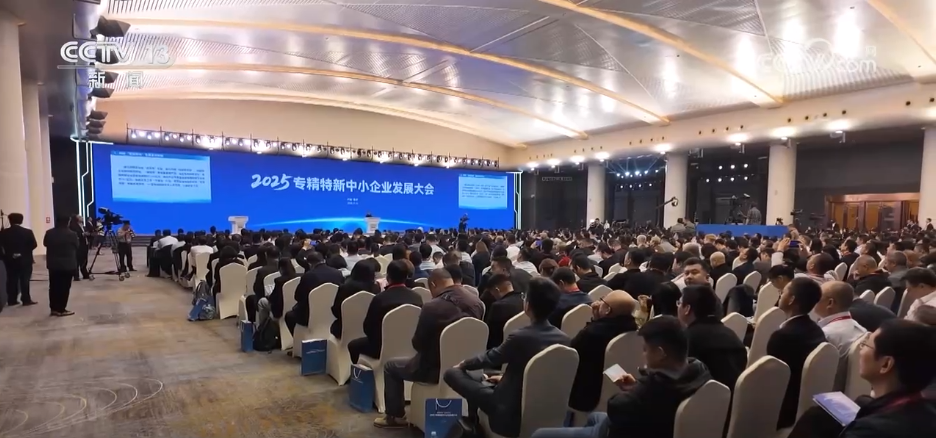
培优育强 2025专精特新中小企业大会在重庆开幕
Zhong Zheng Wang· 2025-11-12 12:56
Core Insights - The 2025 Specialized, Refined, Unique, and Innovative SMEs Conference was held in Chongqing, emphasizing the importance of nurturing specialized and innovative small and medium-sized enterprises (SMEs) in China [1] - The Ministry of Industry and Information Technology (MIIT) aims to strengthen the cultivation of quality enterprises in weak links of the industrial chain, enhancing the backbone of specialized and innovative SMEs and high-tech enterprises [1][2] - As of the end of 2024, the number of registered SMEs in China is expected to exceed 60 million, accounting for 99.9% of all enterprises [2] Group 1: Development of SMEs - The MIIT has reported that over 600,000 technology and innovation-oriented SMEs have been cultivated, with more than 140,000 specialized and innovative SMEs and over 17,600 national-level "Little Giant" enterprises [1][2] - The contribution of "Little Giant" enterprises, which represent 3.5% of the total number of industrial SMEs, includes 9.6% of total revenue and 13.7% of total profits [2][3] - The MIIT is focusing on enhancing the innovation capabilities of SMEs and optimizing the business environment for their development [1][2] Group 2: Financial Support and Growth - The second phase of the National SME Development Fund has been approved by the State Council, aiming to attract more social capital to support the growth of early-stage SMEs [1] - Central financial support has been provided to over 4,200 "Little Giant" enterprises to increase innovation investment [3] - The loan balance for "specialized, refined, unique, and innovative" enterprises has exceeded 6.57 trillion yuan, reflecting a year-on-year growth of 13% [3] Group 3: Artificial Intelligence Empowerment - The MIIT has identified 238 typical application scenarios for artificial intelligence (AI) to empower SMEs, focusing on optimizing business processes and innovating product services [4][5] - Key areas of AI application include intelligent design, production operations, and management processes, which significantly enhance decision-making and operational efficiency [4] - The initiative also highlights the potential of AI in driving technological innovation and upgrading business models within SMEs [4][5]
工信部:强化金融精准支持 引导更多社会资本支持初创期中小企业成长
Zheng Quan Shi Bao Wang· 2025-11-12 11:34
Core Viewpoint - The 2025 Specialized and Innovative Small and Medium Enterprises Development Conference emphasizes the importance of nurturing high-quality enterprises as a key support for developing new productive forces and modern industrial systems [1] Group 1: Enterprise Innovation - The Ministry of Industry and Information Technology aims to strengthen the role of enterprises as innovation subjects by establishing more national-level innovation platforms and exploring the creation of specialized innovation empowerment centers [1] - There is a focus on promoting seamless connections between innovation chains and industrial chains [1] Group 2: Industry Chain Support - The initiative includes enhancing the role of high-quality enterprises in supporting the industry chain, particularly in addressing weak links within the industry [1] - The goal is to solidify the foundational strength of technology and innovation-driven small and medium enterprises, while also expanding the backbone of specialized, innovative small and medium enterprises and high-tech companies [1] - The strategy aims to strengthen the core of "little giant" enterprises and manufacturing champions [1] Group 3: Development Ecosystem - The conference highlights the need to optimize the development ecosystem for enterprises by establishing a comprehensive service network for small and medium enterprises [1] - There is an emphasis on building an overseas service system for small and medium enterprises and enhancing financial support to guide more social capital towards the growth of early-stage small and medium enterprises [1]
日本学欧盟加薪,不为高关税所动,力争连续四年大幅加薪
Sou Hu Cai Jing· 2025-11-09 07:27
Core Points - The article discusses the challenges faced by countries in setting wage standards amid rising global prices, highlighting a reform in Kochi Prefecture, Japan, which aims to link minimum wage to the median wage of full-time workers at a ratio of 60% [1][3] - The reform is seen as a step towards addressing income disparity in Japan, but questions remain about its effectiveness and implications for similar challenges in China [1][14] Summary by Sections Minimum Wage Reform in Kochi - Kochi Prefecture plans to raise its minimum wage from 952 yen to 1023 yen per hour starting December 1, 2024, which is still the lowest in Japan [3] - The reform introduces a new standard for minimum wage based on 60% of the median wage, a concept derived from the EU's minimum wage directive [3][5] Economic Context - Japan's average minimum wage will increase from 1055 yen to 1121 yen in 2024, reflecting a 6.3% rise, driven by workers' demands for income security [1][5] - The median hourly wage for full-time workers in Kochi is 1822 yen, suggesting a target minimum wage of 1093 yen, indicating a phased approach to reach this goal [5] Challenges for Small and Medium Enterprises (SMEs) - Japan's SMEs, which make up 99.7% of all businesses and employ about 70% of the workforce, face pressure from rising labor costs due to the minimum wage increase [9] - Concerns exist that a rapid increase to 1093 yen could raise labor costs by approximately 10%, potentially leading to reduced hiring or business closures [9][11] Policy Implications - The article emphasizes the need for supportive policies for SMEs, such as tax rebates and training subsidies, to mitigate the impact of wage increases [14] - It highlights the importance of establishing independent wage monitoring to avoid excessive political interference in wage setting [14] Lessons for China - China's minimum wage standards are generally lower than international norms, with most regions between 35% to 50% of average wages [13] - The article suggests that China could adopt a similar approach to Kochi's reform by linking minimum wage to local median wages and providing support for SMEs to balance labor rights and business costs [13][14] Conclusion - The reform in Kochi serves as a potential model for wage setting that prioritizes data-driven decisions over political maneuvering, which could enhance economic vitality and social equity [16]

“高市早苗经济学”面临哪些挑战?
Di Yi Cai Jing· 2025-11-03 08:20
Economic Challenges - The Japanese economy is facing significant constraints due to demographic issues, with a focus on the long-term impact of population decline and aging [1][5] - The government has initiated the "Japan Growth Strategy Council" to implement active fiscal policies aimed at increasing income, improving consumer confidence, and enhancing tax revenue [1] - Despite achieving a 5.4% wage increase agreement in 2025, real wage income is still declining due to rising prices, indicating a need for wages to grow at least 3% to meet sustainable inflation targets [3][5] Inflation Impact - The core consumer price index in Tokyo rose by 2.8% year-on-year as of October 31, surpassing previous expectations, with nationwide price increases remaining above the Bank of Japan's 2% target for three and a half years [3] - The rising cost of living, particularly for essential goods, is significantly impacting low-income groups, leading to increased financial strain on the population [3][4] Corporate and Labor Market Dynamics - The number of bankrupt companies in Japan with debts exceeding 10 million yen reached 4,990 in the first half of 2025, marking a 1% increase from the previous year, highlighting the financial strain on small and medium-sized enterprises [4] - Large corporations are raising wages, but the cost is often passed onto suppliers, which poses challenges for small businesses that employ 70% of the workforce [3][4] Demographic Trends - Japan's total population is projected to be slightly above 124.33 million in 2024, reflecting a decrease of approximately 554,500 from 2023, continuing a 16-year trend of population decline [5] - The aging population is leading to increased social security expenditures, which accounted for 33.1% of the total fiscal budget in the 2025 initial budget proposal [5] Workforce Investment - Addressing labor shortages is seen as a structural issue, with calls for reforms in human resource systems to attract talent through flexible work arrangements and salary structures [6] - There is an emphasis on increasing investments in human capital, particularly focusing on women's potential and enhancing productivity in small and medium enterprises [6]

西普尼(02583)被认定为第七批国家级专精特新“小巨人”企业
Zhi Tong Cai Jing· 2025-10-26 11:40
Core Viewpoint - Xipuni (02583) has been recognized as a "Little Giant" enterprise in the seventh batch of specialized and innovative small and medium-sized enterprises by the Ministry of Industry and Information Technology, which enhances its core competitiveness and industry influence [1] Group 1 - The company has been officially acknowledged for its specialization, uniqueness, and innovation capabilities [1] - This recognition is expected to improve the company's brand image and visibility in its niche market [1]
青海新认定80家创新型中小企业
Sou Hu Cai Jing· 2025-10-15 00:33
Core Insights - Qinghai Province is focusing on the development of specialized and innovative small and medium-sized enterprises (SMEs) to support its industrial goals, with a structured cultivation system for high-quality SMEs [1][2] - The province has recognized 80 innovative SMEs and 22 specialized and innovative SMEs this year, contributing to economic growth and high-quality development [1] - As of now, there are 274 recognized innovative SMEs and 146 specialized and innovative SMEs in Qinghai, with 9 classified as "little giants" [1] Group 1 - The average operational time of specialized and innovative SMEs in their main product areas exceeds 12 years, indicating deep expertise in niche markets [1] - In 2024, specialized and innovative SMEs in Qinghai are projected to achieve a total revenue of 30.477 billion yuan and a total profit of 4.375 billion yuan [1] - The total R&D expenditure of these SMEs is expected to exceed 1.3 billion yuan, accounting for 9.76% of total revenue, with an increase in the number of R&D institutions at national, provincial, and municipal levels [1] Group 2 - The provincial government has implemented 25 specific measures to support the development of specialized and innovative SMEs, focusing on financing, innovation, quality service, and enterprise transformation [2] - These measures aim to enhance the SMEs' capabilities in specialized management and distinctive development, positioning them as stabilizers in the industrial chain and leaders in technological innovation [2]