
土壤修复

Search documents
【投资视角】启示2023:中国土壤修复行业投融资及兼并重组分析(附投融资汇总、兼并重组等)
Qian Zhan Wang· 2025-08-20 04:47
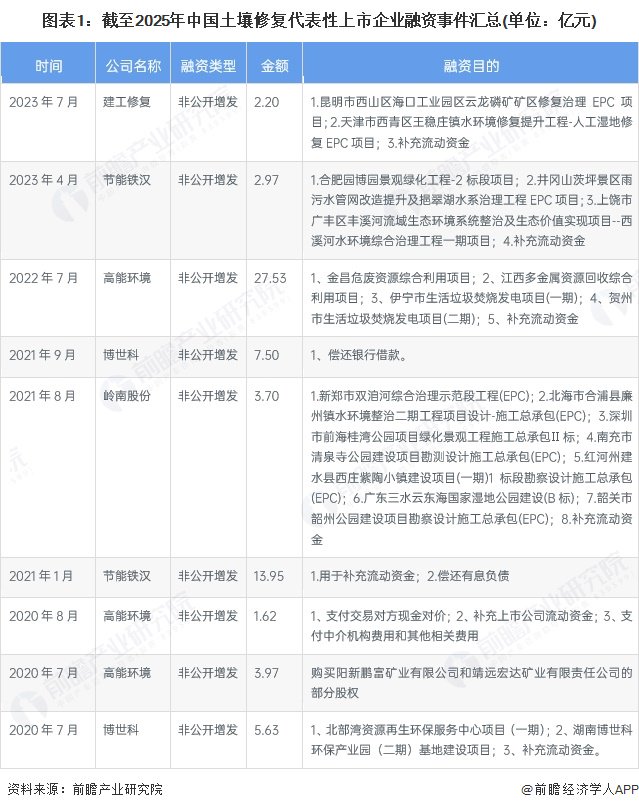
Core Insights - The article discusses the financing and investment trends in China's soil remediation industry, highlighting the primary financing methods and purposes of listed companies in this sector [1][2][3]. Financing Overview - Listed companies in the soil remediation industry primarily use private placements for financing, focusing on environmental project development and working capital supplementation [1]. - Key financing events for representative listed companies in the soil remediation sector are projected until 2025, with significant amounts raised for various projects [2][3]. Investment Activities - Representative companies in the soil remediation sector are diversifying their business through external investments, primarily by establishing subsidiaries [3][4]. - Specific investment amounts and purposes include: - Beijing High Energy's investment in various resource utilization companies totaling 150 million RMB [4]. - Construction Repair's investment in environmental technology companies [4]. - Sen Te's investments in renewable energy and environmental technology [5]. Industry Trends - The soil remediation industry is experiencing a trend of mergers and acquisitions, with companies diversifying their portfolios through the acquisition of environmental and remediation firms [12][16]. - The investment landscape shows a high frequency of strategic financing and equity transfers, with a notable concentration of events occurring between 2017 and 2018 [9][10]. Summary of Investment Events - A summary of investment events in the soil remediation industry indicates a mix of strategic investments and equity transfers, with a focus on expanding business operations and enhancing technological capabilities [8][9][10].


深交所对京蓝科技及相关当事人给予公开谴责纪律处分
Mei Ri Jing Ji Xin Wen· 2025-08-15 13:15
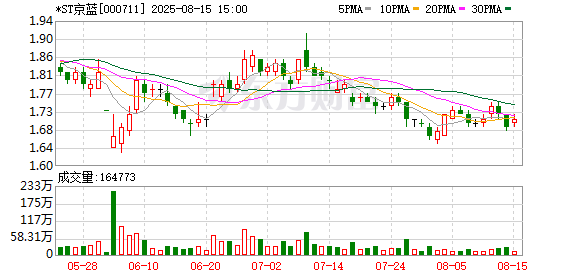
Core Viewpoint - The Shenzhen Stock Exchange has publicly reprimanded Jinglan Technology Co., Ltd. and related parties for violations related to financial reporting and performance commitments [2][4]. Group 1: Violations and Disciplinary Actions - Jinglan Technology entered into an agreement in September 2018 to acquire 56.7152% of the shares of its subsidiary Zhongke Dingshi Environmental Engineering Co., Ltd. through a share issuance, with performance commitments to achieve a cumulative net profit of no less than 40 million yuan from 2018 to 2020 [2]. - In 2020, Zhongke Dingshi falsely recognized project completion and inflated revenue, costs, and profits to meet performance commitments, leading to significant misstatements in Jinglan Technology's annual report [3]. - The inflated figures included an increase in operating revenue by 162.91 million yuan (14.06% of reported revenue), operating costs by 96.55 million yuan (4.3% of reported costs), total profit by 66.36 million yuan (2.67% of total profit), and net profit by 57.71 million yuan (2.27% of net profit) [3]. Group 2: Disciplinary Measures - The Shenzhen Stock Exchange has decided to publicly reprimand Jinglan Technology and its former executives, including the chairman, president, vice president, and financial officer, for their roles in the violations [5]. - The disciplinary actions are based on the company's failure to adhere to the Stock Listing Rules and the lack of diligence and integrity from the executives involved [4][5]. - The company and the individuals have the right to apply for a review of the disciplinary decision within fifteen trading days [5].
金融“活水”如何浇出企业好“钱景”?
Xin Hua Wang· 2025-08-12 06:31
Group 1 - In January 2022, China saw a record high of 3.98 trillion yuan in new RMB loans, indicating strong financial support for the economy amid downward pressure [1][2] - The increase in loans is primarily driven by a significant rise in corporate loans, which accounted for over 80% of the total new loans, amounting to 3.36 trillion yuan [2][3] - The People's Bank of China is focused on stabilizing the economy by implementing policies that promote lending and support for the real economy, particularly in the face of economic challenges [2][3] Group 2 - Various regions are actively implementing financial measures to stimulate market vitality, with specific initiatives such as the "1+5+N" program in Chongqing aimed at supporting small and micro enterprises [4] - In January 2022, Chongqing's banks issued 38.729 billion yuan in new loans to small and micro enterprises, reflecting a year-on-year growth of 32.64% [4] - Financial institutions are responding to the needs of market entities by enhancing coordination and offering tailored financial products to address the challenges faced by small and micro enterprises [6] Group 3 - Despite improvements in corporate financing, challenges remain, particularly for small and micro enterprises that struggle with collateral requirements and high financing costs [6] - The People's Bank of China is transitioning direct tools to market-oriented policies to increase credit support for small and micro enterprises and individual businesses [6] - Financial institutions are committed to leveraging the strong demand for credit at the beginning of the year to proactively engage with businesses and provide necessary support [6]


【干货】土壤修复行业产业链全景梳理及区域热力地图
Qian Zhan Wang· 2025-07-30 03:08
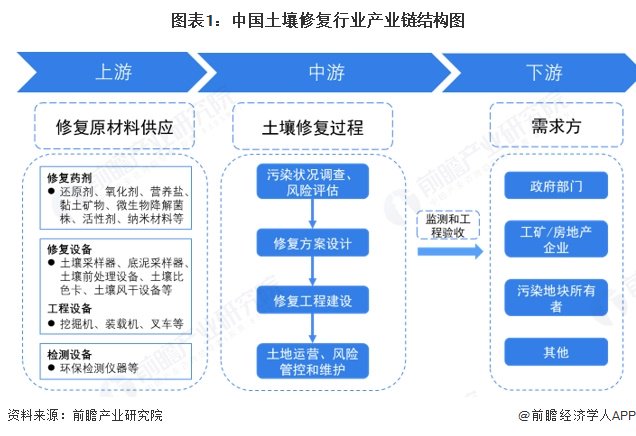
Core Viewpoint - The soil remediation industry in China is rapidly growing, with increasing participation from various sectors due to the anticipated large market size. The industry is characterized by a comprehensive supply chain involving upstream suppliers, midstream consulting and engineering services, and downstream clients including government and industrial entities [1][2][6]. Industry Overview - The soil remediation industry chain consists of upstream suppliers providing remediation agents and equipment, midstream businesses focusing on consulting and engineering, and downstream clients such as government departments and real estate companies [1]. - The number of companies engaged in soil remediation in China is increasing, with significant contributions from various sectors due to the expected market potential [2]. Company Distribution - The distribution of listed soil remediation companies is concentrated in regions like Beijing, Guangdong, and Zhejiang, with notable companies such as JianGong Repair and GaoNeng Environment leading in these areas [6]. - Other regions like Guangxi, Hunan, and Hubei have also developed some listed soil remediation enterprises [6]. Business Layout of Listed Companies - Most listed companies in the soil remediation sector have developed comprehensive capabilities covering pollution investigation, remediation engineering, and project management [9]. - Companies like JingLan Technology and JianGong Repair have a high proportion of their business (over 60%) dedicated to soil remediation, while others like GaoNeng Environment and SenTe have broader focuses in waste treatment and metal containment systems [9]. - Regional characteristics are evident, with companies like YongQing Environmental focusing heavily on Hunan province, where over 60% of their revenue comes from [9]. Latest Developments and Business Plans - Many companies are integrating AI models, digital twins, and IoT monitoring into their operations to enhance decision-making and cost control [10]. - GaoNeng Environment is focusing on heavy metal pollution remediation and plans to promote integrated models combining soil remediation with waste treatment [11]. - JianGong Repair is developing a low-code ECO system to streamline soil monitoring and risk assessment, aiming for a 30% reduction in remediation costs by 2025 [11]. - Companies are also exploring innovative technologies such as in-situ thermal desorption and microbial-plant joint remediation to address complex pollution challenges [11].
添加生物炭可精准修复砷污染土壤
Ke Ji Ri Bao· 2025-07-23 08:27
Core Viewpoint - The research reveals a dual regulatory mechanism of shrimp shell biochar on arsenic migration in acidic and alkaline soils, providing a new pathway for precise arsenic pollution remediation in agricultural environments [1][2]. Group 1: Research Findings - The study published in the journal "Biochar" highlights that shrimp shell biochar significantly activates arsenic migration in acidic soils while promoting arsenic fixation in alkaline soils [1]. - In acidic environments, shrimp shell biochar enhances the solubility of organic matter, leading to increased arsenic release, and activates microbial functions that elevate the abundance of arsenic-reducing and efflux genes [1][2]. - Quantitative data indicates that arsenic migration rates in acidic soils increase by 21%-31% with biochar addition, while arsenic fixation rates in alkaline soils improve by 19%-24%, confirming the dual regulatory effect [2]. Group 2: Practical Implications - The findings challenge the traditional view of biochar's single remediation function, establishing a theoretical basis for its differentiated application in arsenic-contaminated soils [2]. - The research suggests that biochar application should be carefully evaluated based on soil pH; it should be used cautiously in acidic soils and fully leveraged in alkaline soils for stabilization [2]. - This technology represents an innovative approach to utilizing waste shrimp shells for environmental remediation, combining ecological and economic benefits, and offers a controllable solution for arsenic pollution risk management in China [2].
土壤修复项目总是批不下来,为什么?怎么办?
Zhong Guo Huan Jing Bao· 2025-06-09 23:12
Core Viewpoint - The Chinese government plans to issue 1.3 trillion yuan of ultra-long-term special bonds by 2025, with 800 billion yuan allocated to support major strategic projects and key areas, including soil pollution remediation [1] Group 1: Current Issues in Soil Remediation Bond Application - There are significant issues in the application process for soil remediation projects, including insufficient preliminary planning and a lack of a dynamic project database [2] - Many local governments do not prioritize the identification of contaminated sites, leading to rushed applications and inadequate understanding of key information [2] - The selection of remediation projects often lacks precision and deviates from national policy guidance, resulting in weaker competitiveness [2] - Delays in essential procedures such as project approval and environmental assessments increase risks and compliance issues [2] Group 2: Quality of Application Materials - The quality of application materials for soil remediation projects is often low, with missing key elements and insufficient justification [3] - Performance targets are frequently vague, lacking quantifiable metrics such as remediation area and pollutant reduction [3] - Long-term monitoring and management considerations are often neglected, leading to a "one-time fix" mentality [3] - Coordination among various departments involved in the application process is inadequate, resulting in insufficient preparation of project materials [3] Group 3: Recommendations for Improving Application Quality - It is recommended to enhance preliminary planning and establish a project reserve system to improve application quality [4] - Local governments should prioritize selecting contaminated sites that align with national policy and focus on areas with severe pollution [4] - Establishing a departmental coordination mechanism is crucial for expediting the application process and ensuring timely approvals [5] Group 4: Enhancing Material Quality and Comprehensive Benefit Analysis - Improving the quality of application materials involves establishing a scientific quantitative indicator system for performance targets [5] - Comprehensive benefit analysis should quantify environmental, economic, and social impacts, emphasizing the importance of food security and urban renewal [6] - A long-term management mechanism should be established to ensure project sustainability, including funding and responsibility frameworks [6] Group 5: Professional Support and Organizational Assurance - Forming expert advisory teams can provide technical support for improving application quality [7] - High-level leadership and a structured reporting mechanism are essential for addressing challenges in the application process [6]
*ST京蓝涉嫌信披违规被立案
Zhong Guo Jing Ying Bao· 2025-06-03 14:57
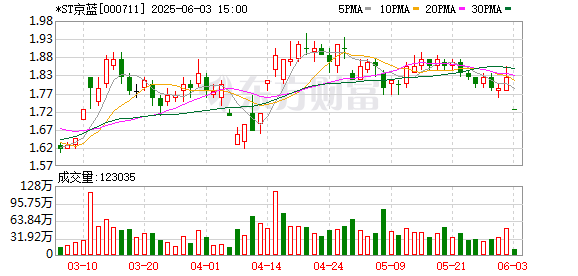
Group 1 - *ST Jinglan has been issued a "Notice of Case Filing" by the China Securities Regulatory Commission (CSRC) for suspected violations of information disclosure, marking a recurrence of such issues since July 2023 [2] - The company has previously faced penalties for multiple disclosure violations, including failure to disclose goodwill impairment in annual reports for 2021 and 2022, resulting in a fine of 3 million yuan [2] - The company has committed to improving internal governance and enhancing the quality of information disclosure to protect the interests of shareholders [2] Group 2 - *ST Jinglan's main business includes industrial and urban solid waste harmless disposal and soil environment remediation, but its performance has been declining [3] - Revenue has decreased from 738 million yuan in 2021 to 195 million yuan in 2022, and further down to 149 million yuan in 2023, a year-on-year decline of 23.69% [3] - Although revenue is projected to increase to 378 million yuan in 2024, the company is expected to incur a net loss of 110 million yuan, a year-on-year increase of 110.41% [3] Group 3 - In Q1 2025, *ST Jinglan reported revenue of 126 million yuan and a net loss of 12.95 million yuan [4] - The company attributed the Q1 loss to production stoppages during the Spring Festival, which significantly reduced profits due to depreciation, labor, and interest costs [4] - Annual maintenance costs also contributed to the reduced profits, leading to a pattern of low or negative profits in the first quarter of each year [4]
3家A股公司,突发!一家实控人被刑事立案,两家被证监会立案
证券时报· 2025-05-30 15:04
Core Viewpoint - The article discusses the criminal investigation of *ST Tianyu's actual controller Yan Chunyu for suspected fund misappropriation, which has raised concerns about the company's governance and financial health [2][4]. Group 1: Company Investigation - *ST Tianyu's actual controller Yan Chunyu and others have been criminally investigated for suspected fund misappropriation, as confirmed by the Wuhan Public Security Bureau [2]. - The company stated that Yan Chunyu does not hold any director, supervisor, or senior management positions, and the investigation is not expected to significantly impact normal operations [4]. Group 2: Company Performance - In the 2024 annual report, *ST Tianyu reported total revenue of 847 million yuan, a year-on-year decrease of 50.20%, and a net loss attributable to shareholders of 364 million yuan, compared to a profit of 19.71 million yuan in the previous year [7]. - The Q1 2025 report showed total revenue of 45.37 million yuan, a year-on-year decline of 86.50%, with a net loss of 40.19 million yuan, compared to a profit of 4.74 million yuan in the same period last year [7]. Group 3: Management Changes - Multiple key personnel have resigned from *ST Tianyu in May, including the chairman Yang Haitao and other board members, citing personal reasons [6][8].



浙江卓锦环保科技股份有限公司 关于披露联合体项目中标的公告
Zhong Guo Zheng Quan Bao - Zhong Zheng Wang· 2025-05-21 00:07
Group 1 - The company has won a bid for the soil remediation project at the former gas plant site of Hefei Huanran Huaren Gas Co., Ltd, with a total bid amount of 67.68 million yuan (including tax) [2][5] - The company's share of the contract work is approximately 88.5%, which translates to an expected amount of about 59.8968 million yuan, subject to final execution by the consortium [2][5] - The project duration is set for 900 calendar days, with the final terms to be confirmed upon contract signing [2][5] Group 2 - The bidding entity, Hefei Huanran Huaren Gas Co., Ltd, is a limited liability company with a registered capital of 1 billion yuan, engaged in gas production, sales, and related engineering services [2] - The consortium includes Coal Industry Hefei Design Institute Co., Ltd and Hefei Hehe Construction Engineering Co., Ltd, with the former having a registered capital of approximately 401.38 million yuan and the latter 30 million yuan [4][5] - The project is part of the company's regular business operations, and revenue will be recognized progressively based on project implementation [5]

大数据技术如何助力土壤修复更加绿色低碳?
Zhong Guo Huan Jing Bao· 2025-04-21 00:54
Core Insights - The soil remediation industry is transitioning from traditional methods to low-carbon, precise governance driven by global climate change and carbon neutrality goals [1] - The rapid development of digital technologies is ushering the industry into a new phase of digitalization and intelligence [1] Summary by Sections Digital Transformation in Soil Remediation - Big data and smart technologies are driving the soil pollution governance system towards precision and low carbon [2] - Traditional remediation methods are limited by reliance on experience and static assessments, leading to inefficiencies and high hidden costs [2] - New technologies enable breakthroughs in pollution spatial analysis, remediation process control, and carbon footprint tracing [2] Pollution Identification and Cost Reduction - Pollution identification has shifted from experience-based judgment to data-driven approaches, significantly improving accuracy and reducing costs [2] - For instance, a case study in a lead-zinc mining area achieved an identification accuracy of 89% and reduced investigation costs by 40% through the use of satellite remote sensing and machine learning [2] Intelligent Upgrades in Remediation Processes - The remediation process is evolving towards intelligent dynamic control, reducing energy consumption and material waste [3] - A project in Tianjin reduced the use of persulfate by 22% and energy consumption by 18% through an intelligent decision-making system [3] - Digital twin technology has been used to optimize carbon emissions, achieving a 31% reduction in lifecycle carbon emissions [3] Comprehensive Evaluation of Remediation Effects - The evaluation of remediation effects is transitioning from terminal detection to a full lifecycle carbon footprint tracking model [3] - A blockchain-based tracing platform recorded carbon footprint data, revealing a 43% difference in carbon emissions from different sources of bentonite [3] Domestic and International Practices - Big data technology has shown irreplaceable advantages in pollution remediation, enhancing precision, efficiency, and sustainability [4] - Domestic applications emphasize technology integration and innovation, achieving significant reductions in repair cycles and carbon emissions [4] - Internationally, there is a focus on interdisciplinary integration and data-driven innovation, with successful case studies demonstrating effective pollution source identification and remediation [6] Recommendations for Future Development - It is recommended to integrate various data sources to build a unified soil environment big data platform for quantitative management [7] - The industry should focus on developing intelligent systems to overcome key technological bottlenecks and enhance carbon monitoring capabilities [7] - Emphasis on cultivating interdisciplinary talent to foster deep integration of environmental science and big data technology [8] Conclusion - Big data technology is reshaping the value logic of soil remediation, transitioning from mere pollution removal to ecological enhancement and carbon asset creation [8] - The collaboration of technological breakthroughs and institutional innovation is essential for advancing the industry towards intelligent and precise remediation solutions [8]