
数字农业

Search documents
中国创新投资与江苏立卓公司订立框架协议 拟就推广与落实AI农业产业的应用达成投资合作
Zhi Tong Cai Jing· 2025-11-12 13:06
Core Viewpoint - China Innovation Investment (01217) has signed a strategic investment framework agreement with Jiangsu Lizhuo Information Technology Co., Ltd. to promote and implement applications of artificial intelligence (AI) in the agricultural industry [1] Group 1: Investment Strategy - The company plans to invest in Jiangsu Lizhuo, focusing on capital operations to support the latter's market expansion through technology research and development, scenario implementation, and model replication [1] - The investment aims to assist Jiangsu Lizhuo in initiating its overseas market strategy, directly investing and connecting with strategic investors to achieve technology iteration and nationwide project implementation [1] Group 2: Business Development Goals - Jiangsu Lizhuo intends to create an integrated solution for AI and unmanned agriculture, with the first phase targeting a provincial benchmark project, the second phase aiming for coverage in over ten provinces, and the third phase focusing on international expansion in Southeast Asia and along the Belt and Road [1] - The company will support Jiangsu Lizhuo in developing replicable business models, including a standardized AI agriculture business model that encompasses technology systems, operational processes, and profit models [1] Group 3: Industry Positioning - The investment is expected to enhance Jiangsu Lizhuo's industry status, aiming to establish a benchmark case in the domestic AI agriculture sector and increase the company's brand influence and voice [1]
中国创新投资(01217)与江苏立卓公司订立框架协议 拟就推广与落实AI农业产业的应用达成投资合作
智通财经网· 2025-11-12 12:59
Core Viewpoint - China Innovation Investment (01217) has signed a strategic investment framework agreement with Jiangsu Lizhuo Information Technology Co., Ltd. to promote and implement applications of artificial intelligence (AI) in the agricultural industry [1] Summary by Relevant Sections Investment Strategy - The company plans to invest in Jiangsu Lizhuo, focusing on capital operations to support the latter's market expansion through technology research and development, scenario implementation, and model replication [1] Market Expansion - The investment aims to assist Jiangsu Lizhuo in initiating its overseas market strategy, directly investing and connecting Jiangsu Lizhuo with strategic investors to achieve technology iteration, project implementation, and nationwide promotion [1] Business Development - Jiangsu Lizhuo intends to create an integrated solution for AI and unmanned agriculture, with the first phase targeting the establishment of a provincial benchmark project, the second phase aiming for coverage in over ten provinces nationwide, and the third phase focusing on international expansion in Southeast Asia and along the Belt and Road [1] Model Replication - The investment will support Jiangsu Lizhuo in developing replicable business models, including a standardized and rapidly scalable AI agriculture business model, which encompasses technology systems, operational processes, and profit models [1] Industry Positioning - The goal is to enhance Jiangsu Lizhuo's industry status by building an AI agriculture ecosystem, positioning its projects as benchmark cases in the domestic AI agriculture sector, thereby increasing the company's brand influence and voice [1]
联合国粮农组织首席信息官德扬:AI带来变革农业领域重大机遇
Bei Ke Cai Jing· 2025-11-09 05:55
Core Insights - The 2025 World Internet Conference in Wuzhen highlighted the transformative potential of artificial intelligence (AI) in agriculture, emphasizing the need for responsible use of technology [1] Group 1: AI in Agriculture - AI presents significant opportunities for transforming the agricultural sector, acting as both an opportunity and a catalyst for change [1] - The ethical application of AI is crucial, necessitating a balance between leveraging opportunities and ensuring responsible usage [1] Group 2: China's Role in Digital Agriculture - The Food and Agriculture Organization (FAO) commended China's contributions to South-South cooperation and trilateral cooperation in the digital agriculture sector [1] - China has accumulated extensive experience in applying digital technologies, providing valuable references for developing countries in areas such as precision agriculture, smart logistics, e-commerce, and rural revitalization [1] - The FAO looks forward to continued collaboration with China to share experiences, technologies, and innovations that benefit global southern countries [1]
新质新造·兵团丨科创沃土育新质 数字经济动能强
Yang Guang Wang· 2025-11-07 12:42
Core Insights - The rapid development of Xinjiang Jianyun Technology Co., Ltd. and Xinjiang Jiangtian Aerospace Technology Co., Ltd. reflects the integration of technological innovation and economic growth in the Xinjiang Production and Construction Corps [5] Group 1: Xinjiang Jianyun Technology Co., Ltd. - Established three years ago, Jianyun Technology has quickly become a national high-tech enterprise specializing in data annotation services for AI, employing over 30 recent graduates [2] - The company provides high-quality data annotation, data review, and algorithm model training services across six cutting-edge fields, including computer vision and natural language processing [2] - Jianyun Technology has developed 30 independent intellectual property rights, including 29 software copyrights and 1 high-quality invention patent, and has established partnerships with notable institutions like Tsinghua University and Alibaba [2][5] Group 2: Xinjiang Jiangtian Aerospace Technology Co., Ltd. - Founded in 2016 with a total investment of 140 million yuan, Jiangtian Technology focuses on creating a traceable agricultural planting system and big data services for agriculture [3] - The company has a team of over 80 members, with a significant portion holding advanced degrees, and specializes in remote sensing monitoring and real-time analysis for major crops [3][4] - Jiangtian Technology has developed a comprehensive technology system with 29 independent intellectual property rights, including 4 invention patents, and has been recognized as a national high-tech enterprise [4] Group 3: Industry Impact - The growth of both companies signifies the Xinjiang Production and Construction Corps' commitment to developing the digital economy and fostering new economic growth drivers [5] - The integration of "Corps spirit" with technological innovation is driving industrial upgrades and enhancing economic quality and efficiency in the region [5]
解码兵团高质量发展路径:科技赋能谋创新,出疆出海拓发展
Xin Lang Cai Jing· 2025-11-03 12:00
Core Insights - The article highlights the transformation of Xinjiang Production and Construction Corps (XPCC) through technological innovation and digital agriculture, showcasing a shift towards high-quality development in the region [1][3][13] Technological Innovation - Tianshan Laser Intelligent Technology Co., Ltd. has developed a laser big data platform with a comprehensive process database covering 33 types of engineering materials, connecting over 1,500 devices and forming more than 8,000 process parameter combinations [3] - The company has invested 137 million yuan and has successfully assisted over 30 enterprises in integrating laser technology with traditional processes, significantly enhancing productivity and reducing energy consumption [3] Digital Agriculture - Jiangtian Technology focuses on creating a fully traceable agricultural system and big data services, utilizing drones for real-time monitoring of soil moisture and crop growth [6] - The company has developed 26 proprietary technologies and was recognized as a national high-tech enterprise in 2019, indicating its commitment to advancing digital agriculture [6] Regional Collaboration - The integration of resources between the XPCC and local communities is exemplified by Xinye Energy, which employs over 1,800 workers and has established a circular economy system combining coal chemical, clean energy, and fine chemicals [5][8] - The collaboration has resulted in stable employment opportunities and has driven regional industrial upgrades [5] Expansion and International Trade - The XPCC is actively building international logistics hubs and enhancing open platform construction to facilitate trade, particularly targeting Central Asia and Europe [9][11] - Tianshan Laser has secured orders from Kazakhstan and is exploring opportunities in Turkey, indicating a strategic focus on international markets [9] - The Xinjiang Tianheng International Automotive Cultural City is positioning itself as a key player in exporting domestic vehicles to Central Asia, having already exported 28 vehicles [9][11]

怎样用手机种好地、智慧渔场如何运营?这个比赛上有答案
Yang Shi Xin Wen Ke Hu Duan· 2025-11-01 10:05
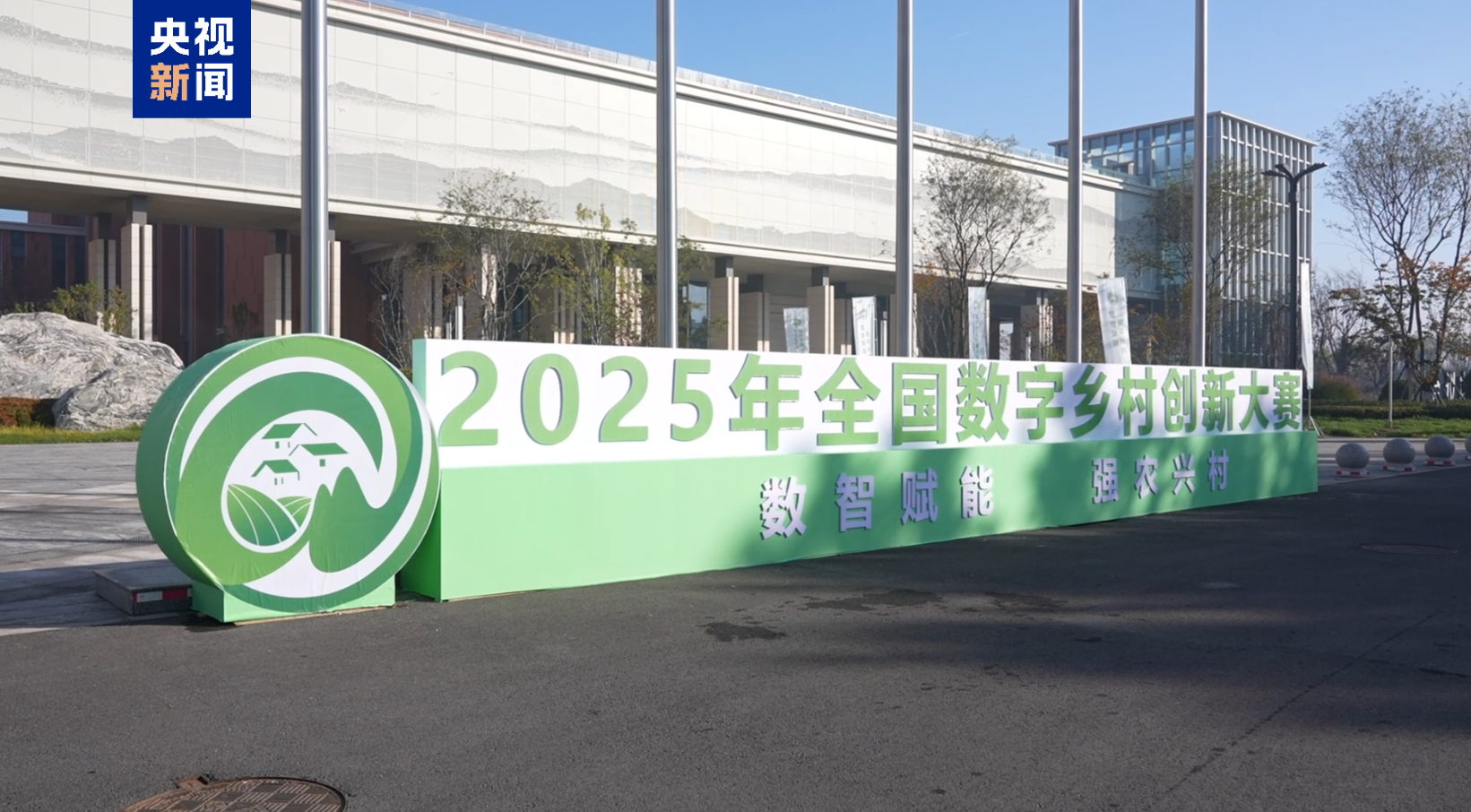
Core Insights - The 2025 National Digital Rural Innovation Competition finals were successfully held in Handan, Hebei, showcasing 21 selected projects that demonstrate innovative applications of digital technology in rural revitalization [1][3]. Group 1: Competition Overview - The competition was themed "Digital Intelligence Empowerment for Strong Agriculture and Prosperous Villages" and featured five main categories: digital wealth creation in rural areas, digital governance, digital public services, digital culture, and smart beautiful villages [3]. - The event emphasized the practical application of digital technology in the "Three Rural Issues" (agriculture, rural areas, and farmers), highlighting the integration and innovation of new technologies such as artificial intelligence [3]. Group 2: Notable Projects - The "Smart Fishing Farm Unmanned Operation Management Construction" project in Guangdong aims to achieve intelligent and unmanned management of deep-sea aquaculture, with an annual production capacity of 150,000 jin (75 tons) of various fish species, generating an annual output value of 3-4 million yuan [3]. - In Daming County, Handan, the "One Product One Broadcast" e-commerce live streaming platform enables more farmers to increase their income through the digital economy, achieving a county-wide online retail sales of 810 million yuan, a year-on-year increase of 16.9% [3]. Group 3: Implementation and Impact - The competition included an investment project matchmaking session, providing opportunities for award-winning projects to promote their cases and connect with industry financing, effectively bringing digital technology from the competition stage to rural development [3].
湖北富邦科技股份有限公司2025年第三季度报告
Shang Hai Zheng Quan Bao· 2025-10-26 18:20
Core Viewpoint - The company emphasizes the authenticity and completeness of its quarterly report, ensuring no misleading statements or significant omissions are present [2][3]. Financial Data - The third-quarter financial report has not been audited [9]. - The company does not require retrospective adjustments or restatements of previous accounting data [3]. - There are no non-recurring gains or losses defined as regular gains or losses [3]. Shareholder Information - The company has not reported any changes in the top ten shareholders or any significant shareholder lending activities [5]. Other Important Matters - The company is actively responding to national "dual carbon" strategies by promoting a "zero-carbon" transformation in rural areas, focusing on low-carbon agricultural production and ecological development [5]. - The company has been recognized as a "green manufacturing" unit in Hubei Province, demonstrating its role in guiding local manufacturing enterprises towards deeper green transformation [7]. - The company is involved in a legal dispute regarding a claim from HNC HOLDING B.V. related to a share transfer price dispute, with no impact on its daily operations reported [7].

2025会议明牌:未来5年钱往哪流,都在这13个领域
Sou Hu Cai Jing· 2025-10-25 18:33
Core Viewpoint - The era of land finance is officially over, and the next five years will see a shift in wealth towards technology and green innovation, with a target to increase per capita GDP from $13,000 to $20,000 by 2035 [1][3] Group 1: Economic Transition - The focus of economic growth has shifted from investment and real estate to high-quality development, emphasizing self-controlled industrial chains, particularly in chips and artificial intelligence [3][5] - Significant investments are expected in high-end manufacturing, aerospace, and comprehensive transportation networks, indicating a strong capital flow into these sectors [5] Group 2: Emerging Opportunities - The AI sector is moving from concept to practical integration across various industries, while quantum technology is being pushed from laboratories to applications [5] - The domestic market is identified as a new growth area, with sectors like specialty dining, healthcare, and cultural entertainment poised for rapid development, especially in central and rural regions [5][6] Group 3: Policy Support and Market Trends - The "Three Guarantees" policy aims to support employment, consumption, and livelihood, benefiting businesses related to basic living needs, such as community services and affordable consumption [6] - The silver economy is projected to reach ¥30 trillion by 2035, creating a vast industry around elderly care and related services [8] Group 4: Infrastructure and Digital Trade - Urban development will shift from expansion to internal renewal, with over 700,000 kilometers of underground pipeline renovations expected, generating nearly ¥5 trillion in new investment demand [6] - The digital trade sector is expanding, with a current scale exceeding ¥3 trillion and 165 cross-border e-commerce pilot zones, allowing even small companies to engage in global trade [6] Group 5: Regional Development and Financial Market - Key regional developments are focused on the Yangtze River Delta and the Guangdong-Hong Kong-Macao Greater Bay Area, with specific attention to integrated circuits and biomedicine [10] - Financial market reforms are optimizing channels for long-term funds, enhancing market stability and potentially increasing foreign investment in A-shares [10]

拼多多在联合国粮农组织当评委:中国农业“升级密码”藏在这里
Jing Ji Guan Cha Wang· 2025-10-24 05:52
Core Insights - The 2025 World Food Forum, hosted by the FAO in Rome, focuses on transforming the global food system with the theme "Working Together for Better Food and a Better Future" [1] - Pinduoduo has been recognized as a digital agriculture innovation model, showcasing its achievements in agricultural technology and innovation on an international stage [1][2] Group 1: Pinduoduo's Role and Achievements - Pinduoduo has been invited to the World Food Forum for two consecutive years, highlighting its evolution from a participant to a speaker and judge, reflecting China's digital agriculture progress [2] - The company emphasizes the dual drivers of technological innovation and talent cultivation as key to upgrading China's agriculture [2][6] - Pinduoduo's "100 Billion Support" plan aims to invest over 100 billion RMB in agricultural innovation, focusing on technology application and promotion [7] Group 2: Innovations and Competitions - The Global Agri-Entrepreneurship Competition (GAC) serves as a hub for global agricultural innovation, attracting over 1,000 teams and thousands of young agricultural innovators since its inception [5] - The competition identifies and empowers promising agricultural technology projects, facilitating their market application through Pinduoduo's resources [5][8] - The "Muyu Cloud Computing" team showcased AI technology for livestock monitoring, achieving significant efficiency improvements and commercial returns [3][4] Group 3: Ecosystem and Market Impact - Pinduoduo's approach creates a sustainable ecosystem that benefits all stakeholders, including consumers, farmers, and agricultural innovators [8] - The "100 Billion Support" plan has led to significant sales growth in seasonal fruits and seafood, demonstrating the effectiveness of targeted support for agricultural products [7] - The company aims to bridge the gap between agricultural innovation and market application, ensuring that technology is accessible and practical for farmers [6][9]

张乐飞:乡村振兴成立农业产业基金的战略价值与实施路径
Sou Hu Cai Jing· 2025-10-24 01:01
Core Viewpoint - The deepening implementation of the rural revitalization strategy requires breaking through traditional funding allocation models, with agricultural industry funds serving as an innovative tool to connect financial capital with rural entities, addressing the financing difficulties of the "three rural issues" and reconstructing the flow mechanism of urban and rural factors [1] Group 1: Strategic Value Reconstruction of Agricultural Industry Funds - Agricultural industry funds effectively resolve the contradiction of traditional financial systems, which often view agricultural projects as "investment forbidden zones" due to their long cycles, high risks, and low returns, through a dual mechanism of "government guidance + market operation" [2] - The Guizhou Agricultural Rural Fund leveraged a financing model of "fund + bank + guarantee" to attract 317 million yuan in social capital to support Guiwang Biological Company, resulting in a fivefold increase in annual output value in the edible fungus industry [2] - The fund's capital reconstruction not only fills the "market failure" gap in agricultural investment but also allows farmers to gain multiple benefits such as land transfer, employment, and equity dividends through a profit-sharing mechanism [2] Group 2: Catalytic Engine for Reshaping Agricultural Industry Ecology - Agricultural industry funds focus on building an industrial ecosystem rather than limiting investments to single projects, as seen in the Zhejiang Rural Revitalization Investment Fund, which has established a multi-layered structure covering 12 sub-sectors including biological breeding and digital agriculture [3] - Investments in companies like Longping Biology and Dabeinong have led to breakthroughs in gene editing breeding, increasing corn yields by 15% and enhancing pest resistance by 30% [3] - This ecological layout not only enhances the added value of the industrial chain but also drives surrounding small farmers to upgrade their production methods through technology spillover effects [3] Group 3: Building Bridges for Urban-Rural Factor Flow - Agricultural industry funds innovate benefit connection models such as "land management rights equity" and "farmer technology equity," facilitating two-way flow of urban and rural factors [4] - The Central Enterprise Rural Industry Investment Fund, managed by Guotou Chuangyi, implemented a model of "leading enterprises + cooperatives + farmers" in the Gan Nan revolutionary old area, attracting 2.3 billion yuan from central enterprises to develop特色产业, increasing local farmers' per capita income from 12,000 yuan in 2018 to 28,000 yuan by 2024 [4] - This institutional innovation safeguards farmers' property rights while providing stable investment channels for urban capital [4] Group 4: Innovative Implementation Pathways for Agricultural Industry Funds - A three-level fund system is proposed, consisting of "national guiding funds + provincial regional funds + county project funds," with national funds focusing on strategic areas like seed industry revitalization [5] - Provincial funds emphasize regional characteristic industry development, while county funds concentrate on specific project implementation, creating a collaborative effect of "top-level design - mid-level coordination - grassroots execution" [5] Group 5: Risk Control Innovation under ESG Framework - The introduction of an ESG (Environmental, Social, Governance) evaluation system establishes a full lifecycle management mechanism for projects [6] - Guotou Chuangyi sets six major stages and 133 ESG indicators for investment projects, requiring a social benefit score of over 60 for investment eligibility [6] - The establishment of an "annual assessment + full-cycle assessment" error tolerance mechanism encourages innovation within the management team [6] Group 6: Multi-Channel Capital Circulation Exit Mechanism - A composite exit path is designed, including "equity transfer + corporate listing + repurchase agreements + asset securitization" [7] - The Zhejiang Provincial Industry Fund supports companies like Huazhong Holdings through a "loan + investment" model, helping three invested companies successfully go public, achieving a 23% return on investment [7] - For long-cycle projects, a "staged exit" strategy is employed, ensuring healthy capital circulation [7] Group 7: Institutional Guarantees and Policy Coordination - The establishment of a legal framework for the management of rural revitalization investment funds is accelerated, clarifying the entire process of fund establishment, operation, and supervision [8] - Policies to increase the proportion of land transfer income used for agricultural rural projects are implemented, with tax reductions and risk compensation incentives for social capital investing in agricultural industry funds [9] - A talent system is cultivated, combining "fund managers + agricultural experts + rural operation officers," enhancing the scientific selection of projects [10]