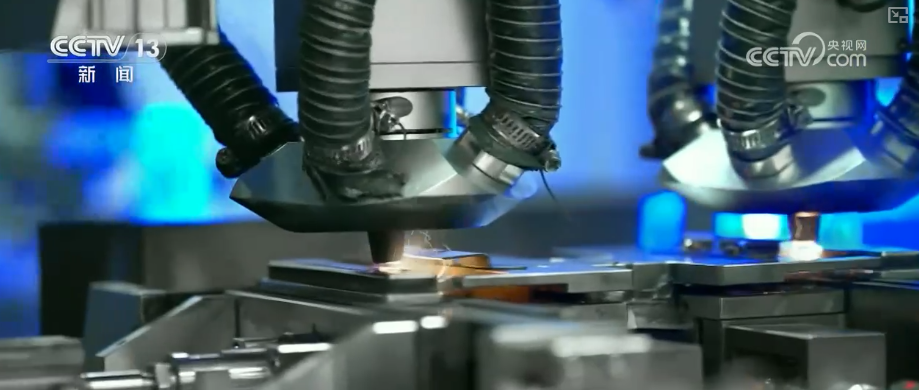
数字经济核心产业

Search documents
税收数据显示 前三季度山西新质生产力跑出“加速度”
Sou Hu Cai Jing· 2025-11-12 03:19
Group 1 - The core viewpoint is that Shanxi Province is experiencing significant growth in new productive forces, with sales revenue in related industries increasing by 9.06% year-on-year, outperforming the overall industrial sales growth by 17.75 percentage points [1] - The digital economy is accelerating its industrialization, with core industry sales revenue growing by 7.34% year-on-year and a dramatic increase of 6.6 times in the procurement of digital products by enterprises [1] - High-tech industries are showing strong resilience, with sales revenue increasing by 12.20% year-on-year, including a 17.76% increase in high-tech manufacturing and a 3.86% increase in high-tech services [1] Group 2 - Shanxi Province is focusing on high-quality development by nurturing new productive forces, with a 7.98% year-on-year increase in spending on R&D and technical services, supporting the integration of technological and industrial innovation [1] - The tax authorities in Shanxi will continue to implement tax incentives to reduce the burden on enterprises and stimulate market vitality, aiding companies in increasing R&D investments and moving up the industrial chain [2] - The tax department will enhance economic analysis and monitor regional economic dynamics using tax data to support the cultivation of new productive forces and high-quality development in Shanxi [2]
数字经济领跑经济增长,数字经济ETF(560800)盘中蓄势,机构:数字技术将会与实体经济深度融合
Xin Lang Cai Jing· 2025-11-03 02:56
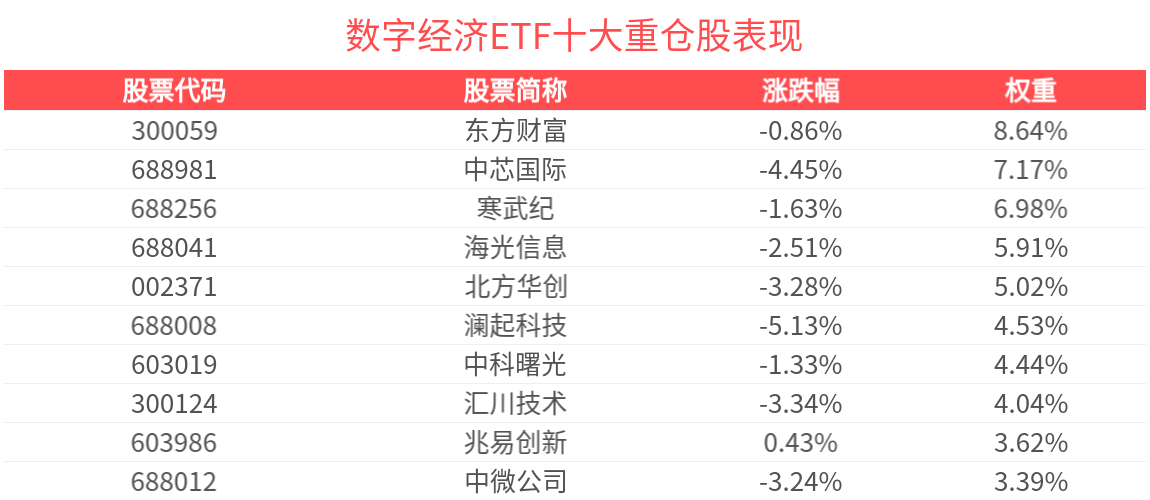
Core Viewpoint - The digital economy continues to drive economic growth in China, with significant contributions from key regions like Beijing, Shanghai, and Zhejiang, as evidenced by their respective GDP growth rates and industrial performance [1][2]. Group 1: Economic Performance - National GDP grew by 5.2% year-on-year in the first three quarters, with an increase of 0.2 percentage points compared to the previous year and 0.4 percentage points compared to the same period last year [1]. - Beijing's digital economy added value grew by 9.0%, while Shanghai's AI manufacturing sector saw a growth of 12.8% [1]. - Zhejiang's core digital economy manufacturing maintained double-digit growth, indicating robust performance across key sectors [1]. Group 2: Sector Contributions - In Beijing, the industrial and information software sectors achieved an added value exceeding 1.3 trillion yuan, accounting for 35.1% of the city's GDP and contributing 58.2% to economic growth [2]. - Shanghai's leading industries reported an 8.5% increase in manufacturing output, outperforming the city's overall industrial output growth by 2.8 percentage points [2]. - Anhui province's high-tech manufacturing sector saw a remarkable 27.8% increase in added value, contributing 46.2% to the growth of all regulated industrial added value [2]. Group 3: Digital Economy Index and ETF - The CSI Digital Economy Theme Index (931582) saw a decline of 2.01%, with leading stocks including Runze Technology and Runhe Software, while stocks like Tuojing Technology experienced the largest declines [1]. - The digital economy ETF (560800) closely tracks the CSI Digital Economy Theme Index, which includes companies with high digitalization levels and infrastructure [2]. - The top ten weighted stocks in the CSI Digital Economy Theme Index account for 53.93% of the index, with notable companies such as Dongfang Wealth and Cambricon [3][5].

前三季度企业创新力度加大 新质生产力加快培育
Yang Shi Wang· 2025-10-26 12:06
Core Insights - The latest data from the National Taxation Administration indicates a 6.1% year-on-year increase in the amount spent by enterprises on research and development and technical services in the first three quarters of the year, reflecting a sustained increase in innovation efforts [1] Group 1: R&D and Technology Services - The sales revenue of the scientific and technical service industry, a key area for the integration and value conversion of technological elements, grew by 22.3% year-on-year in the first three quarters, continuing its rapid growth trend [1] - Sales revenue in knowledge-intensive industries, characterized by high technological content, increased by 11.5% year-on-year [1] Group 2: Emerging Industries - High-tech industries and equipment manufacturing saw sales revenue growth of 15.2% and 9% year-on-year, respectively, in the first three quarters [1] - The implementation of the "Artificial Intelligence +" initiative has accelerated growth in emerging industries, with sales revenue for integrated circuit manufacturing, robotics manufacturing, and drone manufacturing increasing by 17%, 21.7%, and 69.8% year-on-year, respectively [1] Group 3: Digital Economy - The sales revenue of core industries in the digital economy grew by 10.6% year-on-year in the first three quarters [1] - Within this sector, the digital product manufacturing and digital technology application industries experienced year-on-year growth of 11% and 14.5%, respectively, indicating rapid development in digital industrialization [1] - The amount spent by enterprises on digital technology increased by 10.6% year-on-year, reflecting an upgrade in industrial digitalization [1]
前三季度新质生产力加快培育
Ren Min Ri Bao Hai Wai Ban· 2025-10-21 01:39
Group 1 - The core viewpoint of the articles highlights the significant increase in corporate innovation investment and the robust growth of strategic emerging industries in China, indicating a faster pace of new productivity development that injects new momentum into economic growth [1][2] Group 2 - In the first three quarters, the sales revenue of the technology service industry, a key area for integrating technology resources, grew by 22.3% year-on-year, continuing its rapid growth trend [1] - The sales revenue of high-tech industries and equipment manufacturing increased by 15.2% and 9% year-on-year, respectively, with notable growth in sectors such as computer communication equipment manufacturing and aerospace [1] - The sales revenue of specialized and innovative "little giant" enterprises increased by 8.2% year-on-year, with high-tech manufacturing enterprises experiencing an 11.8% growth [2] Group 3 - The core industries of the digital economy saw a sales revenue increase of 10.6% year-on-year, with digital product manufacturing and digital technology application sectors growing by 11% and 14.5%, respectively [2] - The total amount spent by enterprises on digital technology increased by 10.6% year-on-year, reflecting an upgrade in industrial digitalization [2]
前三季度中国加快培育新质生产力 专精特新“小巨人”企业销售收入增8.2%
Chang Jiang Shang Bao· 2025-10-19 23:49
Core Insights - The latest data from the National Taxation Administration indicates that in the first three quarters, Chinese enterprises have significantly increased their innovation investments, particularly in strategic emerging industries, which reflects a rapid development of new productivity in China [1][2][3] - The sales revenue of specialized and innovative "little giant" enterprises grew by 8.2% year-on-year, with a notable acceleration of 4.1 percentage points compared to 2024, especially in high-tech manufacturing, which saw an 11.8% increase [1][2] Group 1: Innovation and Investment - In the first three quarters, the amount spent by enterprises on R&D and technical services increased by 6.1% year-on-year, indicating a sustained increase in R&D investment [2] - The sales revenue of the scientific and technical service industry, which is crucial for the integration and value transformation of technological elements, grew by 22.3% year-on-year, continuing its rapid growth trend [2][3] Group 2: Digital Economy and New Productivity - The core industries of the digital economy saw a year-on-year sales revenue growth of 10.6%, with digital product manufacturing and digital technology application sectors growing by 11% and 14.5%, respectively, highlighting the rapid development of digital industrialization [2] - The procurement of digital technology by enterprises increased by 10.6% year-on-year, indicating an upgrade in industrial digitalization [2] Group 3: Policy Support and Tax Relief - The tax authorities have implemented policies to support technological innovation, with tax reductions and refunds amounting to 1.3336 trillion yuan from January to August, effectively alleviating the tax burden on enterprises and encouraging increased R&D investment [1]
前三季度企业购进研发技术服务金额同比增6.1%
Jing Ji Ri Bao· 2025-10-19 22:08
Core Insights - The latest data from the National Taxation Administration indicates that tax reductions and refunds supporting technological innovation reached 1.3336 trillion yuan in the first eight months of the year [1] - In the first three quarters, the amount spent by enterprises on research and development and technical services increased by 6.1% year-on-year, reflecting a sustained increase in R&D investment [1] Group 1: Technological Innovation and R&D - The sales revenue of the scientific and technical service industry grew by 22.3% year-on-year in the first three quarters, continuing its rapid growth trend [1] - The sales revenue of intellectual property-intensive industries increased by 11.5% year-on-year [1] Group 2: Strategic Emerging Industries - In the first three quarters, sales revenue in high-tech industries and equipment manufacturing grew by 15.2% and 9% year-on-year, respectively [1] Group 3: Digital Economy Integration - The sales revenue of core industries in the digital economy increased by 10.6% year-on-year in the first three quarters, with digital product manufacturing and digital technology application industries growing by 11% and 14.5%, respectively [1] - The amount spent by enterprises on digital technology increased by 10.6% year-on-year [1] Group 4: Tax Policy and Support - The tax authorities plan to leverage big data to enhance the implementation of tax and fee preferential policies that support the development of new productive forces, aiming to improve service quality for high-quality development [1]
2024年我国数字经济核心产业发明专利授权量已经达到50万件 位居全球第一
Yang Shi Xin Wen· 2025-09-11 06:26
Group 1 - The 14th China Intellectual Property Annual Conference was held in Beijing, focusing on "Intellectual Property in the Digital Age" [1] - The National Intellectual Property Administration has proposed four fundamental principles for establishing a data intellectual property system, emphasizing data security, public interest, personal privacy, and the unique attributes of data [1] - A series of key issues regarding data intellectual property protection have been explored, including protection objects, subjects, empowerment methods, rights content, and utilization models [1] - Data intellectual property pilot programs have been launched in 17 provinces and cities, with nearly 58,000 registration applications and over 29,000 certificates issued by June this year, leading to financing guarantees exceeding 10 billion yuan [1] Group 2 - In 2024, the number of invention patents authorized in China's digital economy core industries reached 500,000, ranking first globally with a year-on-year growth rate of 23.1% [2] - China has become the largest holder of artificial intelligence patents globally, accounting for 60% of the total [2] - The number of overseas invention patents authorized in China's digital economy core industries increased from 21,000 in 2016 to 52,000 in 2024, indicating a robust international presence [2] - By the end of 2024, 95 countries and regions had valid invention patents in China's digital economy core industries, totaling 407,000, which represents 43.7% of foreign invention patents in China [2]
海南出台行动方案加快构建特色优势现代化产业体系
Hai Nan Ri Bao· 2025-08-09 23:11
Core Viewpoint - Hainan Province aims to establish a modern industrial system with distinctive advantages, targeting that four leading industries will contribute approximately 70% to the GDP by 2027 [2] Group 1: Overall Goals - The plan emphasizes the deepening of the international tourism consumption center, with ongoing release of tourism consumption potential [2] - The integration of productive services and advanced manufacturing is prioritized, with modern service industry value added expected to approach 30% of GDP [2] - The goal is to achieve a research and development (R&D) expenditure intensity of 1.8%, with high-tech industry value added exceeding 17% of GDP [2] - Tropical characteristic efficient agriculture is expected to maintain an annual growth of over 5% in the value added of its entire industrial chain [2] Group 2: Industry Development - Hainan will focus on cultivating three future industries: seed industry, deep-sea industry, and aerospace, while strengthening tropical characteristic efficient agriculture [3] - The "Southern Breeding Silicon Valley" will be developed, aiming for the modern seed industry cluster in Yazhou Bay to achieve over 20 billion yuan in revenue by 2027 [3] - The deep-sea industry will be promoted for high-quality development, with a target of 10 billion yuan in revenue for the Wenchang International Aerospace City aerospace industry cluster by 2027 [3] - The province aims to attract 2.3 million inbound tourists and operate 160 international routes by 2027 [3] Group 3: Support Measures - Hainan will enhance organizational leadership, improve resource guarantees, and strengthen project support to ensure the successful implementation of the plan [4] - A dynamic evaluation of major industrial policies will be conducted to ensure the stability of supply chains before and after the closure [4] - The province aims to cultivate 30 key industrial clusters with revenues exceeding 10 billion yuan by 2027 [3][4]

上半年 “以旧换新”新扩围的手机等通信设备零售同比增长25.4%|数据看板
Sou Hu Cai Jing· 2025-08-04 23:51
Group 1 - The core viewpoint of the articles highlights the steady growth of national enterprise sales revenue in the first half of the year, driven by various positive factors [1] - Manufacturing industry sales revenue growth outpaced the overall national enterprise growth by 1.5 percentage points, supported by tax incentives and policies [1] - High-tech industries saw a significant sales revenue increase of 14.3% year-on-year, indicating the continuous expansion of innovative sectors [1] - The digital economy's core industry sales revenue grew by 10.1%, reflecting the accelerated integration of digital and real economies [1] - The "Two New" policies have shown clear effectiveness, with machinery equipment purchases increasing by 11.1% year-on-year [1] - Retail sales of home appliances, such as televisions and refrigerators, surged by 45.3% and 56.6% respectively, driven by consumer demand [1] Group 2 - The construction of a unified national market is progressing steadily, with inter-provincial sales accounting for 40.7% of national enterprise sales revenue, an increase of 0.6 percentage points from the previous year [2]
8.9%、11.9%、45.3%,增长!“数”览“两新”成效 制造业“高端化”稳步推进
Yang Shi Wang· 2025-08-04 04:46
Group 1 - The core viewpoint indicates that in the first half of 2025, national enterprise sales revenue is experiencing steady growth, with the manufacturing sector improving in quality and efficiency, and the "two new" policies showing significant results [1] - Manufacturing sales revenue growth rate is 1.5 percentage points faster than the overall national enterprise growth rate, highlighting its role as a key support for economic stability [3] - The high-end manufacturing sector is progressing steadily, with sales revenue in equipment manufacturing and high-tech manufacturing increasing by 8.9% and 11.9% year-on-year, respectively [6] Group 2 - The innovation industry is expanding, with high-tech industry sales revenue growing by 14.3% year-on-year, indicating rapid growth [8] - The procurement of machinery and equipment by enterprises increased by 11.1% year-on-year, continuing the strong growth trend observed since 2024, driven by large-scale equipment renewal policies [11] - Consumer demand is being continuously released due to the old-for-new policy, with retail sales of home audio-visual equipment and daily household appliances increasing by 45.3% and 56.6% year-on-year, respectively [15] Group 3 - Inter-provincial sales accounted for 40.7% of national enterprise sales revenue, an increase of 0.6 percentage points compared to the same period last year, reflecting deepening inter-provincial trade connections and steady progress in building a unified national market [17]