新材料产业

Search documents
新材料50ETF(159761)涨超1%,技术突破与政策驱动成行业双主线
Mei Ri Jing Ji Xin Wen· 2025-12-17 07:03
Core Viewpoint - The new materials industry is experiencing a dual drive from technological breakthroughs and policy support, with significant advancements in nuclear fusion and quantum technology, as well as improvements in perovskite solar cells [1] Group 1: Technological Advancements - The nuclear fusion sector is seeing accelerated technological progress, with a clear long-term commercialization outlook, particularly focusing on the Tokamak technology route and key components such as high-temperature superconducting magnets and first-wall materials [1] - The industrialization process of quantum technology is speeding up, with China having a visible window to catch up, concentrating on three core areas: quantum computing, quantum communication, and quantum precision measurement, along with upstream key hardware [1] - In the perovskite field, the silicon-perovskite tandem solar cells are reaching a cost-performance inflection point, with gigawatt-level production lines expected to be established, emphasizing the importance of complete line equipment and upstream auxiliary materials [1] Group 2: Policy and Industry Outlook - The "14th Five-Year Plan" has identified new materials-related technologies as a core direction for future industries, indicating that the sector is poised to become a new economic growth point [1] - The New Materials 50 ETF (159761) tracks the New Materials Index (H30597), which focuses on the new materials industry by selecting listed companies involved in advanced basic materials, key strategic materials, and cutting-edge new materials, reflecting the overall performance of related listed securities [1] - The index exhibits high characteristics of technological innovation and growth, with a focus on sectors such as chemicals, non-ferrous metals, and electronics [1]
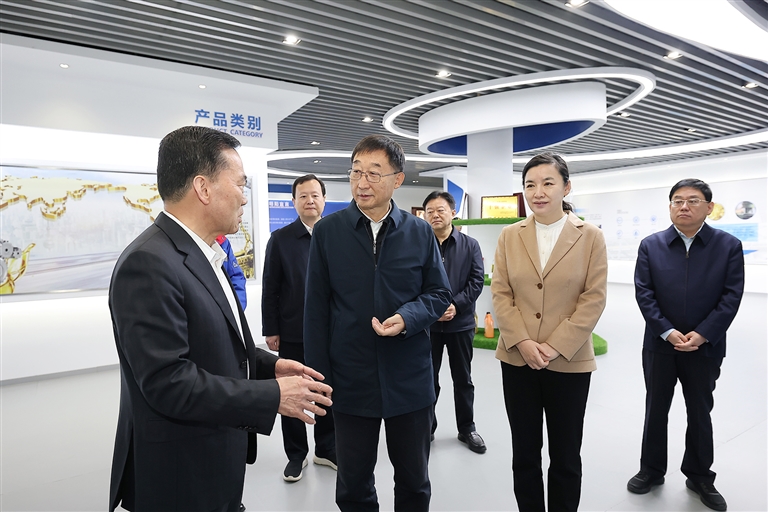
落子“上海唯一”!埃米三江获评高质量孵化器,筑牢宝山区新材料创新“硬核”根基
AMI埃米空间· 2025-12-11 05:35
Core Viewpoint - The article highlights the successful inclusion of the Shanghai Aimi Sanjiang New Materials Industry Innovation Center as the only specialized incubator focusing on new materials among 18 high-quality incubators in Shanghai, marking a significant step in enhancing the innovation capabilities of the Baoshan District's billion-level new materials industry cluster [1][3]. Group 1 - The establishment of Aimi Sanjiang is a collaborative effort between Beijing's benchmark incubator Aimi Space and Shanghai Baoshan University Science and Technology Park Development Co., showcasing effective government-enterprise cooperation and targeted empowerment [3]. - Baoshan District has proactively seized opportunities since the release of the "High-Quality Incubator Cultivation Implementation Plan," positioning Aimi Sanjiang's development as a core strategy for building a scientific innovation ecosystem [3][5]. - The innovative co-office model between Shanghai Baoshan Technology Transfer Co. and the Aimi team has significantly enhanced resource sharing and operational efficiency, facilitating a collaborative approach to incubator construction [3][5]. Group 2 - During the application process, Baoshan District mobilized all resources to support the project, with the District Science and Technology Commission leading policy interpretation and material refinement, while the Economic Commission linked industrial chain resources to solidify the incubation foundation [5]. - Aimi Sanjiang has attracted high-quality projects such as high-performance flexible sensing materials/devices and high-frequency PCB PTFE substrate films, leveraging Baoshan's "investment before equity" national reform pilot policy [5]. - The future focus of Aimi Sanjiang will be on advanced fields such as membrane materials, carbon-based materials, and special alloys, aiming to address the challenges of converting results from 0 to 1 in the new materials sector and injecting momentum into Baoshan's new materials industry [5].

中央政治局会议解读:培育壮大新动能 充分发挥资本市场枢纽功能
Zheng Quan Ri Bao· 2025-12-10 23:40
Group 1 - The core viewpoint emphasizes the importance of innovation-driven development and the cultivation of new growth drivers in China's economy [1][2] - Key emerging industries identified include artificial intelligence, commercial aerospace, and biomanufacturing, which are becoming internationally competitive due to their unique technological advantages [1] - The integration of technology and industry innovation is crucial for transforming scientific achievements into productive forces, with a focus on breakthroughs in core technologies [2] Group 2 - The new growth drivers also encompass renewable energy, new materials, and high-end equipment manufacturing, which are essential for sustainable development and industrial upgrades [2] - The capital market is highlighted as a vital link between policy, industry, and technology, providing long-term capital for technological innovation and supporting the transition of traditional industries [3] - Recent policy measures have been implemented to enhance the capital market's ability to serve the real economy, including the establishment of the Sci-Tech Innovation Board and reforms in various market segments [3]
成都市武侯区第五期“武商智慧堂”“商会菁英沙龙”顺利举行
Sou Hu Cai Jing· 2025-12-06 07:17
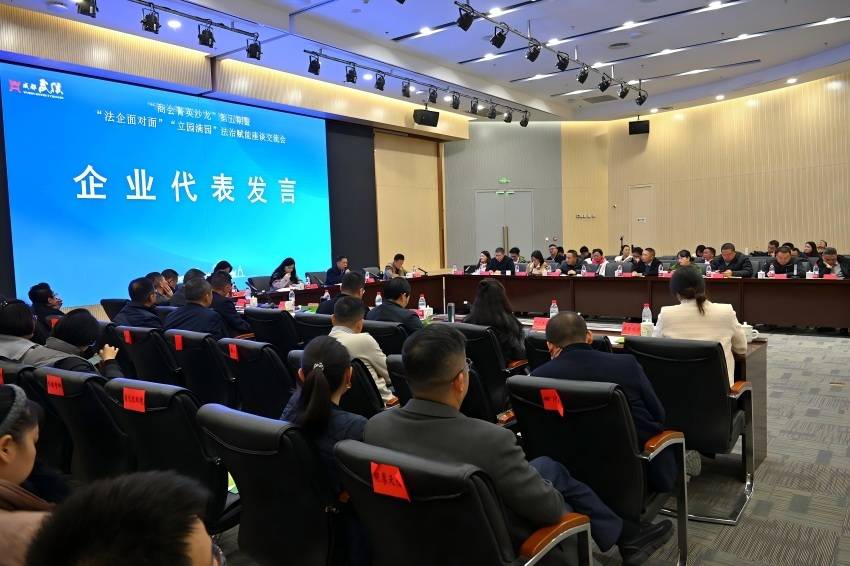
Core Insights - The event "Wushang Wisdom Hall" and "Chamber of Commerce Elite Salon" aimed to facilitate dialogue between private enterprises and government officials, addressing issues and fostering high-quality development [1][4][10] Group 1: Event Overview - The event was held on December 4, organized by various local economic and legal institutions, and attracted over a hundred representatives from private enterprises [1][4] - The morning session featured a lecture by Zeng Mingyou, focusing on the implementation of the spirit of the 20th National Congress of the Communist Party of China, emphasizing high-quality development and legal governance [2][4] Group 2: Key Discussions - The afternoon session included a visit to the Yuelake Technology City, followed by a roundtable discussion focusing on the legal business environment, where representatives from various government departments engaged directly with entrepreneurs [6][7] - Entrepreneurs raised over 20 specific issues related to intellectual property protection, regulatory adaptability for new business models, and minimizing the impact of economic cases on normal operations [6][7] Group 3: Government Response - Government officials demonstrated a high level of professionalism and commitment to addressing the concerns raised by entrepreneurs, promising to provide timely feedback and develop practical service measures [7][9] - The event resulted in a compilation of 23 common and individual suggestions from entrepreneurs, which will be systematically addressed through a collaborative legal consultation mechanism involving multiple departments [9][10] Group 4: Future Directions - The Wuhou District Federation of Industry and Commerce plans to continue enhancing the "Federation +” collaborative model, aiming to create a first-class business environment and stimulate innovation and vitality among various business entities [10]
新材料领域的「攻坚者」:1300+份报告
材料汇· 2025-12-05 15:56
Core Viewpoint - The article emphasizes the importance of collaboration and information sharing among professionals in the new materials sector, highlighting the establishment of a platform called "Materials Exchange" to facilitate this process [3][10]. Group 1: Platform Overview - "Materials Exchange" is described as a comprehensive intelligence station for professionals in the new materials field, featuring over 1300 documents and a vast knowledge network [4][5]. - The platform aims to serve as a professional search engine, allowing users to input specific challenges and access relevant information quickly [7]. Group 2: Functional Benefits - The platform provides extensive resources, including technical roadmaps and independent analyses of key bottlenecks in various sectors such as solid-state batteries and advanced packaging materials [9]. - It helps users bypass extensive research by offering 80% of the foundational information needed for decision-making, thus saving time and enhancing the accuracy of insights [9]. Group 3: Target Audience - The platform is designed for engineers, scientists, investors, analysts, and decision-makers who are engaged in solving material-related challenges and seeking differentiated advantages in the market [9].
山东新泰:政务服务“及时雨”助力企业“拔节长”
Qi Lu Wan Bao· 2025-12-02 06:17
Group 1 - New Tai City focuses on optimizing government services and improving the business environment to stimulate market vitality and innovation, contributing to high-quality economic development [1][3] - The DePu New Materials Industrial Park is undergoing expansion and upgrade, with the project expected to start production in May next year after completing equipment automation testing [1] - The New Tai City Administrative Approval Service Bureau provides comprehensive support for the project, including tailored solutions for specific challenges such as steam pipeline installation and high-voltage line setup [1] Group 2 - The "Park Affairs Handled by the Park" mechanism integrates one-stop services for project commencement and chemical project completion, ensuring smooth construction and production [2] - Tai'an Baichuan Paper Co., Ltd. has completed a strategic restructuring and is focusing on high-value specialty paper products, expanding its market reach internationally [2] - The company has adopted an "Internet + Paper" model, actively developing e-commerce and exporting products to various countries, including Turkey, Italy, and Germany [2]
河南信阳:推进重点项目入库纳统工作提质增效
Zhong Guo Fa Zhan Wang· 2025-12-02 05:55
Core Insights - The meeting in Xinyang, Henan Province focused on the inclusion and statistics of key projects, highlighting existing issues and proposing work suggestions [1][2] - Emphasis was placed on the necessity of integrating project management with statistical inclusion to achieve annual goals [1] Group 1: Project Inclusion and Management - The Xinyang Development and Reform Commission reported on the current status of key project inclusion and identified major issues [1] - The meeting stressed the importance of proactive responsibility and detailed planning to ensure effective implementation of tasks [1] Group 2: Quality and Efficiency Improvement - High-quality project planning is essential for high-quality development, with a focus on enhancing the quality of project inclusion [1] - The meeting called for strengthening policy research and project planning, targeting six new industries and two quality categories for project implementation [1] Group 3: Targeted Strategies and Problem Solving - A problem-oriented approach was advocated, focusing on weaknesses and establishing a tracking service for problematic projects [2] - The goal is to ensure timely completion of project objectives, injecting strong momentum into the city's economic high-quality development [2]
邀请函 | 2025金普新区新材料产业创新发展大会暨北京大学卓越工程师金普行
DT新材料· 2025-12-01 16:04
分享一篇文章。 北京大学材料科学与工程学院 邀请函 | 2025新材料产业创新发展大会暨北京大学卓越工程师金普行 原创 阅读全文 ...
刘宁到信阳市平桥商城固始淮滨调研时强调:推动创新链与产业链深度融合 以新发展理念引领高质量发展
He Nan Ri Bao· 2025-11-24 03:05
Group 1: Industry Development - The focus on introducing and nurturing innovative enterprises in Xinyang, encouraging increased R&D investment and innovation efforts [2] - The new materials industry is highlighted as a strategic and foundational sector, crucial for high-tech competition both domestically and internationally [2] - Emphasis on the development of green low-carbon circular economy projects, with specific mention of hydrogen and ammonia projects [2] Group 2: Economic and Infrastructure Initiatives - The Huai Bin Central Port is being upgraded from a loading port to a logistics and trade port, enhancing its capacity and capabilities [5] - There is a strong emphasis on improving waterway planning and construction to strengthen the shipbuilding industry and integrate into the national market [5] - The importance of cultural tourism integration is noted, with a focus on leveraging cultural resources to foster entrepreneurship [5] Group 3: Policy and Strategic Goals - The need to align with the goals set by the 20th National Congress of the Communist Party, focusing on innovation and the integration of industrial and innovation chains [3][5] - The call for creating a first-class business environment to stimulate the vitality of various business entities [5] - The commitment to enhancing green development momentum and fostering new productive forces tailored to local conditions [5]

刘宁到信阳市平桥商城固始淮滨调研时强调 推动创新链与产业链深度融合 以新发展理念引领高质量发展
He Nan Ri Bao· 2025-11-23 23:12
Group 1 - The provincial secretary Liu Ning conducted research on the development of green low-carbon circular economy in Xinyang City, focusing on various sectors including industrial development, inland shipping, and cultural tourism integration [2][3] - Liu emphasized the importance of the new materials industry as a strategic and foundational sector, urging for enhanced R&D investment and innovation to strengthen the technological level and advance towards the mid-to-high end of the value chain [3] - Liu acknowledged the efforts of Huayang Changqing Investment Co., Ltd. in developing projects related to electric hydrogen ammonia and green low-carbon circular economy, encouraging the company to deepen its market presence in Henan [3] Group 2 - The Huai Bin Central Port, the largest comprehensive single-port in the province, is transitioning from a loading and unloading port to a logistics and trade port, with an emphasis on enhancing port capabilities and promoting the shipbuilding industry [4] - Liu highlighted the need to leverage cultural resources, particularly the root culture, to foster talent return initiatives and create a conducive environment for entrepreneurship [4] - The focus is on integrating innovation chains with industrial chains, enhancing green development momentum, and creating a first-class business environment to stimulate various business entities [5]