
智慧农业

Search documents
晶采观察丨“十五五”开局!新质生产力赋能 中国农业现代化“智慧大升级”
Huan Qiu Wang· 2026-01-24 12:20
Core Viewpoint - The modernization of agriculture and rural areas in China is increasingly driven by technology and data, transitioning from traditional farming methods to data-driven practices, with a clear outline for future development [1] Group 1: Agricultural Production and Technology - By 2025, China's grain production is expected to reach 14,298 billion jin, an increase of 168 billion jin, maintaining a historical high for two consecutive years [2] - The construction and improvement of high-standard farmland will cover 7,568 million mu, with a cumulative total exceeding 1 billion mu [2] - The comprehensive mechanization rate of crop farming is projected to reach 76.7% by 2025, indicating that over 70% of field operations will be mechanized [2] - Agricultural technology's contribution rate has surpassed 64%, showcasing significant advancements in agricultural productivity [2] Group 2: Economic Impact on Rural Residents - By 2025, the per capita disposable income of rural residents is expected to reach 24,456 yuan, reflecting a 6% real growth from the previous year [3] - The improvement in income levels is attributed to the acceleration of new agricultural productivity and the development of new industries such as rural tourism and e-commerce [3] - Smart agriculture is transforming the agricultural value chain, enhancing not only production but also marketing and sales, thus increasing farmers' income [3] Group 3: Future Outlook and Strategic Goals - The strategic goal of accelerating agricultural modernization is to improve the living standards of farmers, making rural areas more attractive for long-term residence [5] - The next five years will see continued enhancement of digital infrastructure and core technologies, with smart agriculture serving as a key driver for rural revitalization [5] - The vision for agricultural modernization is to create a vibrant rural environment that is desirable for living and working, marking a significant transformation in the agricultural sector [5]

“数字丝绸之路”,串联拉美创新发展图景(国际视点)
Ren Min Ri Bao· 2026-01-22 21:55
Core Insights - Latin America has emerged as one of the most fruitful regions for the "Digital Silk Road" cooperation, driven by Chinese digital technology and collaboration concepts [1] - The digital infrastructure initiatives in Latin America, particularly in cloud computing, 5G communication, and smart agriculture, are significantly enhancing regional cooperation and development [2][3] Digital Infrastructure as a Foundation for Cooperation - Huawei's cloud data center in Santiago, Chile, is providing quality cloud services and attracting clients from neighboring countries like Argentina and Peru, reinforcing Chile's position as a digital hub in Latin America [2] - Chile's "Digital Nation Strategy" aims to establish a data hub in the Southern Hemisphere, with Chinese companies playing a crucial role in this transformation [2] - Various countries in Latin America, including Brazil and Mexico, are collaborating with Chinese firms to enhance their digital infrastructure, which is vital for bridging the development gap [3] Empowering Industries and Enhancing Livelihoods - Chinese smart port technology is being implemented in Santos Port, Brazil, improving operational safety and efficiency [4] - The integration of digital technologies in traditional industries, such as agriculture in Brazil and Argentina, is leading to significant improvements in productivity and efficiency [4] Realizing Digital Benefits in Daily Life - Farmers in Puebla, Mexico, are benefiting from the "Digital Rural Project," which has increased their profits by 20% through digital marketing and e-commerce platforms [5] - Cross-border e-commerce is facilitating the flow of goods between China and Latin America, enhancing trade efficiency and creating job opportunities in logistics and customer service [6] Cultivating Digital Talent for Development - The "Future Seeds" program in Peru is fostering digital skills among youth while promoting cultural exchange, exemplifying the educational cooperation between China and Latin America [7] - Initiatives like the China-Latin America Digital Education Alliance are aimed at nurturing a skilled workforce capable of driving digital transformation in the region [7] Expanding Cooperation Across Various Fields - The "Digital Silk Road" is not only about technology transfer but also about building trust and collaboration between China and Latin America, enhancing e-commerce vitality and digital infrastructure coverage [8] - Latin American countries are eager to deepen cooperation with China in digital economy and education, recognizing the potential for sustainable development [8]

农业农村部:加快种业、农机装备、智慧农业等关键领域突破
Xin Lang Cai Jing· 2026-01-22 02:21
Core Viewpoint - The Ministry of Agriculture and Rural Affairs emphasizes the goal of achieving high-level agricultural technology self-reliance by 2026, focusing on breakthroughs in key areas such as seed industry, agricultural machinery, and smart agriculture [1] Group 1 - The new system will leverage the advantages of a novel national framework to accelerate technological innovation [1] - There will be a solid push for the deep integration of technological innovation and industrial innovation [1]

藏在武都的优商密码
Xin Lang Cai Jing· 2026-01-22 00:44
Core Insights - The article highlights the efforts of Wudu District in Gansu Province to enhance regional development through deepening East-West cooperation and strengthening investment attraction, focusing on addressing operational pain points for enterprises [1][2] Group 1: Investment and Economic Development - Wudu District aims to create a strong investment magnet by building a high-quality business environment and providing efficient government services to accelerate project construction [1] - The "Smart Fishing + Vertical Composite Ecological" greenhouse project in Jiao Gong Village exemplifies the integration of advanced technologies like AI, IoT, and big data to enhance agricultural productivity and efficiency [1] Group 2: Government Support and Collaboration - The rapid implementation and efficient progress of projects are attributed to the collaborative efforts between government and enterprises, with local authorities actively resolving issues related to land planning, electricity access, and road construction [2] - Jiao Gong Town has established a dedicated task force to focus on key areas such as land coordination and infrastructure development, ensuring ongoing support for project phases and enterprise operations [2] Group 3: Agricultural Innovation and Community Impact - The project is seen as a new engine for transforming agriculture in the region towards smart and ecological practices, significantly improving land utilization efficiency [1] - The local government emphasizes a service-oriented approach to foster enterprise growth and rural revitalization, aiming for a win-win situation that enhances both corporate development and community income [2]
释放气候资源这座“发展宝库”的生产力
Ren Min Ri Bao· 2026-01-21 09:34
气候资源经济蕴含着向新发展的基因。在北京,当地推出朝霞、晚霞、星空等特色气象景观预报,并将 相关服务融入文旅推广;在浙江省丽水市云和县,游客打开"云和梯田数字气象地图"小程序可以查看云 海预报。精细的气象服务与观景、康养等美好生活需求相契合,既盘活气候资源,又赋能绿色发展,促 进人与自然和谐共生。 把无限风光变成绿色经济、美丽经济,下好科技创新的先手棋至关重要。在黑龙江高标准农田旁边,自 动化气象站24小时实时收集气温、湿度等气象要素数据,小程序、APP等及时将预报、预警信息推送给 农户,农业生产变为"知天而作";在湖南张家界,种植户精准把握采摘期的湿度和光照,使莓茶获 评"湖南气候好产品"。开发基于气候数据的智慧农业管理系统,可以精准预测农作物生长环境的变化, 帮助农民提高作物产量和品质。着力提升气候资源的监测评估精细度,提高气候资源的转化效率,科技 创新还有很大空间。 科学利用气候资源,是生态文明建设和绿色发展的题中应有之义。释放气候资源这座"发展宝库"的生产 力,不断拓展向金山银山转化的路径,气候经济的发展潜能值得期待。 光照、热量、云水、风等气候资源,是一种新型的战略性资源。将气候资源要素转化为商品与 ...
硬核科技护航农业安全 托普云农荣获海南省科学技术进步奖一等奖
Quan Jing Wang· 2026-01-21 04:26
近日,2024年度海南省科学技术奖评选结果正式揭晓。由浙江托普云农科技股份有限公司 (301556.SZ)参与完成的"海南重大迁飞害虫智能监测及精准防控关键技术创新与集成应用"成果获得 科学技术进步奖一等奖,充分彰显了托普云农在农业科技创新领域的硬核实力与行业引领地位。 2024年度海南省科学技术奖是《海南省科学技术奖励办法》及实施细则修订后第一次授奖。此次获奖项 目技术创新突出,推动行业进步作用明显,产生了显著的社会和经济效益,充分彰显了海南在吸引和培 育创新团队、激发创新动能方面的成效。 立足不同场景的差异化监测需求,托普云农创新整合光诱、色诱、性诱等多元诱集方式,搭建全域适配 的智能测报体系,实现从微小害虫到迁飞害虫、从田间单点到全域范围的多维度监测覆盖,彻底打破传 统测报方式的场景局限。 通过联动卫星遥感、无人机遥感、地面感知网络等多维手段,托普云农打造 "天空地一体化" 立体监测 系统,同时深度嵌入农业AI智能体 "问稷",实现虫情数据与气象、作物生育期等多维信息的联动分 析,推动植保测报从"人工估测"向"精准量化"、从"被动响应"向"主动预警"的根本性转变。 多年来,托普云农在智慧农业领域的技术成 ...

河南省方城县:科技赋能激活现代农业发展新动能
Zhong Guo Jing Ji Wang· 2026-01-20 11:41
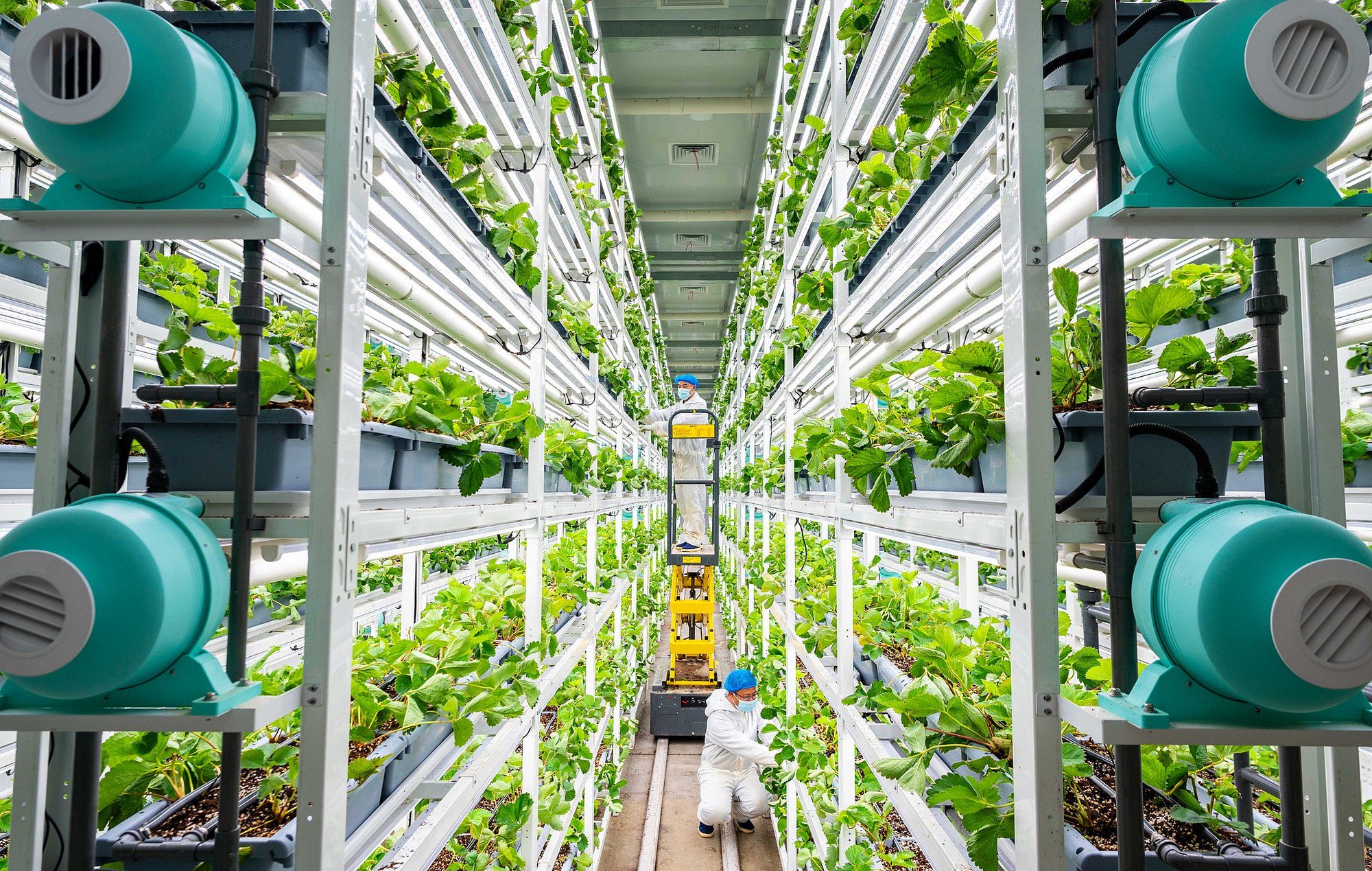
Core Viewpoint - The article highlights the transformation in agriculture at the Hongwang Agricultural Smart Planting Base in Yangji Town, Fangcheng County, Henan Province, showcasing the integration of technology in modern farming practices to enhance productivity and sustainability [1][2]. Group 1: Technological Advancements - The smart greenhouses utilize advanced digital systems to monitor and control various growth parameters such as light, temperature, humidity, and nutrient levels, allowing for precise management of plant growth [1]. - Hydroponic lettuce is cultivated in a controlled environment, with a growth cycle of 20 days in summer and 30 days in winter, enabling up to 13 harvests per year, significantly surpassing traditional farming yields [1]. Group 2: Economic Impact - The "enterprise + base + farmer" model has transformed local villagers from passive observers to active participants, allowing them to earn income while managing family responsibilities [1]. - Workers at the base, such as Zhang Hua, report earning 80 yuan per day, contributing to both household income and skill development [1]. Group 3: Future Plans - The administrative supervisor, Cui Hanying, indicated plans to diversify crop varieties and establish a unique brand for their fruits and vegetables, aiming to involve more local residents in the initiative for shared prosperity [2].
中国经济一月纪事丨机器人、无人机、AI大脑、物联网……“未来农场”原来这么酷!
Yang Guang Wang· 2026-01-20 06:24
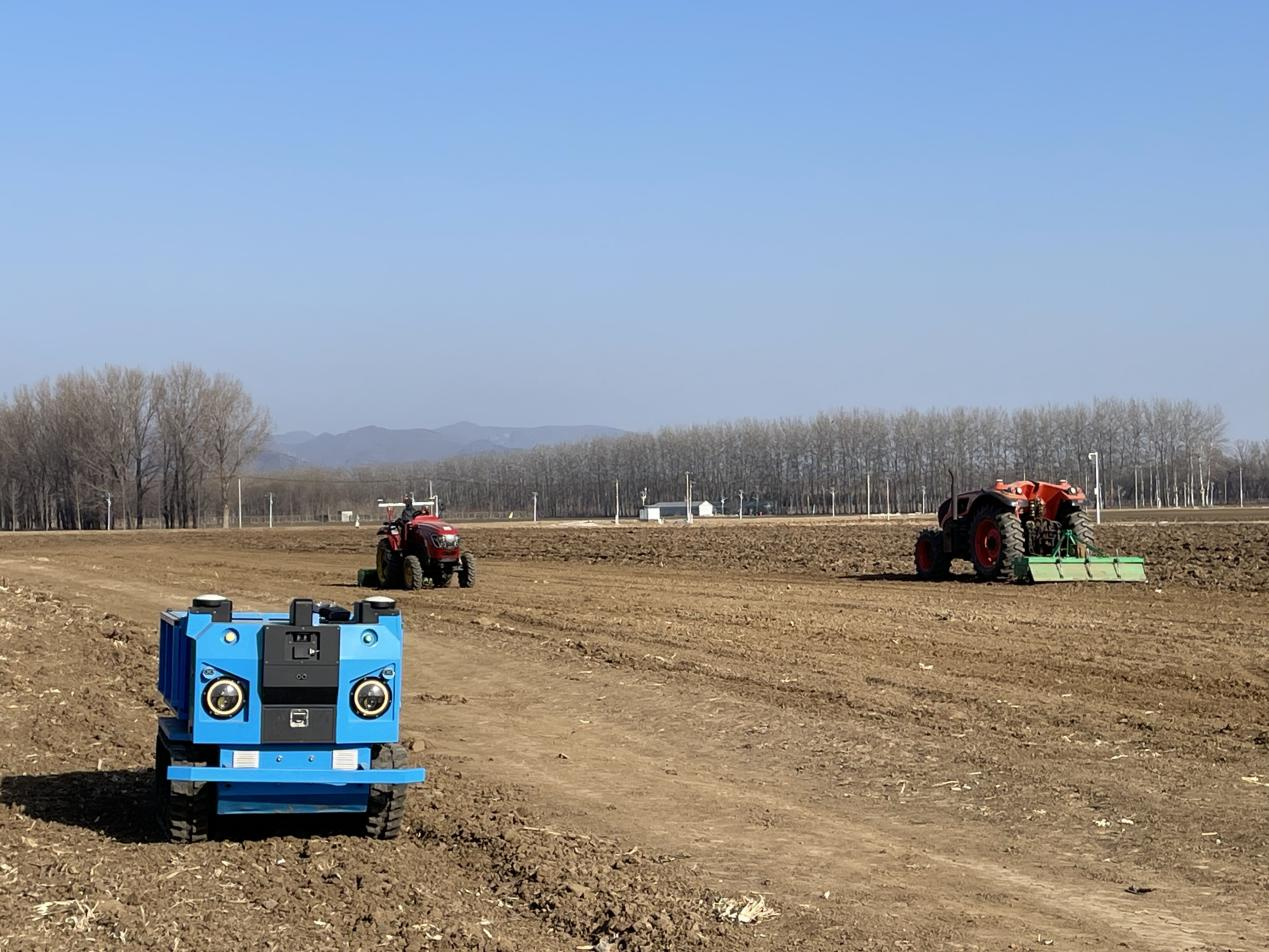
Core Viewpoint - The article highlights the advancements in smart agriculture in China, showcasing a modern agricultural technology demonstration base that utilizes robotics and AI to enhance efficiency and productivity in farming [1][3]. Group 1: Smart Farming Technologies - The demonstration base in Xiaotangshan, Beijing, features a variety of robotic systems, including unmanned tractors and drones, which significantly reduce the need for human labor in agricultural tasks [3][5]. - The unmanned tractors are reported to be more cost-effective and precise compared to traditional human-operated tractors, achieving centimeter-level accuracy in field operations [5][7]. - The smart farming system integrates various technologies, including autonomous robots for field management, which can detect pests and diseases and analyze data through cloud platforms [5][12]. Group 2: Efficiency and Cost Reduction - The implementation of smart farming technologies has led to an 8-12 times increase in operational efficiency and a 55% reduction in overall labor costs [7][12]. - The comprehensive smart decision-making system allows for improved crop quality and yield, with a 15% increase in overall cost-effectiveness per acre [7][12]. - The use of autonomous transport robots has alleviated the burden on farmers during harvest seasons, allowing for efficient transportation of produce [7][12]. Group 3: Advanced Research and Development - The base also serves as a testing ground for advanced agricultural equipment, including a wind tunnel for simulating aerial pesticide application, which is crucial for optimizing spray techniques [12][14]. - New technologies, such as non-destructive testing devices for fruit quality assessment, are being developed to enhance the efficiency of agricultural processes [12][14]. - The integration of AI in agriculture is evolving from a supportive role to a strategic one, providing comprehensive solutions for producers and managers [17][18].

泓基农业数字化田园综合体入选全国智慧农业典型案例
Da Zhong Ri Bao· 2026-01-20 01:54
Core Viewpoint - The case study of Huanji Agricultural Cooperative has been included in the "2025 National Smart Agriculture Typical Case Compilation" by the Ministry of Agriculture and Rural Affairs, showcasing the integration of digital agriculture in rural development [1] Group 1: Digital Agriculture System - Huanji Agricultural has developed a digital agriculture system characterized by "1 platform + 1 center + N applications" to create a digital rural complex [1] - The cooperative has deployed an Internet of Things (IoT) sensor network for real-time monitoring of environmental data such as soil moisture, air temperature and humidity, and light intensity [1] Group 2: Efficiency and Cost Reduction - The data collected is analyzed through a cloud platform, which enables a smart water and fertilizer integration system to perform precise irrigation and scientific fertilization [1] - This approach has resulted in a water and fertilizer savings of 30% to 50% and a reduction in labor costs by over 50% [1] Group 3: Diversification of Agricultural Functions - Huanji Agricultural has opened online sales channels, including live streaming, and established a digital agriculture research and tourism base [1] - This initiative allows citizens and tourists to experience modern agricultural technologies such as IoT planting and intelligent harvesting, promoting a shift from a single production function to a diversified model that includes "production + culture and tourism + education" [1]
三部门发文重点建设6类国家农业现代化示范区 打造一批农业产业发展高地
Ren Min Ri Bao· 2026-01-18 22:11
Core Viewpoint - The Ministry of Agriculture and Rural Affairs, the Ministry of Finance, and the National Development and Reform Commission have issued a work plan for the creation of national agricultural modernization demonstration zones, aiming to provide practical models for achieving agricultural modernization in China by 2030 [1]. Group 1: Creation Goals - The plan aims to establish no more than 500 recognized demonstration zones by 2030, focusing on six types: grain industry, livestock farming, advantageous specialty industries, smart agriculture, urban agriculture, and dry farming [1]. - The goal is to enable qualified demonstration zones to achieve agricultural modernization ahead of others, creating a phased construction pattern with key breakthroughs [1]. Group 2: Creation Tasks - The plan requires clear positioning, application standards, and creation goals for each type of demonstration zone, incorporating both "regular tasks + special tasks" to advance the creation work [1]. - Counties applying for demonstration zones must select a type that meets the application standards and strengthen organizational leadership, innovate systems and mechanisms, ensure resource support, optimize guidance services, and explore diverse development models [1].