
毛绒玩具

Search documents
餐饮+毛绒玩具为何能火?核心商业逻辑全面拆解
Sou Hu Cai Jing· 2025-06-06 21:46
Core Insights - The article highlights the emerging trend of integrating plush toys into the food and beverage industry, showcasing how brands are creatively merging culinary experiences with emotional value through these products [2][4][5]. Group 1: Market Trends - The global plush toy market is projected to exceed 10 billion yuan in 2024, with an annual growth rate of approximately 15% [4]. - The primary consumer demographic for plush toys is the post-2000 generation, accounting for 43% of the market, followed by the post-1990 generation at 36% [4]. Group 2: Emotional Consumption - Young consumers are increasingly driven by emotional value in their purchasing decisions, with nearly 30% of surveyed individuals indicating that they buy products for emotional reasons [4]. - Plush toys are being utilized for their therapeutic benefits, as studies suggest that touching soft objects can reduce anxiety levels, fulfilling the emotional needs of young consumers [5]. Group 3: Cultural Integration - The rise of "Guochao" (national trend) reflects a significant cultural resonance in the consumer market, with food-themed plush toys serving as a medium for cultural expression and connection [7][8]. - Brands like Quanjude and Beijing Daoxiangcun are creatively combining traditional Chinese culinary elements with modern design, enhancing cultural pride among younger generations [8]. Group 4: Social Media Influence - High-quality and cute plush toys have strong social attributes, making them popular for sharing on social media platforms, which in turn boosts brand visibility and consumer engagement [6]. - The integration of plush toys into dining experiences creates a multi-dimensional consumption scenario that combines food, culture, and emotional connection [6]. Group 5: Sustainability and Innovation - As the trend of food-themed plush toys continues to grow, brands are encouraged to think deeply about sustainable development and innovative practices to maintain consumer interest [18]. - Companies are advised to focus on original designs and local relevance to avoid superficial cultural expressions and to protect their intellectual property [20].


扬州全链条帮扶脱贫地区年销11.5亿
Xin Hua Ri Bao· 2025-06-06 21:05
Group 1 - The article highlights the success of Yangzhou Industrial Vocational and Technical College in establishing the first e-commerce live streaming academy in China, which has set up 279 live streaming bases and trained over 20,000 hosts, contributing to a revenue increase of 310 million yuan for local farmers [1] - Yangzhou is recognized as one of the ten key cities for consumption assistance in China, actively supporting various regions including Xinjiang and Qinghai, and has dispatched 30 government officials and 445 technical talents to aid these areas [1] - The city has invested 515 million yuan in various projects, resulting in the establishment of 94 industrial projects and 101 livelihood projects, with a total sales scale of products and services reaching 870 million yuan [1] Group 2 - Yangzhou Anbeisi Toy Co., Ltd. has successfully developed a plush toy industry in collaboration with regions like Ankang in Shaanxi, creating a complete industrial chain that includes design, production, and trade, with annual sales exceeding 1 billion yuan [2] - The city has implemented a comprehensive model that integrates government guidance, market leadership, and social participation to enhance consumption assistance efforts, focusing on brand development, policy innovation, and industry collaboration [2] - In the previous year, Yangzhou's efforts in supporting poverty alleviation regions resulted in a sales scale of 1.15 billion yuan, with market-driven sales reaching 600 million yuan [2]
全球订单变局,中国企业正加码这些市场→
21世纪经济报道· 2025-05-26 14:31
Core Viewpoint - The article discusses the impact of recent tariff adjustments between China and the United States on various industries, highlighting how companies are adapting to the changing trade environment and maintaining customer relationships despite increased costs [1][4][11]. Group 1: Impact of Tariff Adjustments - Following the tariff adjustments on May 12, companies in various sectors, including wedding supplies and consumer electronics, reported a surge in orders from the U.S. market, indicating a recovery in demand [1][4]. - The new trade agreement resulted in the U.S. canceling 91% of additional tariffs, which has led to a significant increase in orders for many companies, with some reporting order volumes higher than the previous two to three months [4][13]. - Companies are focusing on long-term strategies, including supply chain diversification and brand development, to mitigate the risks associated with fluctuating tariffs [1][4][11]. Group 2: Market Diversification Strategies - Many companies are exploring multi-market strategies, with a focus on expanding into European and Russian markets as a response to the uncertainties in the U.S. market [5][8]. - Firms that have established overseas production capabilities or diversified their market presence reported minimal impact from the tariff changes, allowing them to maintain stable operations [2][4]. - The trend of integrating domestic and international trade strategies is becoming more prevalent, with companies seeking to balance their portfolios to reduce reliance on any single market [11][12]. Group 3: Customer Relationships and Product Development - Companies with long-standing relationships with U.S. clients have found that trust mitigates the impact of tariff increases, allowing for collaborative solutions to share the burden of costs [7][13]. - Continuous product innovation is emphasized, with companies introducing new products to maintain competitiveness in the market, such as the development of smart pool cleaning robots [5][7]. - The importance of maintaining high-quality and differentiated products is highlighted as a key strategy for competing in international markets, particularly in the face of tariff challenges [8][13].

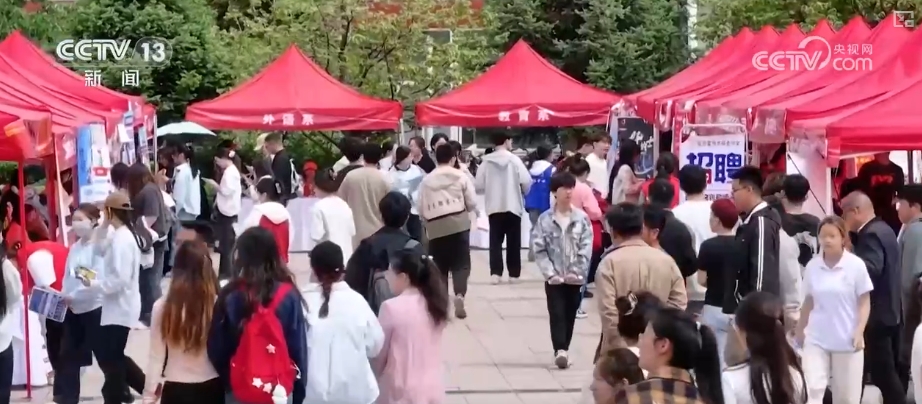
为企业聚精英、为人才建舞台 政策红利“助”企“惠”民 加大岗位释放力度
Yang Shi Wang· 2025-05-08 05:15
Core Viewpoint - The Chinese government emphasizes stabilizing employment, enterprises, markets, and expectations to respond to external uncertainties with high-quality development [1] Group 1: Employment Initiatives - The target for urban new employment in 2025 is set at over 12 million, with enhanced public employment services and support for key groups [1] - A series of recruitment events have been launched, with over 1,000 events and 697,000 job postings from more than 350,000 employers, attracting nearly 7.42 million job-seeking graduates [2][4] - Various specialized service zones have been established at job fairs to provide policy consultation and career guidance [4] Group 2: Policy Support and Financial Aid - The government has implemented incentive policies to expand job opportunities in key sectors, including new productivity development and basic livelihood services [6] - Employment support policies have been enhanced, with a cumulative issuance of over 640 billion yuan in loans to stabilize and expand employment positions [13] - In the first quarter, 35.2 billion yuan in stabilization funds were distributed to 588,000 enterprises, reducing costs by 45.6 billion yuan through lowered unemployment insurance rates [15] Group 3: Skills Training and Development - The "Skills Illuminate the Future" training initiative aims to address structural employment issues by increasing the supply of skilled labor in high-demand sectors [20] - Over 1 million people are expected to receive subsidies for vocational skills training, focusing on advanced manufacturing and modern services [26] - Specialized training programs for sectors like elderly care and domestic services have been initiated to support workforce stability [30]
AI+玩具专家交流
2025-03-02 16:46
Summary of AI Toy Industry Conference Call Industry Overview - The conference focused on the AI toy industry, highlighting the current stage of development and key players involved in the market [1][2] - The industry is experiencing a surge in interest, particularly with the rise of domestic AI models and their applications in toys [1] Key Players and Developments - Companies like Polotoy and YueRan Innovation are recognized for their early moves into the AI toy sector, identifying opportunities for commercialization [2] - Notable figures in the industry include Huang Yingming from Alibaba Cloud OS and Guo Renjie, former CEO of a major Chinese entertainment company, who are exploring innovative AI toy products [3][4] - The market is characterized by a lack of dominant players, with many companies entering the space but not achieving significant scale [6] Market Size and Growth Projections - The current market size for AI toys is estimated at around 50 billion, with AI plush toys contributing approximately 3 to 4 billion [5] - Projections for 2024 suggest the market could grow to between 100 billion and 150 billion, driven by increased competition and innovation [5] Challenges and Pain Points - The industry faces challenges in finding effective commercial applications for AI technology in toys, with many products still lacking advanced interaction capabilities [2][6] - There is a noted difficulty in achieving emotional engagement and interaction quality in AI toys, which is crucial for consumer acceptance [7][14] Technological Innovations - The integration of advanced algorithms and emotional recognition technologies is seen as essential for the future of AI toys [17][18] - The potential for using biometric feedback, such as temperature and micro-expressions, to enhance emotional interaction is being explored [18][32] Consumer Insights and Market Dynamics - Consumer feedback indicates a desire for more engaging and responsive AI toys, with current offerings often falling short in terms of interaction speed and emotional depth [14][15] - The market is witnessing a mix of traditional toy manufacturers and new entrants from tech backgrounds, leading to a diverse range of product offerings [21][22] IP and Branding Considerations - The importance of intellectual property (IP) in the AI toy market is emphasized, with successful products likely to leverage strong IP to attract consumers [17][33] - The challenge of securing IP rights and the lengthy authorization processes are noted as barriers to rapid product development [34] Future Outlook - The industry is expected to see significant developments and product launches in the coming year, with a focus on enhancing emotional engagement and interactivity [40][41] - The potential for AI toys to integrate into educational contexts, particularly for preschool-aged children, is identified as a promising avenue for growth [37][38] Conclusion - The AI toy industry is in a dynamic phase of growth, with numerous players vying for market share and innovation. The focus on emotional engagement, technological advancements, and strong branding will be critical for success in this evolving landscape [6][17][40]