私域电商

Search documents
2025年中国私域电商行业趋势白皮书
艾瑞咨询· 2025-09-20 00:04
Core Insights - The private domain e-commerce industry is experiencing rapid growth due to the saturation of user growth and rising customer acquisition costs, necessitating refined and differentiated operational strategies to meet user demands and enhance brand competitiveness [1][2][11] Industry Overview - Development Background and Drivers - The number of online shopping users in China reached 970 million in 2024, with a penetration rate close to 90%, indicating limited natural growth potential [2] - The transition from acquiring new users to managing existing ones has driven the demand for private domain e-commerce, which offers lower customer acquisition costs and focuses on long-term user value [2] Demand Side - User Needs - Users are increasingly prioritizing service quality and personalized experiences, with significant emphasis on after-sales service, product variety, and personalized fulfillment [4] - In private domain channels, users show a stronger inclination towards fulfillment efficiency and personalized needs, validating the effectiveness of refined operational strategies [4] Supply Side - Brand Focus - In the era of stock competition, brands are increasingly focusing on digital and channel operational capabilities to enhance competitiveness through private domain layouts [6][7] - Private domain strategies allow brands to leverage data and AI technologies to improve user operations and reduce operational costs [7] Policy Environment - The government has introduced various policies to promote the healthy development of private domain e-commerce, encouraging participation from individuals and small businesses [9][10] Industry Characteristics - The private domain e-commerce sector has evolved through technological iterations and policy regulations, entering a new phase characterized by AI empowerment and the integration of public and private domains [11][12] Operational Model - Private domain e-commerce drives growth through a comprehensive and refined operational model that enhances user lifetime value by diversifying acquisition channels and fostering user trust [14] Market Space - The industry is projected to grow to 2.3 trillion yuan in 2024, with a growth rate of 6.3%, and is expected to exceed 3 trillion yuan by 2025 due to consumption incentives and technological advancements [17][18] Participant Ecosystem - The private domain e-commerce ecosystem consists of brands, store owners, platforms, and consumers, with platforms playing a crucial role in connecting these parties [20][23] Platform Insights - Player Types - Different types of platforms, including comprehensive, vertical, and brand-specific players, serve as core suppliers of goods and services in the private domain e-commerce landscape [23] Platform Insights - Market Landscape - Leading platforms are focusing on marketing innovation, user recognition, and supply chain capabilities to establish competitive advantages [26] Consumer Insights - User Profile - The majority of private domain e-commerce users are women aged 24-39, with a good educational background and middle to high income levels [40] Consumer Insights - Purchasing Behavior - Users primarily purchase daily consumables, with price discounts, product variety, and personalized service experiences driving increased purchase frequency [42][43] Consumer Insights - Experience Feedback - User satisfaction is high, with over 80% expressing satisfaction with their shopping experiences, indicating potential for further enhancement through refined operations [47] Store Owner Insights - Profile - Female store owners are predominantly aged 31-40, with a high level of education, and are motivated by self-improvement and economic independence [50][55] Store Owner Insights - Business Behavior - Store owners primarily convert through word-of-mouth and personal experiences, with a strong internal drive for personal growth and economic contribution [53] Merchant Private Domain Layout - Nearly 90% of surveyed merchants have initiated private domain layouts, indicating positive early results in revenue contributions and operational efficiency [58] Industry Trend Outlook - Refined Operations - The shift from traffic-oriented to user-centric operations is essential for sustainable growth, emphasizing long-term relationships with users [67] Industry Trend Outlook - Technology Integration - The application of AI technology is expected to enhance operational efficiency across user management, content, supply chain, and service operations [70] Industry Trend Outlook - Model Export - Leading players are exploring overseas markets by leveraging successful social e-commerce models, indicating a trend towards international expansion [72]


私域电商名词大揭秘:掌握这些,轻松搭建私域运营体系!
Sou Hu Cai Jing· 2025-09-12 11:46
Core Insights - The essence of private domain traffic is a user asset pool controlled by brands, contrasting with public domain traffic reliant on platform distribution [3] - Private domain traffic allows brands to build long-term stable customer relationships through low-cost operations and repeated engagement [3] - The rise of enterprise WeChat is reshaping the private domain tool landscape, enhancing user trust and enabling precise operations [4] Group 1: Private Domain Traffic - Private domain traffic is accumulated through channels like WeChat ecosystem, mini-programs, and has characteristics of low-cost operations and repeat reach [3] - Brands can achieve personalized outreach by constructing user profiles based on consumption frequency, average order value, and interests [3] - Brands utilizing a referral growth mechanism can reduce user acquisition costs by 65% compared to traditional channels, with a user participation rate of 38% [3] Group 2: User Engagement and Conversion - The conversion process emphasizes subtle guidance through community engagement, 1v1 consulting, and live-streaming sales [4] - Private domain users have an annual repurchase frequency 2.3 times higher than public domain users, with high-quality private domain users having a lifetime value (LTV) up to 5 times that of regular users [4] - A clothing brand reduced its conversion cycle from 7 days to 3 days and increased average order value by 25% using enterprise WeChat [4] Group 3: Operational Strategies - The construction of a private domain matrix follows the principle of "multiple touchpoints, strong connections," creating a complete operational loop [4] - A food brand achieved over 10 million in private domain GMV within three months, accounting for 28% of total revenue through a four-channel linkage [4] - Professional platforms are providing full-link solutions to help businesses transition from traffic acquisition to value realization [6]

私域电商核心名词全解:助你从入门到精通
Sou Hu Cai Jing· 2025-09-12 09:20
Core Insights - The article emphasizes the importance of understanding and applying core concepts in private domain e-commerce for sustainable growth [1][22] Summary by Categories Private Domain Traffic - Private domain traffic refers to user assets that brands or individuals can freely reach and repeatedly operate, with common channels including WeChat ecosystem (Moments, WeChat groups, WeChat Work), mini-programs, and official accounts. It highlights controllability and long-term retention compared to public domain traffic [2] User Operations - User operations involve refined management and services throughout the user lifecycle, enhancing user activity, retention, and repurchase rates through tagging, segmentation, and personalized outreach [4] Community Operations - Community operations focus on building high-frequency interactions between brands and users primarily through WeChat groups or social circles, utilizing strategies like event planning, content sharing, point systems, and viral marketing [6] Refined Tagging - Refined tagging employs multi-dimensional user profiles (such as purchase frequency, average order value, and interest preferences) to achieve precise segmentation and personalized recommendations, serving as a core technical method in private domain e-commerce [8] Viral Growth - Viral growth leverages user relationship chains for expansion, employing tactics like reward-based friend invitations, group buying, and price-cutting assistance. This approach not only attracts new users but also boosts the activity of existing users [10] Transaction Conversion - Transaction conversion refers to the entire process from user attention to purchase. Private domain e-commerce emphasizes "low cost and high conversion" through community interactions, personalized recommendations, and live-stream selling [12] Repurchase Rate - The repurchase rate measures the proportion of users who make repeat purchases within a certain timeframe, serving as one of the core indicators of private domain operations. A high repurchase rate indicates the increasing value of private domain assets [14] User Lifetime Value (LTV) - User lifetime value (LTV) represents the total value a user generates for a brand throughout their lifecycle. The ultimate goal of private domain operations is to enhance LTV through continuous engagement [16] WeChat Enterprise Operations - WeChat Work has become a core tool for private domain operations due to its official endorsement and open interfaces, enabling customer management, data retention, and conversion tracking [18] Private Domain Matrix - The concept of a private domain matrix is introduced, although specific details are not provided in the text [20] Conclusion - Private domain e-commerce is not an elusive "traffic myth" but a practical process built on a clear set of concepts and methodologies. Understanding these core terms is essential for constructing a private domain system and identifying growth opportunities. The company, QuKu Network, aims to provide solutions for merchants, from traffic acquisition and user retention to operational conversion and repurchase enhancement, helping brands effectively utilize private domains for sustainable growth [22]
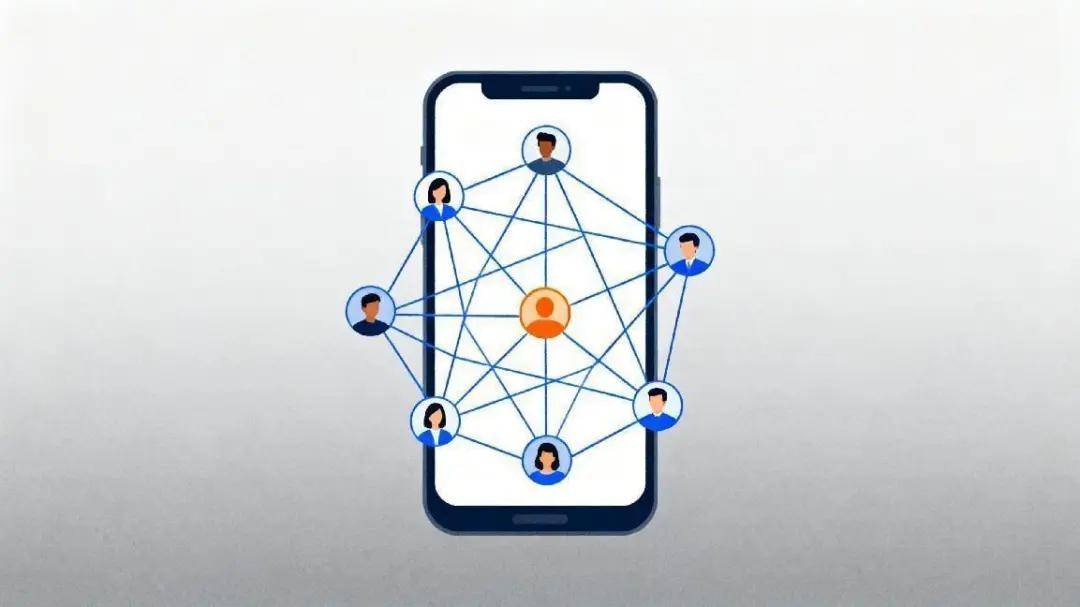
推客崛起:透视2025年私域电商生态繁荣的推手与演变历程
Sou Hu Cai Jing· 2025-08-15 05:06
Core Insights - The rise of the "推客" (Tui Ke) industry represents a significant transformation in the commercial landscape, with its origins tracing back to 2005 and gaining momentum in 2025 [1][3][8] Timeline of Key Events - The concept of "推客" emerged in 2005, with the term officially trademarked by Sina in 2009, although it did not translate into immediate commercial success due to an immature social e-commerce environment [1][4] - In 2018, Suning launched the "Suning Tui Ke" platform, focusing on a community-driven model, but its impact was limited to its ecosystem [1][4] - A pivotal moment occurred on January 9, 2025, when WeChat included "推客" in its ecosystem strategy, alongside the announcement of the "万人推客大会" (Ten Thousand Tui Ke Conference) by the Feidianhui, marking the start of a dual-engine growth for the industry [3][4] - The first "万人推客大会" was held in Hangzhou on March 3, 2025, validating the model's feasibility and market potential [3][4] - The second conference took place in Changsha on May 28, 2025, focusing on resource integration and the launch of the "推客小程序服务商大会" (Tui Ke Mini Program Service Provider Conference) [3][4] - By August 7, 2025, the third conference in Guangzhou attracted over a thousand brands, solidifying the "推客" ecosystem [3][4][6] Industry Growth and Development - The "推客" industry is experiencing explosive growth, with Feidianhui setting ambitious goals to launch 2,000 Tui Ke platforms and reach 10 million Tui Ke influencers impacting 1.3 billion consumers by year-end [6] - The efficient integration of information flow, logistics, and capital flow has provided a solid foundation for the rapid development of the Tui Ke model [6] - The collaboration between WeChat and Feidianhui has fostered a strong participatory effect within private domain circles, promoting the idea that "everyone can be a Tui Ke" [6][8] Conclusion - The evolution of the "推客" industry highlights the importance of innovation in business models and the power of collaborative ecosystems, marking a new phase in the development of private domain e-commerce [8]


推客纪元:2025年私域电商生态繁荣的推手与背后力量
Sou Hu Cai Jing· 2025-08-15 00:38
Core Insights - The evolution of the "推客" (Tuike) concept has transitioned from initial exploration to a thriving ecosystem, with 2025 identified as a pivotal year for its development [1][6] - The concept was first registered by Sina in 2009, but it did not materialize into a commercial model until Su Ning launched the "Su Ning Tuike" platform in 2018 [1][4] - The real turning point occurred in January 2025 when WeChat included "推客" in its ecosystem strategy, marking the beginning of a dual-engine development for the industry [3][4] Timeline of Key Events - **2005-2009**: Multiple attempts to register the "推客" trademark were unsuccessful, leading to the concept remaining unrealized [4] - **2009**: Sina successfully registered the "推客" trademark, but this was limited to trademark positioning without commercial practice [4] - **2018**: Su Ning launched the "Su Ning Tuike" platform, showcasing the initial model but limited by its closed ecosystem [4] - **January 9, 2025**: WeChat's public course discussed "推客" and the "万人推客大会" project was initiated by the organization "沸点会," marking a significant industry focus [3][4] - **March 3, 2025**: The first "万人推客大会" was held in Hangzhou, validating the model's feasibility and providing practical tools [3][4] - **May 28, 2025**: The second conference took place in Changsha, focusing on resource integration and the establishment of WeChat's e-commerce product department [3][4] - **August 7, 2025**: The third conference in Guangzhou gathered over a thousand brands, solidifying the "千万推客" ecosystem [6] Industry Growth and Development - The 推客 industry is experiencing unprecedented explosive growth, with ambitious goals set by "沸点会" to launch 2000 platforms and engage 10 million 推客 to influence 1.3 billion consumers [6] - The 推客 role has evolved from merely being a "mobile shelf" to becoming a "content sharer," enhancing the ecosystem's prosperity [6] - Efficient closed loops of information flow, logistics, and capital flow have provided a solid foundation for the rapid development of the 推客 model [6] - The collaborative efforts of WeChat and "沸点会" have fostered a "人人皆推客" (everyone can be a 推客) philosophy, gradually becoming a reality [6][8]
推客时代崛起:2025年生态爆发背后的技术、生态与声量共振
Sou Hu Cai Jing· 2025-08-14 12:54
Core Insights - The development of the "Tuike" concept has evolved from a vague idea to a thriving ecosystem, with 2025 identified as a pivotal year for its growth [1][8] - The initial attempts to establish the "Tuike" trademark began as early as 2005, but it was not until 2009 that Sina successfully registered the trademark, although no commercial model was developed at that time [1][4] - The introduction of "Suning Tuike" in 2018 marked the first practical application of the Tuike concept, but its closed ecosystem limited its broader impact [1][4] Timeline of Key Events - **2005-2009**: Multiple attempts to register the "Tuike" trademark were unsuccessful, leading to the concept remaining undeveloped [4] - **2009**: Sina successfully registered the "Tuike" trademark, but this was limited to trademark registration without any commercial practice [4] - **2018**: Suning launched "Suning Tuike," showcasing the initial model, but it remained confined within Suning's ecosystem [4] - **January 9, 2025**: WeChat publicly mentioned "Tuike" and integrated it into its ecosystem, marking the start of a dual-engine approach to drive industry attention [3][4] - **March 3, 2025**: The first "Ten Thousand Tuike Conference" was held in Hangzhou, validating the feasibility of the Tuike model [3][4] - **May 28, 2025**: The second conference in Changsha focused on resource integration, and WeChat established an e-commerce product department to support Tuike [3][4] - **August 7, 2025**: The third conference in Guangzhou solidified the formation of a substantial Tuike ecosystem [4][6] Industry Growth and Impact - The Tuike industry is experiencing explosive growth, with goals set for 2,000 Tuike platforms to launch and 10 million Tuike participants impacting 1.3 billion consumers [6] - The role of Tuike has evolved from "mobile shelves" to "content sharers," enhancing the ecosystem's vibrancy [6] - The efficient integration of information flow, logistics, and capital flow has provided robust support for the Tuike model [6] - The collaborative efforts of WeChat and the "沸点会" (Fengdianhui) have made the concept of "everyone can be a Tuike" a reality [6][8]
《消费增值:你的每一笔消费,都在悄悄 “变值钱”》
Sou Hu Cai Jing· 2025-08-02 10:48
Core Viewpoint - The "consumption value-added" model is revolutionizing traditional consumer perceptions, transforming spending into a potential source of long-term wealth growth [1][6]. Group 1: Characteristics of the Consumption Value-Added Model - Value Co-Creation: Consumers evolve from mere purchasers to key players in the business process, actively creating value [8]. - Continuous Returns: Consumption is no longer a one-time event but a sustainable activity that generates long-term returns [8]. - Mutual Empowerment: Businesses enhance operational efficiency through stable customer sources, while consumers gain value-added benefits from their spending, fostering mutual growth [8]. Group 2: Implementation Paths of the Consumption Value-Added Model - Innovation in Points System: Traditional points are transformed into appreciating digital assets, significantly enhancing their liquidity and value [9]. - Upgrade of Membership Rights: Membership services incorporate investment attributes, such as using spending amounts as a basis for platform dividends [9]. - Integration of Consumption and Investment: A portion of spending is converted into investment capital, allowing consumers to directly participate in profit distribution [9]. - Development of Data Value: Deep analysis and application of consumption data create additional benefits for consumers, such as personalized discounts and data value returns [9]. Group 3: Industry Adoption - Various industries, including dining, retail, and online platforms, are adopting this model for transformation, with early adopters likely to gain a competitive edge in the new commercial ecosystem [5].

“我店”到“头米生活”,积分补贴如何重塑本地生活?
Sou Hu Cai Jing· 2025-08-01 09:05
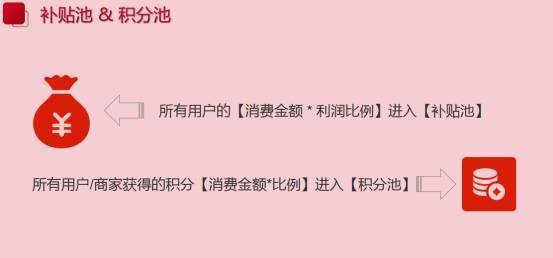
Core Insights - The article discusses the emerging "points subsidy" business model in cities like Hangzhou and Shanghai, which transforms consumer spending into potential earnings, changing traditional consumption patterns from "spending for services" to "saving for returns" [1][11]. Group 1: Points Subsidy Model - The points subsidy model operates on a "win-win logic," where users can earn significant rewards from their purchases, while merchants can reduce customer acquisition costs by offering points instead of traditional discounts [2][11]. - Users can receive points equivalent to their spending, which can later be redeemed for substantial discounts, creating a perception of "earning money while spending" [2][11]. - Merchants benefit from lower advertising costs, as they can convert discounts into points, retaining existing customers and attracting new ones [2][11]. Group 2: Technical Support - The success of the points subsidy model relies on robust technical support, exemplified by the microservice platform "Weisan Cloud," which provides essential functionalities to manage points effectively [3][4]. - Key features include flexible control of points release rates based on sales growth, targeted settings for points pools to prevent fund misallocation, and a secure payment system capable of handling millions in daily transactions [3][4][5]. Group 3: Real-World Applications - Case studies illustrate the effectiveness of the points subsidy model, such as "Zhongdian" abandoning self-developed systems for Weisan Cloud due to stability issues, leading to rapid user growth [8]. - "Toumi Life" integrates AI with the points model to recommend discounts based on user habits, creating a local service ecosystem that incentivizes both merchants and consumers [8][11]. Group 4: Future Prospects - The article suggests that the points subsidy model has proven its viability, with potential for further innovation through AI optimization and integration with blockchain technology for financialization of points [11]. - Entrepreneurs are encouraged to focus on the technological support and system sustainability to capitalize on the emerging consumer rebate market [11].
从银行白领到私域创业,一位宝妈月销二十万的逆袭之路
Sou Hu Cai Jing· 2025-06-13 10:04
Core Insights - The article highlights the transformative journey of a woman, Zhou Qing, from a bank wealth manager to a successful private domain e-commerce store owner, emphasizing the empowerment of women's economic independence [1][2][7] Group 1: Entrepreneurial Journey - Zhou Qing began her entrepreneurial journey in 2019 by exploring a private domain e-commerce platform called "Ai Kucun," initially treating it as a side job [2][4] - Her first significant success came when she sold nearly 100 orders in one night, earning 1,000 yuan, which motivated her to invest more time into the business [2][4] - Over five years, her monthly sales reached between 100,000 to 200,000 yuan, showcasing her growth and commitment to the e-commerce sector [2][5] Group 2: Business Strategies - Zhou emphasizes the importance of persistence in e-commerce, stating that changing products frequently can lead to losing customers [5] - She focuses on sourcing high-quality products and personally testing them to enhance customer trust and increase conversion rates [5] - Zhou has expanded her customer base significantly, with 80% of her clients now being strangers, achieved through various marketing strategies and community engagement [5] Group 3: Community Impact - Zhou has inspired friends and acquaintances to join her in e-commerce, fostering a collaborative environment where even small earnings are celebrated [7] - She encourages stay-at-home mothers to step out of their comfort zones and explore their potential in the private domain economy [7] - Zhou's future goal is to establish a "mom entrepreneurship incubation base," aiming to empower more women to achieve their aspirations while managing family responsibilities [7]

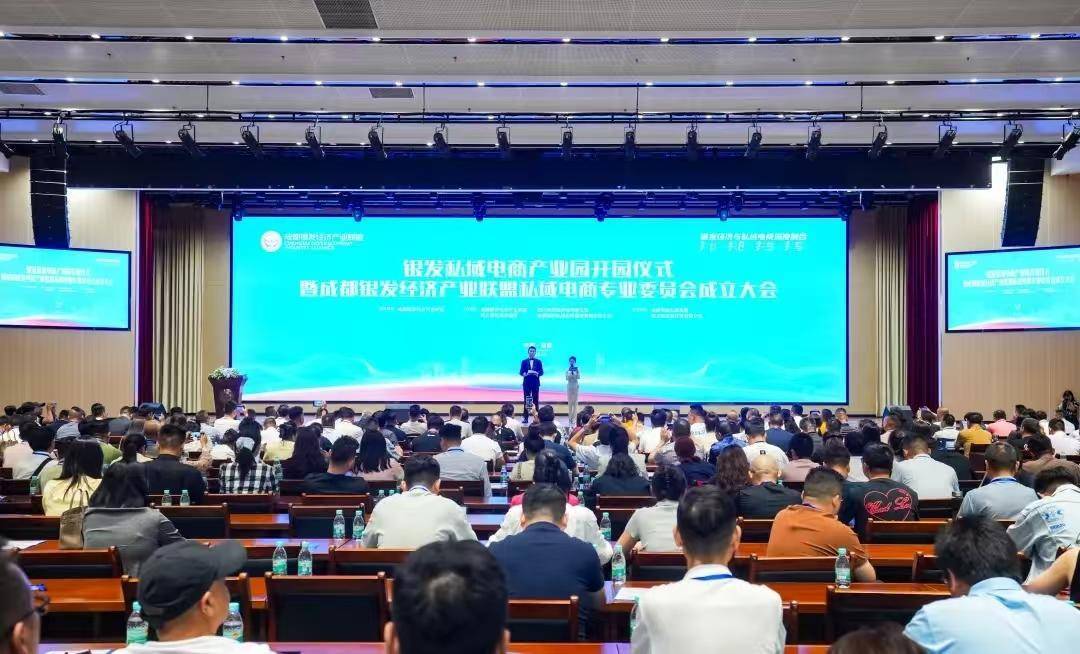
成都温江举行成都银发经济产业联盟私域电商专业委员会成立大会
Sou Hu Cai Jing· 2025-05-25 12:47
Core Insights - The opening ceremony of the Silver Economy Private Domain E-commerce Industrial Park and the establishment of the Chengdu Silver Economy Industry Alliance Private Domain E-commerce Professional Committee took place in Chengdu, focusing on the deep integration of the silver economy and private domain e-commerce [1][3] Group 1: Industrial Park and Committee Establishment - The Silver Economy Private Domain E-commerce Industrial Park covers an area of 20,000 square meters and aims to create a comprehensive industrial chain ecosystem integrating product research and development, e-commerce operations, supply chain services, and financial support [3] - The newly established committee will focus on industry standard formulation, resource connection, and policy research, serving as a bridge between the government and enterprises [3] - The first batch of companies entering the park will benefit from various preferential policies, including platform traffic, media exposure, and precise cooperation connections [3] Group 2: Development and Support for Silver Economy - The Chengdu Silver Economy Industry Alliance aims to leverage the park's opening to promote deep integration between the silver economy and sectors such as e-commerce, technology, and cultural tourism, enhancing the service system for resident companies [5] - The industrial park is positioned as a key area for the development of the silver economy in Chengdu, with a concentration of 648 pharmaceutical health companies, 168 health food companies, and various medical institutions [5] - The park's establishment signifies a significant breakthrough in the e-commerce sector for the silver economy, aiming to create a full industrial chain ecosystem from product development to consumer services [5]