公私域联动

Search documents
热闹是AI的,微信闷声发财
Xin Lang Cai Jing· 2026-01-27 05:09
Core Insights - The article discusses Tencent's WeChat and its evolving ecosystem, particularly focusing on the WeChat Mini Store and its growth potential in 2026 [3][32] - Tencent's CEO, Ma Huateng, emphasizes the importance of patience and time in developing new technologies within WeChat, particularly for video accounts and e-commerce [3][32] - The WeChat ecosystem is expected to see significant growth in user engagement and transaction volume, with a focus on enhancing the user experience and expanding the platform's capabilities [4][37] WeChat Mini Store Growth - In 2025, the WeChat Mini Store transitioned from a supplementary channel to a primary platform for brand operations, with brand sales growth exceeding the market average by 430% [4][38] - The number of active merchants increased by 170%, and the cost per thousand impressions (PPM) rose by 150% [4][38] - The user demographic has shifted, with a 336% increase in users aged 25, and over 32% of users are from high-tier cities [4][38] Ecosystem Strategy - WeChat's strategy prioritizes ecosystem growth over immediate revenue, focusing on metrics like Gross Merchandise Volume (GMV) and user growth while minimizing short-term income assessments [8][37] - The platform aims to ensure that partners, merchants, and service providers benefit financially, indicating a long-term vision for ecosystem expansion [8][37] Service Provider Dynamics - Over 5,900 new service providers joined in 2025, contributing to a monthly growth rate of 37.6% for new stores [9][39] - The retention rate for core service providers is 64%, attributed to stable policies and the complexity of platform rules [9][39] - Service providers play a crucial role in bridging the gap between the platform and brands, offering comprehensive support for account setup, traffic operation, and data growth [9][39] Future Projections for 2026 - The WeChat Mini Store is expected to enhance its service matching capabilities and simplify platform policies, aiming for broader scene and category access [12][41] - Key areas of focus for service providers will include expanding supply chains and improving marketing capabilities [12][41] - The platform will continue to leverage social attributes to explore C2C and B2C models, enhancing private domain operations [12][42] E-commerce Trends - The online retail penetration rate is nearing 40%, with significant room for growth in core categories that remain below 50% [16][43] - The WeChat ecosystem is witnessing a doubling of transaction volumes for influencers, indicating a shift towards quality over quantity in product offerings [16][43] New Features and Tools - In 2026, WeChat plans to introduce new features to enhance user interaction during live broadcasts, such as gift-giving and collaborative purchasing [24][54] - The platform will also optimize content matching and incentivize high-quality content creators with traffic support and rewards [25][55] - New functionalities will include enhanced tools for public and private domain integration, allowing for better user engagement and conversion [27][56] Incentive Policies - WeChat will implement various incentive policies in 2026, including additional commission rewards for new merchants and service providers [49][53] - The platform aims to foster healthy competition among service providers and enhance training and support systems [52][52] - A focus on brand exposure and conversion will be emphasized through upgraded promotional events and reduced commission structures [52][53]



微信学会闷声发财了
虎嗅APP· 2026-01-27 01:09
Core Insights - The article emphasizes that WeChat (WXG) remains a crucial pillar for Tencent, with expectations for growth in features like video accounts and WeChat stores, highlighting the need for patience and time to integrate new technologies [5][6][10]. WeChat's Growth and Ecosystem - WeChat's public class in 2026 showcased significant attendance and engagement, indicating strong interest in its evolving features [6][8]. - The WeChat store has transitioned from a supplementary channel to a primary platform for brand operations, with brand sales growth outpacing the market by 430% and a 170% increase in active merchants [10][12]. - The user demographic is diversifying, with a 336% increase in users aged 25, and over 32% of users from high-tier cities [10][12]. Platform Strategy and Performance Metrics - WeChat's strategy focuses on ecosystem growth over immediate revenue, prioritizing natural traffic and GMV (Gross Merchandise Volume) growth while reducing low-quality traffic from 30% to single digits [10][12]. - The platform aims to create a robust trading ecosystem, with a significant increase in service providers and a 37.6% monthly growth rate in new stores [12][13]. Future Directions and Innovations - In 2026, WeChat plans to enhance its service provider capabilities and simplify platform policies, aiming for broader scene and category access [15][16]. - The platform will introduce new features to improve user engagement, such as live streaming enhancements and better integration of public and private domains [29][31][32]. - WeChat will also focus on optimizing user experience through improved search functionalities and social sharing features, aiming to reduce customer acquisition costs [36][38].

国内电商运营核心痛点剖析与破局之道
Sou Hu Cai Jing· 2025-12-18 04:42
Market Overview - The domestic e-commerce market has entered a phase of stock competition, shifting from incremental expansion to stock market competition, leading to profit pressure and growth challenges for merchants [3][9] Major Challenges - Intense price wars and profit shrinkage due to homogenized competition, with discounts on some products as low as 40-50%, creating a cycle of "selling more but losing more" [7] - High marketing costs driven by rising platform traffic fees, live streaming costs, and promotional commissions, severely eroding profit margins [7] - Complex platform rules with frequent adjustments in operational guidelines and algorithms, resulting in high learning and adaptation costs for merchants [7] - Expensive public traffic that does not allow merchants to retain user assets, coupled with low consumer loyalty due to excessive choices [4][7] - Management difficulties arising from multi-platform operations, leading to inefficiencies and errors in order and inventory management [10] Core Solutions - Diversification of channels to mitigate risks by exploring emerging channels like content e-commerce and social e-commerce while maintaining a presence on mainstream platforms [7] - Data-driven lean operations to replace intuition-based decision-making, utilizing data analysis tools for precise product selection, pricing, and promotional strategies [7] - Building a public-private domain operational matrix to transition from merely purchasing public traffic to retaining customers in private domains through personalized engagement [4][7] - Embracing AI and content transformation to optimize product visibility in AI-driven search and recommendation systems [4][7] - Implementing an integrated ERP system to manage multi-platform operations efficiently, reducing manual processing time from days to hours [10] - Utilizing automated tools to lower after-sales costs by encouraging self-service options for customers [10] - Leveraging platform logistics solutions to reduce logistics costs and improve delivery efficiency, especially for orders to remote areas [10] Strategic Recommendations - Strengthening internal digital infrastructure by prioritizing the deployment of professional ERP systems to automate operations and eliminate data silos [10] - Utilizing external platform ecosystems to take advantage of logistics solutions, AI tools, and self-service products to address operational shortcomings [10] - Shifting growth paradigms from pursuing GMV (Gross Merchandise Volume) to focusing on user LTV (Lifetime Value) and building a strong private domain for brand protection [10]

2025年中国私域电商行业趋势白皮书
艾瑞咨询· 2025-11-29 00:03
Core Insights - The private domain e-commerce industry is experiencing rapid growth due to the saturation of user growth and rising customer acquisition costs, necessitating refined and differentiated operational strategies to meet user demands and enhance brand competitiveness [1][2][12] Industry Overview - Development Background and Drivers - The number of online shopping users in China reached 970 million in 2024, with a penetration rate close to 90%, indicating limited natural growth potential. This shift has led the e-commerce industry to transition from acquiring new users to managing existing ones [2] - Private domain e-commerce, characterized by lower customer acquisition costs and a focus on long-term user value, aligns with the industry's current demand for lifecycle management and refined operations [2] Demand Side - User Needs - Users are increasingly prioritizing service quality and personalized experiences, with research showing that after basic needs like quality and price, advanced needs such as after-sales service and product variety are highly valued [4] - In private domain channels, users show a stronger inclination towards fulfillment efficiency, personalized needs, and after-sales experiences, validating the effectiveness of refined operational strategies [4] Supply Side - Brand Focus - In the era of stock competition, brands are increasingly focusing on digital and channel operational capabilities to enhance competitiveness through private domain layouts [6][7] - Brands can leverage private domain platforms' data and AI capabilities to improve their digital and user operational skills while reducing operational costs and expanding channels [7] Policy Environment - The government has introduced various policies to promote the healthy development of private domain e-commerce, encouraging participation from individuals and small businesses to stimulate new consumption and individual economic growth [9][10] Industry Characteristics - Stages - The private domain e-commerce industry has evolved through several stages, currently entering an AI-driven phase where digital capabilities and innovative models are key growth engines [12][13] Operational Model - Private domain e-commerce drives growth through a comprehensive refined operation model, focusing on user asset management, trust-building, and transaction path shortening to enhance user lifetime value and brand competitiveness [15] Market Space - The industry is projected to grow at a rate of 6.3% in 2024, reaching a scale of 2.3 trillion yuan, with expectations of surpassing 3 trillion yuan by 2025 due to consumption incentives and technological advancements [18][19] Participant Ecosystem - The private domain e-commerce ecosystem consists of brands, store owners, platforms, and consumers, with various player types contributing to a diverse operational landscape [21][24] Platform Insights - Player Types - Different player types, including comprehensive, vertical, and brand platforms, serve as core suppliers of goods and services, while tool players provide essential operational infrastructure [24] Platform Insights - Market Landscape - Leading platforms in the private domain e-commerce space have established core advantages through marketing innovation, user recognition, and supply chain capabilities [27] Consumer Insights - User Profile - The majority of private domain e-commerce users are women aged 24-39, with a high level of education and income, indicating a broad reach across various city tiers [41] Consumer Insights - Purchasing Behavior - Users primarily purchase daily consumables, with price discounts and personalized service experiences driving increased purchase frequency [43][44] Store Owner Insights - Profile - Female store owners, predominantly aged 31-40 and well-educated, are motivated by self-improvement and economic independence [51][56] Merchant Private Domain Layout - Nearly 90% of surveyed merchants have initiated private domain layouts, indicating positive early results in revenue contributions and operational efficiency [59]

2025年中国私域电商行业趋势白皮书
艾瑞咨询· 2025-11-14 00:06
Core Insights - The private domain e-commerce industry is experiencing rapid growth due to the saturation of user growth and rising customer acquisition costs, necessitating refined and differentiated operational strategies to meet user demands and enhance brand competitiveness [1][2][12] Industry Overview - Development Background and Drivers - The number of online shopping users in China reached 970 million in 2024, with a penetration rate close to 90%, indicating limited natural growth potential. This shift has led the e-commerce industry to transition from acquiring new users to managing existing ones [2] - Private domain e-commerce, characterized by lower customer acquisition costs and a focus on long-term user value, aligns with the industry's current demand for lifecycle management and refined operations [2] Demand Side - User Needs - Users are increasingly prioritizing service and personalized experiences, with a significant emphasis on after-sales service, product variety, and personalized fulfillment, which aligns with the refined operational strategies of private domain e-commerce [4] Supply Side - Brand Focus - In the era of stock competition, brands are increasingly focusing on digital and channel operational capabilities to enhance competitiveness through private domain layouts [6][7] Policy Environment - The government has introduced various policies to promote the healthy development of the private domain e-commerce sector, encouraging participation from individuals and small businesses to stimulate new consumption and individual economic growth [9][10] Industry Characteristics - Stages of Development - The private domain e-commerce industry has evolved through several stages, currently entering an AI-driven phase where digital capabilities and innovative models are key growth engines [12][13] Operational Model - Private domain e-commerce drives growth through a comprehensive refined operation model that enhances user lifecycle value, from multi-channel customer acquisition to user asset management and trust-building through personalized content [15] Market Space - The industry is projected to grow at a rate of 6.3% in 2024, reaching a scale of 2.3 trillion yuan, with expectations of surpassing 3 trillion yuan by 2025 due to consumption incentives and technological advancements [18][19] Participant Ecosystem - The private domain e-commerce ecosystem consists of brands, store owners, platforms, and consumers, with various player types contributing to a diverse operational landscape [21][24] Platform Insights - Player Types - Different player types, including comprehensive, vertical, and brand platforms, serve as core suppliers of goods and services, while tool players provide the necessary operational infrastructure [24] Market Landscape - Survival Player Advantages - Leading platforms in the private domain e-commerce space focus on marketing innovation, user recognition, and supply chain capabilities to establish core competitive advantages [27] User Insights - User Demographics - The majority of private domain e-commerce users are women aged 24-39, with a high level of education and income, indicating a broad reach across various city tiers [41] User Behavior - Purchasing Patterns - Users primarily purchase daily consumables, with price discounts, product variety, and personalized service experiences driving increased purchase frequency [43][44] User Experience Feedback - User satisfaction is high, with over 80% expressing satisfaction with their shopping experiences, indicating potential for further enhancement through refined operations [48] Store Owner Insights - Profile - Female store owners, primarily aged 31-40 and well-educated, are motivated by self-improvement and economic independence through private domain e-commerce [51][54] Merchant Private Domain Layout - Nearly 90% of surveyed merchants have initiated private domain layouts, indicating positive early results in revenue contributions and operational efficiency [59] Future Trends - Operational Refinement - The shift from traffic-oriented to user-centric operations is essential for sustainable growth, emphasizing long-term relationships with users [68] Future Trends - Technology Integration - The application of AI technology across various operational aspects is expected to enhance efficiency and optimize industry development [71] Future Trends - Model Export - Leading players are exploring overseas markets by leveraging successful domestic models, indicating a trend towards international expansion [73]

20亿红包!知名电商,最新公布!
Nan Fang Du Shi Bao· 2025-09-22 12:10
Core Insights - The article discusses the upcoming "Double Eleven" shopping festival and highlights Kuaishou's strategies to enhance consumer experience and support merchants [1][2][5] Group 1: Kuaishou's Strategies for Double Eleven - Kuaishou will provide substantial support for the Double Eleven event, including several billion in traffic subsidies, 2 billion in user red envelopes, and 1 billion in product subsidies to enhance consumer purchasing power [1][5] - The focus has shifted from merely competing on price to improving consumer experience and ensuring merchants can profit, indicating a transformation in the e-commerce landscape [2][5] - Kuaishou's Super Selection Conference gathered around 3,000 merchants and influencers to discuss product selection and promotional mechanisms for the festival [3][4] Group 2: Merchant and Influencer Engagement - Merchants showcased high-quality products and made commitments to consumers, such as offering significant discounts and guarantees on product authenticity [3][4] - The conference featured a special area for local products, emphasizing Kuaishou's collaboration with local industry associations to boost the e-commerce ecosystem in Guangzhou [4] Group 3: Growth Strategies and Metrics - Kuaishou's e-commerce operations emphasize the importance of both public and private domain strategies, with public domain traffic accounting for about 70% and private domain transactions being four times more efficient [8] - The platform's dual approach of integrating short videos and live streaming has proven to significantly enhance user engagement and sales conversion rates [8][10] - In the second quarter of 2025, Kuaishou's e-commerce GMV grew by 17.6% year-on-year, reaching 358.9 billion, with active user engagement also showing positive trends [10]

2025年中国私域电商行业趋势白皮书
艾瑞咨询· 2025-09-20 00:04
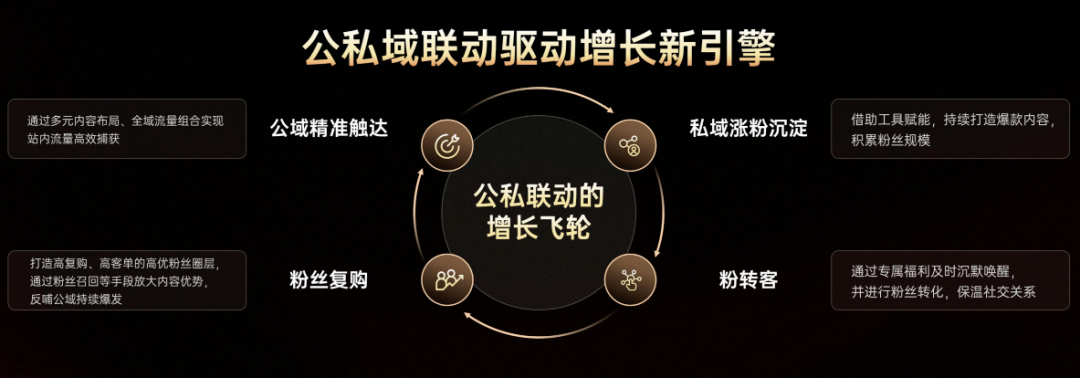
Core Insights - The private domain e-commerce industry is experiencing rapid growth due to the saturation of user growth and rising customer acquisition costs, necessitating refined and differentiated operational strategies to meet user demands and enhance brand competitiveness [1][2][11] Industry Overview - Development Background and Drivers - The number of online shopping users in China reached 970 million in 2024, with a penetration rate close to 90%, indicating limited natural growth potential [2] - The transition from acquiring new users to managing existing ones has driven the demand for private domain e-commerce, which offers lower customer acquisition costs and focuses on long-term user value [2] Demand Side - User Needs - Users are increasingly prioritizing service quality and personalized experiences, with significant emphasis on after-sales service, product variety, and personalized fulfillment [4] - In private domain channels, users show a stronger inclination towards fulfillment efficiency and personalized needs, validating the effectiveness of refined operational strategies [4] Supply Side - Brand Focus - In the era of stock competition, brands are increasingly focusing on digital and channel operational capabilities to enhance competitiveness through private domain layouts [6][7] - Private domain strategies allow brands to leverage data and AI technologies to improve user operations and reduce operational costs [7] Policy Environment - The government has introduced various policies to promote the healthy development of private domain e-commerce, encouraging participation from individuals and small businesses [9][10] Industry Characteristics - The private domain e-commerce sector has evolved through technological iterations and policy regulations, entering a new phase characterized by AI empowerment and the integration of public and private domains [11][12] Operational Model - Private domain e-commerce drives growth through a comprehensive and refined operational model that enhances user lifetime value by diversifying acquisition channels and fostering user trust [14] Market Space - The industry is projected to grow to 2.3 trillion yuan in 2024, with a growth rate of 6.3%, and is expected to exceed 3 trillion yuan by 2025 due to consumption incentives and technological advancements [17][18] Participant Ecosystem - The private domain e-commerce ecosystem consists of brands, store owners, platforms, and consumers, with platforms playing a crucial role in connecting these parties [20][23] Platform Insights - Player Types - Different types of platforms, including comprehensive, vertical, and brand-specific players, serve as core suppliers of goods and services in the private domain e-commerce landscape [23] Platform Insights - Market Landscape - Leading platforms are focusing on marketing innovation, user recognition, and supply chain capabilities to establish competitive advantages [26] Consumer Insights - User Profile - The majority of private domain e-commerce users are women aged 24-39, with a good educational background and middle to high income levels [40] Consumer Insights - Purchasing Behavior - Users primarily purchase daily consumables, with price discounts, product variety, and personalized service experiences driving increased purchase frequency [42][43] Consumer Insights - Experience Feedback - User satisfaction is high, with over 80% expressing satisfaction with their shopping experiences, indicating potential for further enhancement through refined operations [47] Store Owner Insights - Profile - Female store owners are predominantly aged 31-40, with a high level of education, and are motivated by self-improvement and economic independence [50][55] Store Owner Insights - Business Behavior - Store owners primarily convert through word-of-mouth and personal experiences, with a strong internal drive for personal growth and economic contribution [53] Merchant Private Domain Layout - Nearly 90% of surveyed merchants have initiated private domain layouts, indicating positive early results in revenue contributions and operational efficiency [58] Industry Trend Outlook - Refined Operations - The shift from traffic-oriented to user-centric operations is essential for sustainable growth, emphasizing long-term relationships with users [67] Industry Trend Outlook - Technology Integration - The application of AI technology is expected to enhance operational efficiency across user management, content, supply chain, and service operations [70] Industry Trend Outlook - Model Export - Leading players are exploring overseas markets by leveraging successful social e-commerce models, indicating a trend towards international expansion [72]

2600万创作者创收 短视频直播激活流量新动能
Zhong Guo Xin Wen Wang· 2025-09-01 02:35
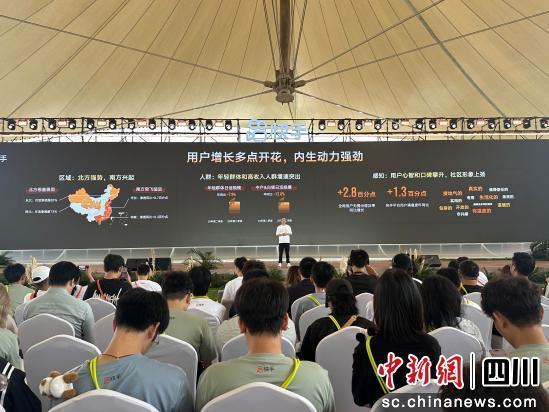
Core Insights - The 2025 Kuaishou Photonic Creator Conference was held in Chengdu, focusing on creator ecosystem development, traffic policy optimization, commercialization, and AI technology empowerment [1][3] - Kuaishou's founder and CEO presented impressive results, with over 91 million creators continuously posting for three years, and a 100% year-on-year increase in submissions from creators with over 10,000 followers [1][3] Group 1: Creator Ecosystem and Revenue Growth - The thriving content ecosystem has led to revenue growth for creators, with 26 million creators earning income on Kuaishou, and those earning over 1,000 yuan per month increasing by nearly 12% year-on-year [1][3] - The strategies of "short video and live streaming integration" and "public-private domain linkage" are key to helping creators gain traffic and accumulate private domain stickiness [3][4] Group 2: Traffic and Commercialization Strategies - Data shows that dual-format creators (short video and live streaming) achieve traffic efficiency 4 to 10 times higher than single-format creators, with GMV from "short and live dual opening" being five times that of single short videos [3][4] - The conference introduced "four traffic passwords" for creators, focusing on deep interaction, niche content creation, quality assurance, and relevant topic engagement [3] Group 3: AI Technology and Future Trends - AI technology has become a core productivity driver for traffic and commercial monetization, with the global AI video creator scale surpassing 100 million [4] - Kuaishou's AI content viewership increased by 321% in July compared to six months prior, indicating a significant rise in AI-generated content popularity [4] - The company has provided API services to over 20,000 enterprise clients across various industries, with AI creator pricing reaching thousands to tens of thousands of yuan per minute [4]
陕北说书人高小青:从负债到快手顶流, “短直一体”如何重塑创作者命运?
Sou Hu Cai Jing· 2025-09-01 00:50
Group 1 - The core theme of the 2025 Kuaishou Creator Conference is "Born Different, Creation Without Boundaries," highlighting the platform's latest strategies and the impact on creators' lives [1] - Kuaishou's founder, Cheng Yixiao, emphasized the commitment to a "short video and live streaming integration" and "public-private domain linkage" strategy to enhance visibility and traffic for dedicated creators [1][4] - Over the past year, Kuaishou has seen a significant increase in creator engagement, with creators having over 10,000 followers increasing their submissions by over 100% year-on-year, and those earning over 1,000 monthly rising by nearly 12% [4] Group 2 - Kuaishou's dual content strategy has proven effective, with creators utilizing both short videos and live streaming achieving 4-10 times higher traffic efficiency compared to those focusing on a single format [4] - The platform's "public-private domain linkage" has led to a 10.2% increase in exposure for high-value private domain creators and a 7.2% rise in new followers [7] - Kuaishou is actively promoting creator retention through features like "Follow Flash Sales" and "Fan Coupons," transitioning creators from merely gaining traffic to retaining it [7] Group 3 - The conference showcased inspiring stories from creators in the northwest region, such as the Shanbei storyteller Gao Xiaoqing, who transformed his life through Kuaishou, gaining over 1.58 million followers and generating significant income for his team [8][9] - Gao Xiaoqing's journey reflects the platform's ability to empower individuals and revive regional culture, as he aims to provide a stage for over a thousand Shanbei storytellers [12] - Kuaishou's community essence is about releasing individual value, fostering vibrant groups and communities, particularly evident in the northwest where user engagement is high [13] Group 4 - Kuaishou is evolving from a content platform to a super hub connecting people and life, with regional content gaining traction both online and offline [13] - The platform's initiatives are not just about individual success but also about creating a supportive environment for creators, as highlighted by Gao Xiaoqing's gratitude towards Kuaishou [17] - Cheng Yixiao stated that traffic should flow towards good creators and quality content, emphasizing the platform's role in enhancing the visibility and rewards for sincere creators [17]

2025快手创作者盛会:短视频直播融合,万粉创作者收入大增生态繁荣
Sou Hu Cai Jing· 2025-08-31 07:10
Core Insights - The 2025 Kuaishou Creative Conference in Chengdu emphasized the theme "Born Different, Creation Without Boundaries," showcasing significant growth in creator engagement and monetization on the platform [1] Group 1: Creator Growth and Engagement - The number of creators with over 10,000 followers doubled in the past year, and the number of creators transitioning to professional streamers increased by 8% [1] - A total of 26 million creators on the platform earned income, with those earning over 1,000 yuan per month seeing a nearly 12% increase [1] - The "short video and live streaming integration" concept was highlighted, with creators skilled in both formats achieving 4 to 10 times the traffic efficiency compared to those focusing on a single content type [1] Group 2: Content Performance and Technology - The number of works with over 50,000 views increased by 35% in the first half of the year, attributed to significant improvements in flow matching technology [2] - Recommendations for creators to enhance traffic include increasing deep interaction, focusing on niche areas, ensuring content quality, and effectively using topic tags [2] Group 3: Commercial Ecosystem and AI Content - Creators published over 6.6 million commercial content pieces daily, attracting 320 million users and garnering over 22 million likes, benefiting 3.7 million creators [5] - AI-generated content has become one of the fastest-growing categories, with a 321% increase in playback volume for AI content in July [5] - Kuaishou's AI services have been provided to over 20,000 enterprises through API [5] Group 4: User Engagement and Community Growth - The daily active user base among Generation Z and middle-class white-collar workers saw year-on-year growth in the second quarter [5] - The platform added 480,000 creators with over 10,000 followers and 3,000 creators with over 1 million followers in the past year [5] - Kuaishou's user penetration rates in Northeast and Northwest regions exceeded 85% and 73%, respectively, establishing itself as a core hub for new farmers [6]