绿色食品

Search documents
北京大学教授李玲:发展“健康+”新范式 开启全球产业新蓝海
Zhong Guo Jing Ji Wang· 2026-01-16 07:13
Core Viewpoint - China is transitioning from a "disease-centered" approach to a "people's health-centered" model, aiming to improve public health and reduce illness [1][3]. Group 1: Health System Reform - The Chinese government is implementing systematic reforms in the healthcare service system, focusing on integrated management of rural healthcare institutions [3]. - The payment system is being reformed, with health insurance funds being allocated to "health communities," linking hospital and physician income to residents' health levels [3]. - The "health community" model, known as the "Sanming Model," is being promoted nationwide, with a goal of achieving full coverage within four years [3]. Group 2: New Development Opportunities - The health sector in China faces challenges such as an aging population but also presents new development opportunities [4]. - The country is entering a "health+" development phase, integrating various industries such as healthcare, pharmaceuticals, green food, wellness, and smart health to create a new health industry covering the entire life cycle [4]. - The demand for this new health industry is continuous and substantial, serving both domestic needs and potential global markets [4]. Group 3: Innovation and Technology - China is leveraging the integration of agriculture, industry, commerce, and information technology to drive innovation in the health sector [4]. - With the empowerment of artificial intelligence and new production capabilities, the country aims to achieve comprehensive health management through platforms like personal health codes and health information networks [4]. - The integration of systematic, informational, and intelligent approaches is expected to create a high-quality, low-cost, and scalable health system [4].

农业连年超千亿,海洋经济冲进全省三甲!湛江交出“十四五”亮眼答卷
Nan Fang Nong Cun Bao· 2026-01-16 02:39
Core Viewpoint - Zhanjiang has achieved significant economic growth during the 14th Five-Year Plan period, with a focus on developing a modern coastal economy and enhancing its agricultural and marine sectors [2][5][6]. Economic Performance - The city's GDP is projected to reach 400 billion yuan by 2025, with agricultural output exceeding 100 billion yuan for five consecutive years [3][4]. - The marine economy's contribution to the GDP increased from 27.0% to 34.2%, with a total marine production value growth of 475.1 billion yuan, representing a 56.7% increase [25][26]. Industrial Development - Zhanjiang has established a diversified industrial system, focusing on "Four Greens and One Blue" industries, including green steel, green petrochemicals, green energy, green food, and blue marine economy [12][13]. - The green petrochemical and modern agriculture sectors have each surpassed 100 billion yuan in annual output, becoming key drivers of economic growth [13]. Agricultural Advancements - The city has developed a robust agricultural brand, with 75 nationally recognized agricultural products and 130 "Yue" branded products, maintaining a stable grain output of over 1.5 million tons annually [16][17]. - Notable products such as "Volcano Sweet Potato," "Zhanjiang Prawn," and "Xuwen Pineapple" have gained popularity both domestically and internationally [18]. Marine Economy - Zhanjiang's marine fisheries have ranked first in the province for 30 consecutive years, with significant contributions from marine oil, marine chemicals, and marine tourism industries [21][27]. - The city has developed deep-sea aquaculture zones and innovative breeding technologies, enhancing its position in the marine economy [32][39]. Ecological Initiatives - Zhanjiang has prioritized ecological development, completing the first national blue carbon transaction and becoming a pilot for ecological product value realization [45][46]. - The city has restored and created significant areas of mangrove forests, contributing to its status as a leader in ecological conservation [51][52]. Innovative Practices - The introduction of ecological aquaculture models, such as "Mangrove + Blue Crab" and "Shellfish-Algae Mixed Cultivation," has promoted sustainable practices in the fishing industry [55][60].

北大教授李玲重磅发声:中国下一个增长极已现,规模或远超房地产!
新浪财经· 2026-01-15 09:32
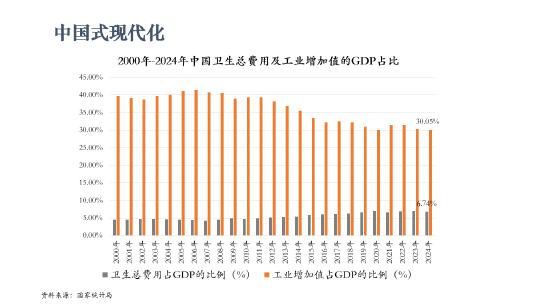
Core Viewpoint - The article emphasizes the importance of transitioning China's healthcare system from a disease-centric model to a health-centric model, highlighting the need for preventive care and a focus on overall well-being as part of the "Healthy China" national strategy [6][10]. Group 1: Healthcare System and Spending - China is recognized as the world's strongest industrialized nation, with significant progress in healthcare reform. In 2024, the total health expenditure in China was approximately 90,895.5 billion yuan, with government spending at 24.9%, social spending at 47.6%, and personal spending at 27.5%. The per capita health expenditure was 6,454.4 yuan, and the total health expenditure as a percentage of GDP fell below 7% for the first time, standing at 6.7% [4]. - The government is shifting the healthcare model to a system where hospitals and healthcare providers are incentivized to keep people healthy rather than treating them after they become ill. This involves creating a "health community" where resources are pooled to promote health and prevent disease [7]. Group 2: Challenges and Opportunities - The aging population presents significant challenges but also opportunities for a new development paradigm termed "Health+" that integrates healthcare, pharmaceuticals, green food, wellness, and elderly care into a new health industry. This industry is expected to be a lifelong necessity for individuals and could surpass the real estate sector in scale [8]. - The integration of artificial intelligence and new productive forces is seen as a competitive advantage for the nation, enabling a comprehensive health management system that spans an individual's entire life cycle [10]. Group 3: Global Contribution and Future Vision - The "Healthy China" initiative is positioned not only as a new development model for China but also as a potential original contribution to global health, leveraging China's rich agricultural civilization and wisdom in health [10]. - The article contrasts China's approach to health with that of the United States, suggesting that the challenges faced by the U.S. healthcare system present an opportunity for China to lead in global health solutions [10].
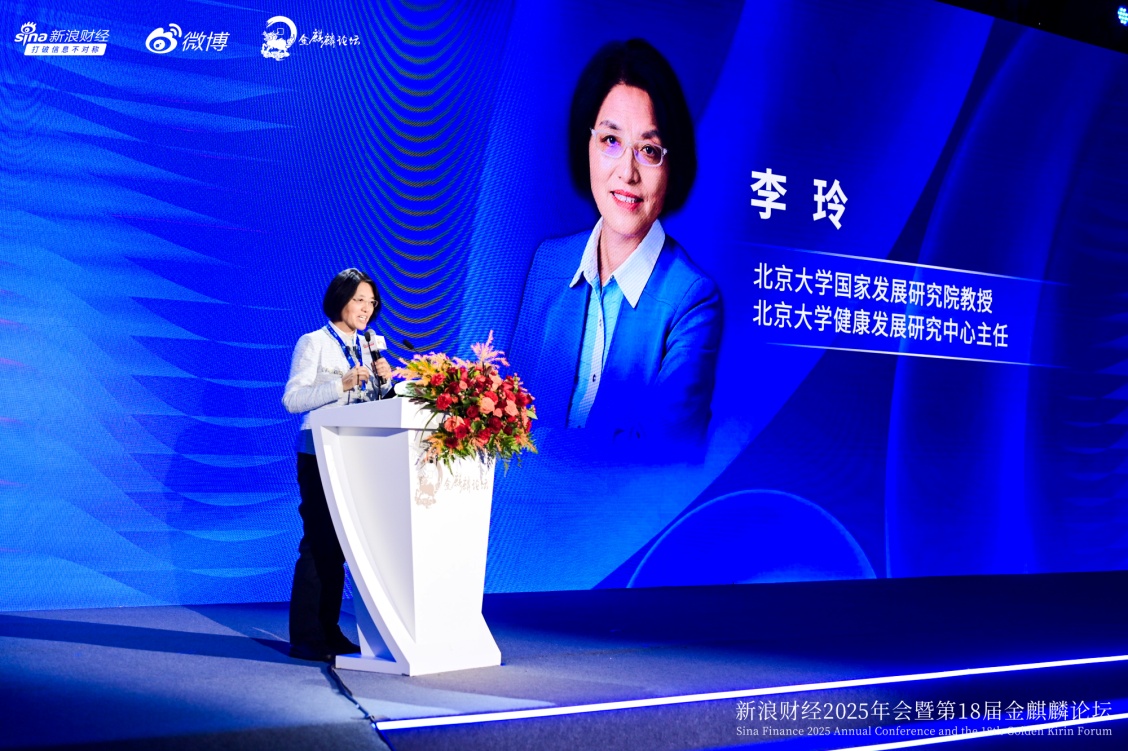
北京大学国发院教授李玲:新型大健康产业规模不可限量,“可以远远超过房地产”
Xin Lang Cai Jing· 2026-01-15 04:23
Core Viewpoint - The "Sina Finance 2025 Conference and the 18th Golden Unicorn Forum" emphasizes the theme of reshaping growth paradigms and creating future prosperity, highlighting the importance of health in China's modernization strategy [1][9]. Group 1: Healthcare Spending and Trends - In 2024, China's total health expenditure is estimated at 90,895.5 billion yuan, with government spending at 24.9%, social spending at 47.6%, and personal spending at 27.5% [1][9]. - The per capita health expenditure is 6,454.4 yuan, and the health expenditure as a percentage of GDP has dropped to 6.7%, marking a significant decline below 7% for the first time [1][9]. Group 2: Challenges and Strategic Shifts - The primary challenge facing China is population aging, necessitating a shift from a disease treatment focus to a health-centered approach, promoting disease prevention [4][12]. - The "Healthy China" national strategy prioritizes health as a key indicator of socialist modernization, requiring collaboration among government, society, and individuals to implement a preventive health model [4][12]. Group 3: Systemic Changes in Healthcare - The government is promoting a systemic approach to healthcare, integrating county, township, and village services into a cohesive "health community," moving away from a profit-driven model based on patient volume [5][13]. - The "Sanming Model" aims to incentivize hospitals and doctors to manage patients' health effectively, with a goal of nationwide implementation within four years [5][13]. Group 4: Opportunities in the Health Industry - The aging population presents opportunities for a new "health+" development paradigm, integrating healthcare, pharmaceuticals, green food, wellness, and elderly care into a large health industry [5][13]. - This emerging health industry is expected to be a lifelong necessity for individuals, with potential market size surpassing that of real estate, serving both Chinese citizens and the global population [5][13]. Group 5: Future Health Management - The envisioned future health model includes a personal health code system, utilizing AI for continuous health management throughout an individual's life, aiming to reduce disease incidence and promote longevity [6][14]. - The integration of traditional wisdom with modern technology is seen as a unique contribution from China to global health, especially in light of challenges faced by developed nations like the U.S. [6][14].
产业强基文化赋能 加快高质量发展
Xin Lang Cai Jing· 2026-01-13 22:55
Group 1 - The core viewpoint of the articles emphasizes the strategic planning and goals set by the provincial meeting for economic development in Heilongjiang, particularly focusing on high-quality development and the establishment of Five Chang as a model city for high-end rice industry and cultural empowerment [1][2]. - Five Chang aims to enhance domestic demand through actions that improve urban and rural consumption infrastructure, create innovative consumption scenarios, and increase the supply of quality goods and services [1][2]. - The city plans to leverage technological innovation to revitalize industries, fostering a robust ecosystem for high-tech and specialized enterprises while transitioning to green food and biomedicine sectors [2][3]. Group 2 - Five Chang will focus on modern agriculture, ensuring food security by implementing strategies to enhance grain storage and technology, while promoting the "Five Chang Rice" brand to achieve a world-class status [2]. - The city intends to improve the business environment by reforming regulations to stimulate market vitality and enhance cross-border industry development through cooperation with Harbin [2]. - Urban-rural integration and cultural development are prioritized, with initiatives aimed at improving living standards and promoting local cultural heritage to drive economic growth [3].
产业集群显优势,浓情回归好兴业!麻章区(广州)招商推介会谱新篇
Nan Fang Nong Cun Bao· 2026-01-12 12:01
Core Viewpoint - The article highlights the investment promotion conference in the Mazhang District of Zhanjiang, emphasizing the district's strategic advantages, industrial clusters, and the "Return of Mazhang Business" initiative aimed at attracting local enterprises back to invest in their hometown [1][5][66]. Group 1: Strategic Location and Transportation - Mazhang District is located on the central axis of the Leizhou Peninsula, covering an area of 479.09 square kilometers with a coastline of 81.1 kilometers, serving as a key transportation hub connecting Guangdong, Hainan, and other provinces [11][12]. - The completion of the Guangzhan High-speed Railway by the end of 2025 will enhance connectivity, with multiple high-speed rail lines converging in Mazhang, including the Zhanjiang West High-speed Railway Station located within the district [13][15][19]. - The district features a comprehensive transportation network with five vertical and seven horizontal main roads, facilitating a "1-2 hour" transportation circle to major economic zones [17][18]. Group 2: Industrial Clusters and Development - Mazhang District has a well-planned industrial park layout, with rich resources leading to the formation of clusters in equipment manufacturing, green paper-making, green food, biomedicine, and logistics [22][23][31]. - The district's West City area is one of the four key comprehensive development zones, covering 52.32 square kilometers, with approximately 1,800 acres available for application, focusing on integrated development of port, industry, city, and countryside [24][25][27]. - The Mazhang Economic Development Zone, a provincial-level development area, spans 1,054.5885 hectares, with 12,393 acres developed and 1,100 acres available for application, housing 43 enterprises, including 16 high-tech firms [28][30]. Group 3: Business Initiatives and Community Engagement - The "Return of Mazhang Business" initiative was proposed during the conference, encouraging local entrepreneurs to invest back in their hometown, with several representatives sharing their commitment to this cause [5][52][66]. - Local enterprises, such as Zhanjiang Fourth Construction Engineering Co., have successfully expanded into national markets while maintaining ties to their roots in Mazhang, benefiting from the district's supportive policies [50][51][59]. - The article emphasizes the importance of a favorable business environment and the district government's commitment to developing the real economy, which has attracted attention from local business associations [62][63].
9个方面重点任务明确成都郫都区“十五五”路线图、任务书
Zhong Guo Fa Zhan Wang· 2026-01-12 09:38
Core Viewpoint - Chengdu's Pidu District has outlined a comprehensive five-year development plan focusing on modern industrial systems, technological innovation, and deep integration of industry and innovation, aiming for high-quality economic and social development [1] Group 1: Modern Industrial System - The focus is on strengthening the real economy, emphasizing the development of advanced manufacturing as the backbone of a modern industrial system [3] - Key industries include electronic information, military-civil integration, green food, and cultural industries, with specific initiatives like upgrading the "Pixian Douban" brand and enhancing the Chengdu Film City [3] - Emerging industries such as hydrogen energy and solid-state batteries will be prioritized, alongside the integration of AI applications to create new economic growth points [3] Group 2: Technological and Industrial Innovation - The plan emphasizes the importance of technological innovation in shaping new development advantages and fostering deep integration between technology and industry [4] - Strengthening innovation platforms and enhancing corporate innovation capabilities are key strategies, including the establishment of industry chain innovation consortia [4][5] Group 3: Domestic Demand and Economic Growth - The strategy aims to boost consumption and investment, creating a positive interaction between supply and demand to ensure stable economic growth [6] - Specific actions include enhancing consumer rights protection, optimizing investment management, and fostering a supportive business environment for SMEs [6] Group 4: Rural Revitalization and Urban Integration - The plan promotes new urbanization and rural revitalization strategies, focusing on improving infrastructure and public services in rural areas [7] - Development of modern agriculture and integration of rural industries are highlighted to enhance the quality of life in rural communities [7] Group 5: Reform and Opening Up - The initiative aims to integrate into the national market and enhance openness, addressing systemic barriers to promote a dynamic environment for reform and development [8] - Key areas for reform include industrial parks and financial sectors, with a focus on expanding international market reach for local products [8] Group 6: Cultural Development - The plan emphasizes cultural confidence and the promotion of local heritage, aiming to enhance the cultural soft power of the city [9] - Initiatives include creating a 15-minute cultural service circle and integrating cultural, tourism, and sports sectors [9][10] Group 7: Social Welfare and Quality of Life - The focus is on improving living standards and ensuring high-quality employment, education, and healthcare services [11] - Strategies include enhancing social security systems and promoting a multi-pillar pension system [11] Group 8: Green Development - The plan commits to ecological protection and green transformation, aiming for a sustainable and livable environment [12] - Key initiatives include pollution prevention, the establishment of a park system, and the promotion of clean energy [12] Group 9: Safety and Governance - The strategy integrates safety into urban development, enhancing emergency management and smart governance [13] - Emphasis is placed on legal governance and community engagement to resolve conflicts and enhance public safety [13]
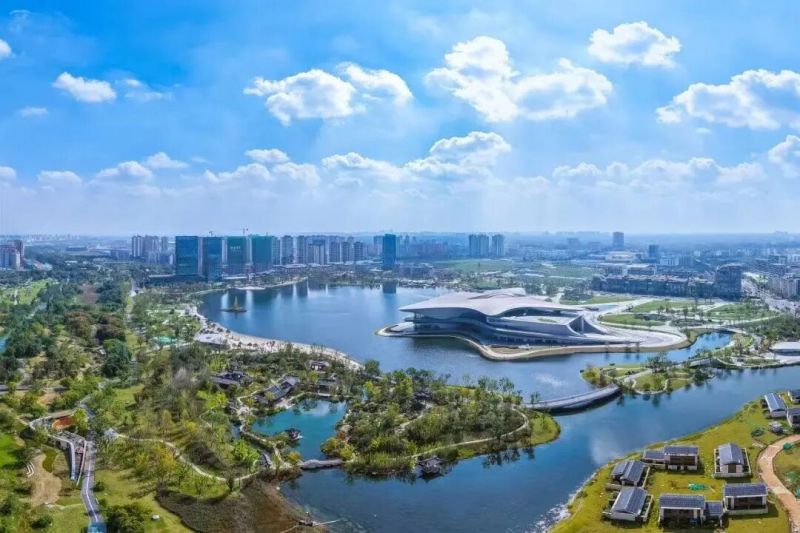
吉林发改委党组书记李平:高标准推进长春现代化都市圈建设
Xin Lang Cai Jing· 2026-01-11 04:50
Core Viewpoint - The construction of the Changchun Modern Urban Circle aims to enhance the city's radiating effect, promote urban integration, and serve as a driving force for high-quality development in Jilin Province and revitalization in Northeast China [1] Group 1: Urban Circle Development - The Changchun Modern Urban Circle, centered around Changchun City, includes Jilin City, Siping City, and Liaoyuan City, covering an area of approximately 29,700 square kilometers with a resident population of about 12.1 million [1] - The "Changchun Urban Circle Development Plan" was officially issued in October 2025, marking the transition from planning to implementation [1] Group 2: Industrial Collaboration - The urban circle will leverage its industrial foundation and educational resources to enhance industrial layout and collaborative systems, focusing on sectors like automotive, equipment manufacturing, green food, and fine chemicals [2] - A collaborative model will be established where R&D headquarters are in Changchun, manufacturing occurs within the circle, and innovation results are transformed and applied locally [2] Group 3: Infrastructure Connectivity - Key projects will be initiated in transportation, energy, water resources, and information sectors to improve connectivity and resource flow within the urban circle [3] - A comprehensive transportation network will be developed, including high-speed rail, highways, and aviation, alongside a robust energy and water resource system [3] Group 4: Public Services - The province aims to create a public service system that is equitable, high-quality, and regionally shared, focusing on education, healthcare, and employment security [4] - The goal is to ensure that the benefits of urban circle development are distributed fairly among the population [4] Group 5: Open Cooperation - The urban circle will promote industrial collaboration, transportation linkage, and innovation synergy with other cities in the province, creating five cooperative development zones [5] - New channels and platforms for open cooperation will be established with other provinces in Northeast China, enhancing the region's openness [5]
务实重干,以钉钉子精神深化为企服务
Xin Lang Cai Jing· 2026-01-08 23:08
焦作市工商联秉持"大道至简、实干为要"的工作理念,紧扣"三会三联三服务"工作机制中联络对接、服 务发展的关键要点,全力推动高水平对内对外开放,促使交流合作走上常态化轨道,为区域经济发展注 入源源不断的新活力。 焦作市把推动民营经济高质量发展作为构建现代化产业体系的重要支撑,累计培育国家级制造业单项冠 军企业4家、专精特新"小巨人"企业30家、专精特新中小企业308家、创新型中小企业753家。如今,焦 作市民营经济正以创新为翼、以转型为径,在高质量发展的赛道上加速腾飞。 为助力民营经济发展壮大,促进民营经济人士健康成长,焦作市工商联深入贯彻党中央及省委、市委决 策部署,以"三会三联三服务"工作机制为抓手,在思想政治引领、服务高质量发展、优化营商环境、深 化对外合作和加强自身建设等多个方面精准发力、务实创新,为助力全市民营经济高质量发展交出了一 份亮眼答卷。 "三会三联三服务"工作机制激活市场新动能 (来源:中华工商时报) 转自:中华工商时报 近年来,河南省焦作市民营经济蓬勃发展,呈现链式、集群化的良好态势。在高端制造领域,龙佰集团 连续7年入围中国制造业民营企业500强,多氟多等8家企业入选2024年省制造业头 ...
湖北潜江产业升级步伐坚实
Jing Ji Ri Bao· 2026-01-06 22:23
Group 1 - Hubei Province's Qianjiang City has integrated into the advanced manufacturing industry cluster, showing solid industrial upgrades with a 9% year-on-year growth in industrial added value for the first 11 months of 2025 [1] - Qianjiang has established a complete industrial chain in optical fiber, represented by Yangtze Optical Fibre and Cable Company, covering electronic materials to optical information services [1] - The city is excelling in emerging sectors, with high-end wet electronic chemicals recognized as a provincial characteristic industry cluster and a hydrogen energy action plan being developed to create a full-chain demonstration [1] Group 2 - The local government aims to build a modern industrial system that emphasizes intelligence, greenness, and integration, focusing on traditional, emerging, and future industries [2] - Plans include advancing the modern chemical industry towards a trillion-yuan industry cluster and developing textile, clothing, and green food industries into hundred-billion-yuan characteristic clusters [2] - There is a forward-looking layout for future industries such as low-altitude economy and embodied intelligence, alongside the growth of emerging industries like optoelectronic information and aluminum-based new materials [2]