锂电池回收

Search documents
迪生力(603335.SH):拟将持有的广东威玛公司47.00%股份转让给安徽朋泽公司
Ge Long Hui· 2025-10-27 13:52
Core Viewpoint - The company intends to transfer 14,669.64 million shares of its subsidiary, Guangdong Weima, to Anhui Pengze for a transaction price of 47.47 million yuan, reducing its stake from 66.85% to 19.85%, thus no longer consolidating Guangdong Weima in its financial statements [1] Group 1 - The company holds 20,865.00 million shares in Guangdong Weima, representing 66.85% of the total share capital [1] - The share transfer will allow the company to introduce upstream suppliers from the lithium battery recycling industry, enhancing operational synergies for future development [1] - Other shareholders of Guangdong Weima have waived their preemptive rights regarding this share transfer [1] Group 2 - The transaction is part of the company's overall strategic planning aimed at maximizing the benefits of its business segments [1] - After the completion of the transaction, Guangdong Weima will no longer be a controlled subsidiary of the company [1] - The decision to transfer 47% of the shares was made after careful evaluation and research by the company [1]

天奇股份调整募投项目进度,磷酸铁锂电池项目(二期) 延期至 2026 年 11 月
Ju Chao Zi Xun· 2025-10-25 07:22
Core Viewpoint - Tianqi Co., Ltd. announced a delay in the completion of its "15,000 tons per year lithium iron phosphate battery recycling project (Phase II)" from November 2025 to November 2026, without changing the project's implementation subject, method, location, funding purpose, or investment scale [3] Fundraising Overview - The company raised over 292 million yuan through a private placement of 27,124,773 shares at a price of 11.06 yuan per share, with net proceeds after expenses amounting to 292,105,585.61 yuan [4] - As of September 30, 2025, the cumulative investment in the fundraising projects exceeded 160 million yuan, with specific allocations to the lithium battery recycling project and working capital [5] Project Overview - The total planned investment for the lithium iron phosphate battery recycling project is 443.83 million yuan, with 210 million yuan allocated from the raised funds, of which 78.77 million yuan has been utilized [5] Reasons for Project Delay - The company cited intensified competition in the lithium battery recycling industry and prolonged equipment procurement cycles as reasons for the project delay [6] - The competitive landscape has led to challenges in raw material supply stability and economic viability in the wet metallurgy process, prompting the company to adjust its construction pace to maximize funding efficiency [7] - The procurement process for necessary equipment involves multiple stages, resulting in longer-than-expected timelines, which has directly impacted project progress [7]


格林美、金晟新能接连赴港上市,抢滩锂电“退役潮”
高工锂电· 2025-09-23 10:13
Core Insights - The article discusses the simultaneous IPO plans of two representative companies in China's power battery recycling industry, GreeenMe and Jinsheng New Energy, highlighting their differing business models and financial performances as they seek international capital [5][11][13]. Company Overview - GreenMe has submitted an application for a dual listing in A-shares and H-shares, while Jinsheng New Energy is updating its prospectus for its Hong Kong listing [3][4]. - GreenMe's founder, Professor Xu Kaihua, emphasizes a technology-driven, integrated industry chain approach, while Jinsheng New Energy, founded by the Li brothers, focuses on specialized technical services within specific segments of the industry [6][10]. Business Models - GreenMe operates an integrated business model that includes battery and vehicle recycling, as well as deep processing of recovered metal resources, creating a closed-loop system [7][8]. - Jinsheng New Energy positions itself as a third-party recycling specialist, focusing on the recovery of battery-grade lithium carbonate and other chemicals from retired batteries and production waste [10]. Financial Performance - GreenMe's revenue is projected to grow from 29.4 billion yuan in 2022 to 33.2 billion yuan in 2024, with a net profit of 1.16 billion yuan in 2023, recovering to 1.33 billion yuan in 2024 [11][12]. - Jinsheng New Energy's revenue is expected to decline from 2.9 billion yuan in 2022 to 2.16 billion yuan in 2024, with cumulative net losses of 959 million yuan from 2023 to the first half of 2025 [13][14]. Market Trends - The lithium battery recycling market is anticipated to experience explosive growth, driven by the retirement of first-generation batteries as electric vehicle sales surge [15]. - The competitive landscape is intensifying, with major players like CATL's Bangpu Recycling posing significant challenges to third-party recyclers [16]. Strategic Implications - Both companies' IPO efforts reflect a broader industry trend towards capital-intensive expansion and consolidation, as they seek to secure funding for growth and navigate a rapidly evolving market [15][16].
“锂电回收巨头”18亿债务压顶,金晟新能上市“补血”?
阿尔法工场研究院· 2025-09-19 00:05
Core Viewpoint - The company Jinsheng New Energy is facing significant financial challenges, including 1.8 billion yuan in short-term debt and continuous losses, while attempting to capitalize on the growing lithium battery recycling market amid fierce competition [5][18]. Financial Pressure - Jinsheng New Energy has 1.8 billion yuan in debt maturing within a year, with cash reserves of only 40 million yuan, leading to severe short-term liquidity and repayment pressures [2]. - The company has reported a continuous decline in revenue, with figures dropping from 2.905 billion yuan in 2022 to 2.157 billion yuan in 2024, and net losses of 471 million yuan in 2023 and 344 million yuan in 2024 [11]. Customer Dependency - Over 60% of the company's revenue comes from its top five customers, with the largest customer contributing nearly half of its revenue, indicating a high level of dependency and associated risks [3][12]. Market Outlook - The global retirement wave of power batteries is accelerating, with the recycling market expected to expand rapidly, providing Jinsheng New Energy with a rare growth opportunity [4]. - According to a report by Frost & Sullivan, the global lithium battery recycling market is projected to grow at a compound annual growth rate (CAGR) of 48.1%, reaching a processing volume of 20.6 million tons by 2031 [10]. Competitive Landscape - Jinsheng New Energy is the second-largest lithium battery recycling company globally and the largest third-party recycler, but it faces stiff competition from industry giants like Greeenme and others who are also expanding their recycling capabilities [7][9]. - Greeenme, for instance, has announced plans for a Hong Kong IPO and has a processing capacity that exceeds Jinsheng New Energy's, with annual revenues over 30 billion yuan compared to Jinsheng's less than 3 billion yuan [10][9]. Strategic Initiatives - The company plans to raise funds through a Hong Kong IPO to advance its closed-loop strategy of recycling to cathode materials, including expanding its processing capacity and establishing new production lines [11]. - However, the execution of these plans is complicated by the need for significant capital investment and the company's ongoing cash flow challenges [11]. Governance and Ownership - The governance structure of Jinsheng New Energy is highly concentrated, with the founder and his family controlling over 55% of the voting rights, which raises concerns among investors regarding decision-making processes [19].
格林美与美国AE签署谅解备忘录,锂电池回收业务扩大至欧洲
Ju Chao Zi Xun· 2025-09-18 09:13
Core Viewpoint - The company has signed a memorandum of understanding with ASCEND ELEMENTS, INC to establish a leading lithium battery recycling industry system in Europe, aiming to enhance the entire lifecycle value chain of new energy in Europe and promote green development globally [2][3]. Group 1: Partnership and Collaboration - The memorandum aims to leverage the advantages in geopolitics, resources, capital, technology, and operational management between the company and AE [2][3]. - The collaboration will focus on building a comprehensive lithium battery recycling system, including dismantling and black powder manufacturing, as well as resource recovery and battery material remanufacturing [2]. Group 2: Strategic Expansion - This partnership marks the company's strategic expansion into Europe for lithium battery recycling, following its existing operations in China, South Korea, and Indonesia [3]. - The company is also exploring potential collaborations in the United States to advance lithium-ion battery recycling and engineering battery material production [3]. Group 3: Company Background - ASCEND ELEMENTS, INC, established in March 2017, is a leading player in the lithium-ion battery recycling market in North America and Europe, focusing on creating a clean and sustainable supply chain through waste recycling [2]. - AE utilizes its patented Hydro-to-Cathode® technology to efficiently extract black powder, lithium carbonate, and precursor materials from used lithium-ion batteries for the production of high-performance new cathode materials [2].

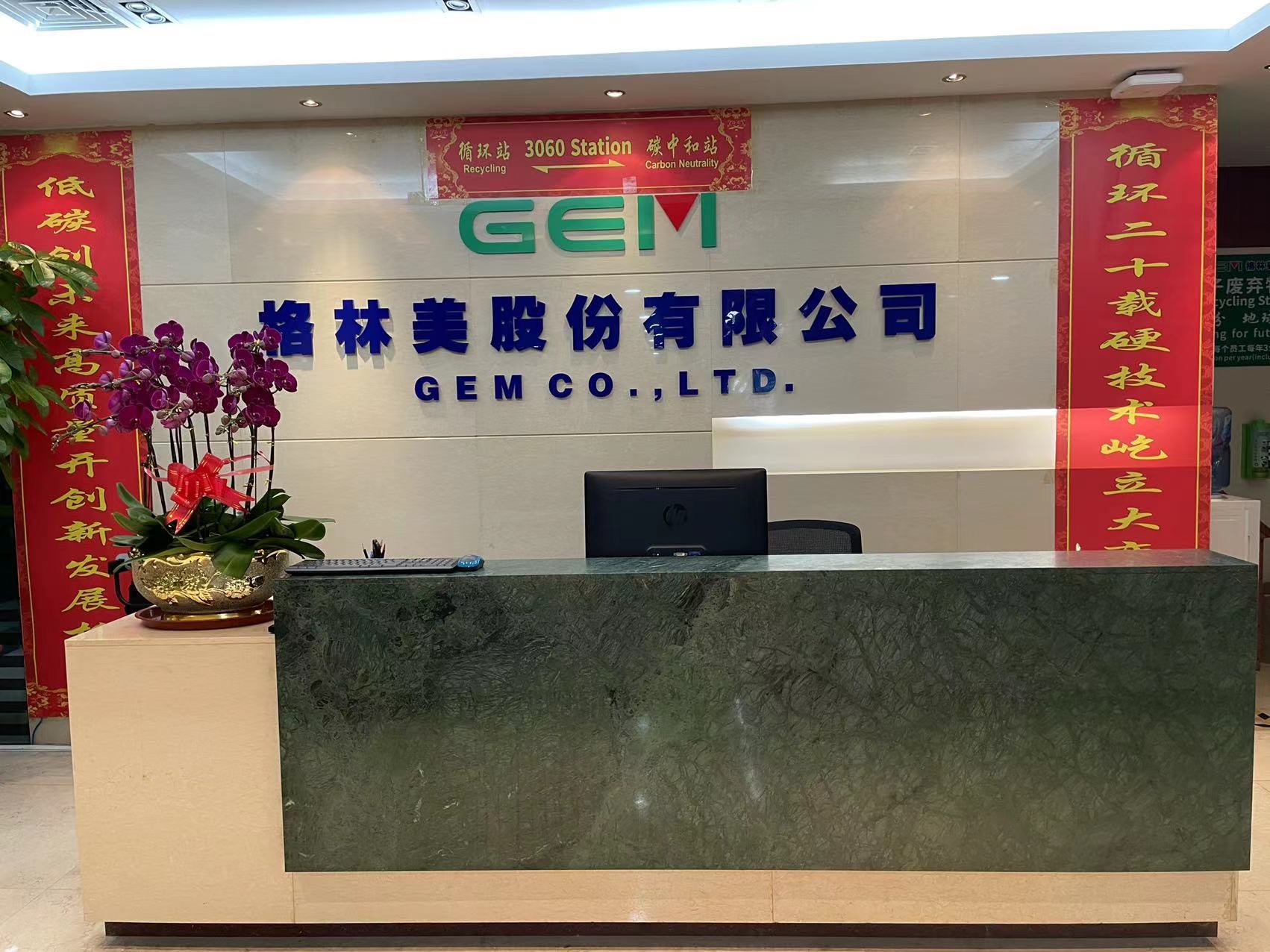
财务承压、估值波动,金晟新能负重闯关IPO
Jing Ji Guan Cha Bao· 2025-09-12 14:07
Core Viewpoint - The company, Guangdong Jingsheng New Energy Co., Ltd., is attempting to list on the Hong Kong Stock Exchange for the second time after its initial application lapsed in December 2024, amid significant financial losses and market volatility in the lithium battery recycling sector [1]. Financial Performance - The company has experienced a "roller coaster" financial performance, with revenues declining from 29.05 billion yuan in 2022 to 9.37 billion yuan in the first half of 2025, indicating a continuous downward trend [2]. - The company reported a profit of 1.51 billion yuan in 2022 but has since incurred losses of 4.71 billion yuan in 2023, 3.44 billion yuan in 2024, and 1.44 billion yuan in the first half of 2025, totaling over 10 billion yuan in losses over the past three and a half years [2]. Market Conditions - The core reason for the company's losses is attributed to the drastic decline in prices of lithium carbonate, nickel, and cobalt, leading to a situation where product prices are lower than production costs [2]. - The average price of lithium carbonate plummeted from 426,900 yuan per ton in 2022 to 62,300 yuan per ton in the first half of 2025, representing a cumulative decline of over 80% [4]. Customer Concentration - The company's sales are heavily reliant on a few major clients, with revenue from the top five customers accounting for 52.7% to 67.3% of total revenue during the reporting period, indicating increasing customer concentration [2]. - The largest single customer contributed 13.9% to 45.2% of total revenue over the same period, raising concerns about the company's dependency on a limited customer base [2]. Accounts Receivable - The turnover days for trade receivables increased from 38 days in 2022 to 56 days in the first half of 2025, a nearly 50% rise, which is significantly higher than the industry average [3]. - The high customer concentration and low collection efficiency create a negative feedback loop, where major clients demand extended payment terms, increasing the risk of bad debts for the company [3]. Valuation and Ownership - The company was founded by the Li brothers in 2010 and has undergone multiple rounds of financing, with its valuation fluctuating significantly, peaking at 12 billion yuan in March 2023 and dropping to 6.2 billion yuan in July 2024 before recovering to 7.6 billion yuan in November 2024 [5]. - The current valuation has decreased by over 30% from its peak, reflecting the volatility in the industry [5]. Strategic Direction - In response to industry fluctuations, the company aims to establish a closed-loop industry model from "recycling to regeneration" to mitigate reliance on market conditions for profitability [5].
{动力电池退役潮起,金晟新能源如何破局循环经济与盈利难题?
Sou Hu Cai Jing· 2025-09-07 21:47
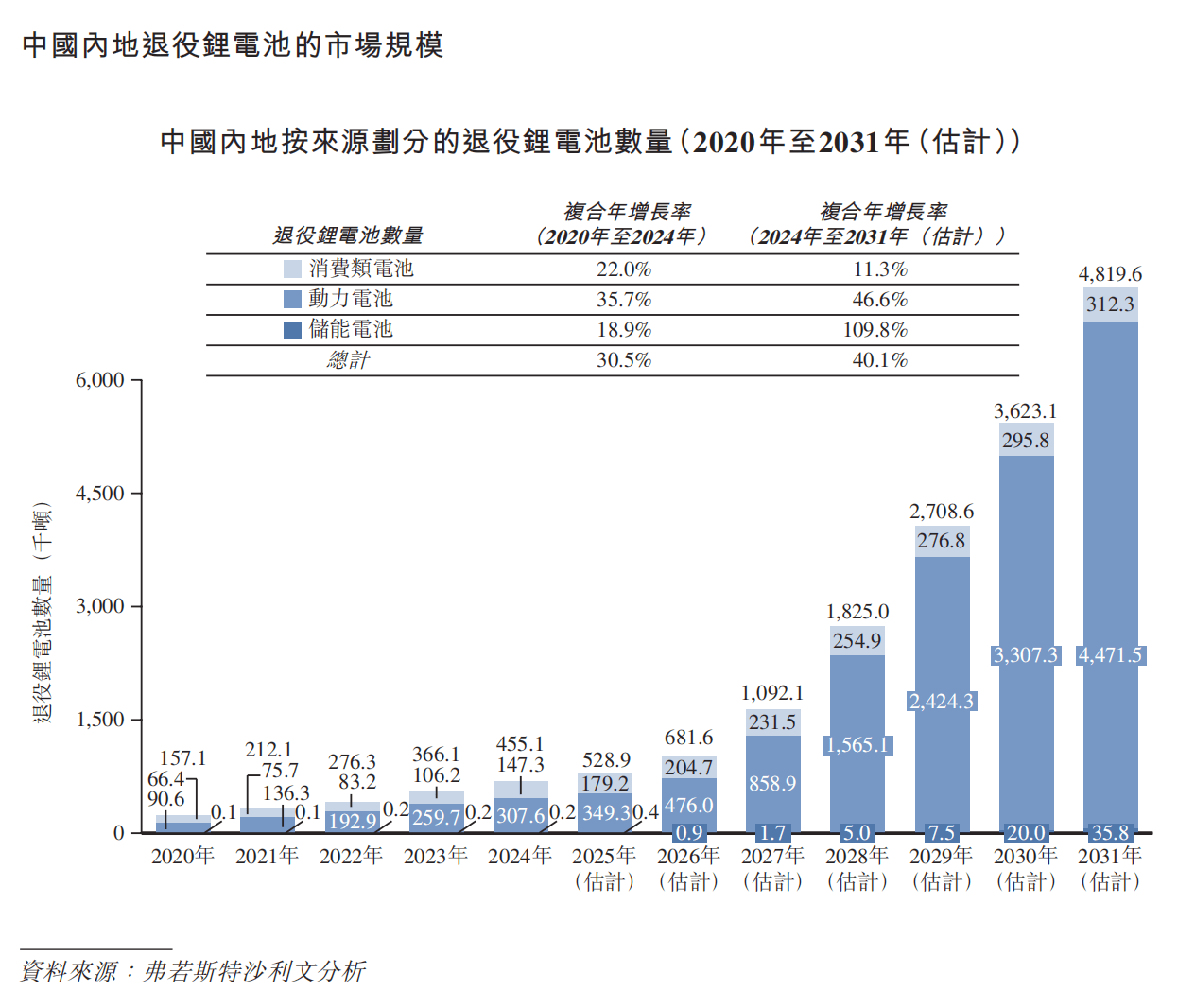
Core Viewpoint - The rapid growth of the domestic electric vehicle market since 2020 has led to an increasing focus on the disposal and recycling of retired power batteries, with Jinsheng New Energy's IPO highlighting its business model and operational challenges [1][3]. Group 1: Company Overview - Jinsheng New Energy's core business is lithium battery recycling and regeneration, establishing a circular economy model by connecting downstream applications with upstream material production [3]. - The company is the second-largest lithium battery recycling enterprise globally, with production bases in Zhaoqing, Yichun, and Ganzhou to address the upcoming peak of retired batteries [3]. Group 2: Market Dynamics - According to a report by Frost & Sullivan, the total amount of retired lithium batteries in mainland China is expected to reach 455,100 tons in 2024, with 54.9% from power batteries and 44.8% from consumer electronics [3]. - The total volume of retired lithium batteries in China is projected to surge to 4.8 million tons by 2031, with a compound annual growth rate of 40.1% from 2024 to 2031 [3]. Group 3: Financial Performance - Jinsheng New Energy reported a net profit of 151 million yuan in 2022, but faced losses in the subsequent two years: a net loss of 471 million yuan in 2023 and a projected net loss of 344 million yuan in 2024 [4][6]. - The company's financial challenges are attributed to significant fluctuations in raw material prices, particularly lithium carbonate, which dropped from 426,900 yuan per ton in 2022 to 80,100 yuan per ton in 2024 [4][6]. Group 4: Operational Challenges - The company faces competition from both battery manufacturers and third-party recyclers, with the latter needing to establish collection points and partnerships to acquire retired batteries [4]. - Jinsheng New Energy's gross profit has been pressured by both product prices and raw material costs, leading to a nearly doubled inventory impairment loss in 2023 compared to 2022 [4][6]. - To improve profitability, the company plans to optimize procurement and inventory management, diversify product offerings, and enhance operational efficiency [4][6]. Group 5: Industry Outlook - The lithium battery recycling market is still in its early development stages, requiring continuous investment to establish market position [7]. - Jinsheng New Energy must navigate price volatility and differentiate itself amid competition from automakers with their own recycling systems [7].
锂电回收巨头再次冲刺IPO!
Xin Lang Cai Jing· 2025-09-07 00:41
Core Viewpoint - Jinsheng New Energy has submitted a second IPO application to the Hong Kong Stock Exchange on September 3, 2025, after a failed attempt in December 2024. The company aims to leverage growth opportunities in the global lithium battery recycling market while addressing challenges such as price volatility and financial risks [1][8]. Industry Position and Core Business Layout - Market Position: Jinsheng New Energy ranks second globally in lithium battery recycling by sales revenue in 2023, maintaining its position as the largest third-party recycler in 2024 [2]. - Products and Applications: The company specializes in key materials such as lithium carbonate, nickel sulfate, and cobalt sulfate, which are essential for electric vehicle batteries, energy storage systems, and consumer electronics [2]. - Capacity Layout: Jinsheng has established three production bases in Zhaoqing, Yichun, and Ganzhou, focusing on the recycling of ternary lithium batteries and lithium iron phosphate batteries [2]. Shareholder and Financing Background - Notable Shareholders: The company has prominent investors including Fosun International, Dacheng Venture Capital, Shaanxi Automobile, GAC Group, and Bosch. In May 2025, it completed a financing round, receiving 148 million yuan from Jiangxi Dongliang [3]. Financial Performance: Revenue Fluctuations and Ongoing Losses - Revenue Trends: The company's revenue fluctuated from 1.133 billion yuan in 2021 to 2.905 billion yuan in 2022, then slightly decreased to 2.892 billion yuan in 2023. In 2024, revenue dropped to 2.157 billion yuan, with a further decline to 937 million yuan in the first half of 2025, representing a year-on-year decrease of 5.83% [5]. - Losses: After a profit of 151 million yuan in 2022, cumulative losses reached nearly 960 million yuan from 2023 to the first half of 2025, primarily due to falling product prices, inventory write-downs, and increased administrative and R&D expenses [5]. Core Product Prices and Deteriorating Debt Servicing Ability - Price Declines: The average price of lithium carbonate plummeted from nearly 400,000 yuan per ton in 2022 to less than 60,000 yuan per ton in the first half of 2025, a decrease of 85%. Nickel sulfate and cobalt sulfate prices also fell by 34% and 50%, respectively [6]. - Short-term Debt Risks: As of June 2025, the current ratio and quick ratio were both only 0.5, with net current assets at -1.029 billion yuan, indicating a significant deterioration in short-term debt servicing ability [6]. - Customer and Supplier Concentration: In the first half of 2025, the top five customers accounted for 67.3% of sales, with the largest single customer representing 45.2%. The top five suppliers accounted for 51.4% of purchases, with the largest supplier at 35.2%, raising concerns about supply chain stability [6]. Listing Challenges and Future Plans - Core Risk Factors: The cyclical nature of the lithium battery raw material market leads to significant price fluctuations, which can mismatch revenue and costs, as seen with the sharp decline in lithium carbonate prices in 2023 that triggered losses [7]. - Capacity Expansion Pressure: The company is advancing the construction of a lithium iron phosphate battery processing line at its Ganzhou base, but faces risks of industry overcapacity and intensified price competition that could further compress profits [7]. Fundraising Purpose - The funds raised from the IPO will be used to enhance the retired battery recycling network, improve R&D capabilities, attract industry talent, and supplement working capital to alleviate short-term debt pressures and meet operational needs [8].
又一个超级IPO诞生丨IPO一周要闻
Sou Hu Cai Jing· 2025-09-07 00:08
Group 1: IPO Market Overview - The IPO market is showing signs of normalization with a trend of "streamlined reviews and highlighted opportunities" as of September [2] - This week, only two companies were reviewed by the Shanghai and Shenzhen Stock Exchanges, both of which were approved [2] - China Uranium Corporation achieved over 17 billion yuan in revenue, making it the second-largest IPO of the year after Zhongce Rubber [2] Group 2: Company Highlights - China Uranium Corporation focuses on the comprehensive utilization of natural uranium and radioactive co-associated mineral resources, holding a dominant position in the domestic market [3] - The company reported revenues of 17.279 billion yuan and a net profit of 1.712 billion yuan for 2024 [3] - Aoxin Electric, listed on the Hong Kong Stock Exchange, saw its stock price drop 7% on its debut, closing at 16.73 HKD per share, with a market capitalization of 25.727 billion HKD [4] - Aoxin is the fifth-largest air conditioning provider globally, with a market share of 7.1% [4] Group 3: New Listings - Jiangyin Huaxin Precision Technology Co., Ltd. successfully listed on the Shanghai Stock Exchange, focusing on precision stamping cores for electric vehicles and other applications [5] - The company raised 814 million yuan through its IPO, with a share price increase of over 300% on its first trading day [5] - Guangdong Jinsheng New Energy Co., Ltd., the largest third-party lithium battery recycling company, has filed for an IPO in Hong Kong [6][8] Group 4: Upcoming Companies - Light Health Group has submitted a second application for an IPO on the Hong Kong Stock Exchange, focusing on digital health services and insurance solutions [9] - Yipin Nutrition Technology Group, the second-largest goat milk powder brand in China, has also applied for a listing on the Hong Kong Stock Exchange [10] - Tianchen Biopharmaceuticals is seeking to list in Hong Kong, focusing on innovative drugs for allergic and autoimmune diseases [11]
港交所8月证券市场日均成交额同比上升192%;高盛上调港交所目标价至524港元丨港交所早参
Mei Ri Jing Ji Xin Wen· 2025-09-04 16:44
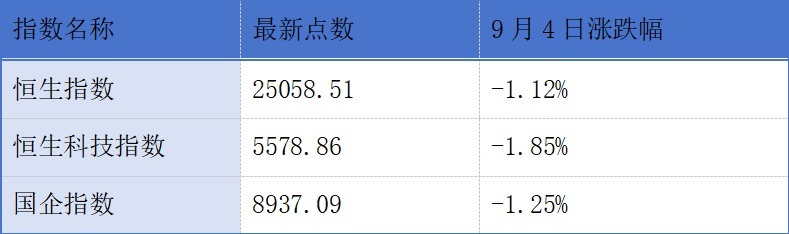
Group 1: Hong Kong Stock Exchange Performance - The total market capitalization of the Hong Kong Stock Exchange reached HKD 46.6 trillion by the end of August 2025, a 47% increase from HKD 31.8 trillion in the same period last year [1] - The average daily trading volume in August 2025 was HKD 279.1 billion, up 192% from HKD 95.5 billion year-on-year [1] - These positive figures indicate enhanced attractiveness of the Hong Kong Stock Exchange and increased vitality in the capital market, suggesting a favorable outlook for future market development [1] Group 2: Goldman Sachs Target Price Adjustment - Goldman Sachs raised the target price for Hong Kong Stock Exchange from HKD 509 to HKD 524, maintaining a "Buy" rating [2] - The firm noted that the exchange is improving market efficiency and aligning with international standards through simplified trading and settlement fee structures [2] - Despite lowering the forecast for margin income due to anticipated changes in interbank lending rates, Goldman Sachs increased its earnings per share estimates for the exchange [2] Group 3: Company Listings and Developments - Guangdong Jinsheng New Energy Co., Ltd. submitted a prospectus to the Hong Kong Stock Exchange, marking its second attempt after a previous application expired in December 2024 [3] - Jinsheng New Energy is a leading provider of lithium battery recycling solutions, ranking second globally and first in third-party recycling [3] - The company has faced losses due to declining product prices, but a successful listing could provide necessary capital to expand its operations and alleviate financial pressures [3] Group 4: XGIMI Technology's IPO Plans - XGIMI Technology announced plans to issue shares overseas (H-shares) and apply for a listing on the main board of the Hong Kong Stock Exchange [4] - Founded in 2013, XGIMI specializes in new display technologies, focusing on smart projectors and laser TVs, with multiple core technologies and capabilities [4] - The move to list in Hong Kong is expected to facilitate the company's expansion into overseas markets and support its development in the automotive sector [4] Group 5: Hong Kong Stock Market Indices - The Hang Seng Index closed at 25,058.51, down 1.12% on September 4 [5] - The Hang Seng Tech Index fell by 1.85% to 5,578.86 [5] - The National Enterprises Index decreased by 1.25%, closing at 8,937.09 [5]