
显示面板

Search documents
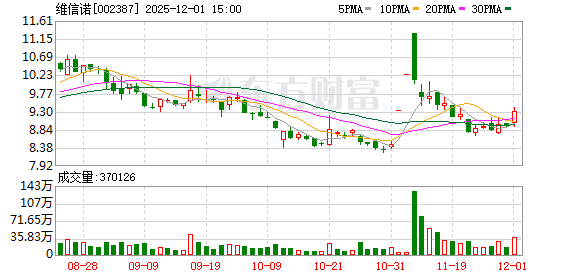
维信诺:公司已建立完善的廉洁机制
Zheng Quan Ri Bao· 2025-12-01 10:10
Group 1 - The company emphasizes its commitment to compliance and has strengthened internal controls and risk management [2] - The company has established a comprehensive integrity mechanism [2] - The issuance of A-shares to specific investors is ongoing, with further developments to be announced [2]


上市公司股份回购暴露出来的问题值得重视
Guo Ji Jin Rong Bao· 2025-12-01 09:05
其二,回购金额大幅增长。这不仅体现在单个上市公司上,也体现在总金额上。与此前上千万元、数亿 元相比,如今抛出十数亿元甚至数十亿元资金实施回购的上市公司也不在少数。从总额上看,在2020 年、2021年期间,年度回购金额还维持在1000至1300亿元左右的水平,2024年则攀升至1586亿元并创出 新高,今年到目前已突破2200亿元。考虑到年内还有一个多月的时间,目前的纪录有可能进一步刷新。 其三,将回购股份予以注销的上市公司越来越多。上市公司回购股份的用途主要有三种,或用于员工持 股计划,或用于股权激励,或予以注销。此前回购股份用于员工持股计划或股权激励的占多数,如今予 以注销的上市公司则越来越多。像贵州茅台、京东方等均拟巨资回购股份后予以注销。 但伴随着上市公司股份回购规模的水涨船高,个中暴露出来的问题也越来越多,其所产生的负面影响显 然也是不可忽视的。 据统计,截至11月24日,今年A股已有1859个回购方案实施完毕,涉及1365家上市公司,年内回购金额 高达2275亿元,刷新历史纪录。个人以为,在上市公司回购股份如火如荼的背景下,其中暴露出的问题 也有必要引起足够重视。 上市公司回购股份,对提振投资者信 ...
维信诺:AMOLED产品可应用于智能穿戴等领域
Zheng Quan Ri Bao Wang· 2025-12-01 08:14
证券日报网讯12月1日,维信诺(002387)在互动平台回答投资者提问时表示,公司AMOLED产品可应 用于智能穿戴、智能手机、平板、笔记本电脑、车载显示、智慧家居等领域,产品具体应用主要依据客 户需求。 ...
惠科IPO透视:“中国屏”从规模领先到技术突围的质变之路
2 1 Shi Ji Jing Ji Bao Dao· 2025-12-01 02:13
Core Viewpoint - Huike Co., Ltd. has submitted an updated prospectus for its IPO on the Shenzhen Stock Exchange, aiming to raise funds for advanced OLED and Mini-LED technology projects, marking a pivotal moment in China's display industry transitioning from scale expansion to technological leadership [1][2]. Group 1: Company Development and Market Position - Huike has over 20 years of experience in the display sector, evolving from terminal manufacturing to upstream core components, establishing four G8.6 generation production lines, and integrating the semiconductor display panel and smart display terminal supply chain [1][3]. - In 2024, Huike is projected to rank third globally in TV panel shipment area, fourth in monitor panel shipment area, and third in smartphone panel shipment area, with its 85-inch LCD TV panel shipment area ranking first worldwide [1][2]. Group 2: Technological Advancements - The company is focusing its IPO fundraising on new display technology R&D, particularly OLED and Mini-LED, to transition from a "scale follower" to a "technology innovator" [2][4]. - Huike has established a solid foundation in LCD technology, being one of the first in China to build G8.6 generation production lines, and has developed advanced technologies such as ultra-fine high-transmittance wide-view LCD technology and wide-view low color deviation display technology [3][5]. Group 3: Mini-LED and OLED Technology - The Mini-LED technology is gaining traction for its high contrast and fine HDR control, with Huike already achieving mass production of Mini-LED display terminal products [4][5]. - Huike is also making strides in OLED technology, having developed its first OLED product that passed customer testing and secured initial mass production orders, indicating significant progress in this area [5][6]. Group 4: Production Capacity and Vertical Integration - Huike operates four semiconductor display panel production bases using G8.6 generation lines, allowing for flexible coverage of various product sizes, particularly in the large-size segment [7][8]. - The company's vertical integration model enhances its competitive edge by ensuring quality control and supply chain stability, allowing for efficient new product development and rapid market response [8][9]. Group 5: Financial Performance and Future Outlook - Huike's revenue for 2023, 2024, and the first half of 2025 is projected to be 35.824 billion, 40.282 billion, and 18.997 billion yuan respectively, with net profits of 2.582 billion, 3.320 billion, and 2.162 billion yuan, reflecting strong growth momentum [10]. - The company is well-positioned to leverage emerging opportunities in the display industry driven by advancements in 5G, IoT, and AI, aligning its technology developments with new market demands [11].
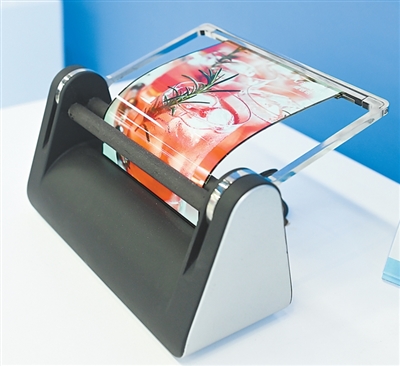
柔性屏 打开“显示”新视窗(国际科技前沿)
Ren Min Ri Bao· 2025-11-30 22:04
Core Insights - The display technology is rapidly transitioning from "rigid" to "flexible," with flexible displays being increasingly utilized in consumer electronics, commercial spaces, and smart interactions [1] - Recent advancements include the development of high-performance stretchable polymer light-emitting diodes (PLED) by a research team from the Chinese Academy of Sciences, and a prototype of a stretchable display by LG Display, capable of approximately 53% deformation [1] Group 1: Flexible Display Technology - Flexible displays are not merely traditional glass screens bent; they require a multi-layered structure where each layer must possess flexibility to ensure overall bending and folding while maintaining display quality and durability [2] - Key components include flexible substrate materials, core electronic components, and packaging technology, all of which must innovate collaboratively [2][3] - Common flexible substrate materials include polyimide and polyester, which can be as thin as 0.1 mm and withstand high temperatures and thousands of folds without deformation [2] Group 2: Core Electronic Components - Core electronic components such as thin-film transistors (TFT) and organic light-emitting diodes (OLED) rely on high-performance electronic materials, including oxide semiconductors and organic semiconductors [3] - These components work together to ensure rapid current flow, self-emission of light, and effective stress release during bending, maintaining the integrity and functionality of the display [3] Group 3: Market Expansion and Applications - The global market for flexible displays is expanding, with projections indicating that by 2024, shipments of flexible active matrix organic light-emitting diode (AMOLED) panels will reach 631 million units, accounting for 42% of the smartphone screen market [4] - By 2031, the flexible display market is expected to exceed $173 billion, with a compound annual growth rate (CAGR) of 34.3% [4] - Applications are diversifying across various sectors, including smart terminals, wearable devices, automotive, healthcare, and public services [4][5][6] Group 4: Innovations in Automotive and Healthcare - In the automotive sector, flexible displays are enhancing human-vehicle interaction, with companies like Mercedes and BMW integrating flexible OLED screens into their vehicles for improved display and energy efficiency [5] - In healthcare, flexible displays are being utilized in wearable medical devices, providing real-time health data monitoring and improving clarity and portability [6] Group 5: Future of Intrinsic Flexibility - Current flexible displays still rely on external structures for deformation, facing challenges such as fragility and resolution loss [7] - The development of intrinsic flexible materials aims to address these issues by enabling the display itself to withstand deformation through molecular structure and micro-design [7][8] - This innovation could lead to new applications, allowing displays to adapt to various devices and user needs, enhancing the overall user experience [8]
柔性屏,打开“显示”新视窗(国际科技前沿)
Ren Min Ri Bao· 2025-11-30 22:01
Core Insights - The article discusses the rapid advancement of flexible display technology, highlighting its transition from rigid to flexible forms, which is increasingly applied in various sectors such as consumer electronics, commercial spaces, and smart interactions [5][8]. Group 1: Flexible Display Technology Development - Flexible displays are characterized by their ability to bend and stretch, leading to innovative applications in products like foldable phones and curved screens [5][8]. - Recent breakthroughs include the development of high-performance stretchable polymer light-emitting diodes (PLEDs) by the Chinese Academy of Sciences, which significantly enhance optical performance and mechanical stability [5][11]. - LG Display has showcased a prototype of a stretchable display capable of approximately 53% deformation, indicating significant progress in the field [5][8]. Group 2: Manufacturing Process of Flexible Displays - The creation of flexible displays involves a complex multi-layer structure, requiring innovations in flexible substrate materials, core electronic components, structural design, and packaging technology [6][7]. - Flexible substrates must be thin, soft, and resistant to high temperatures and corrosive environments, with common materials including polyimide and polyester [6]. - Core electronic components like thin-film transistors (TFT) and organic light-emitting diodes (OLED) rely on high-performance materials to ensure rapid current flow and energy efficiency [7]. Group 3: Market Expansion and Applications - The global market for flexible displays is projected to grow significantly, with an estimated shipment of 631 million flexible AMOLED panels in 2024, accounting for 42% of the smartphone screen market [8]. - By 2031, the flexible display market is expected to exceed $173 billion, with a compound annual growth rate (CAGR) of 34.3% [8]. - Applications are expanding across various sectors, including smart terminals, wearables, automotive, healthcare, and public services, enhancing user experience and functionality [9][10]. Group 4: Future Innovations and Challenges - The concept of intrinsic flexibility is emerging, which refers to the inherent ability of materials to withstand deformation without relying on external structures [11][12]. - Research teams are exploring new material systems to improve the mechanical strength and durability of flexible displays, with ongoing challenges in achieving large-scale applications [11][12]. - The integration of sensors and AI algorithms in intrinsic flexible displays could lead to personalized and intelligent user experiences, transforming the interaction between devices and users [12].

新材料产业周报:六氟磷酸锂价格持续上涨,北京规划建设太空数据中心-20251130
Guohai Securities· 2025-11-30 10:04
Investment Rating - The report maintains a "Recommended" rating for the new materials industry [1]. Core Insights - The new materials sector is positioned as a crucial direction for the chemical industry, currently experiencing rapid growth in downstream demand. With policy support and technological breakthroughs, domestic new materials are expected to accelerate into a long-term growth phase. The report emphasizes that "one generation of materials supports one generation of industry," highlighting the foundational nature of the new materials industry as the material basis for other industries [4]. Summary by Sections 1. Electronic Information Sector - Focus areas include semiconductor materials, display materials, and 5G materials [5]. - A significant development is the plan to construct a large-scale data center system in Beijing, aimed at moving large-scale AI computing power to space, with operations expected to exceed 1 GW [6][22]. 2. Aerospace Sector - Key materials of interest are PI films, precision ceramics, and carbon fibers [7]. 3. New Energy Sector - The report highlights the focus on photovoltaic materials, lithium-ion batteries, proton exchange membranes, and hydrogen storage materials [9]. - As of October 2025, over 800 integrated projects for wind and solar hydrogen production have been planned in China, with a total green hydrogen capacity nearing 9 million tons per year [10]. 4. Biotechnology Sector - The focus is on synthetic biology and scientific services [11]. - A notable breakthrough in India involves the launch of a pilot plant for CO2 to DME conversion, marking a significant milestone in carbon recycling technology [12]. 5. Energy Conservation and Environmental Protection Sector - Key materials include adsorption resins, membrane materials, and biodegradable plastics [13]. - The Ministry of Ecology and Environment has released a carbon emissions trading market allocation plan, which aims to incentivize companies based on their carbon emissions performance [14]. 6. Key Companies and Earnings Forecast - The report lists several key companies with their stock prices and earnings per share (EPS) forecasts for 2024 to 2026, indicating a positive outlook for many companies in the new materials sector [16].
深圳公示新LCD/OLED偏光片产线项目遴选方案
WitsView睿智显示· 2025-11-28 09:54
Core Viewpoint - The announcement by Shenzhen Pingshan District Investment Promotion Service Office regarding the selection plan for a 1.49-meter wide polarizer production line project indicates a strategic move by Shengbo Optoelectronics to enhance its competitiveness in the high-end display panel market [1][3]. Group 1: Project Overview - Shengbo Optoelectronics plans to invest a total of 1.334 billion yuan in the construction of a new production line for LCD and OLED polarizers with a width of 1.49 meters, which will have a production capacity of 18 million square meters per year [3]. - The new production line will include advanced equipment such as dyeing stretching composite production lines, coating composite production lines, slitting machines, slicing machines, and edge grinding machines [3]. Group 2: Current Operations and Capacity - Shengbo Optoelectronics currently operates four production lines with a total annual capacity of 60 million square meters, covering product sizes from 3.5 inches to 105 inches [4]. - The existing production lines are running at full capacity, with a projected output of 45.198 million square meters and a revenue of 3.601 billion yuan in 2024 [3]. Group 3: Strategic Importance - The investment aims to address the capacity bottleneck faced by Shengbo Optoelectronics and support its rapid growth in the high-value-added polarizer market [4][5]. - The project is expected to enhance the company's profitability in the polarizer business and improve operational efficiency across production lines [5].

京东方A:将继续加大研发投入,进一步提升钙钛矿组件的转换效率、稳定性和寿命
Xin Lang Cai Jing· 2025-11-28 01:35
Group 1 - The company will continue to increase R&D investment in the short term to enhance the conversion efficiency, stability, and lifespan of perovskite components [1] - The company aims to accelerate the industrialization process, moving from pilot line technology to large-scale production while continuously reducing costs [1] - The company is deepening open innovation with global partners to jointly build a healthy perovskite industry ecosystem covering materials, equipment, products, applications, and standards [1]
京东方A:将继续加大研发投入 提升钙钛矿组件的转换效率、稳定性和寿命
Ge Long Hui A P P· 2025-11-28 01:32
Core Viewpoint - BOE Technology Group (京东方A) is leveraging its long-term capabilities in glass-based processing, film preparation, packaging, and large-scale intelligent manufacturing to enhance the research and production of perovskite solar cells, thereby accelerating the industrialization process [1] Group 1 - The company plans to increase R&D investment to improve the conversion efficiency, stability, and lifespan of perovskite modules [1] - The company aims to expedite the transition from pilot line technology to large-scale production while continuously reducing costs [1]