茶业

Search documents
广州好客茶业有限公司成立 注册资本1万人民币
Sou Hu Cai Jing· 2025-10-17 07:46
天眼查App显示,近日,广州好客茶业有限公司成立,法定代表人为吴镇钦,注册资本1万人民币,经 营范围为保健食品(预包装)销售;国内贸易代理;贸易经纪;采购代理服务;日用玻璃制品销售;木制容器 销售;金属包装容器及材料销售;针纺织品销售;礼品花卉销售;互联网销售(除销售需要许可的商品);厨 具卫具及日用杂品零售;日用陶瓷制品销售;茶具销售;农副产品销售;日用百货销售;日用品销售;日用品批 发;食用农产品批发;食品销售(仅销售预包装食品);食品互联网销售(仅销售预包装食品)。 ...
潮州市魏派茶业有限公司成立 注册资本10万人民币
Sou Hu Cai Jing· 2025-10-17 07:46
Core Viewpoint - Chaozhou Weipai Tea Industry Co., Ltd. has been established with a registered capital of 100,000 RMB, focusing on tea product production and food internet sales [1] Company Overview - The company is engaged in the production of tea products and food, with specific operations requiring approval from relevant authorities [1] - The general business scope includes the sale of agricultural products, tea cultivation, and retail of food products, specifically pre-packaged food [1] Business Activities - The company is involved in various activities such as: - Sales of daily ceramics and kitchenware - Sales of tea sets and primary agricultural products - Retail of edible agricultural products and their initial processing [1] - It also offers services related to cultural and artistic exchanges, event planning, and information consulting [1]
广州市山醒茶业有限公司成立 注册资本100万人民币
Sou Hu Cai Jing· 2025-10-17 07:46
Core Viewpoint - Guangzhou Shanxing Tea Industry Co., Ltd. has been established with a registered capital of 1 million RMB, indicating a new player in the tea industry focusing on various related services and products [1] Company Summary - The company is engaged in the sale of tea utensils and tea cultivation, showcasing its commitment to the tea market [1] - It offers marketing planning and brand management services, which may enhance its market presence and competitiveness [1] - The company provides a range of consulting services, excluding licensed information consulting, indicating a focus on general advisory roles [1] Industry Summary - The company is involved in the sale of agricultural and sideline products, reflecting the growing trend of integrating agricultural production with retail [1] - It includes internet sales of pre-packaged food, aligning with the increasing consumer preference for online shopping [1] - The establishment of the company highlights the ongoing development in the tea industry, particularly in areas such as cultural and artistic exchanges, which may attract a diverse customer base [1]
安化县暮雪煮茗茶业有限责任公司成立 注册资本20万人民币
Sou Hu Cai Jing· 2025-10-17 05:52
天眼查App显示,近日,安化县暮雪煮茗茶业有限责任公司成立,法定代表人为罗欢,注册资本20万人 民币,经营范围为许可项目:食品销售。(依法须经批准的项目,经相关部门批准后方可开展经营活 动,具体经营项目以相关部门批准文件或许可证件为准)一般项目:农副产品销售;日用品销售;国内 贸易代理;日用百货销售;个人卫生用品销售;个人互联网直播服务;包装服务;广告制作;广告发 布;食用农产品批发;食用农产品零售;食品互联网销售(仅销售预包装食品)。(除依法须经批准的 项目外,凭营业执照依法自主开展经营活动)。 ...
2025广州茶博会11月20日开幕,两大技能竞赛及颁奖典礼同期亮相
Nan Fang Nong Cun Bao· 2025-10-17 05:36
Core Points - The 2025 Guangzhou International Tea Expo is scheduled to take place from November 20 to 23 at the Canton Fair Complex, featuring a series of 20th-anniversary celebration activities and two major professional skill competitions [3][4][8] - The competitions aim to promote skill development and talent cultivation within the tea industry, highlighting the importance of craftsmanship and expertise [10][11] - The event will also include various activities such as commemorative tea gatherings and quality selection events for renowned teas, emphasizing industry interaction and consumer engagement [22][23] Industry Overview - The Chinese tea industry is currently focused on high-quality development, creating a collaborative framework across production, circulation, and consumption [14] - In 2024, China's total tea production reached 3.499 million tons, with an agricultural output value exceeding 321.8 billion yuan, indicating the industry's resilience [15][16] - Guangdong province, as a leading tea consumption region, had a tea planting area of 1.5905 million mu and a total production of 191,700 tons in 2024, showcasing significant growth in the local tea sector [19][20]


郑州大湾头茶业有限公司成立 注册资本50万人民币
Sou Hu Cai Jing· 2025-10-16 04:28
天眼查App显示,近日,郑州大湾头茶业有限公司成立,法定代表人为程维晗,注册资本50万人民币, 经营范围为一般项目:食品销售(仅销售预包装食品);农副产品销售;茶具销售;食用农产品批发; 日用品销售;销售代理;食品互联网销售(仅销售预包装食品);技术服务、技术开发、技术咨询、技 术交流、技术转让、技术推广;办公用品销售(除依法须经批准的项目外,凭营业执照依法自主开展经 营活动)许可项目:食品销售(依法须经批准的项目,经相关部门批准后方可开展经营活动,具体经营 项目以相关部门批准文件或许可证件为准)。 ...
年入20亿,传承289年的泉州茶业家族终圆梦,通过港交所上市聆讯
Sou Hu Cai Jing· 2025-10-15 13:56
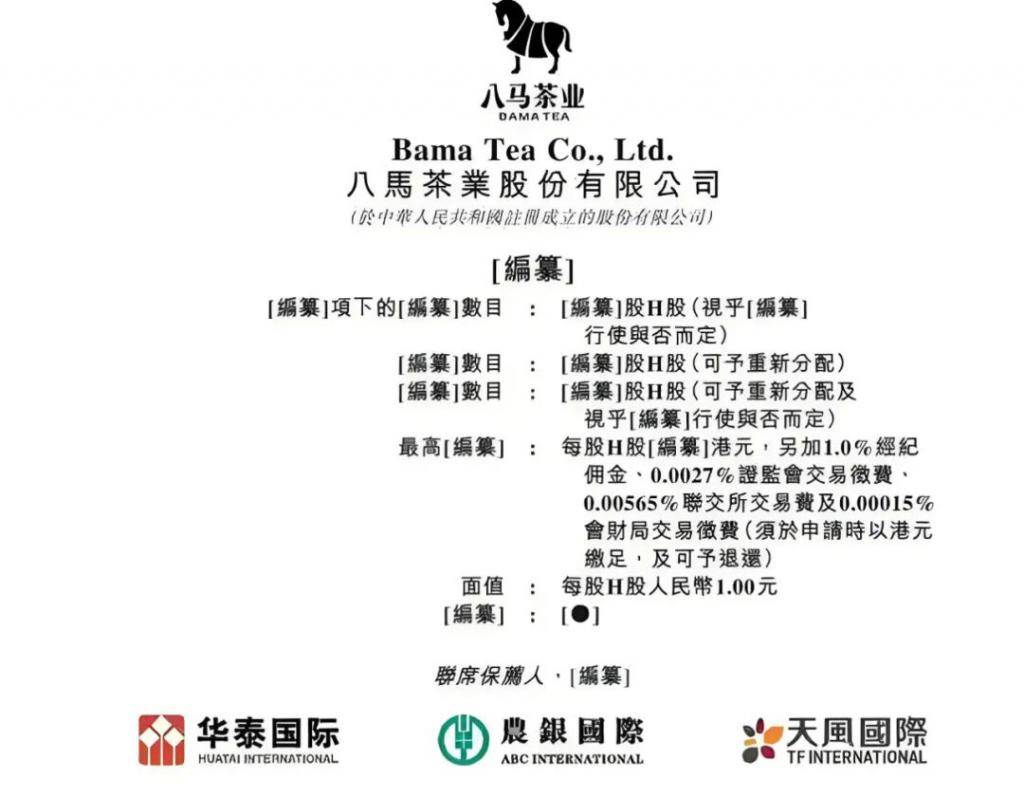
Core Insights - Eight Horse Tea has finally moved closer to its IPO after a decade of attempts, with the Hong Kong Stock Exchange announcing its hearing on October 12 [1] - The company, founded by the Wang family, has transformed into a modern enterprise with annual revenues exceeding 2 billion yuan, focusing on popular tea varieties like Tieguanyin and black tea [1] Group 1: Business Model and Performance - As of June 2025, Eight Horse Tea operates 3,585 stores nationwide, with 3,341 being franchise stores, accounting for 93% of the total [4] - Franchisees contributed 1.09 billion yuan in sales in 2024, making up half of the total revenue, while direct stores' sales dropped to 354 million yuan, representing only 16.5% [4] - The franchise model has enabled rapid market penetration, particularly in lower-tier regions, leveraging local resources to reduce expansion costs [6] Group 2: Challenges and Risks - The extensive franchise model has led to management challenges, including quality control issues, as evidenced by complaints and lawsuits related to product expiration due to improper storage [8] - The Wang family's intricate "billion-dollar in-law network" consolidates 55.9% of voting rights, raising concerns about potential conflicts of interest in decision-making [8][10] Group 3: Brand Strategy and Digitalization - Eight Horse Tea is attempting brand rejuvenation with new product lines targeting younger consumers, such as "Xinjihao" for high-end Pu'er tea and "Wanshanhong" for cold brew fruit tea [12][14] - The company's online sales have increased from 567 million yuan in 2022 to 838 million yuan, accounting for nearly 40% of total sales, indicating a growing trend among younger consumers to purchase tea online [14] - Post-IPO, Eight Horse plans to expand production facilities, open more direct stores, and enhance digital capabilities to address quality control issues [16] Group 4: Future Outlook - With an annual profit of approximately 224 million yuan, Eight Horse Tea is poised for its IPO, but it must balance franchise and direct store operations, maintain quality control, and engage younger consumers effectively to ensure long-term success [17]
500 亿福建富豪圈,跑出来一个“香港茶王”
Sou Hu Cai Jing· 2025-10-15 13:43
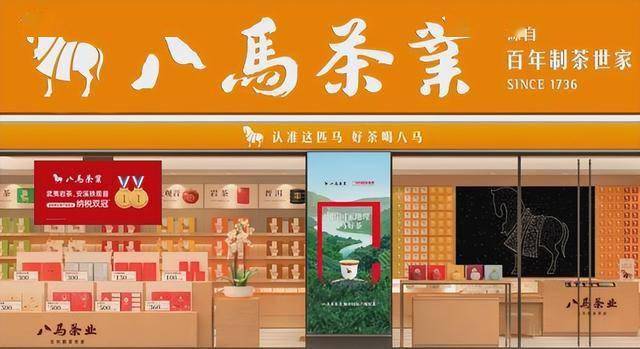
Core Viewpoint - Baima Tea Co., Ltd. has successfully passed the hearing for its IPO application on the Hong Kong Stock Exchange, marking a significant step towards its public listing after multiple attempts in the past 12 years [1][3]. Company Overview - Baima Tea is a leading player in the Chinese tea market, ranking first in terms of revenue and net profit among high-end tea suppliers as of 2024 [3][9]. - The company operates over 3,700 chain stores nationwide, establishing itself as a dominant force in the tea industry [3][9]. Historical Background - Founded by Wang Wenli, Baima Tea has roots in a family with a long history in tea production, dating back to the Qing Dynasty [6]. - The company has faced several challenges in its journey to go public, including failed attempts to list on various exchanges before finally targeting the Hong Kong market [1][3]. Financial Performance - Baima Tea's revenue for the years 2022 to 2025 (first half) shows a steady growth trajectory, with figures of 18.18 billion, 21.22 billion, 21.43 billion, and 10.63 billion respectively [9]. - The net profit for the same period was 1.66 billion, 2.06 billion, 2.24 billion, and 1.20 billion, indicating a positive financial outlook [9]. Market Position - The company is recognized as the "King of High-End Tea" in China, leading the market in both oolong and black tea segments [3][15]. - Baima Tea's gross margin has been impressive, with rates of 53.3%, 52.3%, 55.0%, and 55.3% from 2022 to 2025 (first half), reflecting its high-end product strategy [9]. Business Model - The company employs a franchise model, with approximately 50% of its revenue generated from franchise sales [14][16]. - Baima Tea has established a comprehensive sales system that includes both direct and franchise stores, with a focus on offline channels [13][14]. Challenges and Risks - Recent financial reports indicate a decline in revenue and net profit for the first half of 2025, attributed to a decrease in offline store numbers and rising administrative costs [15]. - The sustainability of the franchise model is a concern, as the company relies heavily on franchisees for revenue generation [16][17]. Marketing Strategy - Baima Tea has invested significantly in marketing, with sales and marketing expenses accounting for about 32% of revenue in recent years [13]. - The company emphasizes creating a high-end brand image through various marketing initiatives, including global tasting events and participation in international forums [11][13]. Future Outlook - The company aims to enhance its brand recognition and market presence through innovative marketing strategies and product offerings [11][18]. - Despite the challenges in the high-end tea market, Baima Tea's established brand and market position provide a solid foundation for future growth [18].
复活已故茶界泰斗做代言,AI不能被无底线使用
Xin Jing Bao· 2025-10-15 04:26
泰斗张天福被茶企用AI"复活"并为其代言,引发了社会争议。图/新京报我们视频截图 已故茶界泰斗"复活"做品牌代言?10月14日,一段由AI生成的视频引发热议。 ▲茶界 据新京报报道,已故"茶界泰斗"张天福被"复活",现身短视频为茶企代言、发声。发布方福建张天福品 牌管理有限公司工作人员承认,该视频为AI制作。对此,张天福的遗孀张晓红表示,将通过法律途径 维权;其子张德友称曾授权企业制作视频,但已被主管部门约谈。 张天福先生是我国著名茶学家、制茶与审评专家,曾任福建省农业科学院茶叶研究所技术顾问、中国茶 叶学会荣誉理事,享受国务院特殊津贴。但他于2017就已去世,享年107岁。 离世8年之后,其音容笑貌通过AI的形式重现网络,本应是一段佳话。但被AI"复活"的张先生居然在视 频里为茶企做广告,自称"我活到108岁,试茶80多年了……"令人惊诧莫名。 从法律角度看,用AI"复活"专家名人等进行企业品牌宣传,其内容真实与否,需接受我国广告法的严肃 审视。 我国民法典更明确规定,自然人去世后,其姓名、肖像、名誉等人格利益仍受保护,其近亲属有权依法 维权。也就是说,逝者并非"无主之物",其形象权与名誉权的延续性在法律上 ...

八马茶业花12年打破IPO屡败魔咒
21世纪经济报道· 2025-10-15 02:48
Core Viewpoint - Eight Horses Tea Industry has successfully passed the listing hearing on the Hong Kong Stock Exchange, marking a significant step towards its IPO after a lengthy 12-year journey, amidst challenges faced by the tea industry in capital markets [2][5][11]. Company Overview - Eight Horses Tea Industry has attempted to go public multiple times since 2013, with three failed attempts to list on the A-share market between 2013 and 2022 due to various market conditions and internal adjustments [3][11]. - The company transitioned to the Hong Kong market in 2023, submitting its prospectus and successfully passing the hearing in October [5][11]. Market Context - The tea industry is considered a challenging sector for capital investment, with few successful IPOs among tea companies since 2012. The complexity of the supply chain and the non-standardized nature of tea products contribute to this difficulty [4][11]. - As of 2023, only a few tea companies, including Lincang Ancient Tea, have successfully listed, with significant stock price declines post-IPO [4]. Business Performance - Eight Horses Tea Industry has established itself as a leader in the Chinese tea market, ranking first in terms of sales revenue and store count as of 2023. The company has maintained its position as the top seller of Tieguanyin tea for over a decade [8][12]. - The company reported revenues of RMB 1.82 billion, RMB 2.12 billion, and RMB 2.14 billion for the years 2022, 2023, and 2024 respectively, with a noticeable slowdown in growth for 2024 [14][15]. Challenges and Concerns - Despite its market leadership, Eight Horses Tea faces performance concerns, with a decline in revenue and net profit reported in the first half of 2023, attributed to decreased sales in offline channels and rising administrative costs [16]. - The company has a family-controlled management structure, which raises governance concerns as it scales and seeks to meet higher regulatory standards post-IPO [16][17]. Industry Outlook - The overall Chinese tea market is projected to grow from approximately RMB 288.9 billion in 2020 to about RMB 407.9 billion by 2029, with a compound annual growth rate (CAGR) of around 4.6% [13]. - The high-end tea market is expected to grow at a faster rate, with a CAGR of approximately 5.6% from 2024 to 2029, indicating a potential opportunity for Eight Horses Tea to expand its market share [13].