
支付

Search documents
传化支付成功更换长期牌照
Bei Jing Shang Bao· 2025-12-05 10:11
Group 1 - The People's Bank of China announced the renewal of the payment business license for non-bank payment institutions, with the latest batch being for December 2025 [1] - Transfar Pay Co., Ltd. has had its payment license validity changed to long-term, allowing it to operate in the areas of stored value account management I and II (limited to online real-name payment account top-ups) [1]
第三方支付交易回暖
Bei Jing Ri Bao Ke Hu Duan· 2025-12-05 05:38
Core Insights - The People's Bank of China reported significant growth in digital payment transactions in Q3, indicating a recovery in consumer spending and a shift in payment habits [1][3] Group 1: Non-Cash Payment Statistics - In Q3, banks processed 1,685.08 billion non-cash payment transactions amounting to 150.34 trillion yuan, while in the same period of 2024, the figures were 1,545.16 billion transactions and 132.24 trillion yuan, showing a substantial increase compared to Q2 [3] - Electronic payment transactions reached 775.54 billion, totaling 82.30 trillion yuan, with online payments at 181.4 billion transactions (67.80 trillion yuan) and mobile payments at 556.94 billion transactions (12.99 trillion yuan) [3] Group 2: Trends in Payment Methods - The increase in transaction amounts, despite a slight decline in transaction numbers, suggests a recovery in third-party payment transactions, particularly in large online payments, indicating a shift towards higher-value transactions [4] - Analysts noted that consumers are increasingly opting for larger purchases or accumulating high-frequency small payments, reflecting an upgrade in consumption structure and a growing demand for high-quality goods and services [4][5] Group 3: Market Dynamics - The market is transitioning from a focus on transaction volume to transaction value, with payment institutions prioritizing the enhancement of each transaction's worth rather than merely increasing transaction counts [5] - Companies like Tencent and Lakala reported growth in commercial payment amounts, driven by strong online payment growth and improved trends in offline payments, particularly in retail and transportation sectors [5] Group 4: Challenges in Traditional Payment Methods - Despite the growth in QR code transactions, traditional card transaction volumes are declining, with Lakala reporting a 13.72% drop in card transaction amounts [6] - Regulatory measures targeting illegal practices in card transactions have led to a contraction in traditional payment models, while increased competition in the domestic market is squeezing profit margins [6] - Future trends indicate that QR code payments will dominate the small payment market, especially among small and micro merchants, while card payment processing will continue to face pressure [6]



小摩2026支付行业展望:看淡费哲金融服务(FISV.US)和PayPal(PYPL.US) 押注Toast(TOST.US)增长潜力
智通财经网· 2025-12-05 02:35
Group 1 - The core viewpoint of the article indicates that JPMorgan has downgraded the ratings of FISV and PYPL from "Overweight" to "Neutral," suggesting that it is too late to sell and too early to buy [1] - JPMorgan's report highlights that the payment sector is experiencing its worst performance in 15 years, excluding the COVID-19 pandemic, due to slowing market growth and concerns over commoditization [1] - The year 2026 is seen as critical for both FISV and PYPL, requiring them to demonstrate execution capabilities and invest in new initiatives and technologies, leading to both potential upsides and risks of underperformance [1] Group 2 - JPMorgan upgraded the rating of TOST from "Neutral" to "Overweight," focusing on companies with pricing power, strong margins, and order growth as it looks ahead to 2026 [1] - Despite a 6% decline in TOST's stock price since 2025, earnings expectations have been raised by 27%, and the composite metric of "growth + profitability" for 2026 has been established [1] - If credit card interchange fee regulations are implemented, TOST may have additional upside potential, which contributed to the rating upgrade [1]


三季度支付数据回暖 释放哪些信号
Bei Jing Shang Bao· 2025-12-04 16:07
Core Insights - The People's Bank of China reported significant growth in digital payment transactions in Q3, indicating a recovery in consumer spending and a shift in payment habits [1][2] Group 1: Non-Cash Payment Growth - In Q3, banks processed 1,685.08 billion non-cash payment transactions amounting to 150.336 trillion yuan, showing a year-on-year increase in transaction volume and value [1] - The increase in non-cash payments is attributed to credit transfers and electronic payments, driven by the central bank's relaxation of transfer limits and improvements in payment systems [1][2] - Electronic payment transactions reached 775.54 billion, totaling 82.297 trillion yuan, with online payments at 181.4 billion transactions worth 67.797 trillion yuan and mobile payments at 556.94 billion transactions worth 12.996 trillion yuan [1] Group 2: Third-Party Payment Institutions - Third-party payment institutions processed 3,380.19 billion online payment transactions worth 85.28 trillion yuan in Q3, reflecting a recovery in transaction scale despite a slight decline in transaction volume compared to previous periods [2] - The increase in transaction value suggests a shift towards larger transactions, indicating a change in consumer behavior towards higher-quality goods and services [2][3] - Companies like Tencent and Lakala reported growth in payment transaction values, with Lakala's QR code transaction amounting to 1.04 trillion yuan, a 3.5% year-on-year increase [2][3] Group 3: Market Trends and Future Outlook - The growth in digital payments is supported by the expansion of online consumption scenarios and advancements in payment technologies, enhancing security and convenience [3] - Despite the growth in QR code transactions, traditional card transaction volumes are declining, with Lakala reporting a 13.72% decrease in card transaction value [3][4] - The future outlook suggests that QR code payments will dominate the small payment market, while card payment services will face ongoing pressure, particularly in B2B and cross-border transactions [4]
小摩下调Fiserv和PayPal目标价,评级均降至“中性”
Ge Long Hui· 2025-12-04 13:02
摩根大通将支付公司Fiserv的目标价从155美元下调至85美元,将金融科技巨头PayPal的目标价从85美元 下调至70美元,两者评级均从"增持"下调至"中性"。 ...
第三方支付交易回暖!三季度支付数据还释放哪些信号
Bei Jing Shang Bao· 2025-12-04 11:31
Core Insights - The People's Bank of China reported significant growth in digital payment transactions in Q3, indicating a recovery in consumer spending and a shift in payment habits [1][3] Group 1: Non-Cash Payment Transactions - In Q3, banks processed 1,685.08 billion non-cash payment transactions amounting to 150.336 trillion yuan, showing a year-on-year increase in transaction volume and value compared to 1,545.16 billion transactions and 132.242 trillion yuan in Q3 2024 [3] - Electronic payment transactions reached 775.54 billion, totaling 82.297 trillion yuan, with online payments at 181.4 billion transactions (67.797 trillion yuan) and mobile payments at 556.94 billion transactions (12.996 trillion yuan) [3] Group 2: Growth Drivers - The growth in non-cash payments is attributed to credit transfers and electronic payments, driven by the central bank's relaxation of transfer limits and the integration of payment systems, indicating an acceleration in digital payment adoption by businesses [3][4] - The increase in transaction amounts suggests a shift towards larger transactions, reflecting a change in consumer behavior towards higher-quality goods and services [4] Group 3: Market Trends - Third-party payment transactions are recovering, particularly in large online payments, indicating that the market is transitioning from quantity to quality, focusing on the value of each transaction rather than just the number of transactions [4] - Companies like Tencent and Lakala reported growth in payment amounts, with Lakala's QR code transactions reaching 1.04 trillion yuan, a 3.5% year-on-year increase [5] Group 4: Challenges and Future Outlook - Despite the growth in digital payments, traditional card transaction volumes are declining, with Lakala reporting a 13.72% drop in card transaction amounts [6] - The market is facing challenges from regulatory policies and increased competition, leading to a need for payment institutions to adapt and diversify their services [6]

全球支付产业变革,银联以新“四方模式”给出开放互联中国方案
2 1 Shi Ji Jing Ji Bao Dao· 2025-12-03 10:49
Core Insights - The article emphasizes the transformative role of China UnionPay in the global payment industry, highlighting its innovative approach to cross-border payment solutions and the establishment of a more inclusive payment ecosystem [1][3][7] Group 1: China UnionPay's Role in Global Payments - China UnionPay is positioned as a "connector" in the global payment network, facilitating cross-border payment services and creating a new ecosystem for global payments [3][4] - The company has expanded its service offerings, partnering with local networks in various countries to enhance its global reach, including collaborations in Armenia and the UAE [3][4] - UnionPay's global acceptance network now covers 183 countries and regions, with over 200 local wallets supporting UnionPay QR codes or mobile payments [7][8] Group 2: Innovations and Collaborations - The company has introduced a new "four-party model" that includes wallet providers and mobile manufacturers, aiming to create a more open and inclusive payment environment [1][7] - UnionPay has established partnerships with 11 global institutions, including banks and payment networks from countries like Malaysia and Uzbekistan, to enhance cross-border payment capabilities [1][2] - The "China-Indonesia cross-border QR code interconnection" project exemplifies the collaborative efforts under the new model, showcasing the integration of various stakeholders to facilitate seamless payments [8][9] Group 3: Ecosystem Development and Shared Infrastructure - UnionPay is committed to building a shared infrastructure for payment systems, allowing banks to utilize standardized APIs and security frameworks, thus enhancing the overall efficiency and safety of payment networks [9] - The company aims to reduce fragmentation in the global payment ecosystem by fostering knowledge exchange and collaborative defense against financial risks [6][9] - UnionPay's initiatives are not merely about market expansion but also about creating a sustainable and interconnected payment ecosystem that benefits all participants [6][9]
全球支付产业变革,银联以新“四方模式”给出开放互联中国方案
21世纪经济报道· 2025-12-03 10:42
Core Viewpoint - The article emphasizes that China, driven by innovation, plays a crucial role in the global payment industry's high-quality development, particularly through the initiatives of China UnionPay to create an open and inclusive payment ecosystem [1][2]. Group 1: Global Payment Network Development - China UnionPay has introduced an open and interconnected "Chinese solution" to enhance the traditional "four-party model" by incorporating wallet institutions and mobile manufacturers, thereby creating a more inclusive payment ecosystem [1][2]. - The "2025 UnionPay Global Partner Conference" held in Shanghai marked the establishment of 11 significant global cross-border payment collaborations, showcasing China's influence in the global payment industry [2][4]. - UnionPay aims to break down payment barriers, allowing millions of small and micro merchants to access vast purchasing power through its global payment network, thus contributing to global economic recovery [2][5]. Group 2: Cross-Border Payment Services - UnionPay is positioned as a "connector" in the global payment network, expanding its service offerings and establishing a new cross-border payment service system [5][6]. - The company has expanded its international product offerings, including partnerships with local networks in countries like Armenia and the UAE, enhancing accessibility to UnionPay's global services [5][6]. - UnionPay has implemented flexible cooperation models, such as "Government-to-Government" and "Network-to-Network," to facilitate QR code interoperability in approximately 50 countries [6][7]. Group 3: Ecosystem Building and Collaboration - The new "four-party model" not only expands external services but also enhances collaboration with account holders and acquirers to provide efficient and secure cross-border payment services [8][9]. - UnionPay's global acceptance network covers 183 countries and regions, supporting various payment scenarios and enhancing the cross-border payment experience for Chinese citizens abroad [8][9]. - The collaboration with local payment institutions, such as the partnership with Indonesia's payment association, exemplifies the practical application of the new "four-party model" [9][10]. Group 4: Technological Advancements and Shared Infrastructure - UnionPay is transforming its technological capabilities into "public goods" for the industry, promoting intelligent development and shared infrastructure among financial institutions [10]. - The company offers standardized API interfaces and security frameworks, enabling banks to utilize ready-made solutions rather than building independent systems [10]. - The "Open Payment Joint Initiative" was announced, emphasizing the principles of openness, compatibility, and security in building a shared global payment network [10].

隐形重器:中国支付的海外突围战
虎嗅APP· 2025-12-03 10:22
Core Viewpoint - The article discusses the fragmentation of global payment systems, highlighting the shift from a linear, standardized approach to a more diverse and localized payment landscape, where different technologies coexist and operate independently [2][3][4]. Group 1: Fragmentation of Global Payments - The current state of global payments is characterized by a lack of interoperability, leading to a situation where payment methods that work in one region fail in another, creating a "cyber waste" of electronic wallets when crossing borders [3][4]. - The article emphasizes the need for a new logic of connectivity that respects local payment systems while enabling interoperability, as demonstrated by UnionPay's approach at the recent Global Partner Conference [4][7]. Group 2: Thick Description and Cultural Sensitivity - The concept of "thick description" is introduced to explain the need for understanding the underlying motivations and contexts behind payment behaviors, moving away from a one-size-fits-all model to a more nuanced approach that respects local payment sovereignty and data security [6][7]. - UnionPay's strategy is to foster an open and inclusive payment ecosystem that allows for the coexistence of various local technologies while facilitating cross-border transactions [7][9]. Group 3: Technical Integration and Efficiency - The proposed solution for achieving interoperability is based on a "one-point access, global sharing" model, which simplifies the connection process for different payment systems, allowing for seamless transactions without the need for extensive individual integrations [14][15]. - This model not only enhances efficiency but also respects local payment habits, reducing the learning curve for users and merchants [15][17]. Group 4: Reconstructing the Payment Ecosystem - The article outlines a new "four-party model" that reflects the evolving nature of payment systems, recognizing the importance of technology platforms and their role in user engagement and transaction facilitation [19][22]. - By redistributing the rights to define payment systems, UnionPay aims to create a collaborative ecosystem where all participants contribute to the network's growth, transforming competition into mutual benefit [23][24]. Group 5: Future of Global Payments - The article concludes by suggesting that the future of global payments lies in creating a "universal interface" that connects disparate payment systems without challenging national sovereignty, thus facilitating trust and efficiency in cross-border transactions [27][28]. - This approach positions UnionPay as a foundational player in the global payment landscape, emphasizing the importance of adaptability and collaboration in an increasingly fragmented world [28][29].
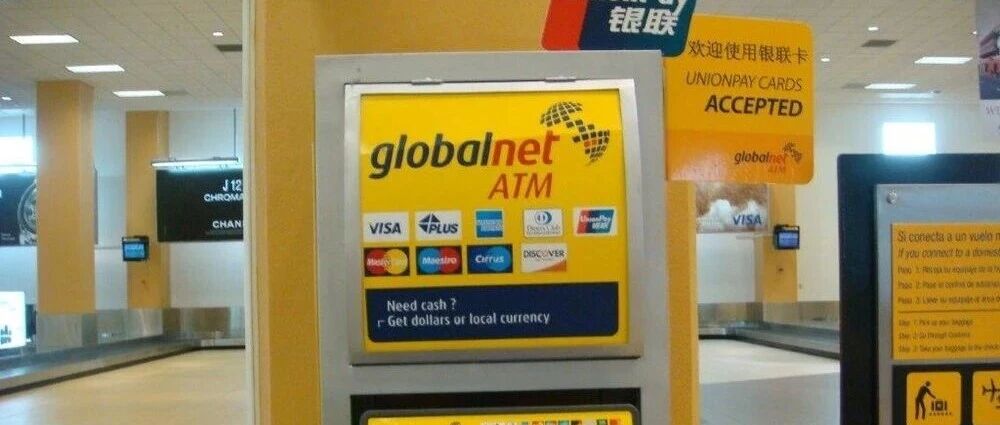
支付行业三季度业绩透视:银行卡收单承压、跨境业务增长强劲
2 1 Shi Ji Jing Ji Bao Dao· 2025-12-03 05:37
Core Insights - The payment industry is experiencing a mixed performance, with some companies achieving revenue growth through diversified strategies while others face pressure from declining transaction volumes in card acquiring business [1][2][3] - The implementation of the 259 Document by the People's Bank of China is impacting transaction volumes, particularly in card acquiring, leading to a strategic shift towards cross-border payment services [1][5] Financial Performance - Haike Rongtong's parent company, Cuiwei Co., achieved a revenue of 1.71 billion yuan, a year-on-year increase of 0.86%, but reported a net loss of 311 million yuan [2] - Guotong Xingyi's parent company, Newland, reported a revenue of 6.244 billion yuan, a 12.04% increase, with a net profit of 937 million yuan, up 14.03% [2] - Lakala reported a revenue of 4.068 billion yuan, a decline of 7.32%, and a net profit of 339 million yuan, down 33.90% [3][4] Impact of Regulatory Changes - The 259 Document restricts card acquiring operations, leading to a decrease in transaction volumes and impacting revenue for many payment institutions [5] - The regulation aims to eliminate illegal practices in card acquiring, which has resulted in a contraction of transaction volumes across the industry [5] Growth in Cross-Border Payments - Cross-border payment services are emerging as a significant growth area for payment institutions, with companies like Lakala reporting a cross-border payment volume of 60.2 billion yuan, a year-on-year increase of 71.91% [6] - Newland's overseas payment device revenue grew over 26%, and the company is expanding its cross-border payment operations [6] - Companies are increasingly focusing on global market expansion, with Newland planning to issue H-shares to enhance its international strategy [6] Market Trends - The global payment market is projected to grow significantly, with offline payment volumes expected to exceed 42.6 trillion USD by 2027, indicating a robust demand for cross-border payment solutions [7] - The demand for localized payment solutions is rising as Chinese companies expand overseas, with significant growth in cross-border payment transaction volumes reported by various companies [8]