
区块链

Search documents
创始人“V神”:以太坊的“下一个十年”是怎样的?
Hua Er Jie Jian Wen· 2025-08-14 03:14
Core Insights - Ethereum's co-founder Vitalik Buterin envisions Ethereum transitioning from a "World Computer" to a more concrete "World Ledger" over the next decade, ultimately entering a "maintenance mode" as technology matures [1][4][5] - The "barbell strategy" focuses on Layer 1 (L1) prioritizing security and decentralization, while Layer 2 (L2) caters to high-performance needs, isolating centralization pressures from L1 [1][6][4] - Vitalik expresses cautious optimism regarding the rise of ETH treasury companies, acknowledging their role in providing new capital entry points but warning about the risks of excessive leverage leading to market instability [4][5][6] Ethereum's Future Vision - The next decade will see Ethereum shift its focus to becoming a "World Ledger," with the metaphor that "if the ledger is a book, ETH is the ink" [4][5] - Privacy is emphasized as a core principle, advocating for it to be a default feature in all wallets rather than a niche offering [7][4] Reflection on the Past Decade - Ethereum's development has exceeded initial expectations, with significant events such as The DAO incident, the rise of NFTs, and the explosive growth of DeFi marking the past ten years [5][4] - Vitalik notes that the unexpected speed of zero-knowledge (ZK) technology development has opened new possibilities for Ethereum's future scalability [8][5] Layer 1 and Layer 2 Strategy - The barbell strategy delineates L1 as a trusted ledger while L2 serves as an efficient environment for various high-performance applications, ensuring the long-term health of the ecosystem [6][4] - L1 should maintain a balance of low latency for regular users, while L2 can cater to extreme low-latency needs like high-frequency trading [6][4] Privacy as a Fundamental Value - Privacy is highlighted as a fundamental aspect of the crypto ethos, with a push for it to be integrated into mainstream wallets rather than being relegated to specialized "privacy wallets" [7][4] - The Ethereum Foundation is reportedly working on making privacy a default feature in wallets, aiming for user-friendly options for private transactions [7][4] Relationship with Bitcoin - Vitalik provides a nuanced view of the relationship between Ethereum and Bitcoin, recognizing mutual respect among technical builders while acknowledging ideological differences [8][4] - The evolution of both ecosystems is seen as a parallel journey, with Ethereum entering its "teenage years" while Bitcoin is still maturing [8][4]


Upexi (UPXI) FY Conference Transcript
2025-08-13 18:30
Upexi (UPXI) FY Conference Summary Company Overview - Upexi has transitioned from a consumer products company to a Solana-focused treasury company, backed by 15 top digital asset VC firms [2][10] - The company has accumulated over 2,000,000 Solana tokens [2] Core Business Strategy - Upexi aims to become a leading company in the Solana space by utilizing capital markets to efficiently accumulate Solana and stake it for yields [2][10] - The company has raised significant capital, including a $100 million PIPE and a subsequent $200 million capital raise, bringing its portfolio to approximately $400 million [10][11] - Upexi has been acquiring Solana at a discount, particularly from institutions that previously held assets through FTX, which has been beneficial for shareholders [12] Financial Strategy and Yield Generation - Upexi's strategy involves raising capital above book value to expand its treasury, similar to MicroStrategy's approach [20][32] - The company is currently generating an 8% yield on its staked Solana, with additional gains from purchasing locked Solana at a 15% discount [32][33] - Upexi plans to use staking yields to support potential dividends and maintain shareholder value [28][31] Innovative Financial Instruments - Upexi has introduced a unique convertible note structure that allows investors to pledge Solana, providing downside protection while offering potential upside in Upexi stock [61][66] - This structure minimizes credit risk for Upexi, as it does not involve borrowing in dollars, thus avoiding basis risk associated with price fluctuations [66] Market Position and Future Outlook - Upexi is focused on expanding its shareholder base and institutional interest, aiming to reach a billion-dollar portfolio as quickly as possible [31][24] - The company is committed to a buy-and-hold strategy for Solana, intending to stake all acquired tokens and reinvest rewards [51][52] - Upexi's management emphasizes creativity in financial strategies, looking to replicate successful models from established players in the crypto space [29][32] Additional Insights - The management team includes experienced professionals from traditional finance, enhancing Upexi's strategic direction [14][16] - Upexi is actively working on building its market presence and increasing exposure to potential investors [72][74] Conclusion - Upexi's pivot to a Solana-focused treasury model positions it uniquely in the market, leveraging innovative financial strategies to maximize shareholder value while navigating the evolving landscape of digital assets [2][10][74]

2026-2031年福州市数字经济行业投资与发展分析报告
Sou Hu Cai Jing· 2025-08-13 08:36
Group 1 - The report provides an in-depth analysis of the digital economy industry, focusing on its definition, characteristics, and the significance of digital economy research in Fuzhou [3][4]. - Key features of the digital economy include data as a critical production factor, continuous innovation in digital technology, and the integration of industries as a driving force for development [3][4]. - The report outlines the current state of the global and Chinese digital economy, highlighting the scale, structure, and contribution to GDP [4][5]. Group 2 - Fuzhou's digital economy development is influenced by various factors, including economic, policy, innovation, and social environments [5][6]. - The report details the infrastructure development in Fuzhou, including traditional and new digital infrastructure such as 5G base stations and data centers [5][6]. - Fuzhou's digital economy is segmented into various industries, including cloud computing, big data, IoT, and AI, with each sector's development policies and current status analyzed [6][7]. Group 3 - The report discusses the trends and investment strategies in Fuzhou's digital economy, emphasizing the advantages and challenges faced by the industry [7][8]. - It highlights the importance of digital transformation for enterprises in Fuzhou, driven by market and technology factors [7]. - The investment opportunities and value within the digital economy sector are assessed, providing insights into potential growth areas [7][8].

十年,以太坊的“灵魂之战”
Hua Er Jie Jian Wen· 2025-08-13 07:57
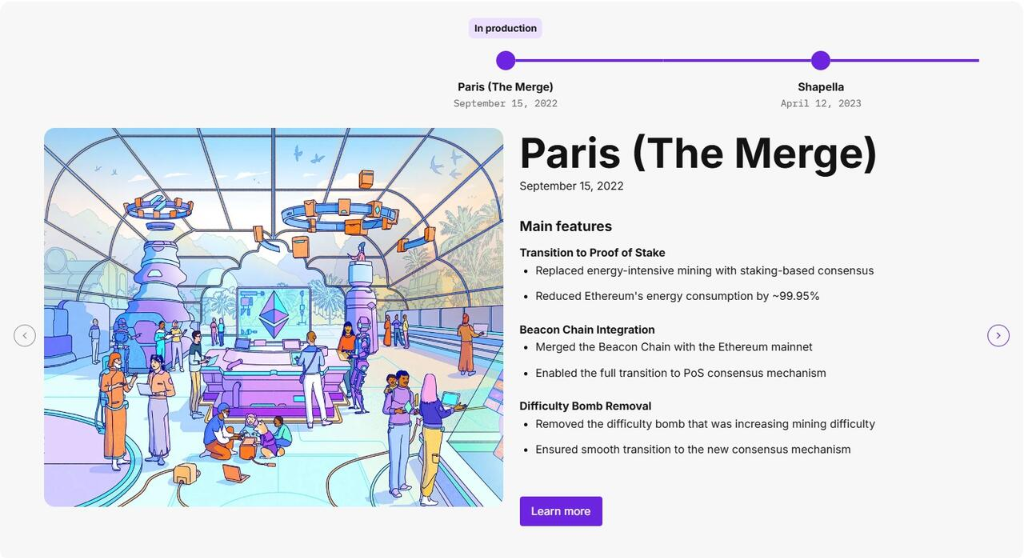
Core Insights - Ethereum is facing a profound debate regarding its core identity, questioning whether it should compete directly with emerging high-performance competitors or solidify its position as the most secure and decentralized settlement layer for its thriving Layer 2 ecosystem [1][11] - Layer 2 transactions now account for 85% of the total, yet a significant amount of capital remains on the Ethereum mainnet, indicating a tension between transaction volume and capital retention [1][5] Group 1: Ecosystem Dynamics - Tomasz Stańczak emphasized that unifying the ecosystem, enhancing interoperability, and improving user experience have been the primary focus over the past 18 months [2][9] - Polygon Labs' CEO Marc Boiron warned that competing on execution speed with newer blockchains like Solana is "dangerous" [2][11] - Dune Analytics co-founder Fredrik Haga noted that the introduction of Blobs in March 2024 has reduced Layer 2 settlement fees to nearly zero, which is a technical breakthrough but poses economic challenges for Layer 1 validators [2][5] Group 2: Technological Advancements - Ethereum's evolution since 2015 has involved significant trade-offs, transitioning from Proof of Work (PoW) to Proof of Stake (PoS) through "The Merge," fundamentally altering the protocol's operation [3] - The community has adopted a Layer 2-centric scaling roadmap to address performance bottlenecks, utilizing innovations like zero-knowledge proofs (ZK-proofs) to optimize scale, speed, and cost [5] - The Dencun upgrade in 2024 introduced the "Blobs" feature, leading to a 90% drop in Layer 2 transaction fees, which has pressured the incentive income of Layer 1 validators [5] Group 3: Strategic Choices - The debate over Ethereum's future boils down to a strategic choice: whether to compete on execution with high-performance chains or focus on its core strengths [11] - Polygon co-founder Sandeep Nailwal asserted that Ethereum's core value proposition lies in being a highly decentralized, censorship-resistant settlement layer [11] - Despite criticisms, discussions at the EthCC conference conveyed a generally optimistic outlook for Ethereum's future, supported by real utility and on-chain metrics [12] Group 4: Institutional Adoption - Major asset management firms like BlackRock are tokenizing assets on Ethereum, with over 90% of real-world asset (RWA) tokenization projects choosing to build on the platform [2][12] - Robinhood announced the launch of its Ethereum-based Layer 2 network during the conference, targeting RWA and securities tokenization [12] - These actions indicate that large traditional financial institutions prioritize Ethereum's security and decentralization as a settlement layer over mere transaction speed [12]
2026-2031年安徽省数字经济行业投资与发展分析报告
Sou Hu Cai Jing· 2025-08-13 07:50
Group 1: Overview of Digital Economy - The concept of digital economy is defined, highlighting its characteristics such as data as a key production factor and the role of digital technology innovation [2] - The digital economy is characterized by the integration of online and offline operations, emphasizing the importance of platform ecosystems [2] Group 2: Significance of Digital Economy in Anhui Province - Digital economy transforms the input structure of economic systems, enhancing the quality and efficiency of factors [3] - It reduces the cost of factor allocation and optimizes the scale and efficiency of market allocation [3] Group 3: Global and Chinese Digital Economy Development - The global digital economy is experiencing significant growth, with a notable increase in its scale and GDP contribution [3] - Key features of global digital economy development include profound adjustments in the development environment and accelerated layout in critical areas [3] Group 4: Anhui Province Digital Economy Development Analysis - Anhui Province's GDP and its ranking nationally are analyzed, along with the province's industrial structure [4] - The policy environment for digital economy development in Anhui is summarized, including key planning and its impact on the industry [4] Group 5: Digital Economy Infrastructure in Anhui Province - The status of traditional and new digital infrastructure in Anhui is assessed, including the number of websites and broadband networks [4] - The construction of 5G bases and data centers is highlighted as part of the new digital economy infrastructure [4] Group 6: Key Industries in Anhui's Digital Economy - The development status of various sectors such as cloud computing, big data, and artificial intelligence is analyzed, including relevant policies [5][6] - The growth prospects for these key industries are also discussed, indicating potential areas for investment [5][6] Group 7: Digital Transformation of Enterprises in Anhui - The concept and driving factors behind enterprise digital transformation are outlined, emphasizing market and technology drivers [6] - Case studies of representative enterprises in Anhui undergoing digital transformation are presented [6] Group 8: Investment Strategies in Anhui's Digital Economy - The development trends and future prospects of Anhui's digital economy are analyzed, identifying advantages and shortcomings [7] - Investment opportunities and strategies for sustainable development in the digital economy sector are discussed [7]
深圳市鑫米福供应链有限公司成立 注册资本1000万人民币
Sou Hu Cai Jing· 2025-08-13 06:58
Group 1 - Shenzhen Xinmifu Supply Chain Co., Ltd. has been established with a registered capital of 10 million RMB [1] - The legal representative of the company is Huang Shihong [1] - The company's business scope includes supply chain management services, blockchain technology-related software and services, and various jewelry-related activities [1] Group 2 - The company is involved in the wholesale and retail of jewelry, as well as the sale of arts and crafts [1] - It also offers services such as jewelry manufacturing, recycling, and repair [1] - The company is permitted to conduct inspection and testing services, subject to relevant approvals [1]
欧科云链(01499)上涨19.57%,报0.55元/股
Jin Rong Jie· 2025-08-13 06:46
Group 1 - The stock price of Okex Chain (01499) increased by 19.57% on August 13, reaching HKD 0.55 per share with a trading volume of HKD 17.61 million [1] - Okex Chain Holdings Limited focuses on the research and application of blockchain technology, offering products such as a blockchain explorer, Onchain AML solutions, and Chaintelligence, a one-stop investigation and tracing platform [1] - The company is registered in Hong Kong as a trust company and holds a Trust or Company Service Provider (TCSP) license as well as a money lender license [1] Group 2 - As of the 2024 annual report, Okex Chain reported total revenue of HKD 391 million and a net loss of HKD 14.53 million [2]
大跌6%!IPO后首次电话会,Circle聚焦“盈利模式”:赚钱方式有两种,目标是“赢者通吃”(附电话会议实录)
美股IPO· 2025-08-13 05:37
Core Insights - Circle's primary revenue sources are reserve income from holding cash-equivalent assets and monetizing transaction processes and network infrastructure, with the latter expected to grow significantly as network adoption increases [4][33]. - The company plans to launch Arc, a proprietary blockchain designed for stablecoin financial applications, which will use USDC as the native asset for transaction fees [3][7][27]. - Circle's competitive advantage lies in its scalable model and inherent operational leverage, supported by a strong liquidity infrastructure and significant network effects in the stablecoin market [6][25][31]. Financial Performance - Circle reported a 53% year-over-year increase in total revenue and reserve income, reaching $658 million, driven by a substantial rise in USDC circulation [3][34]. - The company experienced a 5.4-fold increase in USDC on-chain transaction volume, indicating robust growth in its stablecoin network [34]. - Other revenue sources grew to $24 million, primarily from subscription and service income related to blockchain partnerships, reflecting a 3.5-fold increase [35]. Market Position and Strategy - The stablecoin market is characterized as a "winner-takes-all" environment, with Circle benefiting from deep liquidity infrastructure and a strong competitive moat [6][25]. - The passage of the GENIUS Act is seen as a catalyst for mainstream financial institutions to accelerate the adoption of stablecoin technology [10][25]. - Circle's cautious acquisition strategy focuses on organic growth and small strategic acquisitions rather than large, complex mergers [12][13][56]. Product Development and Partnerships - The upcoming Arc blockchain aims to support various financial applications, including payments and capital markets, and will provide a low-cost, predictable fee structure [27][28]. - Circle has expanded partnerships with major financial institutions and payment providers, enhancing USDC's utility and integration into various payment networks [11][30]. - The company is actively developing its Circle Payment Network (CPN) to facilitate international fund transfers and other payment types, with significant interest from financial institutions [26][49]. Future Outlook - Circle anticipates a compound annual growth rate of 40% for USDC over the coming years, with other revenue expected to range between $75 million and $85 million in 2025 [36]. - The company is focused on expanding its platform capabilities and partnerships to drive long-term growth and profitability [36].

IPO后首次电话会,Circle聚焦“盈利模式”:赚钱方式有两种,目标是“赢者通吃”
Hua Er Jie Jian Wen· 2025-08-13 02:48
Core Insights - Circle, known as the "first stock of stablecoins," reported a significant increase in total revenue and reserve income, driven by a substantial growth in USDC circulation, with total revenue and reserve income rising 53% to $658 million [1][22] - The company plans to launch a self-developed blockchain named Arc in the second half of the year, designed specifically for stablecoin finance, with USDC as the native asset for transaction fees [1][4] - CFO Jeremy Fox-Geen expressed confidence in the company's profitability outlook, citing network effects and the growth of USDC holdings as key drivers for long-term support of RLDC profit margins [1][22] Revenue Generation - Circle generates revenue primarily through two methods: reserve income from holding cash-equivalent assets to support stablecoins and monetizing certain transaction processes and network infrastructure elements [2][21] - Although the second revenue stream is currently small, it is growing and has high profit margins, with the potential for rapid expansion as network adoption increases [2][21] Market Dynamics - The stablecoin market is characterized as a "winner-takes-all" environment, with liquidity and utility driving growth, making it difficult for competitors to replicate Circle's deep liquidity infrastructure [3][14] - Circle's core model anticipates a compound annual growth rate (CAGR) of 40% for USDC over the coming years, supported by strong network effects and operational leverage [3][24] Arc Blockchain Launch - The upcoming Arc blockchain represents a strategic shift for Circle in the stablecoin infrastructure space, designed to support various financial applications and provide a robust platform for mainstream financial institutions [4][16] - Arc will operate as a new layer-1 blockchain compatible with Ethereum infrastructure, aiming to facilitate stablecoin financial applications, payments, foreign exchange, and capital markets [4][16] Institutional Adoption - The passage of the GENIUS Act has catalyzed mainstream financial institutions to accelerate their exploration of stablecoin technology, with Circle establishing partnerships with banks and payment infrastructure providers [6][14] - Major payment networks like Visa and Mastercard have announced plans to expand the availability of USDC on their networks, further driving adoption [6][14] M&A Strategy - Circle's co-founder Jeremy Allaire emphasized a cautious approach to mergers and acquisitions, preferring organic growth and strategic small-scale acquisitions over large, complex deals [7][21] - The company aims to integrate new capabilities that align with its product requirements rather than simply adding additional business lines [7][21] Financial Performance - Circle's total revenue and reserve income for the second quarter reached $658 million, with a 53% year-over-year increase, despite accounting profits being impacted by significant non-cash expenses [1][22] - The company reported a 5.4-fold increase in USDC on-chain transaction volume, reaching nearly $6 trillion, indicating strong growth in platform usage [12][22] Future Outlook - Circle anticipates a compound annual growth rate for USDC circulation of 40%, with expectations for other revenue streams to range between $75 million and $85 million in 2025 [24][25] - The company is focused on long-term success and is investing in key areas to build its platform and global partnerships, projecting adjusted operating expenses between $475 million and $490 million for 2025 [24][25]
Circle(CRCL) - 2025 Q2 - Earnings Call Transcript
2025-08-12 13:00
Financial Data and Key Metrics Changes - USDC in circulation grew to $61.3 billion at June 30, representing a 90% year-over-year increase, and reached $65.2 billion by August 10, marking a 6.4% increase since quarter-end [7][28] - Total revenue and reserve income increased by 53% year-over-year to $658 million in Q2, while total distribution transaction and other costs rose by 64% year-over-year to $407 million [28][29] - Adjusted EBITDA was $126 million in the quarter, up 52% year-over-year, resulting in a 50% adjusted EBITDA margin [30] Business Line Data and Key Metrics Changes - USDC on-chain transaction volume grew 5.4 times year-over-year to nearly $6 trillion, with $2.4 trillion in transactions recorded in July alone [7][27] - CCTP volume also showed significant growth, up 4.1 times year-over-year, indicating the importance of blockchain interoperability [27] - Other revenue increased to $24 million in Q2, up 3.5 times year-over-year, primarily driven by a $13 million increase in subscription and services revenue [29] Market Data and Key Metrics Changes - The total addressable market for stablecoins is considered massive, with dollar stablecoins representing only 1% of the U.S. M2 money supply [9] - The company operates the largest regulated stablecoin network globally, with significant growth driven by partnerships with major financial institutions and technology companies [11][22] Company Strategy and Development Direction - The company aims to build the largest stablecoin network, leveraging its platform to support developers, enterprises, and institutions [24] - The launch of the Circle Payments Network (CPN) is a key initiative to transform international money movement, with active payment corridors already established in several countries [13][58] - The introduction of ARC, a new Layer 1 blockchain, is designed to support stablecoin finance and enhance transaction efficiency [15][93] Management's Comments on Operating Environment and Future Outlook - Management highlighted the rapid expansion of commercial opportunities post-IPO and the positive impact of the Genius Act on stablecoin adoption [12][99] - The company anticipates a conservative multi-year growth rate of 40% CAGR for USDC, reflecting the increasing demand for stablecoins across various sectors [31][108] - Management emphasized the importance of building strong partnerships and the need for financial institutions to integrate new technologies, which may take time [100] Other Important Information - The company has committed to corporate impact by reserving shares for future donations to its foundation [9] - The regulatory environment is seen as a significant tailwind for the company's growth, particularly with the passage of the Genius Act [12][100] Q&A Session Summary Question: Thoughts on ARC and its revenue model - Management expressed excitement about ARC and its potential to underpin stablecoin finance, with gas fees in USDC expected to become a revenue source [35][39] Question: Details on USYC and partnership with Binance - The expanded partnership with Binance includes deeper integration of Circle's wallet technology and aims to promote USDC and USYC as yield-bearing collateral [40][44] Question: Understanding transaction volume versus circulation - Management explained that the high velocity of USDC transactions reflects improvements in blockchain technology and growing payment utility [50][53] Question: Milestones for CPN and its relationship with ARC - The focus is on activating more payment corridors and developing self-service tools for institutions to integrate with CPN [58][60] Question: Payment networks and competition - Management views USDC as a market-neutral infrastructure that supports various payment networks, emphasizing the importance of growing utility and distribution [64][66] Question: Adoption of USDC in remittance - The company is seeing increasing demand for USDC in remittance, with partnerships expanding in both consumer and B2B segments [78][80] Question: Partnership with OKX - The partnership with OKX aims to enhance liquidity and promote USDC to a large user base, contributing to the growth of the network [82][86] Question: Distribution and gas fees for ARC - Management discussed the goal of having a distributed network of professional validators for ARC, ensuring low and predictable transaction costs [90][92] Question: Impact of the Genius Act on growth - Management noted a significant increase in institutional interest post-Genius Act, which is expected to drive further adoption of USDC [95][100]
